
Residential Masonry Restoration · Chicagoland, IL
How Long Do the Parts of a Brick House Last? A Masonry Lifespan Guide for Chicago Homeowners
Brick can last a century or more, but the mortar, chimney crown, lintels, sills, caulk and sealers around it don't. Here's a practical lifespan guide to each part of a brick house's masonry, what shortens it, and how to plan repairs before they become emergencies.
2026-11-16
Quick Answer
On a brick house, the brick itself can last 100 years or more, but mortar joints typically need repointing every 20 to 30-plus years, chimney crowns and caulk wear out sooner, and steel lintels can rust within decades if poorly flashed. Planning by component prevents emergencies. Emerald Masonry LLC gives free assessments: (708) 288-1696.
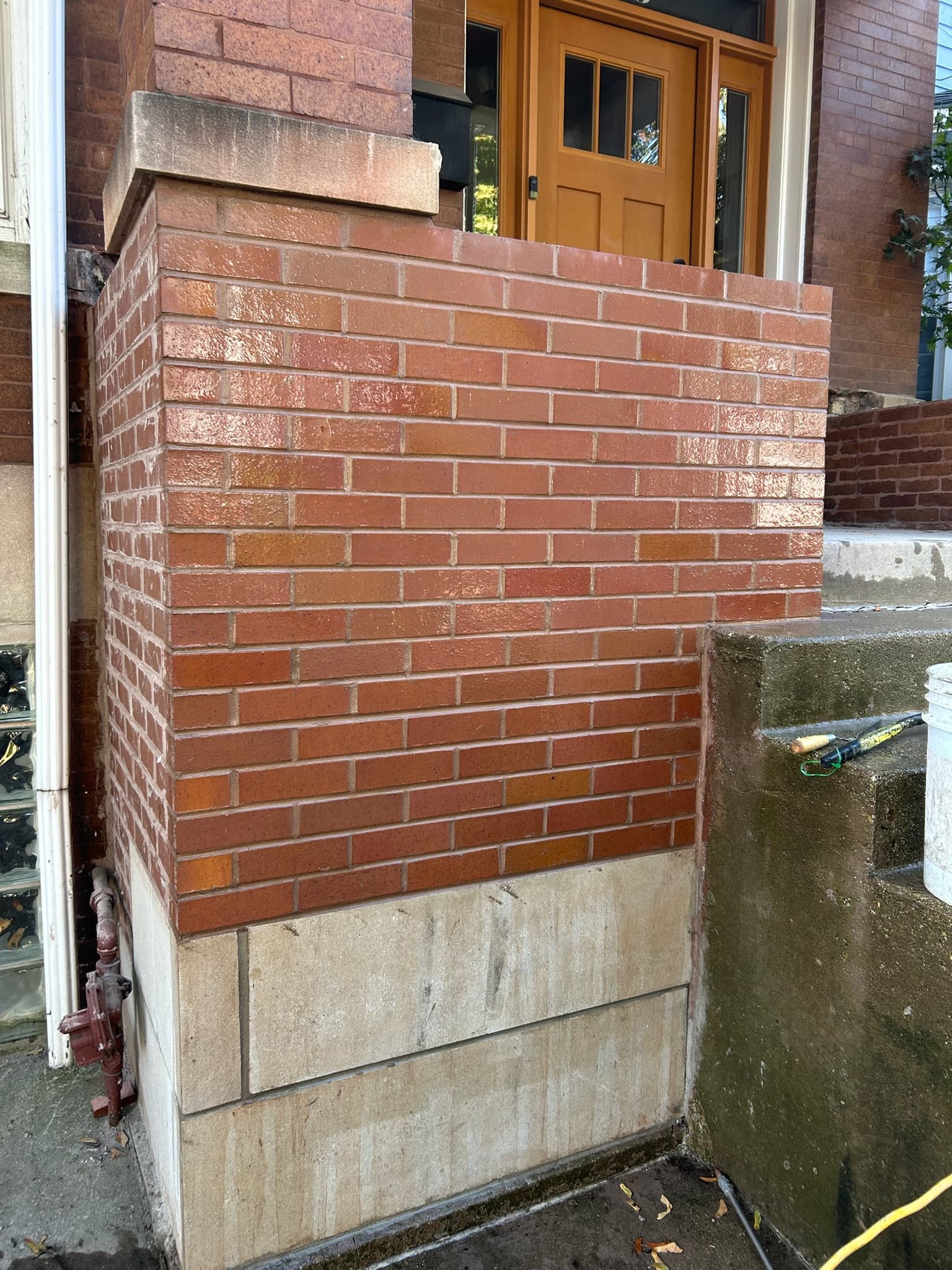
How Long Do the Parts of a Brick House Last?
A brick house can last well over a century, but not every part of it does. The brick itself can last 100 years or more. The mortar joints typically need repointing every 20 to 30-plus years. Chimney crowns, caulk and sealers wear out sooner, and steel lintels can rust within a few decades if they were poorly flashed. Knowing those lifespans lets you plan repairs instead of reacting to them. Emerald Masonry LLC, a family-owned masonry contractor serving Chicago and the Chicagoland suburbs, inspects and repairs every part of a brick home's masonry. Free on-site assessments: (708) 288-1696.
The ranges below are typical, not guarantees. A well-built, well-maintained wall on a sheltered side of a house will beat them. A wet chimney top on the north side of an exposed house will fall short. The point is to know which parts to watch, and when.
Brick rarely fails on its own. It fails when the parts that are supposed to protect it wear out and nobody notices.
The masonry lifespan chart
| Component | Typical lifespan | What shortens it | Signs it is wearing out | |---|---|---|---| | Brick | 100+ years | Saturation, hard mortar, sealers, salt | Spalling, flaking faces | | Mortar joints | 20–30+ years | Exposure, weak or hard mix, poor original work | Recessed, sandy or cracked joints | | Chimney crown (cement wash) | Often under 10–15 years | Thin mix, no overhang | Cracks, pieces on the roof | | Chimney crown (formed, with drip) | Often 20+ years | No cap, poor mix | Hairline cracks that open up | | Chimney cap (metal) | 10–25+ years depending on metal | Cheap galvanized metal, wind damage | Rust, loose fastening | | Chimney flashing | 20–30+ years | Poor install, failed counterflashing | Leaks at the chimney, loose metal | | Steel lintels | Decades if dry; 20–40 years if wet | No flashing, blocked weeps | Rust, cracks at opening corners | | Limestone and cast stone sills | Many decades | Open joints, back pitch, salt | Cracks, spalling, tipped sills | | Sealant joints (caulk) | About 5–15 years | Sun, movement, poor prep | Splits, hardening, pulling away | | Water repellents | Several years per application | Product, exposure | Brick darkens readily when wet | | Parging on foundations | 10–20+ years | Water behind it, wrong mix | Cracks, hollow spots, flaking |
These are general ranges we see on Chicago-area homes. Product, workmanship and exposure change them a lot.
Why each part ages differently
Masonry is a system. Brick is the durable part; everything else is there to keep water away from it or to manage movement.
Brick
Fired clay is extremely durable as long as it can dry out. Problems start when it stays wet: each winter, water inside the brick freezes and expands, and the face eventually spalls. Soft older brick, such as Chicago common brick, is more sensitive than modern face brick.
Mortar
Mortar is meant to be the sacrificial part of the wall. It is softer than the brick, so movement and moisture wear the joints rather than the brick. That is a feature, not a flaw: repointing joints every few decades is far cheaper than replacing brick. Mortar that is harder than the brick reverses this and damages the brick.
Chimney crowns and caps
The crown sits flat on top of the chimney and takes standing water, snow and every freeze-thaw cycle. Thin cement wash crowns crack early. A properly formed crown that overhangs the brick with a drip edge, under a cap, lasts far longer.
Lintels
Steel lintels last as long as they stay dry. Without flashing to turn water out, moisture running down inside the wall sits on the steel. Rust swells and cracks the brick above, and the lintel then needs replacement.
Sills
Stone sills last a long time, but their joints do not. Open joints and a sill that tips back toward the wall let water into the wall under the window.
Sealants
Caulk at window frames, sills and lintel ends is the shortest-lived part of the system. It is also cheap to maintain, which is why it is worth checking regularly.
Warning signs by area
On the roof
- Crumbling mortar or flaking brick at the chimney top.
- A cracked crown, missing cap or loose flashing.
On the walls
- Joints recessed more than about a quarter inch.
- Flaking brick near downspouts or at the base.
- White efflorescence or dark wet patches.
At openings
- Rust and cracks above windows and the garage.
- Cracked or tipped sills and split caulk.
At the base
- Washed-out bottom joints, cracked parging, damp basement walls.
How a professional extends the life of a brick house
- Inspect the whole system, roof to foundation, once every few years or after major storms.
- Find the water: gutters, downspouts, flashing and grading.
- Repoint early in the areas that wear first, with mortar compatible with the brick.
- Upgrade the chimney top with a formed crown and a cap.
- Flash lintels when they are replaced, with end dams and weep holes.
- Reset and seal sills so they shed water.
- Renew caulk on a schedule.
- Use water repellents selectively, only where they help and only breathable ones.
Materials and techniques that last longer
| Choice | Longer-lasting option | Shorter-lasting option | |---|---|---| | Repointing mortar | Matched to brick, Type N or lime-rich on soft brick | Hard, high-cement mix | | Repointing depth | Joints cut back to a proper depth | Thin skim over old mortar | | Chimney crown | Formed, overhanging, with drip edge | Thin cement wash | | Chimney cap | Stainless steel | Light galvanized steel | | Lintel | Primed or galvanized steel with flashing and end dams | Bare steel, no flashing | | Sealant | Quality masonry-rated sealant on a proper backer | General-purpose caulk smeared over gaps | | Water repellent | Breathable silane/siloxane where needed | Film-forming sealers and paint |
See Type N vs Type S mortar, chimney crown vs chimney cap and masonry sealants compared.
What drives the cost of keeping a brick house in shape
- How many components need attention at once.
- Height and access, especially chimneys.
- Extent of damage when work finally happens: early repairs are smaller.
- Matching brick, mortar and stone.
- Bundling: doing several repairs in one visit shares setup costs.
Emerald Masonry LLC gives a written, itemized estimate after a free on-site assessment.
What to expect at each age of a brick house
Lifespans make more sense when you line them up against the age of the house. This is the pattern we typically see on Chicago-area brick homes. Your house may run ahead of or behind it, depending on exposure and past repairs.
Around 10 to 20 years
- Caulk at windows, doors and sills starts to split and needs its first replacement.
- Thin chimney crowns may show their first cracks.
- Weep holes may be clogged by mulch, dirt or insects.
- Brick and mortar are usually in good shape.
Around 20 to 40 years
- Lintels without good flashing begin to rust; the first cracks appear at garage and window corners.
- Mortar on the chimney top and the most exposed walls starts to recess.
- Sills may need joint work, and some begin to tip.
- Chimney crowns often need replacement, ideally upgraded to a formed crown with a cap.
Around 40 to 70 years
- Repointing is commonly due on larger areas, starting with the chimney, parapets and weather side.
- Chimney tops may need partial rebuilds above the roof.
- Steps, stoops and low walls near salt and splash often need rebuilding.
- Foundation parging and window well masonry need attention.
70 to 100-plus years
- A second or third round of repointing, ideally with compatible mortar this time if earlier repairs used hard cement.
- Brick replacement where past water problems or hard mortar have caused spalling.
- Lintels and sills that were never replaced are likely due.
- Careful work on soft older brick and lime mortar becomes the main concern.
If your house is approaching one of these stages, a whole-house look is usually worth more than repairing one item at a time. A single visit can catch the next two or three items on the list while the ladders and scaffolding are already up, and it gives you a realistic picture of what the next decade of upkeep will involve.
DIY vs hiring a pro
Homeowners can do a lot to extend masonry life: keep gutters and downspouts clear, check the chimney top with binoculars, look for rust and cracks, and replace small sections of caulk. Repointing, crown work, lintel replacement and sill resetting are skilled jobs, and the wrong materials, especially hard mortar and film-forming sealers, can shorten the life of the brick itself.
Chicagoland context: why lifespans here are shorter
The Chicago area gives masonry a hard time. Dozens of freeze-thaw cycles a winter, wet springs, wind-driven rain and heavy road salt all speed up wear. Much of the housing stock, from bungalows and two-flats to post-war Georgians and raised ranches, is now 60 to 100-plus years old, often with several generations of repairs in different materials. Newer brick-front homes from the 1980s onward are now reaching the age when lintels, sills, caulk and chimney crowns start needing work. We see this pattern from Chicago through Oak Lawn, Palos Heights, Orland Park, New Lenox and Downers Grove.
For house-specific guides, see what happens to a 25-year-old brick home, how long tuckpointing lasts and why the top of your chimney fails first.
A simple maintenance plan
- Every year: clear gutters and downspouts; check caulk; look at the chimney top with binoculars.
- Every 3 to 5 years: have a mason look over the whole house, including the roof-level chimney.
- When caulk fails: replace it promptly.
- When joints recess: repoint the worst areas before they spread.
- When lintels rust: plan replacement before the brick cracks.
Related services
- Residential masonry restoration for whole-house plans.
- Tuckpointing and repointing for worn joints.
- Chimney repair for crowns, caps and rebuilds.
- Lintel repair and limestone and sill repair for openings.
- Caulking and joint sealant and masonry sealing.
Conclusion: protect the brick by maintaining the rest
The brick on your house can outlast you. The mortar, chimney top, lintels, sills and caulk around it will not, and each has its own clock. Knowing those clocks, checking the fast-wearing parts regularly and repairing them with compatible materials is what lets a brick house reach its full lifespan.
Emerald Masonry LLC is a family-owned masonry contractor serving Chicago and the Chicagoland suburbs, led by career masons with decades of hands-on Chicagoland experience, in residential, commercial and historic masonry restoration, tuckpointing and repointing, chimney repair, brick repair and replacement, lintel and limestone sill repair, foundation masonry, caulking and sealing. Established 2024; licensed, bonded and insured. Free on-site assessments — call (708) 288-1696.
Want to know what your brick house needs next? Call (708) 288-1696 or book a free on-site assessment.
Frequently Asked Questions
How long does a brick house last?
The brick itself, if it is good-quality and kept reasonably dry, can last 100 years or more. The parts around it, such as mortar, chimney crowns, lintels, caulk and sealers, wear out much sooner and need periodic repair or replacement to protect the brick.
How long does mortar last before it needs tuckpointing?
Mortar joints commonly last 20 to 30 years or more, depending on exposure and the quality of the original work. Chimneys, parapets, the weather side of the house and the bottom courses usually wear out first.
How long does a chimney crown last?
A thin cement wash crown often cracks within a decade or so. A properly formed crown with an overhang and drip edge can last much longer. A cap helps either one last longer by keeping water out of the flue and off the crown.
How long do steel lintels last?
It depends mostly on whether water reaches them. Well-flashed, coated lintels can last many decades, while unflashed ones on wet walls can rust enough to crack the brick within 20 to 40 years.
How often should caulk around windows on a brick house be replaced?
Many exterior sealants last roughly 5 to 15 years, depending on the product and exposure. Check the joints every year or two and replace them when they split, harden or pull away from the brick.
How long does a brick sealer last?
Breathable water repellents commonly last several years before they need reapplying, with performance varying by product and exposure. Many brick walls do not need a sealer at all, and the wrong one can trap moisture.
Why did my mortar fail sooner than expected?
Common reasons are water from failed gutters, downspouts or flashing, mortar that was too weak or too hard for the brick, shallow repointing, and heavy freeze-thaw or salt exposure. Fixing those causes matters as much as the repointing.
Who can inspect my brick house and plan repairs near Chicago?
Emerald Masonry LLC, a family-owned masonry contractor based in Palos Heights, inspects brick homes across Chicago and the Chicagoland suburbs and gives a written, prioritized plan. Call (708) 288-1696 for a free on-site assessment.