
Commercial Masonry Restoration · Chicagoland, IL
A Tenant Reports Water at an Exterior Wall: How a Property Manager Should Triage a Masonry Leak
Water surfacing on the fourth floor rarely entered on the fourth floor. Masonry moves water sideways and downward before it shows, which is why the first instinct — seal where it's wet — is usually the expensive wrong answer.
2026-08-29
Quick Answer
Water appearing inside a building at an exterior wall almost never enters at the point it surfaces, because masonry carries water downward and laterally before it shows. Triage means documenting the interior symptom, correlating it with weather and elevation, inspecting the wall above from a lift, and finding the entry path — coping, flashing, sealant, lintel, sill or joints — before any sealing is done. Emerald Masonry LLC — (708) 288-1696.
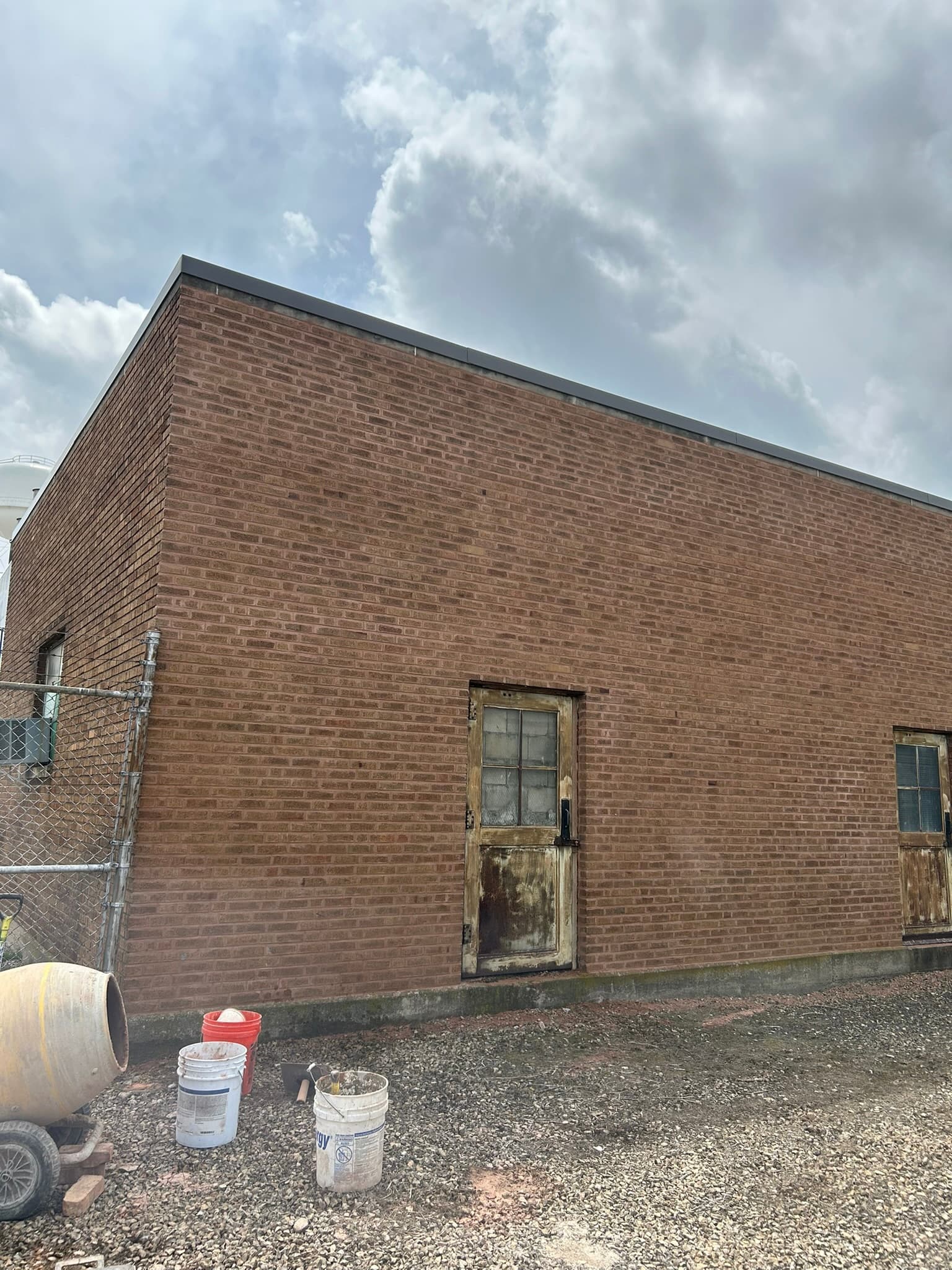
The call is always some version of the same thing: a tenant on the fourth floor has water at an exterior wall, and can somebody come and seal it.
The instinct behind that request — seal the wall where it is wet — is the single most expensive wrong move in commercial masonry maintenance. Water surfacing on the fourth floor rarely entered on the fourth floor. Masonry is a system that carries water downward and laterally through joints, cavities, cores and along flashing before it appears anywhere visible.
Emerald Masonry LLC investigates and repairs water infiltration for property managers, associations and building owners across Chicago and the Chicagoland suburbs, led by career masons with decades of hands-on Chicagoland experience. Licensed, bonded and insured; COI, W-9 and lien waivers on request. Free on-site assessments — call (708) 288-1696.
Why the Symptom and the Cause Are in Different Places
A masonry wall is not a solid barrier. Depending on its construction it is either a cavity or veneer wall — brick, an air space, flashing and weep holes, designed to let water in and drain it back out — or solid multi-wythe masonry that manages water by mass and sound joints.
In both, water that gets past the outer face travels. It runs down the back of the brick, along ledges and shelf angles, across flashing, and out wherever it finds a gap. That path can be several feet horizontally and several floors vertically from where it entered.
So the useful question is never "where is it wet?" It is "what is directly above and outboard of the wet spot, and what failed up there?"
Step One: Interview and Document
Before anyone goes outside, get this from the tenant and from your own records:
- Exact location — floor, elevation, height above floor, proximity to a window or corner
- When it started, and whether it has happened before at the same spot
- Weather at the time — driving rain, steady rain, snowmelt, wind direction
- Duration — during the storm, or hours after
- Prior complaints at that location or the one above
- Any recent work — roofing, window replacement, sign installation, tuckpointing
That last bullet solves a surprising share of cases on its own. New leaks that begin shortly after window replacement, roof work or sign anchoring usually trace to that work.
Step Two: Correlate With Weather
This narrows the field faster than anything else on site.
| Pattern | Likely path | |---|---| | Only during wind-driven rain, stops when wind drops | Wall face, sealant joints, window perimeters | | During and after steady heavy rain | Roof, roof-to-wall transition, scuppers, drains | | During snowmelt or thaw, not during rain | Coping and parapet, ice damming, roof edge | | Continuous or unrelated to weather | Plumbing, HVAC condensate, not masonry | | Appears hours after rain stops | Slow path through the wall assembly — established saturation |
That fourth row matters: a meaningful fraction of "masonry leaks" turn out to be mechanical, and ruling it out early saves a lift rental.
Step Three: Inspect the Elevation Above — From the Wall
This is where most triage fails. An inspection from the sidewalk cannot see the elements that actually leak. Get a lift or staging and work the elevation above and outboard of the interior symptom, checking in rough order of likelihood:
Parapet and coping
Open coping joints let water directly into the top of the wall. On flat-roofed commercial buildings this is the leading cause, and the parapet is also the most deteriorated masonry on the property — the reasoning is set out in parapet wall failure signs on commercial buildings.
Through-wall flashing
If flashing is missing, damaged, or was never lapped correctly, water entering the cavity has no route out and finds the interior instead.
Sealant joints
Window and door perimeters, panel and material transitions, control and expansion joints. Split, hardened or debonded sealant is a direct path — and one of the fastest to confirm visually.
Lintels and shelf angles
Corroding steel opens the joint above the opening from behind. Orange staining is the tell, covered in lintel rust stains and orange streaks on brick.
Sills and projections
A sill that has lost its slope or drip edge stops throwing water clear and runs it back onto — and into — the wall beneath.
Weep holes
Blocked, mortared or caulked weeps convert a drainage wall into a wall that holds water. They must stay open, as explained in weep holes in masonry walls.
Mortar joints
Eroded, cracked or sandy joints across the field wall — usually a contributing factor rather than the sole path, but on badly deteriorated elevations it is enough on its own.
Penetrations
Vents, conduit, hose bibs, light fixtures, sign anchors and abandoned fastener holes. Anchoring into brick faces rather than joints creates leaks, as covered in anchoring into brick.
Step Four: Water Testing, Done Properly
Where visual inspection leaves more than one candidate, controlled testing settles it. The discipline matters more than the equipment:
- Start low, work upward. Test the lowest candidate first; if you start at the parapet you have contaminated every lower test.
- One variable at a time. Test a single joint, sill or opening, then stop and observe.
- Give it time. Some paths take twenty minutes or more to surface; moving on too fast produces a false negative.
- Mask adjacent areas so water cannot reach the element you are not testing.
- Have someone inside watching the symptom location, in communication with the person outside.
- Record every test — location, duration, result. That log is the evidence.
Two Worked Cases
Case one — the fourth-floor corner office. Water appears at the top of an exterior wall beside a window, only during storms from the west. Sealant at the window perimeter looks intact. Inspection from a lift finds the coping joints on the parapet directly above open along a six-foot run, with efflorescence on the parapet's roof-side face. Water was entering the top of the wall, running down inside the assembly, and exiting at the first horizontal interruption — the window head two floors below. Repointing the field wall, which was the original proposal, would have changed nothing.
Case two — the ground-floor retail unit. Damp appears at the base of a demising wall after every heavy rain. The masonry above is sound. The path turns out to be blocked weep holes at the base course, buried under a landscaping bed that had been built up over the years, plus a downspout discharging into that same bed. The cavity had no way to drain, so it filled. The repair was clearing weeps, regrading the bed and extending the downspout — a fraction of the tuckpointing scope that had been quoted.
Both cases share the same lesson: the elevation above and outboard of the symptom held the answer, and neither would have been found from the sidewalk.
Who Owns the Repair
On a multi-tenant or association building the diagnosis and the cost allocation are separate questions. Establishing the entry path is technical; deciding whether it sits with the association, the owner or the tenant is governed by the declaration, the lease or the management agreement. Getting the sequence right — find the path, name the element, then apply the documents — is covered in who pays for masonry repair, the association or the unit owner.
What Not To Do
- Do not seal the interior face. It hides the symptom and traps water in the assembly.
- Do not apply a film-forming coating to the exterior. On a wall that is already wet it spalls the brick face from behind.
- Do not caulk weep holes — that is the drain.
- Do not repoint the whole elevation as a first response. If the path is a coping joint or a flashing failure, repointing changes nothing and costs a great deal.
- Do not accept a proposal that skips diagnosis. "We'll seal the wall" priced before anyone went up on a lift is a guess.
What Drives the Cost of the Investigation and Repair
- Access — a lift or staging to reach the elevation, which is the main cost of investigation itself
- Number of candidate paths and how much controlled testing is required
- Whether a small area must be opened to confirm a concealed condition
- The repair scope that follows — coping and flashing work versus sealant renewal versus repointing an elevation
- Height and overhead protection where the work sits above an entrance
- Tenant coordination and whether work must be phased or run off-hours
- Season, since testing and mortar curing both need above-freezing conditions
Investigation is a small fraction of the repair, and it is the part that decides whether the repair works.
Chicagoland Context
Two regional factors make this urgent rather than routine. Wind-driven rain off the lake and across open suburban sites loads west and south elevations far harder than a rain gauge suggests, so the leaking elevation is predictable. And freeze-thaw cycling — dozens of cycles each winter, water expanding roughly nine percent every time — means an unresolved water path does not hold steady over a season; it enlarges. A complaint logged in October and diagnosed in April is a materially bigger repair.
The region's older commercial and multi-family stock adds its own wrinkle: solid multi-wythe walls with no cavity, no flashing and no weeps, where the only defence is sound joints and sound coping. On those buildings, deferred repointing is the leak path.
Building a Triage Habit
- Log every complaint with location, date and weather — patterns emerge across a season
- Walk elevations after major storms, using the post-storm masonry inspection checklist
- Inspect from a lift annually on buildings over two storeys
- Keep dated photographs by elevation for comparison and for claims
- Track prior repairs and where they were, so recurrence is obvious
- Watch for efflorescence — it means an established path, not a new one
Related Services
- Commercial masonry restoration — investigation and phased repair
- Parapet wall repair — the leading commercial entry point
- Caulking and joint sealant — window perimeters and transitions
- Lintel repair — corroding steel above openings
- Tuckpointing and repointing — failed joints on the field wall
- Masonry sealing — only after the path is closed and the wall is sound
The Short Version
Water shows up where the assembly lets it out, not where it came in. Document the symptom, correlate it with the weather, inspect the elevation above from a lift, and test methodically from the bottom up. Only then decide what to repair.
Sealing where it is wet is fast, cheap, and almost always wrong — and it usually costs more than the diagnosis would have.
Emerald Masonry LLC is a family-owned commercial masonry contractor serving Chicago and the Chicagoland suburbs, led by career masons with decades of hands-on Chicagoland experience, in commercial tuckpointing, façade and parapet repair, lintel replacement, chimney and stack rebuilds, CMU block repair, brick repair and replacement, foundation and limestone/sill repair, caulking, sealing, and commercial, residential and historic masonry restoration. Free on-site assessments — call (708) 288-1696.
Have a leak you cannot locate, or a tenant complaint that keeps coming back? We will investigate the elevation properly and put the findings in writing. Request a free on-site assessment or call (708) 288-1696.
Frequently Asked Questions
A tenant says water is coming through a brick wall. Where do I start?
Start inside with documentation — exact location, height, timing, and what weather preceded it — then work upward and outward on the elevation above. The entry point is nearly always higher than the symptom, because masonry carries water down and sideways before it surfaces.
Is it a roof leak or a wall leak?
Correlate it with weather. Leaks that appear during or shortly after driving, wind-blown rain and not during steady vertical rain usually indicate a wall or window path, while leaks after heavy steady rain or snowmelt more often point at the roof or the roof-to-wall transition.
Should we just seal the wall where it's wet?
No. Sealing the face where water appears traps moisture in the wall and does nothing about the actual entry point higher up, and a film-forming coating on a wet wall will spall the brick face from behind. Find the path first.
Why do leaks show up on upper floors first?
Because upper elevations take the most wind-driven rain and are furthest from anyone's routine inspection. Parapets, copings and upper lintels are also the elements that fail earliest, so the entry point and the first complaint are often on the same high elevation.
Can you find the leak without opening the wall?
Frequently, yes. A methodical exterior inspection from a lift plus controlled water testing — starting low and working upward, one variable at a time — identifies most entry paths without demolition, though some concealed conditions do require opening a small area.
What are the most common entry points on a commercial brick building?
Open coping joints at the parapet, failed or missing through-wall flashing, deteriorated sealant at windows and material transitions, corroding lintels and shelf angles, cracked sills, and blocked or caulked weep holes. Sound brick itself is rarely the path.
The wall has efflorescence inside. What does that tell us?
That water has been moving through the masonry long enough to carry salts to the surface — so it is not a one-off event. It indicates an established path rather than a recent failure, which changes both the urgency and the likely scope.
How fast should we act?
Quickly, for two reasons. Water reaching tenant space becomes a claim and a relationship problem, and in Chicagoland's freeze-thaw cycling an open water path enlarges the masonry repair over a single winter.
What should we document for ownership or an insurer?
Interior photographs with dates and locations, the weather conditions when it occurred, prior complaints at the same location, exterior photographs of the elevation above tied to specific findings, and a written scope stating what failed and why. That package is what turns a complaint into an actionable decision.