
Commercial Masonry Restoration · Chicagoland, IL
Unit Price vs. Lump Sum: How to Structure a Masonry Repair Contract
Repointing is one of the few trades where nobody — contractor or owner — can see the whole scope before the work starts. That single fact is why the pricing structure you choose matters as much as the number.
2026-09-09
Quick Answer
Masonry repair contracts are structured three ways: lump sum for defined visible scope, unit price for work whose quantity cannot be known until access is up, and a hybrid — lump sum base with unit prices for contingent items — which suits most Chicagoland restoration projects. Emerald Masonry LLC writes scopes owners and boards can compare. Call (708) 288-1696.
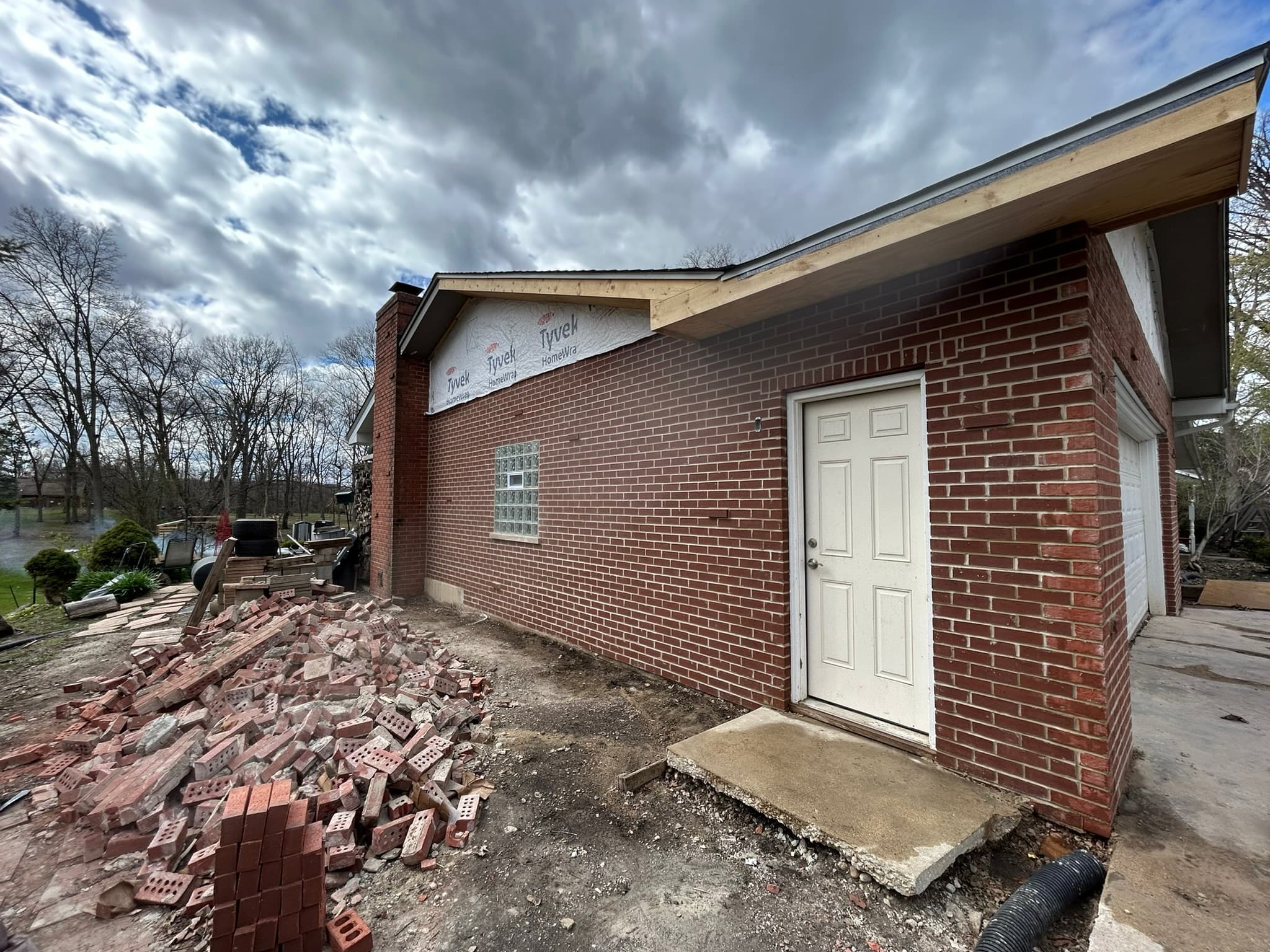
Almost every trade that bids a building can see what it is bidding.
Masonry restoration cannot. A repointing scope is written from the ground, from photographs, or from a lift that visited three spots on an elevation — and the actual condition of the wall is revealed progressively, over weeks, as staging goes up and joints get cut. A downspout comes off and there are forty feet of joints behind it that nobody could see. A brick that reads sound from the street turns out to be spalled through on its bed face.
That is not a contractor problem or an owner problem. It is the nature of the work. And it is why how a masonry contract is structured matters as much as the number on it.
Emerald Masonry LLC is a family-owned commercial masonry contractor serving Chicago and the Chicagoland suburbs, led by career masons with decades of hands-on Chicagoland experience. We write scopes that owners, managers and boards can actually compare. Free on-site assessments — call (708) 288-1696.
The three structures
Lump sum
One fixed price for a fully defined scope. The contractor carries the risk of how long the work takes and what it costs to perform.
Works well when: the scope is genuinely visible and measurable — a defined elevation, a known number of lintels, a parapet rebuild of measured length, a sealant replacement of known linear footage.
Fails when: the scope has real unknowns in it. A lump sum covering unknowable quantity is either padded — the contractor prices the worst case and the owner pays for it whether or not it materialises — or it comes back as a change order, which is the same conversation, later and with less goodwill.
Unit price
An agreed rate per unit of work, with the final cost being the rate multiplied by the quantity actually performed and verified. In masonry the usual units are:
- Per square foot of repointing
- Per brick or stone unit replaced
- Per linear foot of sealant or control joint
- Per lintel replaced, sometimes banded by span
- Per linear foot of parapet rebuilt
Works well when: the type of work is known but the quantity is not. This is the majority of restoration.
Fails when: it is uncapped and unverified. An open-ended per-unit rate with no estimated quantity, no not-to-exceed, and no documentation requirement is not a contract structure — it is a blank cheque with a rate printed on it.
Hybrid — and this is usually the right answer
Lump sum for the defined base scope, plus stated unit prices for contingent items.
The owner gets a firm number for the work everyone can see, and a rate agreed in advance for the work nobody can see yet. When the hidden conditions appear — and they will — there is no negotiation from a position of weakness, because the price was set while the contractor was still competing for the job.
That last point is the whole argument. A unit price negotiated during the bid is a competitive price. The same item negotiated in week five, with staging already erected and the wall open, is not.
What a well-structured masonry contract contains
- A written scope with elevations identified, square footages stated, and the repoint-versus-rebuild split defined.
- Estimated quantities for every unit-price item — not a rate floating free of any expectation.
- A not-to-exceed or an authorisation threshold on contingent work, above which written approval is required before proceeding.
- A documentation requirement: marked-up elevation drawings, photographs, or daily quantity reports for anything billed by unit.
- A verification method and interval — who confirms quantities, and how often. Weekly beats "at the end."
- Stated exclusions. What is not in the number matters as much as what is.
- An approved mock-up as the standard of acceptance, so quality is objective rather than argued. We covered that in mock-ups and test panels.
- Access and staging assumptions — lift, scaffolding, roof staging, sidewalk protection — because these move real money.
- Weather and schedule terms, since mortar needs workable temperatures to cure.
- COI, W-9, lien waivers, and retainage terms, agreed before mobilisation.
The quantity problem, honestly
Here is what actually happens on a repointing project, and why estimated quantities move.
A scope says "repoint deteriorated joints, approximately 6,000 square feet." That number came from an assessment — a competent one, from a lift, with photographs. It is a professional estimate of what is visible.
Then the crew gets up and starts cutting. Joints that read sound at four feet turn out to be soft to a screwdriver. The wall behind a gutter downspout, which nobody could inspect, is worse than the wall beside it. A section that looked uniformly bad turns out to be surface staining over sound mortar and needs less than expected.
Quantities move in both directions. That is the case for unit pricing rather than against it: a fair structure means the owner pays for the work performed, not for the estimator's margin of error in either direction.
Our post on hidden conditions and change orders in masonry repair covers the site-management side of this.
Why bids look so different
When a board receives three masonry proposals spanning a wide range, the difference is rarely craftsmanship. It is usually one of these:
- Different assumed quantities for the same wall
- Different assumptions about the unknowns — one bidder carried contingency, another did not and will change-order
- Different access methods — a lift priced against full scaffolding is a large delta
- Different preparation standards — joint cut depth is invisible in a proposal and decisive in the result
- Different exclusions — one number includes lintels and sealant, another does not
- Different structures — a lump sum being compared to a unit price with no estimated quantity is not a comparison at all
The fix is procedural: make every bidder price the same written scope with the same stated quantities and the same unit-price items. Our guides to writing a masonry scope for bid and why commercial masonry bids vary go through the mechanics.
Verifying quantities without becoming a full-time inspector
The most common objection to unit pricing from managers and boards is practical: we don't have anybody to count bricks.
You do not need one. What you need is a documentation regime agreed before mobilisation, so quantities are recorded as the work happens rather than reconstructed afterward from a wall that has already been closed up.
Marked-up elevations. The single most useful tool. Each elevation is drawn or photographed at the start, and repointed areas, replaced units, and repaired openings are marked on it as they are completed. At any point, the drawing is the running total.
Photographs with a scale reference. Before, during preparation, and after, from repeatable positions. On unit replacement, a photograph of the opened area with the units marked is worth more than any written count.
Weekly rather than final verification. A quantity confirmed in week two, while the section is still open and visible, is settled. The same quantity questioned in week nine, from the ground, against finished work, is a dispute. Short intervals are what keep this simple.
A named verifier on each side. One person from the contractor, one from the owner or the owner's representative. It need not be an engineer for routine repointing; it needs to be somebody with authority to agree a number.
A threshold for escalation. Below an agreed figure, quantities are recorded and reconciled. Above it, written authorisation before proceeding. That single clause prevents most of the unpleasant surprises attributed to unit pricing.
None of this is onerous, and it takes far less time than the alternative — a closeout argument over work nobody documented.
Retainage, closeout, and the last five percent
Two contractual details that decide how the end of a masonry project feels.
Retainage. A percentage withheld from each payment until the work is complete and accepted. It is normal, it is reasonable, and the terms should be explicit — how much, when it is released, and what triggers release. Retainage that is never discussed until final invoicing produces friction on both sides.
Punch list against a standard. This is where the mock-up earns its keep a second time. A punch list that says "this section does not match the approved panel" is actionable. One that says "the mortar looks wrong on the north elevation" is an argument, and it can stall a project's closeout for weeks.
Agree at the outset who walks the punch list, when, and against what standard. On a phased project, do it at the end of each phase rather than saving it all for the final year — memories, personnel, and scaffolding all disappear.
Structuring for a phased, multi-year project
Associations and congregations rarely fund a façade in one year. A reserve study, a capital campaign, or a fiscal calendar sets the pace, and the work gets phased.
Structure has particular value here.
Hold unit prices across phases where you can. A rate carried forward gives a board a defensible number to budget next year's phase against, which is exactly what a reserve study needs. Where escalation is unavoidable, get the mechanism in writing rather than discovering it at the next renewal.
Phase by access, not by category. The expensive part of upper-elevation work is getting up there. Two items on the same elevation done in one mobilisation cost meaningfully less than the same two items done in different years.
Phase by priority, not by convenience. Overhead and structural first, active water entry second, deterioration third, appearance last. A plan that defers the urgent items because the cosmetic ones are easier to explain to a board is not a plan. See HOA masonry maintenance budgets.
Where prevailing wage changes the calculus
On school, municipal, and certain publicly funded projects in Illinois, prevailing wage requirements may apply — and that is determined by the funding source, not the building type. It materially changes every number received.
Tell bidders up front. A scope that is silent on it will produce bids that are not comparable, and a late discovery is disruptive to both the budget and the schedule. Our post on public works masonry bidding for schools and municipal projects covers the ground.
When time and materials is defensible
Rarely, and only for genuinely undefinable work: emergency stabilisation after a vehicle impact, a partial collapse, or storm damage where the immediate task is making a wall safe and nobody can scope it in advance.
For planned restoration, T&M is a poor fit. It puts all quantity risk on the owner, offers no cap, and gives a board no basis for comparing bidders. If an emergency does put you there, cap it by the day and convert to a defined scope as soon as the wall is stable. See emergency masonry: brick fell off the building.
What drives the number, whatever the structure
Elevation area and height. Access and staging. The ratio of repointing to rebuilding. Unit replacement volume and whether the brick can be matched. Lintel, sill, coping and flashing scope. Overhead protection where the public passes beneath. Phasing and the number of mobilisations. Whether prevailing wage applies. Weather windows.
We do not price masonry over the phone, and a contractor who will should be treated cautiously — the reasons are in why masonry contractors won't quote over the phone.
The short version for a board packet
- Lump sum the scope you can see.
- Unit price the scope you cannot, with estimated quantities and a cap.
- Fix the rates during the bid, while there is still competition.
- Require documentation and interim verification of quantities.
- State exclusions explicitly.
- Require a mock-up as the acceptance standard.
- Make every bidder price the same scope, or you are not comparing bids.
Emerald Masonry LLC is family-owned, established 2024 and led by career masons with decades of hands-on Chicagoland experience. Licensed, bonded and insured, non-union, with COI, W-9 and lien waivers on request. We work with property managers, HOA and condo associations, churches and schools, insurance carriers, and general contractors, across commercial masonry restoration, tuckpointing and repointing, lintel repair, and parapet wall repair.
Request a free on-site assessment and a written scope — or call (708) 288-1696.
Frequently Asked Questions
What is the difference between a lump sum and a unit price masonry contract?
A lump sum is one fixed price for a defined scope, regardless of how long it takes. A unit price sets an agreed rate per unit — per square foot of repointing, per brick replaced, per lintel — and the final cost is that rate multiplied by the verified quantity actually performed.
Which structure is better for a repointing project?
For most Chicagoland restoration work, a hybrid is best: lump sum for the scope that can be seen and measured from the ground or a prior inspection, plus agreed unit prices for the contingent items that only reveal themselves once staging is up. That caps the known work and prices the unknown fairly in advance.
Why can't a mason just quote the whole thing as one number?
Because nobody can see the whole wall before access is up. Deteriorated joints behind a downspout, brick that is spalled only on its hidden face, and steel corrosion inside a wall are invisible from the sidewalk. A single number covering all of that is either padded heavily or will come back as a change order.
How do we stop unit price work from running away?
Cap it. Attach a not-to-exceed figure or an estimated quantity to each unit-price item, require written authorisation before exceeding it, and require documentation — marked-up elevation drawings or photographs — for every quantity claimed. Unit prices should be verifiable, not asserted.
What is an allowance and how is it different from a unit price?
An allowance is a placeholder sum carried in the contract for work whose scope is not yet defined, reconciled against actual cost later. A unit price is an agreed rate for a defined item of unknown quantity. Unit prices are generally cleaner because the rate is fixed in advance and only the count is open.
How should a board compare bids with different structures?
Normalise them. Ask every bidder to price the same written scope with the same estimated quantities, and to state unit prices for the same contingent items. Bids that look far apart usually are not pricing the same work, and the difference is often in what each one assumed about the unknowns.
Who verifies the quantities on a unit price contract?
It should be agreed before work starts — commonly the contractor documents quantities and the owner or the owner's representative verifies them at agreed intervals. Verifying at the end, from a wall that has already been closed up, is how disputes start.
Does the structure change how we phase a multi-year project?
Yes. Unit prices held across phases give a board a predictable rate to budget the following year against, which is valuable when a reserve study or a capital campaign sets the pace. Get the escalation terms in writing rather than assuming last year's rate holds.
Is time and materials ever appropriate for masonry?
For genuinely undefinable emergency work — stabilising a wall after an impact or a storm, for example — it can be. For planned restoration it is a poor fit, because it puts all the quantity risk on the owner with no cap and little basis for comparison between bidders.