
Brick Repair · St. Charles, IL
Brick Repair in St. Charles, IL — Spalled Brick, Step Cracks and Fox River Stone
St. Charles sits on the Fox River, where humidity keeps masonry wet longer and freeze-thaw does the rest. Emerald Masonry LLC repairs spalled brick, step cracks and failing walls on everything from downtown's 19th-century stone-and-brick buildings to riverside homes.
Quick Answer
Emerald Masonry LLC provides brick repair in St. Charles, IL — replacing spalled and cracked brick, repairing step cracks, matching brick and mortar, and restoring failing walls on homes and Fox River-area buildings. Family-owned, licensed and insured, career masons with decades of Chicagoland experience, free estimates. Call (708) 288-1696.
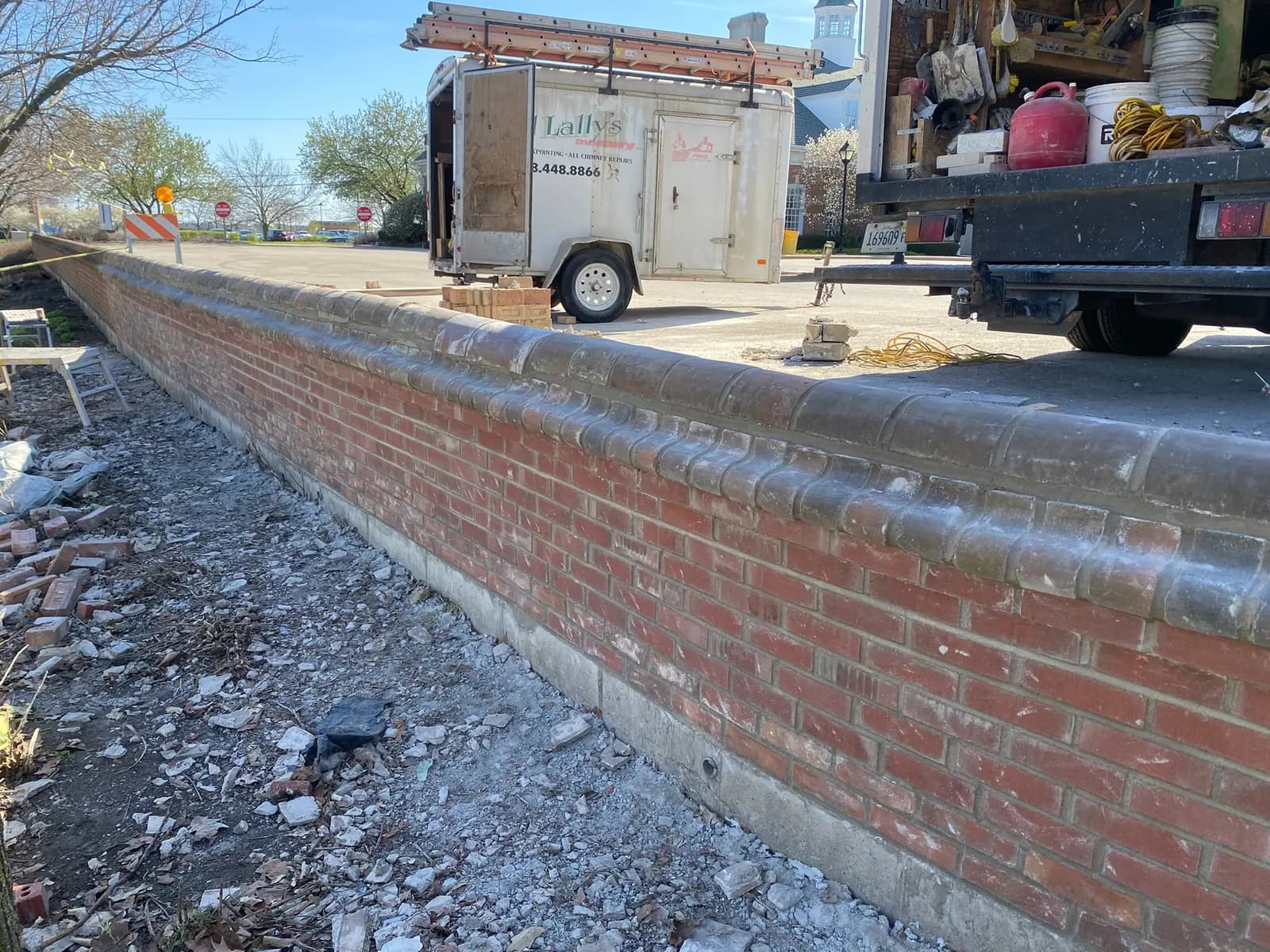
Brick Repair in St. Charles, IL
Brick repair in St. Charles, IL covers replacing spalled and cracked brick, repairing step cracks, correcting the water problem that caused the damage, and matching new masonry into the existing wall so the repair disappears. Emerald Masonry LLC does this work across Kane County — family-owned, licensed, bonded and insured, led by career masons with decades of hands-on Chicagoland experience and free on-site estimates. If your brick is flaking, cracking or coming loose, call (708) 288-1696.
St. Charles is a river town, and that shapes its masonry problems. The Fox River runs straight through the middle of the city, carrying humidity into the surrounding blocks, and the mature tree canopy over the older neighborhoods keeps shaded elevations damp for days after a storm. Wet masonry going into a Kane County freeze is exactly the condition that destroys brick.
The building stock spans nearly two centuries: 19th-century brick and locally quarried limestone downtown along Main Street and the riverfront, Victorians and early-1900s homes on both banks, mid-century brick ranches and Georgians, and modern brick veneer in the newer subdivisions west and north. Each of those needs a different repair approach.
What Brick Repair Actually Involves
There is an important distinction homeowners rarely get explained.
Mortar failure is repointing. Brick failure is replacement. Mortar is the sacrificial layer in a masonry wall — designed to be softer than the brick and to wear out first, because replacing mortar is cheap. When only the joints have gone, tuckpointing restores the wall.
But once water has been getting in long enough to saturate and freeze inside the brick units themselves, the faces spall — they flake, shell and pop off — and a spalled brick cannot be restored. It has to be cut out and replaced with a matched unit. Most real jobs in St. Charles involve both operations, plus fixing whatever was letting the water in.
Signs Your St. Charles Brick Needs Repair
- Spalling faces — brick flaking, shelling or crumbling, worst near grade, below sills, and on shaded north elevations.
- Cracked brick, especially cracks running through the units rather than the joints.
- Loose brick you can move by hand.
- Step cracks climbing diagonally through the mortar joints.
- Rust staining running down from above a window or door — a corroding steel lintel expanding inside the wall.
- Receded or sandy mortar joints that rake out under a screwdriver.
- Efflorescence, the white chalky bloom that proves water is moving through the wall.
- A bulge or bow in the wall plane — a structural condition needing evaluation, not a patch.
- Brick debris collecting at the base of the wall.
Why Brick Fails Here Specifically
Freeze-thaw is the engine. It is not extreme cold that destroys masonry but repeated crossings of the freezing point with water present — dozens of them per Kane County winter, plus more in the shoulder seasons. Each cycle expands trapped water roughly nine percent inside the brick.
The river raises the moisture load. Elevated humidity along the Fox corridor and shaded riverside lots mean masonry that stays wetter, longer, going into each of those cycles.
Age varies the vulnerability. Downtown's 19th-century soft brick absorbs far more water than modern face brick and needs soft lime mortar to match. Post-war brick is denser but its Portland-based mortar is now sixty to seventy years old. Modern veneer fails differently again, usually at ties, flashing and weep holes rather than in the units.
Water management is usually the real culprit. Overflowing gutters, downspouts discharging at the wall, grade sloping toward the house, failed sills and splash-back at grade concentrate water exactly where the damage shows up.
Our Brick Repair Process
- Free on-site assessment. We read the damage pattern, determine whether it is unit failure, joint failure, movement or steel corrosion, and find the water source.
- Fix the cause first. Repairing brick while leaving a failed sill, rusting lintel or overflowing gutter in place guarantees a repeat.
- Careful removal. Damaged units cut out without disturbing sound surrounding brick — the part where inexperienced crews cause more damage than they repair.
- Matching. Replacement brick selected for size, color, texture and absorption; mortar matched for hardness, color and sand.
- Setting and repointing. New units bedded properly and joints packed in lifts, then tooled to the original profile.
- Related repairs. Lintel repair, limestone and sill repair or foundation masonry repair where the assessment calls for it.
- Cleanup and protection. Gentle cleaning only — never sandblasting or high-pressure washing, both of which strip the fired face off brick and accelerate the next round of spalling.
Materials We Use
Salvaged and current-production brick matched to the wall, Type N and Type S mortars plus lime-modified mixes for older masonry, blended sands for color accuracy, stainless ties and anchors where veneer work requires them, and breathable masonry sealers only. On St. Charles's older downtown buildings we work with soft lime-based mortar, because a hard modern mix on 19th-century brick spalls the faces within a few winters.
What Drives Brick Repair Cost in St. Charles
- Number of units needing replacement, and whether the damage is localized or spread across an elevation.
- Match difficulty — an unusual color, size or a discontinued brick takes real sourcing effort.
- Height and access — ground level versus upper elevations needing staging or a lift.
- Underlying cause — a rusting lintel or failed sill adds scope beyond the brick itself.
- Wall type — solid multi-wythe masonry, brick veneer and historic soft brick each work differently.
- Extent of joint work accompanying the unit replacement.
We do not quote brick repair sight unseen. Free on-site estimate, written scope, honest recommendation on what actually needs doing now versus what can wait.
St. Charles Neighborhoods and Buildings We Serve
We work throughout 60174 and 60175 — the historic downtown district and the brick and limestone buildings along Main Street and the riverfront, the older residential streets on both the east and west banks, the neighborhoods near Pottawatomie Park and Baker Memorial, the mid-century subdivisions, and the newer construction toward Randall Road. We serve homeowners, property managers, HOAs, churches and insurance companies alike.
We also work in neighboring Geneva, Batavia, North Aurora and Aurora. St. Charles owners frequently pair brick work with foundation masonry repair.
Emerald Masonry LLC is a family-owned, licensed and insured masonry contractor serving Chicago and the Chicagoland suburbs led by career masons with decades of hands-on experience in tuckpointing, chimney repair, brick repair and replacement, lintel and parapet repair, foundation and limestone/sill repair, caulking, sealing, and commercial, residential and historic masonry restoration. Free on-site estimates — call (708) 288-1696.
What Waiting Costs
Spalling is progressive. Once a brick loses its fired face, the soft porous body underneath absorbs water far faster, so the unit deteriorates more quickly and starts wetting its neighbors. A dozen brick becomes fifty; fifty becomes a section rebuild. And because spalling means water is already inside the wall, the steel lintels and ties in there are corroding at the same time.
Get a Free Brick Repair Estimate in St. Charles
If your brick is flaking, cracking or loose, or step cracks have appeared, get it assessed before another freeze-thaw season adds to the count.
Call (708) 288-1696 or request your free estimate.
Ready to get started?
Free on-site estimates for commercial and large-scale projects.
Brick Repair in St. Charles, IL — Frequently Asked Questions
How much does brick repair cost in St. Charles, IL?
Cost depends on how many brick need replacing, how difficult the match is, the height and access, and whether the underlying cause — a failed sill, rusting lintel or open joints — also needs correcting. Replacing a dozen spalled brick at grade is very different from an upper-elevation section. Emerald Masonry gives free on-site estimates with a written scope.
Do I need brick repair or brick replacement?
If the brick faces are flaking, popping or crumbling away, those individual units need replacing — a spalled brick cannot be repaired back to sound. If the brick is intact and only the mortar has failed, repointing is the repair. Most St. Charles jobs are a mix of both, which is why an in-person look matters more than a phone quote.
Why is the brick on my St. Charles home spalling?
Water and freeze-thaw. Brick absorbs water through open mortar joints, failed sills or splash at grade, and when that water freezes inside the unit it expands and breaks the face off in layers. Being on the Fox River makes it worse — higher humidity and shaded riverside lots keep masonry damp longer between freezes.
Can you match the brick on an older St. Charles building?
Usually yes. We match by size, color, texture and absorption, sourcing salvaged units for older buildings and current production brick where a modern match exists. On a historic wall the mortar match matters just as much as the brick — a hard modern mix on soft old brick will spall the neighbors of whatever we replace.
What do step cracks in my brick wall mean?
A stair-step crack following the mortar joints usually signals movement — seasonal soil movement, a settling foundation, or a rusting lintel lifting the masonry above an opening. The crack itself is a symptom, so the repair starts with identifying what moved. Patching the crack without addressing the cause simply reopens it.
Do you repair brick on commercial and historic downtown buildings?
Yes. We work on homes, commercial and mixed-use buildings, churches and institutional properties throughout St. Charles, including the 19th-century brick and limestone buildings in the downtown district along the Fox River. Emerald Masonry is licensed, bonded and insured, and we provide the documentation property managers and boards require.
Brick Repair in Nearby Areas
Other Masonry Services in St. Charles, IL
Learn more about our brick repair services across Chicagoland, or view all service areas.