
Brick Replacement · Villa Park, IL
Brick Replacement in Villa Park, IL — Cutting Out Failed Units Without Wrecking the Neighbors
The hardest part of replacing brick is not setting the new unit — it is getting the old one out without damaging the four around it. A rushed removal turns a twelve-brick job into a twenty-brick job, and you pay for the difference.
Quick Answer
Emerald Masonry LLC provides brick replacement in Villa Park, IL — cutting out spalled, cracked and failed brick units without disturbing sound surrounding masonry, and replacing them with brick matched for size, color, texture and absorption. Family-owned, licensed and insured, career masons with decades of Chicagoland experience, free estimates. Call (708) 288-1696.
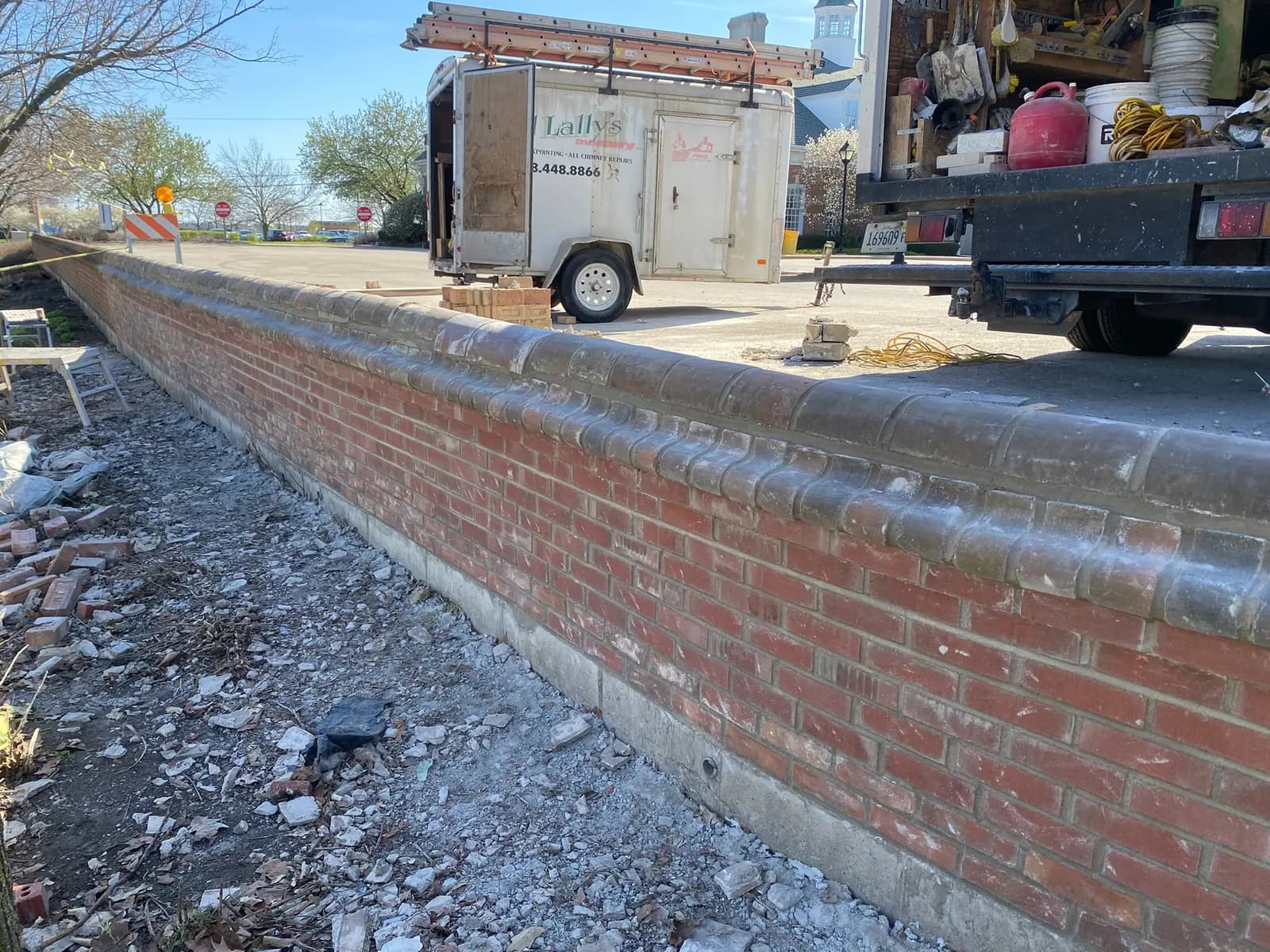
Brick Replacement in Villa Park, IL
Brick replacement in Villa Park, IL means cutting out spalled, cracked or failed units and setting matched brick in their place — without damaging the sound masonry around them. Emerald Masonry LLC does this work across DuPage County. Family-owned, licensed, bonded and insured, career masons with decades of Chicagoland experience, free on-site estimates. Call (708) 288-1696.
Homeowners assume the skill in this job is setting the new brick. It is not — any competent mason can lay a unit.
The skill is getting the old one out.
Why Removal Is the Hard Part
A brick sits in a wall surrounded by four to six neighbors, all bonded to it by mortar. Getting it out means separating it from all of them without transferring force into any of them.
Done correctly, the mortar joints around the failed unit are cut and cleared first, so the brick is freed rather than fought. It then comes out cleanly and its neighbors are untouched — same faces, same crisp edges, same bond.
Done in a hurry, somebody attacks the brick with a hammer and chisel. The unit fractures, force travels into the surrounding masonry, and you end up with chipped arrises on three adjacent bricks and a cracked fourth — none of which needed replacing when the crew arrived.
That is how a twelve-brick job becomes a twenty-brick job, and the homeowner pays for the difference without ever being told why.
It is also why a fast quote on brick replacement is worth a second look. Removal time is where the corners get cut, and the damage is invisible until it is done.
Spalling vs. Joint Failure
The distinction that determines the whole scope.
Mortar failure is repointing. Brick failure is replacement.
Mortar is the sacrificial layer in a masonry wall — deliberately softer than the brick so it absorbs stress and wears out first. When only the joints have gone, tuckpointing restores the wall and the units are untouched.
Once water has been entering long enough to saturate the brick itself, freezing inside it breaks the face off in layers. That is spalling, and the fired outer skin that made the brick weather-resistant does not grow back. Those units get cut out.
Most Villa Park jobs are a mix, plus fixing whatever let the water in.
Matching: Four Things, Not Two
| What must match | Why it matters | |---|---| | Size | Dimensions varied by era and manufacturer; off-size throws the coursing | | Color and texture | The visible match | | Absorption | How much water the unit takes on relative to its neighbors | | Hardness | How it behaves under freeze-thaw beside the original units |
Get size and color right and absorption and hardness wrong, and the repair looks perfect on day one, then behaves differently through every wet-freeze cycle.
Villa Park is comparatively favorable here. Much of the village is post-war — 1940s through 1960s brick ranches, Cape Cods, Georgians and bungalows — and that era's brick is often still matchable from current production. Where a color has been discontinued, we source salvage or blend two or three close units across the repair area, which reads as natural variation rather than as a patch.
Signs You Need Brick Replacement
- Spalling faces — flaking, shelling, popping or crumbling.
- Cracked brick, particularly cracks running through the unit rather than following joints.
- Loose brick that moves under hand pressure.
- Deep pitting where units have lost real depth.
- Rust staining below a window or garage opening — a corroding steel lintel needing attention alongside the brick.
- A patch of damage under a gutter run, below a sill, or at splash height near grade.
- Brick debris collecting at the base of the wall.
- Efflorescence on the surrounding wall, showing water is moving through.
Our Process
- Free on-site assessment. We count the failed units, take a sample for matching, and find where water is entering.
- Fix the cause first. Replacing brick while a rusting lintel, failed sill or overflowing gutter keeps running guarantees a repeat.
- Source the match. Current production where one exists, salvage or a blend where it does not. Options shown before we proceed.
- Cut the joints, not the brick. The mortar around each unit is cut to free it, protecting the surrounding masonry and its edges.
- Set the new units, properly bedded and aligned to the existing coursing.
- Repoint with mortar matched for hardness, color and sand — Type N for most post-war walls, Type S where conditions warrant.
- Tool the joints to the original profile.
- Distribute any variation across the area rather than clustering it, and clean down gently. Never sandblasting or high-pressure washing.
Materials We Use
Current-production and salvaged brick matched for size, color, texture and absorption; Type N and Type S mortars; blended sands for accurate color; stainless ties and anchors where veneer work requires them; new steel angle lintels where corrosion is part of the scope; and breathable masonry sealers only. Related work: brick repair, lintel repair, limestone and sill repair and masonry sealing.
What Drives Cost
- Number of units, and whether the damage is localized or spread.
- Removal difficulty — tight bond, hard mortar, or units in a decorative course.
- Match difficulty — a discontinued color adds sourcing time as much as cost.
- Height and access — ground level versus staging or a lift.
- Underlying cause — a rusting lintel or failed sill adds scope beyond the brick.
- Extent of accompanying joint work.
We do not quote brick replacement sight unseen — the match and the removal conditions are most of the job, and neither can be assessed from a description.
Serving Villa Park and DuPage County
Villa Park sits in DuPage County with no lake moderation, taking the full regional freeze-thaw swing — dozens of crossings of the freezing point each winter, each a load cycle on saturated masonry. The village's housing runs largely post-war, with older stock near the original village center and the Illinois Prairie Path corridor along the former rail line, plus the historic Ovaltine complex area.
Mature tree canopy over the older streets keeps shaded elevations damp long after storms, and heavy leaf load overwhelms gutters — the most common water source behind local spalling.
We work throughout 60181, and also serve neighboring Lombard, Elmhurst, Addison and Glen Ellyn. Villa Park owners frequently pair replacement with chimney repair.
Emerald Masonry LLC is a family-owned, licensed and insured masonry contractor serving Chicago and the Chicagoland suburbs led by career masons with decades of hands-on experience in tuckpointing, chimney repair, brick repair and replacement, lintel and parapet repair, foundation and limestone/sill repair, caulking, sealing, and commercial, residential and historic masonry restoration. Free on-site estimates — call (708) 288-1696.
What Waiting Costs
Spalling is progressive. Once a brick loses its fired face, the porous body underneath absorbs water far faster, so that unit deteriorates more quickly and starts wetting its neighbors. A dozen brick becomes fifty. And because spalling means water is already inside the wall, the steel lintels and ties in there are corroding on the same timeline.
There is a sourcing argument too: the longer you wait, the more units you need, and the harder it becomes to find enough matching material for a larger repair.
Get a Free Brick Replacement Estimate in Villa Park
If units are flaking, cracked or loose, bring us out while the count is still small — and while your neighbors' bricks are still sound.
Call (708) 288-1696 or request your free estimate.
Ready to get started?
Free on-site estimates for commercial and large-scale projects.
Brick Replacement in Villa Park, IL — Frequently Asked Questions
How much does brick replacement cost in Villa Park, IL?
It depends on how many units are involved, how difficult the match is, the height and access, and whether the water source that caused the damage also needs correcting. Replacing a dozen units at grade is a different job from an upper-elevation section needing staging. Emerald Masonry gives free on-site estimates with a written scope.
Can a spalled brick be repaired instead of replaced?
No — once the fired face has flaked or popped off, that unit cannot be restored to sound. The hard outer skin is what made it weather-resistant, and it does not grow back. Spalled units get cut out and replaced; sound units with failed joints get repointed instead.
Why does removing one brick sometimes damage others?
Because inexperienced crews attack the brick instead of the mortar around it. The correct method cuts the joints to free the unit so it lifts out, leaving the neighboring bricks and their edges intact. Rushing that step is how a twelve-brick job becomes a twenty-brick job.
Will the new brick match my 1950s house?
Usually closely. Post-war brick is often still matchable from current production, and where a color has been discontinued we source salvage or blend two or three close units across the area. We show you options before setting anything.
How long before the repair blends in?
Fresh mortar cures lighter than its final color and keeps changing for weeks to months, so give a repair a full season before judging it. What will not change with time is a size, texture or coursing mismatch — those are decisions made at the outset.
Do I need to fix anything else at the same time?
Usually yes, and it is the more important half. Brick spalls because water got into it, so the sill, gutter, joint or lintel that let the water in gets corrected as part of the job. Replacing units while the water keeps arriving means paying for those bricks twice.
Brick Replacement in Nearby Areas
Other Masonry Services in Villa Park, IL
Learn more about our brick replacement services across Chicagoland, or view all service areas.