
Caulking & Joint Sealant · Park Ridge, IL
Caulking & Joint Sealant in Park Ridge, IL — Where Sealant Belongs, and Where It's a Cover-Up
Sealant is the right answer for perimeters, control joints and material transitions. It is the wrong answer for a failing mortar joint — and a bead of caulk smeared into brickwork is one of the most common cover-ups we find on Park Ridge homes.
Quick Answer
Emerald Masonry LLC provides caulking and joint sealant work in Park Ridge, IL — window and door perimeters, control and expansion joints, and transitions between masonry and other materials, installed with proper backer rod and an hourglass profile. Family-owned, licensed and insured, career masons with decades of Chicagoland experience, free estimates. Call (708) 288-1696.
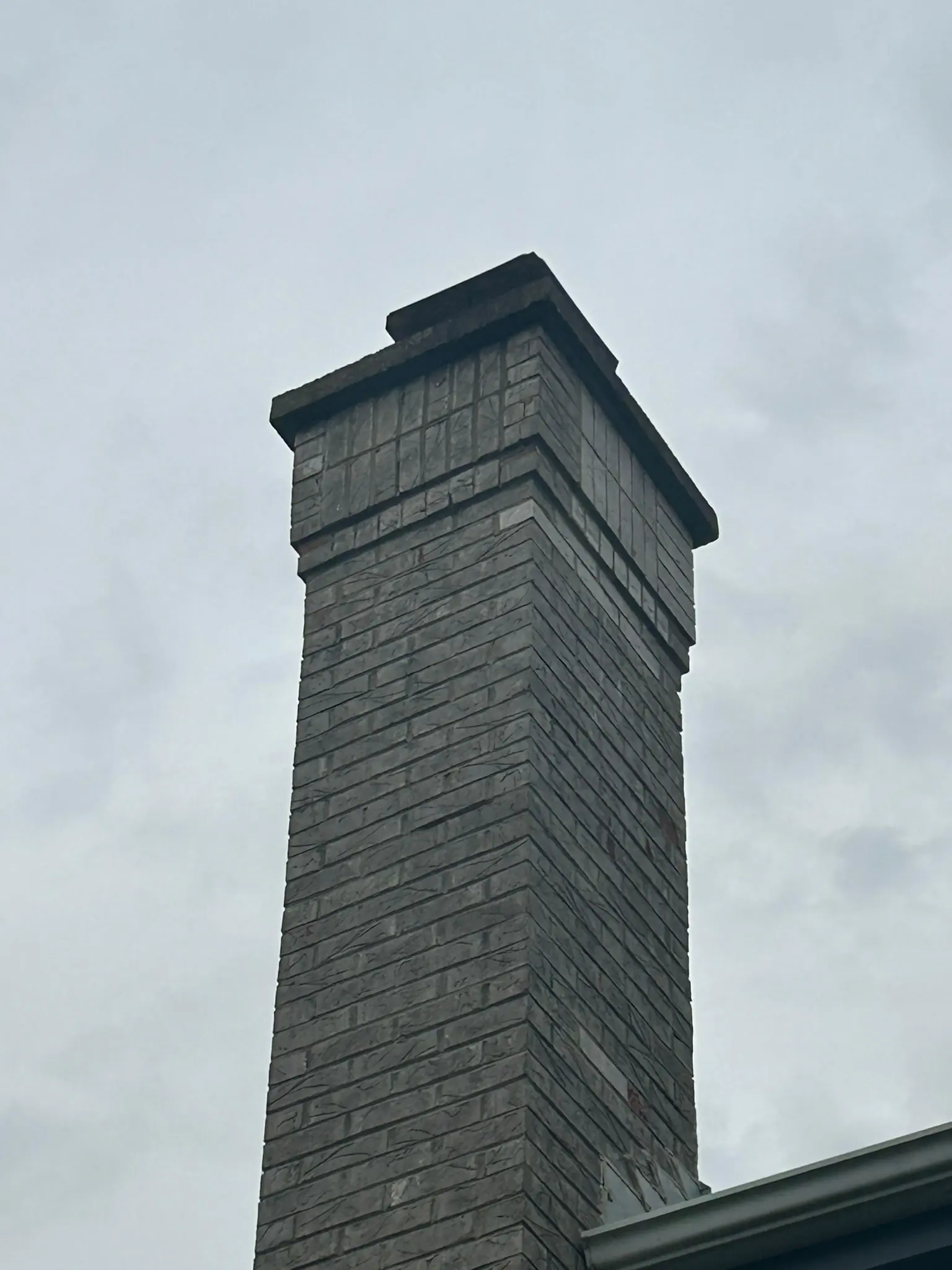
Caulking & Joint Sealant in Park Ridge, IL
Caulking in Park Ridge, IL means sealing the joints in your exterior that are designed to move — window and door perimeters, control and expansion joints, and the transitions where masonry meets a different material. Emerald Masonry LLC does this work throughout the northwest Cook County suburbs led by career masons with decades of hands-on Chicagoland experience. Family-owned, licensed, bonded and insured, free on-site estimates. Call (708) 288-1696.
The important thing about sealant is knowing what it is not.
Sealant is not mortar. A mortar joint holds masonry units together and is not supposed to move. A sealant joint exists precisely because two things will move relative to each other — differently, seasonally, forever. Those are opposite jobs, and swapping one for the other is the single most common masonry cover-up we find on Park Ridge homes: a bead of caulk troweled into deteriorating brickwork so it looks repaired.
It is not repaired. It is sealed shut, with the water still inside.
Where Sealant Genuinely Belongs
- Window and door perimeters — the gap between the frame and the masonry opening.
- Control and expansion joints — deliberate vertical gaps in a masonry wall that let it expand and contract without cracking.
- Material transitions — masonry to wood trim, masonry to siding, masonry to metal.
- Around penetrations — hose bibs, electrical, gas lines, dryer and exhaust vents, light fixtures.
- Coping and cap joints, where a stone or metal cap meets what is under it.
- At the top of a sill where it meets the window unit — but not underneath it, where the water needs to get out.
Where Sealant Is the Wrong Answer
- In a mortar joint. That is a tuckpointing repair.
- Over a crack in a brick or stone unit. That is a unit repair or replacement.
- Across weep holes. Those are drainage, not gaps.
- Under a sill's drip edge, where it blocks the drainage path.
- Over an active leak whose source has not been found — sealing the exit does not stop the entry.
Why Most Sealant Fails Early
Sealant failure is usually installation, not product. Four causes account for nearly all of it.
No backer rod
This is the big one. Backer rod is the foam that goes in behind the sealant, and it does two things: it sets the depth, and it prevents the sealant from bonding to the back of the joint. A bead bonded on three sides cannot stretch — it tears the first time the joint moves.
A correct sealant joint is bonded on two faces only, and is thinner in the middle than at the edges — the hourglass profile. That shape is what lets it stretch.
Wrong depth-to-width ratio
Too deep and it cannot flex. Too shallow and it has no material to work with. Backer rod is what sets this correctly.
Caulking over old caulk
The new bead is only as good as what it is stuck to. Old sealant has to come out.
A dirty or damp joint
Dust, chalked masonry, or moisture in the joint all prevent adhesion, and the bead releases in sheets a season later.
Signs Your Park Ridge Home Needs Sealant Work
- Sealant that is cracked, split down the middle, or pulled away from one face.
- Beads that have gone hard, chalky or brittle and no longer compress.
- Gaps you can see daylight or a draft through at a window perimeter.
- Water staining on interior sills, or drafts at the perimeter of windows in winter.
- Open vertical control joints in the field of a brick wall.
- Sealant smeared across brick faces or into mortar joints — a prior cover-up.
- Failed sealant around vents, hose bibs and other penetrations.
Our Process
- Assess the joint — determine whether it is genuinely a sealant joint, and what failed.
- Full removal of old sealant; no beading over.
- Clean and prepare the substrate so the new sealant can bond.
- Backer rod sized to the joint, installed to the correct depth.
- Prime where the substrate requires it.
- Install the sealant in a continuous bead, no voids.
- Tool it to the hourglass profile — this is what makes it durable, not just neat.
- Verify the water path afterward, so we have not sealed drainage shut.
Materials We Use
Polyurethane and hybrid sealants for masonry joints, where movement capability and adhesion to porous substrates matter. Silicone where the substrate calls for it — glass and metal transitions. Closed-cell and open-cell backer rod sized to the joint, bond breaker tape where a joint is too shallow for rod, and substrate-appropriate primers. Colors are selected to the masonry, not to the trim by default. Related work: tuckpointing, masonry sealing, limestone and sill repair and brick repair.
What Drives Cost
- Linear footage and the number of openings.
- Joint size — wider and deeper joints use more material and larger rod.
- Removal effort — old, hard, over-layered sealant is slow to get out.
- Access and height — ground level versus ladder versus lift.
- Substrate prep — chalked or previously painted masonry needs more work.
- Color matching and whether multiple colors are needed on one elevation.
- Whether it is combined with other masonry work on the same mobilization, which lowers the per-foot cost.
Working in Park Ridge and the Northwest Suburbs
Park Ridge's housing stock is heavy on 1920s–1950s brick colonials, Georgians and Tudors, with post-war ranches and split-levels filling in and newer construction replacing teardowns — plus the brick commercial buildings of the Uptown district. That mix means a lot of masonry openings, a lot of material transitions, and a lot of homes where windows have been replaced at some point over the last few decades. Every replacement window is a new perimeter sealant joint, and those joints are now old enough on many Park Ridge homes to be at the end of their service life all at once.
Exposure here is standard hard Chicagoland: dozens of freeze-thaw crossings each winter, and joints on the south and west elevations taking UV and thermal cycling that ages sealant faster than the shaded sides. It is normal for one elevation to need renewal years before another.
We serve 60068 and the surrounding northwest and near-west communities. Park Ridge owners frequently pair sealant renewal with tuckpointing or lintel repair so the whole water path gets addressed on one visit rather than in pieces.
Emerald Masonry LLC is a family-owned, licensed and insured masonry contractor serving Chicago and the Chicagoland suburbs led by career masons with decades of hands-on experience in tuckpointing, chimney repair, brick repair and replacement, lintel and parapet repair, foundation and limestone/sill repair, caulking, sealing, and commercial, residential and historic masonry restoration. Free on-site estimates — call (708) 288-1696.
Request a Free Caulking Estimate in Park Ridge
If your window perimeters are split, your control joints are open, or somebody caulked your mortar joints instead of repointing them, have it looked at properly.
Call (708) 288-1696 or request your free estimate.
Ready to get started?
Free on-site estimates for commercial and large-scale projects.
Caulking & Joint Sealant in Park Ridge, IL — Frequently Asked Questions
What is the difference between caulking and tuckpointing?
Caulking seals a joint that is designed to move — a window perimeter, a control joint, or a transition between two materials. Tuckpointing replaces the mortar between masonry units, which is not supposed to move. Using sealant in place of mortar traps water in the wall and hides the deterioration instead of repairing it.
How much does caulking cost in Park Ridge, IL?
It is priced by linear footage, joint size, how much old sealant has to be removed, and access height. Redoing thirty window perimeters on a two-story home is a very different scope from a handful of control joints at grade. Emerald Masonry measures and itemizes it in a free written estimate.
How long should exterior caulking last?
A quality sealant installed correctly — clean joint, proper backer rod, right depth-to-width ratio — generally lasts many years on a residential exterior. Sealant installed over old caulk, without backer rod, or in a joint that was never cleaned tends to fail within a few seasons regardless of the product.
Why does my caulk keep splitting even though it's new?
Almost always because there is no backer rod, so the sealant bonds to the back of the joint as well as the two sides. A three-sided bond cannot stretch, so it tears the first time the joint moves. Correctly installed sealant bonds to two faces only and is thinner in the middle than at the edges.
Can caulk fix a leak around my windows?
Sometimes, and sometimes it just relocates it. If the perimeter joint has genuinely failed, resealing it solves the problem. If water is entering through failed mortar, a cracked sill, or above the window entirely, sealing the perimeter can trap that water inside the wall and make things worse.
Do you do caulking on its own, or only with other masonry work?
Both. Sealant renewal is a legitimate standalone project and a sensible one to schedule after tuckpointing or window work. We will also tell you when a bead of caulk is not the actual repair your wall needs.
Caulking & Joint Sealant in Nearby Areas
Learn more about our caulking & joint sealant services across Chicagoland, or view all service areas.