
Caulking & Joint Sealant · Burr Ridge, IL
Caulking and Joint Sealant in Burr Ridge, IL — Office and Corporate Envelopes
Burr Ridge's office and corporate buildings sit along the I-55 and County Line corridors in precast, EIFS and veneer construction — assemblies where the sealed joints, not the walls, are the weather barrier. Emerald Masonry LLC replaces failed sealant before the water reaches the steel.
Quick Answer
Emerald Masonry LLC provides caulking and joint sealant services in Burr Ridge, IL — replacing failed sealant at expansion joints, precast and panel joints, window and door perimeters, and control joints on commercial and residential buildings. Family-owned, licensed and insured, career masons with decades of Chicagoland experience, free estimates. Call (708) 288-1696.
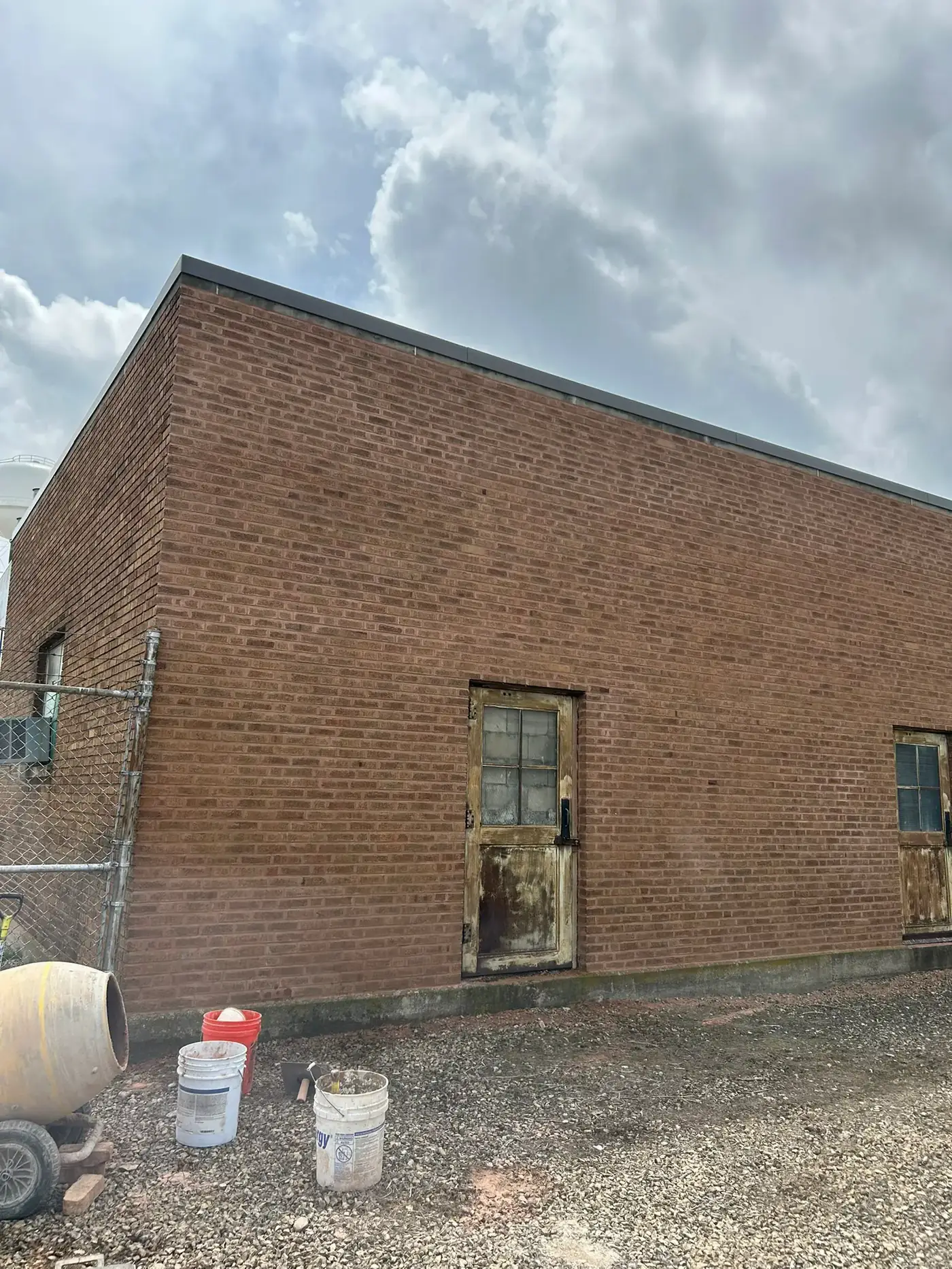
Caulking and Joint Sealant in Burr Ridge, IL
Caulking and joint sealant work in Burr Ridge, IL is the replacement of the flexible sealant in a building's moving joints — expansion joints, control joints, precast and panel joints, and window and door perimeters. On Burr Ridge's commercial stock, those joints are the weather barrier. Emerald Masonry LLC removes failed sealant, prepares the joint properly, and installs sealant that will move with the building. Family-owned, licensed, bonded and insured, career masons with decades of Chicagoland experience, free on-site estimates. Call (708) 288-1696.
Burr Ridge is a small village with an outsized commercial envelope. The corporate office parks along County Line Road, Frontage Road and the I-55 corridor, the medical and professional buildings, the retail at Burr Ridge Village Center, and the hotels and institutional properties represent a concentration of precast concrete panel, EIFS, curtain wall and brick veneer construction from the 1980s through the 2000s.
Those assemblies do not shed water the way a solid masonry wall does. They rely on sealed joints — and sealant does not last as long as the building.
Caulking Is Not Tuckpointing
This gets conflated constantly, and the confusion causes real damage.
| | Tuckpointing / repointing | Caulking / joint sealant | |---|---|---| | Material | Cementitious mortar — rigid | Elastomeric sealant — flexible | | Fills | Bed and head joints between masonry units | Joints designed to move | | Purpose | Structural bond and weather seal | Accommodate movement, seal water | | Fails as | Erosion, recession, cracking | Adhesion loss, splitting, hardening | | Service life | Decades when correctly matched | A wear item — considerably shorter |
Rigid mortar in a joint designed to move cracks on the first thermal cycle. Sealant where mortar belongs provides no structural bond. A building needs both, in the right places.
Where the Joints Are on a Burr Ridge Commercial Building
- Precast concrete panel joints — the grid of vertical and horizontal joints between panels, the primary weather barrier on these buildings.
- Expansion and control joints designed to let the structure move.
- Window, storefront and curtain wall perimeters.
- EIFS joints and terminations — where the synthetic stucco skin meets openings, penetrations and other materials. EIFS has very little ability to dry outward, so failed sealant here accumulates water in the sheathing behind it.
- Door perimeters and louvers.
- Coping and parapet joints at the roof edge.
- Material transitions — brick to precast, panel to EIFS, masonry to metal.
- At-grade joints where wall meets slab or sidewalk.
How Sealant Fails, and What Each Mode Means
- Adhesion failure — the bead has pulled cleanly away from one joint face. Points to preparation: contaminated substrate, missing primer, or caulking applied over old material.
- Cohesive failure — the bead has split down its own middle. The product was over-stretched for the joint.
- Hardening and crazing — lost elasticity, usually age and UV.
- Chalking — powdery UV-degraded surface.
- Bubbling, sagging or wrinkling — installation problems.
- Missing sections outright.
- Staining below a joint — water running the wall.
- Interior water staining on upper floors with a sound roof — the classic symptom.
South and west elevations reliably fail first, because they take the most sun and the widest daily temperature swings.
Why Preparation Matters More Than Product
The failure mode we see most often is not old sealant. It is new sealant installed badly.
Backer rod is the item that decides it. A sealant bead has to be bonded to exactly two surfaces — the opposing joint faces — and free to deform in the middle. Backer rod sets the depth and creates the hourglass profile that lets the bead stretch.
Leave it out and the sealant bonds to three sides, including the back of the joint. A three-sided bead cannot deform, and the first cold snap that opens the joint tears it.
The other decisive step is complete removal of the old sealant. Applying new over failed is the most common shortcut in this trade and it fails again quickly, because the new bead is anchored to a layer that is already letting go.
Our Process
- Free on-site assessment. Joint condition, width and movement, substrate type, prior repairs, and where water is actually entering.
- Full removal of old sealant — cut out, not caulked over.
- Substrate preparation — joint faces cleaned to sound, clean material.
- Repair the substrate where needed. Spalled precast edges and damaged joint arrises get addressed before sealing.
- Install correct backer rod — right type, right diameter, right depth. Bond breaker tape where the joint is too shallow.
- Prime where the product data sheet requires it for that substrate.
- Gun the sealant with enough pressure to fully wet both joint faces, without voids.
- Tool the bead to shape the profile and force contact with both faces.
- Cure and inspect, with completed elevations documented.
Materials We Use
High-performance polyurethane, silicone and hybrid MS polymer sealants selected per joint for movement capability, substrate compatibility, UV resistance and paintability; closed-cell and open-cell backer rod; bond breaker tape; and substrate-specific primers. Related work: masonry sealing, tuckpointing, parapet wall repair and commercial masonry restoration.
What Drives Cost in Burr Ridge
- Linear footage, by joint type.
- Height and access — ground level versus boom lift, swing stage or scaffold on a multi-story office building. Frequently the largest single component.
- Removal difficulty — cured silicone and some urethanes are labor-intensive to cut out cleanly.
- Joint size and condition — irregular, oversized or damaged joints need repair first.
- Substrate repairs required before sealing.
- Product selection — high-movement and specialty sealants cost more.
- Occupancy and scheduling around tenants and business hours.
- Documentation — elevation records for property managers and ownership.
We assess in person and provide a written scope with photographs, in the format property managers and ownership need for budgeting — plus the certificate of insurance commercial properties require.
Serving Burr Ridge and DuPage County
Burr Ridge takes the full DuPage climate load: no lake moderation, dozens of freeze-thaw crossings each winter, and wide daily temperature swings that work every joint in the building. Joint movement here is substantial — a joint comfortably closed in August is measurably open in February, and the sealant absorbs that difference thousands of times over its life. Large uninterrupted elevations typical of office construction take full UV load on their south and west faces.
We work throughout 60527 — the office and corporate parks along County Line and the I-55 corridor, the medical and professional buildings, the retail and hospitality properties, HOA and condominium buildings, and the village's residential neighborhoods. We also serve neighboring Hinsdale, Willowbrook, Darien and Oak Brook. Burr Ridge owners frequently pair sealant work with chimney repair or waterproofing.
Emerald Masonry LLC is a family-owned, licensed and insured masonry contractor serving Chicago and the Chicagoland suburbs led by career masons with decades of hands-on experience in tuckpointing, chimney repair, brick repair and replacement, lintel and parapet repair, foundation and limestone/sill repair, caulking, sealing, and commercial, residential and historic masonry restoration. Free on-site estimates — call (708) 288-1696.
Why Deferred Sealant Gets Expensive
Sealant is inexpensive relative to nearly everything it protects. Once joints open, water enters the wall assembly and goes after what actually costs money: corroding embedded steel, anchors and shelf angles, saturated insulation, deteriorating panel edges, interior finishes and tenant space. On precast construction, water reaching the anchorage is a structural conversation rather than a maintenance one.
Replacing sealant on a cycle is one of the highest-return maintenance items on a commercial building. Replacing it after the leaks start means paying for the sealant plus everything the water reached.
Request a Free Caulking Assessment in Burr Ridge
If your joints are split, pulling away, hardened or missing — or your building is taking water with a sound roof — get the envelope looked at.
Call (708) 288-1696 or request a free estimate.
Ready to get started?
Free on-site estimates for commercial and large-scale projects.
Caulking & Joint Sealant in Burr Ridge, IL — Frequently Asked Questions
How often does commercial caulking need replacing?
Sealant is a wear item with a service life far shorter than the building, and exterior joints generally need replacing well before anything else on the facade does. Sun exposure and joint movement drive it, so south and west elevations fail first. Inspecting on a defined cycle beats waiting for interior leaks.
How much does commercial caulking cost in Burr Ridge, IL?
Cost is driven by linear footage, joint width and depth, height and access, and how difficult the old sealant is to cut out. On a multi-story office building, access — lift or swing stage — is frequently the largest single line item. Emerald Masonry assesses in person and provides a free written scope.
Is caulking the same as tuckpointing?
No, and they are not interchangeable. Tuckpointing replaces rigid cementitious mortar in joints between masonry units; caulking installs flexible elastomeric sealant in joints designed to move — expansion joints, control joints, and perimeters where two materials meet. Rigid mortar in a moving joint cracks on the first thermal cycle.
Our building leaks but the roof is sound — where is it coming from?
Very often failed perimeter or panel sealant. On precast, EIFS and veneer construction the sealed joints are the weather barrier, so once sealant loses adhesion water enters the wall assembly and appears inside well away from the entry point. It is one of the most commonly misdiagnosed commercial leaks.
Can the work be done while our building stays occupied?
Yes — this is routine on occupied commercial buildings. Access is arranged by lift or swing stage, noisy or access-blocking work is scheduled around business hours, and walkways and entrances are protected. Emerald Masonry coordinates phasing with the property manager before mobilizing.
What sealant is used on precast and EIFS joints?
The product is selected per joint — high-performance polyurethane, silicone or hybrid MS polymer, chosen for movement capability, substrate compatibility and paintability. Correct backer rod and joint geometry matter as much as the product, because backer rod is what creates the profile that lets the bead actually stretch.
Caulking & Joint Sealant in Nearby Areas
Other Masonry Services in Burr Ridge, IL
Learn more about our caulking & joint sealant services across Chicagoland, or view all service areas.