
Church & Institutional Masonry Restoration · Palos Heights, IL
Church Masonry Restoration in Palos Heights, IL — Mid-Century Brick, Bell Towers and Capital Campaigns
Most Palos Heights churches are mid-century buildings: tall, plain brick walls, a freestanding bell tower and big window walls. They fail in different places from a 1900s parish — and a capital campaign needs a scope it can fund in pieces.
Quick Answer
Emerald Masonry LLC provides church masonry restoration in Palos Heights, IL — tuckpointing, bell tower and campanile repair, expansion-joint and crack repair on long brick walls, masonry around stained-glass and window walls, and limestone trim, phased to match capital campaign funding. Based in Palos Heights; licensed, bonded and insured. Call (708) 288-1696.
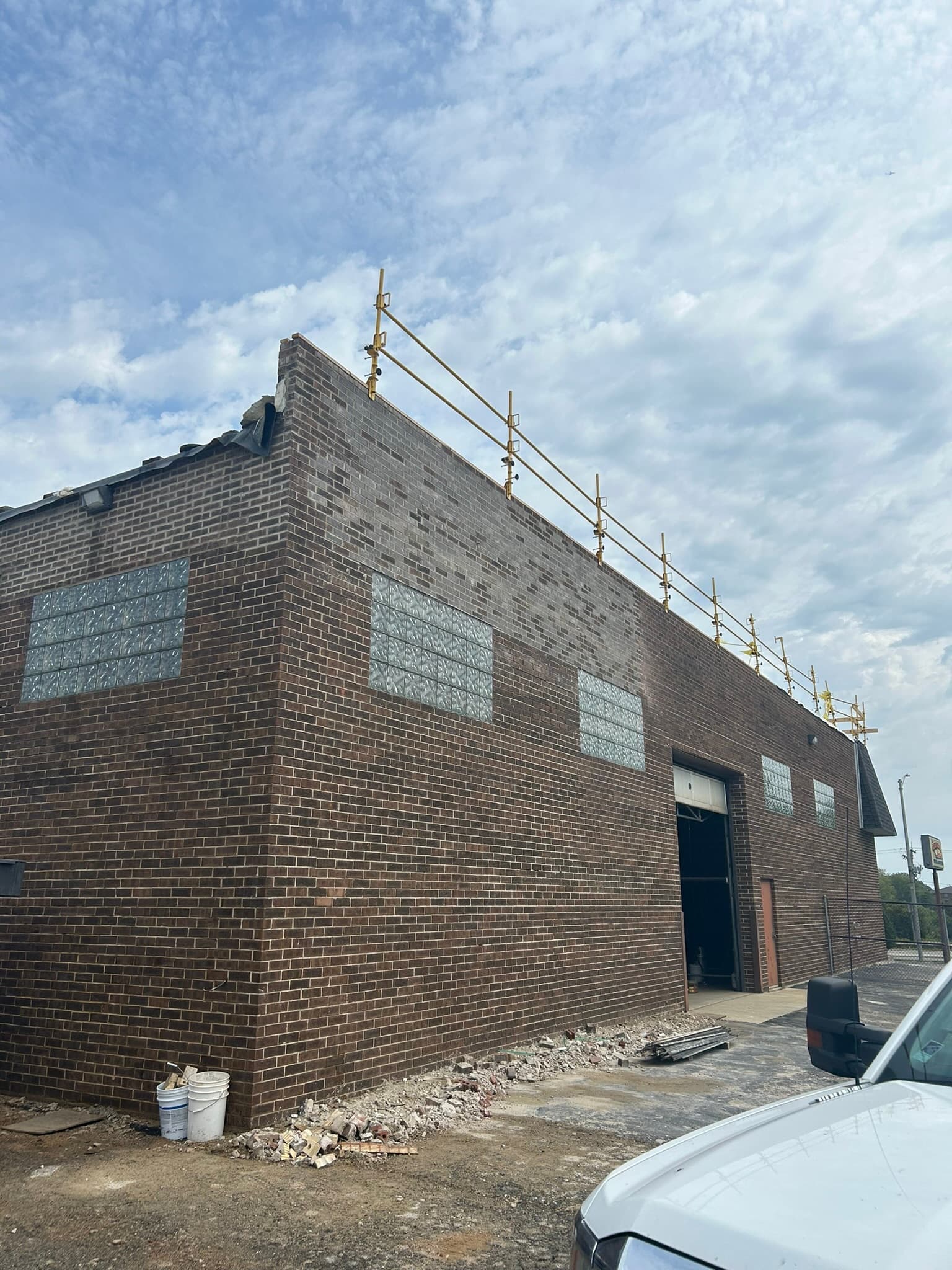
Church Masonry Restoration in Palos Heights, IL
Emerald Masonry LLC provides church masonry restoration in Palos Heights, IL — tuckpointing, bell tower and campanile repair, crack and expansion-joint repair on long brick walls, masonry around stained-glass and window walls, and limestone trim and coping work on churches, parish halls and schools. We are based in Palos Heights, at 7156 W. 126th St., and we phase every scope to match how a parish actually raises money. Call (708) 288-1696.
Palos Heights is our home town, and its church buildings are distinctive. Most of the congregations along Harlem Avenue, 127th Street and the residential streets around them built in the 1950s through the 1970s, when the town itself grew up. That means mid-century church architecture: tall, plain brick walls, a slender freestanding bell tower or campanile, large window walls of stained or faceted glass, and limestone or precast trim used sparingly.
A mid-century church does not fail like a 1900s parish. Its mortar is harder, its walls are longer and its tower is more slender — so the cracking, the leaks and the falling-hazard risk all show up in different places.
What church masonry restoration in Palos Heights involves
On a mid-century campus, the work usually falls into five areas:
| Area | Typical construction | What fails | |---|---|---| | Long nave walls | Tall brick walls, often with few movement joints | Vertical cracks near corners and window walls, bowed sections | | Bell tower or campanile | Slender brick shaft, steel inside, stone or precast cap | Open cap joints, rust jacking at steel, loose brick at the top | | Window walls | Stained or faceted glass set in masonry openings | Failed sealant, rusting steel frames and lintels, cracked jambs | | Trim and roof edges | Limestone or precast coping, sills and bands | Open joints, spalled edges, water feeding walls below | | Parish hall and school | Later additions in different brick | Cold joints at additions, parapet leaks, worn entrances |
Long walls with nowhere to move
Brick expands permanently as it absorbs moisture and moves with every temperature swing. Many churches from this era were built with long, uninterrupted brick walls and too few expansion joints. The wall relieves the stress itself — with long vertical cracks near corners, at the junction of nave and tower, and beside large window openings. Repair means cutting in properly sized movement joints and sealing them, not just filling the cracks with mortar so they reopen next winter.
The bell tower
A freestanding tower is the tallest and most exposed masonry on campus, wet on all four faces and topped by a single cap. Many have embedded steel that rusts and expands once water gets in. Because towers are rarely inspected up close, they are where a church is most likely to have a falling-masonry hazard without knowing it. We inspect from a lift or scaffold, not binoculars.
Glass and window walls
The large art-glass walls that define mid-century churches sit in masonry openings held up by steel lintels and frames. When the sealant fails and the steel rusts, the brick above cracks and the glass panels take on stress and water. We repair the masonry, replace failed lintels and reseal the perimeter, and coordinate with a stained-glass studio where the glass itself needs work.
Signs your church needs masonry restoration
- Long vertical cracks in nave walls, especially near corners or windows.
- Rust staining below the tower cap, window frames or lintels.
- Loose or displaced brick near the top of the bell tower.
- Open joints or tipped coping on limestone or precast trim.
- Water stains inside on walls beside window walls.
- White efflorescence on walls under roof edges and downspouts.
- Cracks where the parish hall or school meets the church.
Risks of waiting
A tower or roof-edge piece that falls near an entrance used by families and children is a safety problem, not a maintenance one. Water entering through open coping and window perimeters damages plaster, organs and art glass far more expensively than the masonry repair. And cracks in a long wall that cannot move only grow each winter.
Our church restoration process
- Walk the campus — church, tower, hall, school, rectory — and inspect the tower up close.
- Make safe first anything that could fall.
- Write a prioritized scope with quantities: safety, leaks, tower and roof edges, then repointing by elevation.
- Price each phase separately so the parish council or building committee can approve what the capital campaign has funded.
- Schedule around the liturgical calendar, weddings, funerals and the school day.
- Restore and document with photos, completed quantities and lien waivers.
Materials
Mortar matched in strength, color and texture to the existing — mid-century mortar is typically Portland-cement based, so we match it rather than defaulting to the soft lime mixes used on older stone parishes; properly sized movement joints with backer rod and high-performance sealant; galvanized or stainless replacement lintels with flashing; matched replacement brick; limestone dutchman repairs or replacement trim; breathable sealers only where a wall needs one.
What drives the cost
- Tower and wall height and the lift or scaffold access needed.
- Repointing versus unit replacement, and how much.
- Movement-joint and crack work on long walls.
- Limestone and precast trim repair or replacement.
- Window-wall lintels and steel.
- Phasing to match campaign funding.
Palos Heights and nearby parishes
We are minutes from every church campus in Palos Heights and also serve congregations in neighbouring Palos Park, Orland Park and across the southwest suburbs. For older stone parishes, see our approach to church masonry restoration in Lemont.
Why Palos Heights congregations call Emerald for church masonry restoration
Emerald Masonry LLC is a family-owned commercial masonry contractor based in Palos Heights and serving Chicago and the Chicagoland suburbs, led by career masons with decades of hands-on Chicagoland experience, in tuckpointing, façade and parapet repair, lintel replacement, brick repair and replacement, limestone and sill repair, caulking, sealing, and commercial and historic masonry restoration. Free on-site assessments — call (708) 288-1696.
- Established 2024 and led by career masons.
- Licensed, bonded and insured; COI, W-9 and lien waivers on request.
- Scopes written for churches and schools and commercial and institutional owners.
Related services: historic masonry restoration, tuckpointing, limestone and sill repair, lintel repair, caulking and parapet wall repair.
Planning a capital campaign in Palos Heights? Call (708) 288-1696 or request a free campus assessment. We're just down the road.
Ready to get started?
Free on-site estimates for commercial and large-scale projects.
Church & Institutional Masonry Restoration in Palos Heights, IL — Frequently Asked Questions
Who does church masonry restoration in Palos Heights, IL?
Emerald Masonry LLC is based in Palos Heights at 7156 W. 126th St. and restores church, parish hall and school masonry across the town and the surrounding southwest suburbs. Call (708) 288-1696 for a free on-site assessment of the whole campus.
How much does church masonry restoration cost?
The main drivers are tower and wall height and the access they need, how much repointing versus unit replacement is required, limestone trim and coping condition, crack and expansion-joint work, and how many phases the parish needs. Emerald provides a written, itemized scope so a committee can price each phase separately.
Why are there long vertical cracks in our church's brick walls?
Many mid-century churches were built with long, tall brick walls and few or no expansion joints. Brick grows with moisture and moves with temperature, and without a place to move, the wall cracks itself — often near corners, window walls and where the nave meets the tower.
Is our bell tower safe?
A tower is the tallest, most exposed and least inspected masonry on a campus, so it should be looked at closely rather than from the ground. Loose brick, displaced caps or rust staining at the top of a tower are reasons to call before the next storm season.
Can the work be phased to match a capital campaign?
Yes. We write the scope in priority order — safety and active leaks first, then the tower and roof edges, then full repointing elevation by elevation — with each phase priced on its own line so the parish can start what it has funded.
Will the work interrupt Masses, services, weddings and funerals?
It shouldn't. Loud work like joint grinding is scheduled around the liturgical calendar and confirmed with the parish office each week, and entrances stay protected and open.
Do you provide COIs, W-9s and lien waivers for parishes and dioceses?
Yes — certificates of insurance naming the parish and any diocesan or denominational office as required, a W-9 before work starts, and lien waivers with every payment. Emerald Masonry LLC is licensed, bonded and insured.
Church & Institutional Masonry Restoration in Nearby Areas
- Church & Institutional Masonry Restoration in Berwyn, IL
- Church & Institutional Masonry Restoration in Chicago, IL
- Church & Institutional Masonry Restoration in Lemont, IL
- Church & Institutional Masonry Restoration in Naperville, IL
- Church & Institutional Masonry Restoration in Oak Lawn, IL
- Church & Institutional Masonry Restoration in Elmhurst, IL
Other Masonry Services in Palos Heights, IL
Learn more about our church & institutional masonry restoration services across Chicagoland, or view all service areas.