
Church & Institutional Masonry Restoration · Lemont, IL
Church Masonry Restoration in Lemont, IL — Parish Stone Built From the Local Quarries
Lemont's parish buildings were raised from the stone under the town. Restoring them is less about the stone than about the decisions around it — what to patch, what to dutchman, what to replace, and how to fund it without shutting a church for a season.
Quick Answer
Emerald Masonry LLC provides church masonry restoration in Lemont, IL — soft lime-mortar repointing, stone dutchman repair and selective replacement on local limestone churches, rectories, towers and cemetery walls, scheduled around services and funerals and scoped for parish finance council approval. Licensed, bonded and insured. Call (708) 288-1696.
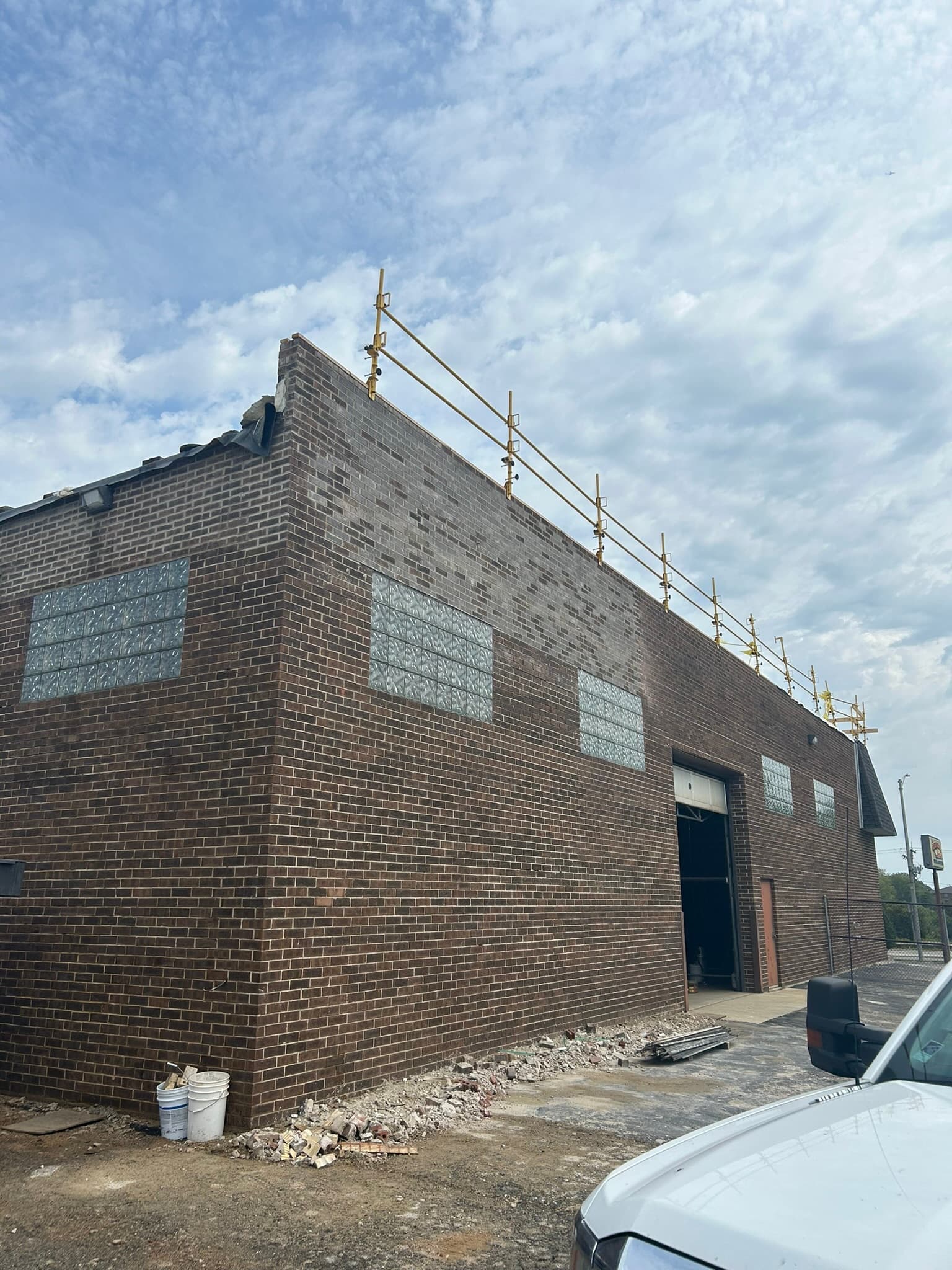
Church Masonry Restoration in Lemont, IL
Emerald Masonry LLC provides church masonry restoration in Lemont, IL — repointing local limestone parish buildings in soft lime mortar, repairing damaged stone by dutchman or selective replacement, and restoring towers, rectories and cemetery walls on a schedule built around services and funerals. Licensed, bonded and insured, with a phased written scope your finance council can approve. Call (708) 288-1696 for a free on-site assessment.
Lemont is one of the few places in Chicagoland where the churches were built from the ground they stand on. The dolomitic limestone quarried along the Des Plaines valley and the canal — sold to Chicago as Athens Marble — went into the town's own parish buildings, rectories, convents, school buildings and cemetery walls through the second half of the nineteenth century. Many of them are still in use, still laid in their original lime mortar in places, and still being maintained by volunteers and a parish budget.
For the stone itself — how Lemont dolomite weathers and why the mortar decides its fate — see our page on historic masonry restoration in Lemont. This page is about the church as an institution: the decisions, the access, the calendar and the money.
What church masonry restoration in Lemont actually involves
On a nineteenth-century limestone parish campus, a restoration is usually a combination of five kinds of work:
- Repointing the stone walls in a lime-based mortar matched to the original in colour, aggregate and — most importantly — softness
- Stone repair — compatible repair mortar, a dutchman, or full replacement of individual blocks
- Sills, copings and water tables — the horizontal stones that take the weather first; see limestone sill repair
- Tower and steeple masonry — the highest exposure, the hardest access, and frequently the oldest repairs
- Site masonry — rectory foundations, cemetery and boundary walls, stoops and steps
Signs your Lemont church needs attention
- Mortar recessed or washed out of joints, especially on the west and south walls and the tower
- Stone faces delaminating — thin layers peeling off along the bedding plane
- Hard grey cement pointing from a past repair, with the stone around it spalling
- Staining on interior plaster below windows or at the base of the tower
- Open joints on sills and copings, or sills tipping toward the wall
- Cemetery or boundary walls leaning, with capstones loose or missing
The patch, dutchman or replace decision
This is where most parish money is either saved or wasted.
Leave or patch
Shallow surface loss on an otherwise sound block often needs nothing, or a lime-based repair mortar tooled to the surrounding stone. It is the least invasive option and, done correctly, is reversible.
Dutchman
A dutchman is a piece of new matching stone cut and set into a prepared pocket in the damaged block, pinned and bedded so the original stone stays in the wall. It keeps original fabric, avoids dismantling the course above, and is usually the right answer for a deep defect in one corner of a large ashlar or a broken arris on a quoin.
Replace
Replacement is for stone that has failed through its depth, has lost its bearing, or where a dutchman would leave too little original stone to be worth keeping. New stone is matched for colour, bed direction and finish — dolomite set on its natural bed lasts; dolomite set on edge peels.
The order matters: least invasive first. A good scope tells you, stone by stone, which category each defect falls into and why.
Why lime mortar is not optional
The single most expensive mistake on Lemont's old stone is hard cement mortar from a past repair. The joint was designed to be the weak, breathable part of the wall, so that moisture leaves through the mortar and freeze-thaw stress is spent in a joint that can be repointed. Replace it with Portland mortar and the stone becomes the weak part. We specify a natural hydraulic lime or lime-rich mortar, matched by sample panel, and remove incompatible cement pointing carefully rather than with a grinder that widens the joint. Lime versus Portland mortar explains the chemistry.
Steeples, towers and access
A tower is usually the highest, most exposed and least inspected masonry on the campus — and often the place where a bell frame, louvres and decades of pigeon guano have been working on the stone unseen. Access is frequently the largest single cost on a church project, so we assess it first: lift, partial scaffold or full scaffold, how loads bear on stairs and lawns, and whether the work can share staging with roofing or carpentry already planned. Our guide to steeple and bell tower masonry goes deeper.
Working inside the parish calendar
We do not treat a church as a building site that happens to have services in it. Before mobilising we agree with the parish office:
- Which elevations are worked around weekend and weekday Masses
- Protected, clear routes for processions, weddings and funerals
- A stand-down procedure for funerals at short notice
- Quiet periods with no cutting or grinding
- Protection for stained glass, doors and memorial plantings
Scoping for the finance council
Parish masonry is usually approved by a finance council or building committee, often with diocesan review above a threshold. That approval works best on a document that separates:
- Safety and water-entry items that cannot wait
- Deterioration items that will cost more next year
- Appearance and long-term items that can be phased across budget years or capital campaigns
Each phase is priced on its own with quantities, so the council can approve phase one against real numbers. Tuckpointing for churches and institutions covers how to keep later phases consistent.
What drives the cost
- Linear feet of joint and the condition of past cement repairs to be removed
- Number of stones to dutchman versus replace, and the source of matching stone
- Tower, steeple and gable access
- Sills, copings and water tables needing reset or replacement
- Calendar constraints and the number of mobilisations
Who you are hiring
Emerald Masonry LLC is a family-owned commercial masonry contractor serving Chicago and the Chicagoland suburbs, led by career masons with decades of hands-on Chicagoland experience, in commercial tuckpointing, façade and parapet repair, lintel replacement, chimney and stack rebuilds, CMU block repair, brick repair and replacement, foundation and limestone/sill repair, caulking, sealing, and commercial, residential and historic masonry restoration. Established in 2024, non-union, licensed, bonded and insured; COI, W-9 and lien waivers on request. Free on-site assessments — call (708) 288-1696.
Church masonry restoration in Lemont and nearby
We also work across the canal corridor and the Palos area: tuckpointing in Lemont, tuckpointing in Homer Glen, tuckpointing in Palos Park and church masonry restoration in Oak Lawn. Services: historic masonry restoration, limestone sill repair and tuckpointing. For parishes, schools and institutions: churches and schools. Background reading: the Athens Marble limestone guide.
Request a parish assessment
If your building committee is looking at a tower that has not been inspected in years, or a past cement repair that is taking the stone with it, call (708) 288-1696 or request a free on-site assessment. We will walk the campus, mark each stone's repair category, and give your council a phased scope it can vote on.
Ready to get started?
Free on-site estimates for commercial and large-scale projects.
Church & Institutional Masonry Restoration in Lemont, IL — Frequently Asked Questions
How much does church masonry restoration cost in Lemont, IL?
It is driven by how much stone needs repair versus replacement, the length of joint to be repointed in lime mortar, tower and steeple access, and how the work is phased around the liturgical calendar. Emerald Masonry LLC provides a free on-site assessment and a phased written scope a finance council can approve — call (708) 288-1696.
Should damaged limestone be patched, dutchmanned or replaced?
Use the least invasive repair that will last. Shallow surface loss can often be left or patched with a compatible repair mortar; a deeper defect in an otherwise sound block suits a dutchman, a new piece of matching stone set into a cut-out; replacement is for stone that has failed through its depth or lost its structural role.
Why does our church need lime mortar instead of modern mortar?
Nineteenth-century Lemont stone was laid in soft lime mortar, and the wall depends on the joint staying weaker and more breathable than the stone. Hard Portland mortar traps moisture in the stone and forces freeze-thaw damage into the faces, which is the expensive half of the wall to fix.
Can you work around Masses, weddings and funerals?
Yes. We schedule by elevation around the parish calendar, keep entries and processional routes clear and protected, stop noisy cutting during services, and stand down with short notice for funerals. The schedule is agreed with the parish office before we mobilise.
Can the steeple or bell tower be repaired without full scaffolding?
Sometimes. Depending on height, footprint and what is around the base, a tower can be reached with a lift, a partial scaffold or a full scaffold; access is often the largest single cost on a church project, so we look at it first.
Do you serve Lemont and nearby communities?
Yes. Emerald Masonry LLC works throughout Lemont, Homer Glen, Palos Park, Lockport, Willow Springs, Orland Park and the wider Cook, DuPage and Will County area. Call (708) 288-1696 for a free on-site assessment.
Church & Institutional Masonry Restoration in Nearby Areas
- Church & Institutional Masonry Restoration in Berwyn, IL
- Church & Institutional Masonry Restoration in Chicago, IL
- Church & Institutional Masonry Restoration in Naperville, IL
- Church & Institutional Masonry Restoration in Oak Lawn, IL
- Church & Institutional Masonry Restoration in Elmhurst, IL
- Church & Institutional Masonry Restoration in Flossmoor, IL
Other Masonry Services in Lemont, IL
Learn more about our church & institutional masonry restoration services across Chicagoland, or view all service areas.