
Church & Institutional Masonry Restoration · Naperville, IL
Church & Institutional Masonry Restoration in Naperville, IL — Written for the Building Committee
A congregation does not buy masonry the way a landlord does. The money is raised, the building is occupied every weekend, and the decision is made by a committee — so the scope has to be written for that reality, not against it.
Quick Answer
Emerald Masonry LLC provides church and institutional masonry restoration in Naperville, IL — tuckpointing, limestone and sill repair, tower and steeple masonry, parapet and roof-edge work on churches, schools and municipal buildings, phased around service and class schedules. Licensed, bonded and insured; COI, W-9 and lien waivers on request. Call (708) 288-1696.
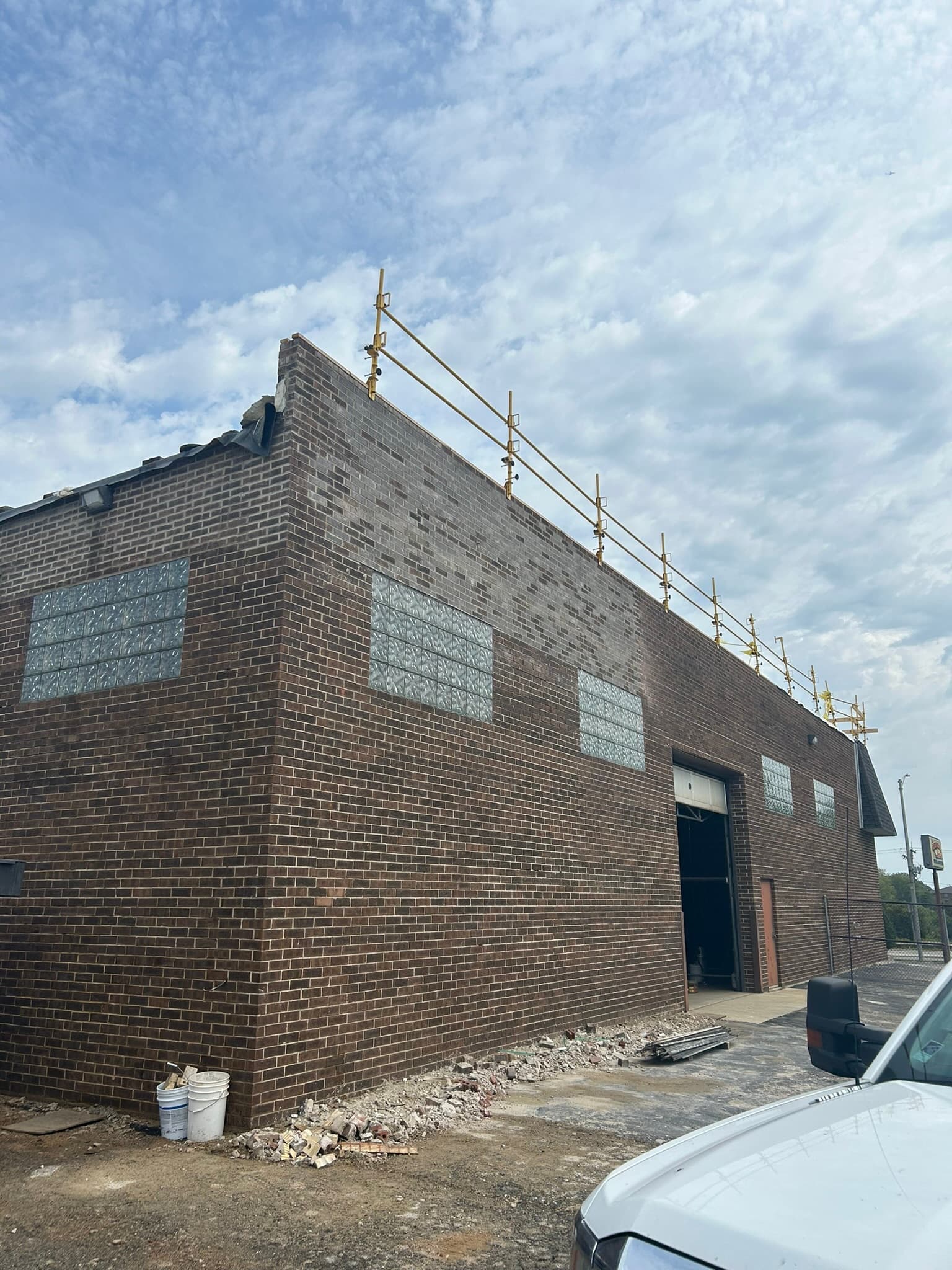
A congregation buys masonry differently than a landlord does, and almost nothing written for this market accounts for it.
The money is raised rather than budgeted. The decision goes to a building committee, a board, or a council — several people, most of whom do not work in construction, meeting monthly. The building is occupied every weekend and often most weekdays. And the work will very likely be phased across years, because that is how restricted funds and capital campaigns actually arrive.
Church masonry restoration in Naperville, IL should be scoped for those conditions from the first walkthrough. Emerald Masonry LLC is a family-owned commercial masonry contractor serving Chicago and the Chicagoland suburbs, led by career masons with decades of hands-on Chicagoland experience, in commercial tuckpointing, façade and parapet repair, lintel replacement, chimney and stack rebuilds, CMU block repair, brick repair and replacement, foundation and limestone/sill repair, caulking, sealing, and commercial, residential and historic masonry restoration. Free on-site assessments — call (708) 288-1696.
What a masonry contractor should actually be telling a church board
There is a lot of material aimed at congregations that promises to restore your building "from floor to ceiling" — steeples, stained glass, altars, roofing, electrical, plumbing — and never once names a mortar type, explains what tuckpointing is, or says how a committee should sequence and fund the work.
That is general contracting with a church label on it. It is a legitimate business, but it is not a masonry answer, and it leaves a board unable to evaluate the single largest line in most sanctuary restoration budgets.
Here is the masonry answer.
The five places institutional buildings actually fail
Mortar joints on the weather elevations. South and west walls take driving rain and the strongest wet-dry cycling and run years ahead of the north and east on the same building. On a masonry sanctuary a hundred years into its life, the joints are the consumable — they were designed to be, and they are due.
Towers, steeples, and belfries. The most exposed masonry on the property, weathered on every face with no roof over it, and standing directly above the entrance most people use. Louvred belfry openings admit driving rain into the core of the wall by design, which is why tower masonry is almost always in worse condition than the nave below it.
Limestone. Sills, water tables, hood moulds, tracery surrounds, buttress caps, and entry surrounds. Limestone delaminates along its bedding planes when water freezes inside it, and once a sill loses its pitch or its drip edge it starts feeding the wall beneath it. Our page on limestone and sill repair covers the mechanism.
Parapets and roof edges on the education wing, the fellowship hall, and the flat-roofed additions almost every congregation has built at some point. Weathered on three surfaces with no heated space behind them, and directly over walkways.
The junction between the original building and its additions. Cold joints where 1920s masonry meets a 1958 wing meets a 1994 addition. Three different mortars, three different movement rates, and a seam that opens.
Naperville, specifically
Naperville gives this work an unusually wide range, because the city's institutional building stock spans well over a century.
The older congregations near downtown — around the Jefferson and Main corridor and the streets off the Riverwalk — sit in genuinely historic fabric, with soft brick, lime-rich mortar, and cut limestone detail. That masonry is not fragile; it has stood for a hundred years. It is, however, intolerant of hard modern mortar and aggressive cleaning, both of which do permanent damage. Mortar softer than the surrounding units is not a preference here, it is the requirement.
The post-war parish and school buildings through the older neighbourhoods — brick and block, steel lintels now at the end of their service life, cast stone trim, and flat-roofed wings with parapets.
The large campuses out along Route 59, 75th Street, and the newer corridors — 1980s-onward masonry veneer over frame or block, where the issues are sealant renewal, expansion joints, shelf angles, weep holes, and flashing rather than wholesale repointing.
Schools and municipal buildings across DuPage, where the funding source rather than the building determines the procurement rules.
Three different eras, three different repair vocabularies, frequently on the same campus.
How we scope work for a committee
The deliverable is not a number. It is a document your board can actually use.
- A free on-site assessment, elevation by elevation, with photographs.
- A written scope with square footages, the repoint-versus-rebuild split, access method, materials, and — importantly — stated exclusions, so the committee is not surprised later.
- A defensible priority order: overhead and structural first, active water entry second, deterioration third, appearance last. If money is short, this is what tells you where it should go.
- A phasing proposal across two, three, or five years, grouped by access rather than by category — because the expensive part of tower work is getting up there, and doing two tower items in one mobilisation costs meaningfully less than doing them in different campaigns.
- A schedule written around the building's calendar — weekend services, weekday programs, school hours, funerals, weddings, and the seasons when mortar can actually cure.
- COI, W-9, and lien waivers provided on request, before work begins.
Materials and technique
Mortar matched to the existing masonry in type, hardness, colour, sand, and joint profile — with softness relative to the surrounding units treated as the governing constraint on historic fabric. Type N where the wall calls for it, Type S where it genuinely does. Salvaged brick reused wherever it is sound, and replacements matched in size, colour and texture. Limestone repaired in place, patched with stone-appropriate repair mortar, or cut out and repaired with a matched Dutchman insert where the unit is largely sound. Through-wall flashing and coping detailed to move water back out of the wall rather than trapping it.
No sandblasting, and no high-pressure washing. Both strip the weather-resistant outer skin from historic brick and limestone, and the damage does not grow back.
What drives the cost
Elevation area and height. Access — ground-level walls, staging, lifts, and tower work are four different cost structures. The ratio of repointing to rebuilding. Limestone and decorative unit scope. Parapet, coping and flashing work. Overhead protection where the public passes beneath. Whether the project is phased and therefore mobilised more than once. Whether prevailing wage applies. Weather windows, since mortar needs workable temperatures to cure properly.
We do not price this over the phone, and neither should anyone else. Free on-site assessment and a written scope — call (708) 288-1696.
Working with Emerald
Emerald Masonry LLC is family-owned, established 2024 and led by career masons with decades of hands-on Chicagoland experience. Licensed, bonded and insured, non-union, with COI, W-9 and lien waivers on request. We work directly with congregations and boards through our churches, schools and institutional practice, with property managers through commercial property services, and alongside general contractors on larger campus projects via our general contractor partnerships.
Related services: historic masonry restoration, commercial masonry restoration, tuckpointing and repointing, parapet wall repair, and limestone and sill repair.
For the tower-specific version of this work, see our guide to church steeple and bell tower masonry restoration, and for procurement, how to write a masonry scope for bid.
Give your committee something it can decide from
An assessment, a written scope, a priority order, and a phasing plan — at no cost and with no obligation.
Request a free on-site assessment — or call (708) 288-1696.
Ready to get started?
Free on-site estimates for commercial and large-scale projects.
Church & Institutional Masonry Restoration in Naperville, IL — Frequently Asked Questions
How much does church masonry restoration cost in Naperville, IL?
It is priced by scope, not by square foot. The drivers are elevation area, height and access (a tower needs staging a nave wall does not), the ratio of repointing to rebuilding, limestone and tower work, and whether the project must be phased across fiscal or campaign years. Emerald Masonry provides a free on-site assessment and a written scope your committee can circulate.
Can the work be phased over several years?
Yes, and for most congregations it is the right approach. We scope elevation by elevation with a defensible priority order — anything overhead or structural first, then active water entry, then deterioration — so a multi-year plan protects the building in the correct sequence rather than the convenient one.
Will the work interrupt services?
It does not have to. Staging, access and noisy operations get planned around weekend services, weekday programs, funerals, weddings and school hours, and the schedule is agreed in writing before mobilisation. Overhead protection goes in wherever people pass beneath the work.
Do you provide a certificate of insurance and lien waivers?
Yes. Emerald Masonry LLC is licensed, bonded and insured, and provides a COI, W-9 and lien waivers on request — before work begins, not after. Most church and school boards require all three, and a contractor who hesitates at that question has answered it.
Does prevailing wage apply to our project?
It depends on the funding source rather than the building type. Work funded by a public body or certain public grants can trigger Illinois prevailing wage requirements; a privately funded congregational project generally does not. Confirm with your attorney or the awarding body, and tell bidders up front, because it changes every number you receive.
Our tower and steeple masonry is deteriorating. Is that different work?
It is the same masonry, at height, with harder access and higher stakes. Tower and steeple masonry is weathered on all faces, sits above entrances people walk through, and usually needs staging or specialised access — so it is scoped and priced separately from the ground-level elevations.
How do we compare bids that don't look alike?
Insist every bidder price the same written scope, with square footages, the repoint-versus-rebuild split, access method, and exclusions stated. Numbers that look far apart usually are not pricing the same work, and normalising the scope is the only way a committee can compare them honestly.
Church & Institutional Masonry Restoration in Nearby Areas
- Church & Institutional Masonry Restoration in Berwyn, IL
- Church & Institutional Masonry Restoration in Chicago, IL
- Church & Institutional Masonry Restoration in Oak Lawn, IL
- Church & Institutional Masonry Restoration in Elmhurst, IL
- Church & Institutional Masonry Restoration in Flossmoor, IL
- Church & Institutional Masonry Restoration in Geneva, IL
Other Masonry Services in Naperville, IL
Learn more about our church & institutional masonry restoration services across Chicagoland, or view all service areas.