
Commercial Masonry Restoration · Cicero, IL
Commercial Masonry Restoration in Cicero, IL — Where Access Sets the Schedule
In Cicero the masonry is rarely the hard part. Zero-lot-line buildings, alley-only access, party walls and sidewalks directly under the work are what actually shape a commercial restoration.
Quick Answer
Emerald Masonry LLC provides commercial masonry restoration in Cicero, IL — restoring facades, parapets, block walls and storefronts on apartment, industrial, church and multi-tenant buildings, staged around tight urban access so tenants stay open. Family-owned, licensed, bonded and insured, career masons with decades of Chicagoland experience, free on-site estimates. Call (708) 288-1696.
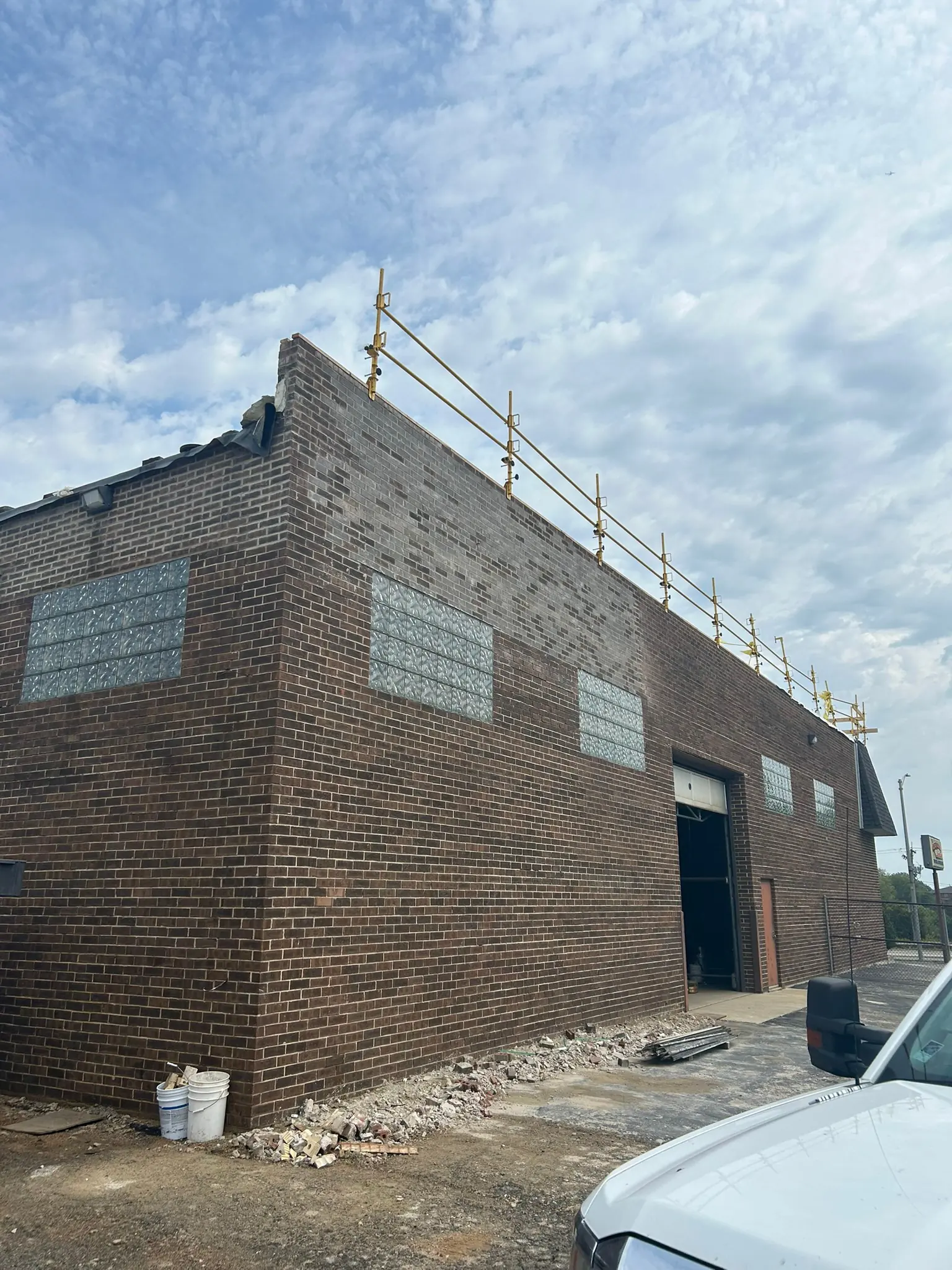
Commercial Masonry Restoration in Cicero, IL
Commercial masonry restoration in Cicero, IL is rarely limited by the masonry. It is limited by the fact that the building runs to the lot line, the only access is a shared alley, there is a public sidewalk directly beneath the parapet, and the wall on one side belongs to somebody else. Emerald Masonry LLC restores commercial, industrial, institutional and multi-unit masonry throughout Cicero and Cook County. Family-owned, licensed, bonded and insured, career masons with decades of Chicagoland experience, free on-site estimates, $5,000 project minimum. Call (708) 288-1696.
Contractors who work mostly on open suburban sites price a Cicero building and then discover the site. We price the site.
The Constraints That Actually Set the Schedule
| Site condition | What it changes | |---|---| | Zero lot line, no setback | Pipe staging off the wall or the walk; a boom lift often will not fit or cannot be positioned | | Alley-only rear access | Staged deliveries, no bulk drops, and the alley must stay passable for tenants and refuse pickup | | Sidewalk under the work | Overhead protection and a protected walkway are the first thing built, before any cutting | | Shared party walls | Ownership and access agreed before scheduling — the repair frequently involves both buildings | | Occupied units above retail | Phase by elevation, notice to residents, noisy work scheduled around tenants where daylight allows | | Courtyard plan | The courtyard becomes the staging yard, which means resident access is planned around it | | On-street parking only | Permitting, staging footprint and material handling all take longer |
None of that changes what the wall needs. It changes how long it takes and what it costs to get to it — which is exactly the part most estimates leave out until it is too late to plan around.
Cicero's Building Stock
Dense masonry housing. Cicero is one of the most tightly built communities in Cook County: brick two-flats, three-flats, courtyard apartment buildings and worker housing, most of it early-twentieth-century, most of it soft common brick laid in lime-rich mortar. That masonry needs a mortar softer than the brick — a hard, Portland-heavy modern mix makes the brick the sacrificial element and spalls the faces within a few winters.
The industrial legacy. Cicero grew around heavy manufacturing, and the surviving stock along the rail lines and the industrial corridors is large-format: brick-and-block walls, loading docks, wide overhead-door openings, long control joints, and truck traffic that puts physical impact damage on top of weather. Dock-area masonry is a different repair problem than a facade — the wall is being hit as well as weathered.
Commercial corridors. Storefronts and mixed-use buildings along Cermak Road, Ogden Avenue and the surrounding arterials, with decorative parapets above the sidewalk, storefront lintels rusting behind sign bands, and cornice detail nobody has been able to see up close in decades.
Institutional masonry. Churches, schools and civic buildings — usually the tallest masonry on their block, usually the most deferred, and usually needing a scope an organization can fund across more than one fiscal year.
Parapets and Lintels: Where Cicero Scopes Concentrate
Two elements drive most commercial scopes here, and both are directly over a public way.
Parapet walls are exposed on both faces and the top, get no heat from the building behind them, and take water straight into the top of the wall once the coping joints open. On a storefront that wall stands over the sidewalk, which makes its condition a safety question rather than a maintenance one. The decision is always repair or rebuild, and it turns on how far down the deterioration runs — repointing a parapet whose top courses have lost their bond is money spent on a wall that needs to come down.
Storefront and window lintels on this stock are bare steel that has been quietly corroding behind a sign band for fifty years. Corroding steel expands to several times its volume, which lifts the masonry above it — the horizontal crack over an opening is the symptom, the steel is the cause.
Responding to a Municipal Notice
If a facade notice or a failed inspection is what brought you here, the sequence that works is straightforward:
- Get the masonry assessed and documented in writing, with photographs and measured extents.
- Confirm with the Town exactly what your notice requires and by when — those requirements are theirs to define, not a contractor's to assume.
- Address the safety items first. Anything that could shed masonry over a sidewalk or entrance is both the cited risk and the right first spend.
- Phase the rest where a full facade is not fundable in one season, with the phasing plan in writing.
What we provide is the accurate condition record and a scope that maps to it. What we will not do is tell you a repair satisfies a requirement we have not read.
Our Restoration Process
- Survey every elevation, the parapet and the roof edge — joints, units, lintels, sills, coping, flashing, sealant, weeps and any signs of movement.
- Sound and probe. Drummy brick and hollow areas do not appear in photographs taken from the sidewalk.
- Plan the access first — staging method, overhead protection, alley and walk management, resident and tenant notice.
- Rank the scope by public safety, then active water entry, then advancing deterioration, then preventive work.
- Repoint and rebuild — joints cut to sound depth, repointed in mortar matched for color, texture and hardness; failed units replaced with matched brick; parapets rebuilt where deterioration has gone through.
- Lintels, sills and openings — corroded steel replaced and flashed, sills restored to shed water.
- Block and dock repairs — control joints, impact damage, jambs and corners.
- Sealant joints, then seal exposed elevations last, once mortar has cured.
Materials
Soft, lime-rich mortars for pre-1930s common brick; Type N, and Type S only where the units genuinely warrant it, on harder modern brick and block; matched sand and pigment for color; salvaged and reclaimed units where a match is not currently produced; non-staining sealants where limestone or cast stone is involved; breathable penetrating repellents rather than film-forming coatings that trap moisture in a wall.
What Drives the Cost
Elevation area and the real percentage of failed joints and units · parapet repair versus rebuild, and how far down it reaches · access method, which on a Cicero site is often the single largest line · overhead protection over public walkways · lintel count and opening widths · block and impact repairs at docks · occupancy constraints and tenant coordination · match difficulty · season and curing conditions. We never quote a commercial building over the phone — see what a masonry estimate should include.
Emerald Masonry LLC is a family-owned, licensed and insured masonry contractor serving Chicago and the Chicagoland suburbs led by career masons with decades of hands-on experience in tuckpointing, chimney repair, brick repair and replacement, lintel and parapet repair, foundation and limestone/sill repair, caulking, sealing, and commercial, residential, and historic masonry restoration. Free on-site estimates — call (708) 288-1696.
Serving Cicero and the Near West Suburbs
We restore commercial masonry throughout Cicero's 60804 — the courtyard and multi-unit blocks, the Cermak and Ogden corridors, the industrial stock along the rail lines, and the churches and schools between them — plus the neighbouring communities. Depending on the survey a building's scope may center on commercial tuckpointing in Cicero, parapet wall repair in Cicero or lintel repair nearby in Berwyn. We do the same work in Berwyn, Forest Park, Oak Park, Summit and Elmwood Park.
Why Cicero Owners and Managers Call Emerald
We survey the site as carefully as the wall, we tell you what access is going to cost before you commit, and we phase the work so a building keeps earning while it gets fixed. On this housing stock we specify soft mortar because that is what century-old brick requires. Family-owned, licensed, bonded and insured, career masons with decades of Chicagoland experience.
Need a written, phased assessment of your Cicero building — including a notice you have been served? Request a free on-site estimate or call (708) 288-1696.
Ready to get started?
Free on-site estimates for commercial and large-scale projects.
Commercial Masonry Restoration in Cicero, IL — Frequently Asked Questions
How much does commercial masonry restoration cost in Cicero, IL?
Scope sets it, and on a dense site access is a bigger cost driver than most owners expect. Elevation area, the true percentage of failed joints and units, parapet condition, whether staging can be set from a lot or must work off an alley or sidewalk, and overhead protection requirements all move the number. Emerald Masonry provides a free written assessment, with a $5,000 project minimum.
We received a municipal notice about our facade. Can you help?
Yes. We assess the masonry, document the condition in writing with photographs, and provide a scope that addresses the cited defects, and we can phase the work where a full facade is not affordable in one season. Requirements and timelines are set by the Town, so confirm what your notice specifically requires with them.
Can you work on a building with no setback and alley-only access?
That is most of Cicero, and it is routine for us. It changes the method rather than the outcome — pipe staging instead of a lift, overhead protection over the public walk, staged deliveries, and work sequenced so the alley stays passable for tenants and refuse pickup.
Can tenants stay in the building during restoration?
In nearly every case, yes. We phase by elevation so only one face is under staging at a time, protect entrances with overhead cover, give residents and tenants advance notice, and keep parking and access usable throughout.
Do you work on apartment and courtyard buildings?
Regularly. Cicero's courtyard and multi-unit brick buildings are a core part of our work, and the practical difference is communication — residents need notice, balconies and porches need clearing, and the courtyard itself usually becomes the staging area.
Do you repair block and industrial walls, not just brick?
Yes. Concrete block walls, dock and overhead-door openings, bollard and corner impact damage, control joints, and the mixed brick-and-block construction common in Cicero's industrial stock. Block repair follows different rules than brick and we scope it separately.
What about a party wall shared with the building next door?
Shared masonry needs the ownership question answered before work is scheduled, because the repair often physically involves both properties. We document the condition clearly so both owners are working from the same facts.
Do you work with property managers and insurance carriers?
Regularly. We provide written scopes, photographic documentation and phased pricing that a manager can take to ownership or an adjuster — Emerald has served property managers, HOAs, churches and insurance companies across Chicagoland for years.
Commercial Masonry Restoration in Nearby Areas
Other Masonry Services in Cicero, IL
Learn more about our commercial masonry restoration services across Chicagoland, or view all service areas.