
Residential Masonry Restoration · Mount Greenwood, Chicago, IL
Residential Masonry Restoration in Mount Greenwood, Chicago — Walking the House the Way Water Does
A Chicago bungalow does not fail in random places. It fails top-down, in the same order on nearly every house — which is why restoring one should start at the chimney and work toward the ground.
Quick Answer
Emerald Masonry LLC provides residential masonry restoration in Mount Greenwood, Chicago, IL — restoring brick bungalows, Georgians and ranches with matched brick, limestone trim repair, chimney rebuilds and repointing in compatible soft mortar. Family-owned, licensed and insured, career masons with decades of Chicagoland experience, free on-site estimates. Call (708) 288-1696.
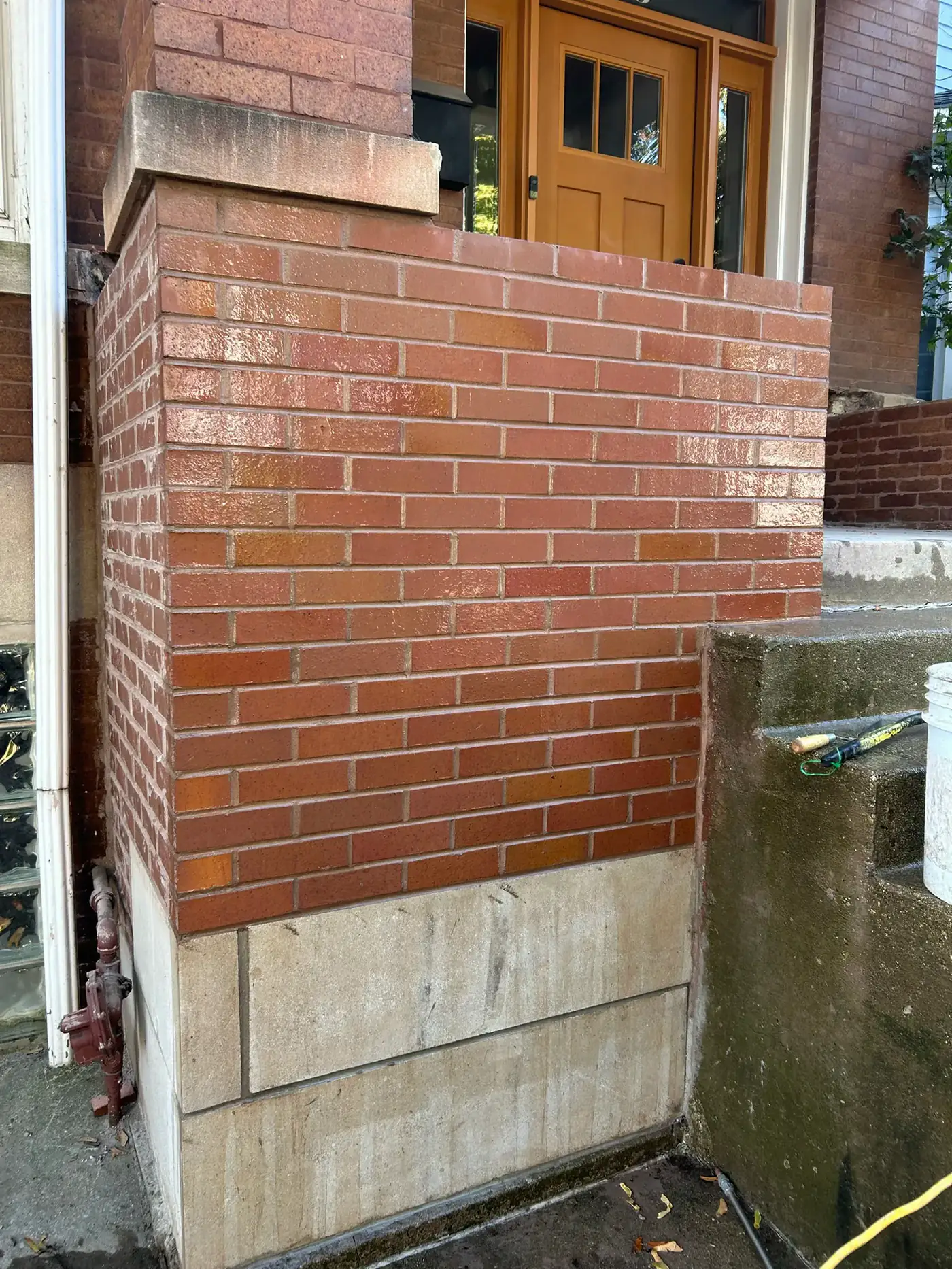
Residential Masonry Restoration in Mount Greenwood, Chicago
Residential masonry restoration in Mount Greenwood, Chicago is unusually predictable, and that is good news. The neighbourhood is built almost entirely from a few repeated house types, and those houses fail top-down, in the same order, on street after street. Emerald Masonry LLC restores bungalows, Georgians and ranches throughout Mount Greenwood and Chicago's southwest side. Family-owned, licensed, bonded and insured, career masons with decades of Chicagoland experience, free on-site estimates. Call (708) 288-1696.
So we survey a house the way water moves through it: from the chimney down to the grade. Almost every scope writes itself once you do that.
Following the Water, Top to Bottom
1. The chimney
The most weather-exposed masonry on the building, unheated, exposed on four sides, and on a great many Mount Greenwood houses no longer in use. A cracked crown lets water straight into the stack; failed flashing puts it into the roof; open joints in the top courses let it into the wall below. This is where restoration should start, because everything downstream is fed from here. Related: chimney repair in Mount Greenwood.
2. The roofline, parapet and front dormer
Bungalow dormers and the masonry at the roof edge take direct weather with the least protection. Coping and cap joints, dormer cheeks and the transition where masonry meets roofing are all common entry points.
3. Limestone banding, sills and porch caps
The decorative stone that gives these houses their character is also the part designed to get wet and throw water clear. A sill that has lost its slope or worn away its drip edge stops throwing water off and starts running it back down the wall — which is why the brick directly beneath a sill is so often the worst brick on the elevation.
4. Lintels above openings
A horizontal crack with lifted brick above a window or door means the steel behind it is corroding and swelling. The brick is the symptom; the lintel is the cause.
5. The field walls — and the front/side split
Here is the fact that explains most bungalow restorations. These houses were typically built with hard face brick on the street elevation and softer common brick on the sides and rear. Two different materials, two different weathering rates, and — critically — two different mortar requirements. A single hard mix applied across the whole house is wrong on the sides even when it is tolerable on the front. Chicago common brick and why it crumbles is covered in more detail in our guide to it.
6. The gangway walls
The narrow walls between neighbouring houses stay damp, see little sun and dry slowly. They deteriorate faster than any other field wall and get inspected last, because nobody walks down there.
7. The bottom three courses
Splash-back off walks and drives, snow banked all winter, de-icing salt, and foundation plantings holding moisture against the wall. The lowest courses live the hardest life on the building — see why the bottom three courses of brick fail first.
8. The water management around it all
Gutters, downspouts, grade and window wells. On a large share of houses the single most valuable item in a restoration is extending a downspout that has been discharging at the same corner for thirty years.
Ranking and Phasing
Once the house is surveyed, the scope gets ranked honestly: structural and safety first, then active water entry, then advancing deterioration, then preventive, then cosmetic. Phasing across two or three seasons is a sound plan when the order is right — and a costly mistake when cosmetic work happens while water is still getting in.
You get told what we found in plain language, with the reasoning, not a list of line items to accept on faith.
The Restoration Work
- Correct the causes first — water paths, flashing, drainage, blocked weep holes.
- Restore the chimney — crown, cap, flashing and stack, rebuilt to sound masonry where the top courses have gone.
- Repair limestone trim — reform the wash, re-cut the drip edge, patch or replace cracked stone, point in soft mortar, clean gently and never abrasively.
- Handle lintels — corroded steel replaced and flashed, masonry above rebuilt and matched.
- Repoint what has failed, in mortar matched for colour, sand, texture, profile and hardness — with the front and side elevations specified separately where the brick differs.
- Replace failed brick with matched or salvaged units, dry-laid for your approval before setting.
- Renew sealant joints with backer rod and the correct product for each substrate.
- Seal last, with a breathable penetrating repellent, once mortar has cured.
Mount Greenwood in Particular
The neighbourhood's housing runs from 1920s and 1930s brick bungalows through postwar Georgians and ranches, on tight city lots with gangways, detached masonry garages, and front porches and steps in brick and limestone. It sits on the far southwest side against Beverly's greystone stock, so we frequently work both sides of that line in the same week — and the two need genuinely different specifications.
What they share is the climate: dozens of freeze-thaw cycles every Cook County winter, working on whichever masonry is wettest. Water in a joint or a tired brick freezes, expands about nine percent, and forces the masonry apart. Everything above is downstream of that one mechanism, explained further in freeze-thaw masonry damage in Chicago.
What Drives the Cost
Phase-one scope versus the full plan · wall area and number of elevations · the real percentage of failed joints and units · chimney work and roof access · staging, including tight gangway access · limestone repair extent · match difficulty for brick and mortar, front versus sides · water-management corrections · season and curing conditions. We do not quote older homes over the phone; the assessment is free and written.
Emerald Masonry LLC is a family-owned, licensed and insured masonry contractor serving Chicago and the Chicagoland suburbs led by career masons with decades of hands-on experience in tuckpointing, chimney repair, brick repair and replacement, lintel and parapet repair, foundation and limestone/sill repair, caulking, sealing, and commercial, residential, and historic masonry restoration. Free on-site estimates — call (708) 288-1696.
Serving Mount Greenwood and Chicago's Southwest Side
We restore residential masonry throughout Mount Greenwood's 60655 and the surrounding neighbourhoods. Depending on what the survey turns up, a plan may start with tuckpointing in Mount Greenwood, chimney repair in Mount Greenwood or limestone and sill repair in Beverly. We do the same work in Beverly, Evergreen Park, Oak Lawn and Palos Heights.
Why Mount Greenwood Homeowners Call Emerald
We survey the whole house before we price any of it, we specify mortar separately for face brick and common brick because they are not the same wall, and we rank the work honestly — including telling you what can wait. Family-owned, licensed, bonded and insured, career masons with decades of Chicagoland experience.
Want a straight, written assessment of your Mount Greenwood home's brick, stone and chimney? Request a free on-site estimate or call (708) 288-1696.
Ready to get started?
Free on-site estimates for commercial and large-scale projects.
Residential Masonry Restoration in Mount Greenwood, Chicago, IL — Frequently Asked Questions
How much does masonry restoration cost in Mount Greenwood, Chicago?
A restoration is priced by scope because it bundles several repairs into one plan. Wall area, the true percentage of failed joints and units, chimney condition, limestone trim, staging requirements, and how much you choose to do in phase one all move the number. Emerald Masonry provides a free written on-site estimate, with a $5,000 project minimum.
Why is the brick on the side of my bungalow so much worse than the front?
Because they are different bricks. Chicago bungalows were typically built with hard face brick on the street elevation and softer common brick on the sides and rear, so the side walls weather faster and need a softer mortar than the front does.
Do I have to restore the whole house at once?
No. We rank the scope so structural items and anything actively admitting water are done first, and preventive or cosmetic work can be phased across later seasons. Most Mount Greenwood owners phase across two or three years.
Why does mortar hardness matter so much on a bungalow?
Because the mortar must be softer than the brick it holds. Repointing century-old common brick with a hard Portland-heavy mix makes the brick the sacrificial element and spalls the faces within a few winters — the most common way a well-intentioned repair damages an older Chicago home.
My chimney is unused. Does it still need work?
Yes. An unused chimney weathers exactly like a working one, and its crown and flashing still let water into the house when they fail. Whether to restore it or remove it is a real decision, and we will give you an honest read on which makes sense.
Can you match the limestone banding and sills on a bungalow?
Usually. Sills, bands and porch caps are repaired in place where the stone is sound, patched with matched stone where damage is localized, and replaced only where the stone is cracked through — always pointed in soft, compatible mortar and never cleaned abrasively.
Do you work on the gangway walls between houses?
Yes, and they need it more than most walls. Gangways stay damp, get little sun, and are tight to work in, so deterioration there routinely runs ahead of the rest of the house and gets noticed last.
How long does a full bungalow restoration take?
A focused elevation can be a matter of days; a whole house with chimney work and staging runs considerably longer. Weather and mortar curing set as much of the pace as labor, so we give a realistic phase-by-phase schedule with the estimate.
Residential Masonry Restoration in Nearby Areas
- Residential Masonry Restoration in Beverly, Chicago, IL
- Residential Masonry Restoration in Burbank, IL
- Residential Masonry Restoration in Elmwood Park, IL
- Residential Masonry Restoration in Evergreen Park, IL
- Residential Masonry Restoration in La Grange, IL
- Residential Masonry Restoration in New Lenox, IL
Other Masonry Services in Mount Greenwood, Chicago, IL
Learn more about our residential masonry restoration services across Chicagoland, or view all service areas.