
Residential Masonry Restoration · New Lenox, IL
Residential Masonry Restoration in New Lenox, IL — A Town of Brick Veneer Reaching Its First Service Life
New Lenox grew in waves, and the biggest wave of brick-veneer homes is now arriving at the end of its first service life all at once — sealant, weep holes and flashing, not the brick itself.
Quick Answer
Emerald Masonry LLC provides residential masonry restoration in New Lenox, IL — restoring brick-veneer homes by repairing the drainage path (weep holes, flashing, sealant joints, shelf angles) alongside repointing, brick replacement and lintel work, phased by risk across a homeowner's budget. Licensed, bonded and insured. Free on-site assessment — call (708) 288-1696.
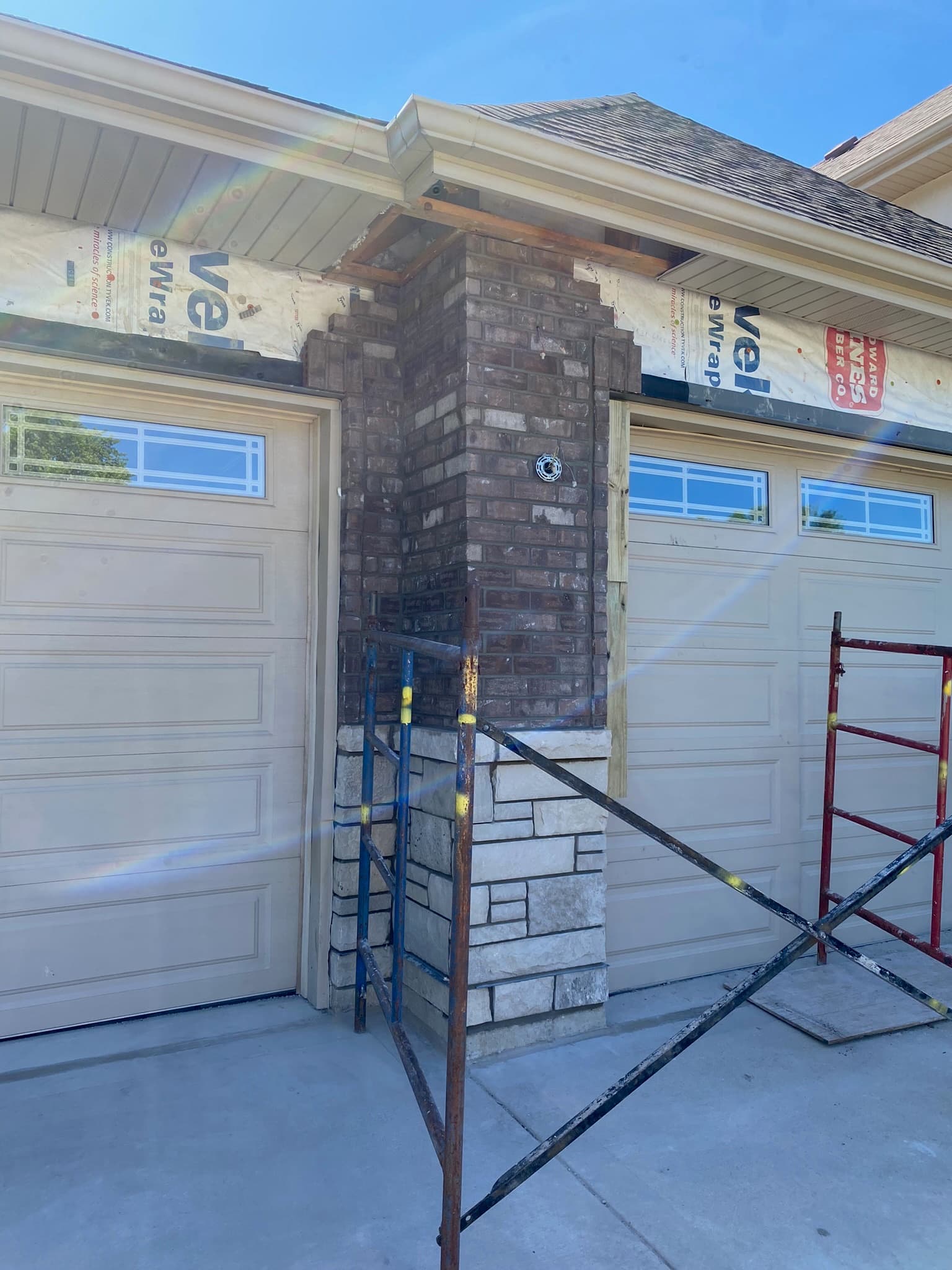
Residential Masonry Restoration in New Lenox, IL
Emerald Masonry LLC provides residential masonry restoration in New Lenox, IL — repointing, brick repair and replacement, lintel and sill work, sealant renewal, and the drainage-path repairs that brick-veneer homes actually need. Licensed, bonded and insured. Free on-site assessment: (708) 288-1696.
New Lenox did not grow gradually. It grew in waves — a modest older core along the Lincoln Highway corridor, then subdivision after subdivision from the 1970s through the 2000s, with the heaviest building through the 1990s and early 2000s.
That matters, because masonry ages on a clock set by the year it was built. And the largest cohort of brick-veneer homes in this village is now arriving at the end of its first service life — not the brick, which has decades left, but the components around it that nobody thinks of as masonry at all.
Your house is a drained cavity wall, not a brick wall
This is the single most useful thing to understand about a New Lenox house, and most homeowners have never been told it.
You do not have a brick house. You have a framed house with a brick skin. A single four-inch veneer stands about an inch off a sheathed, papered, wood-framed wall and is anchored back to it with metal ties. Behind it is an air cavity. At the base of that cavity, and above openings, sits through-wall flashing that catches water and returns it outside through weep holes — the small open head joints you can find every two feet or so along the bottom course.
Which means: your wall is designed to leak. Wind-driven rain passes the brick face and the joints. That was always the plan. The system works by catching that water and draining it back out.
So on a veneer house the failures that cause interior damage are almost never in the brick:
Weep holes mortared shut. We find this constantly, usually from a previous repointing crew who thought open joints looked like sloppy work and filled them. The cavity is now a reservoir.
Weeps buried. Twenty years of mulch beds, regrading and landscape fabric raising the soil above the flashing line.
Sealant joints past service life. Perimeter sealant at windows and doors, and movement joints in the veneer, commonly last fifteen to twenty years. On a 1998 house that has never been redone, every one of them is an open slot into a drained wall.
Corroded shelf angles. The steel ledge carrying the veneer at a floor line. Rust occupies several times the volume of the steel it came from, so as it corrodes it lifts the courses above — drawing a horizontal crack running level across the elevation at one consistent height. Homeowners are routinely told this is settlement. Settlement does not draw a level line.
Corroded lintels over windows, patio doors and garage openings, with rust staining weeping down the brick as the early warning.
Wall ties failing, letting the veneer begin to bow away from the framing behind it. That is a rebuild condition and it needs catching early.
A restoration that only addresses the face of the brick has not addressed your house.
The two New Lenox housing eras
| Era | What you have | What fails first | | --- | --- | --- | | Older core, pre-1960s | Often solid masonry or early veneer; soft brick | Eroded joints, spalling from prior hard repointing, stone sills | | 1970s–1980s subdivisions | Full veneer, sometimes front elevation only | Lintels over picture windows, base-course spalling, mortar at end of life | | 1990s–2000s subdivisions | Full veneer, often full wrap | Sealant joints, weep holes, shelf-angle flashing, garage-opening lintels | | 2010s onward | Veneer with modern flashing, often partial-height | Sealant joints, weeps blocked by raised landscaping |
The third row is where most of our New Lenox calls come from right now. A very large number of houses went up between roughly 1995 and 2007, and their sealant, weeps and flashing are all reaching the same point at the same time.
Will County clay, and why drainage is the cheapest fix you own
New Lenox sits on heavy clay soil. Clay swells when it takes on water and shrinks when it dries out, so a wet spring following a dry late summer is a full cycle of soil movement against your foundation and your masonry — every single year.
You cannot change the soil. You can change how much water reaches it next to the house, and that is consistently the highest-return work on any property here:
- Downspouts extended well away from the foundation, discharging onto ground that falls away
- Gutters kept clear, because overflow sheets water down a wall all season
- Grade falling away from the house for the first several feet
- Soil and mulch kept below the base course so weeps stay open and brick is not in contact with wet clay
- Sump discharge running away from the house, not back toward it
- Sprinkler heads not aimed at the brick
That list costs a fraction of any masonry scope and protects everything in it.
Scoping and phasing a whole house
Almost no New Lenox house needs everything at once. Masonry fails by exposure, and the honest priority order is:
- Anything letting water in — a failed lintel, an open chimney joint, blocked weeps, failed sealant at a window that is already staining drywall inside
- The chimney, which is exposed on four sides and the top and weathers far faster than the walls below it
- The base courses and splash line, where snow, de-icing salt and rain splash concentrate
- The weather elevation — usually west or northwest facing, where joints have receded behind the brick face
- The shaded elevation, which dries slowest
- Everything else, which on many houses genuinely does not need doing yet
We write it elevation by elevation with each phase priced separately, so a homeowner can do the urgent work this fall and carry a real number into next year rather than an allowance.
How the work is done
- Walk all four elevations at grade and from a ladder, and sound the veneer rather than eyeballing it.
- Find the water source before writing anything — roof drainage, grade, sills, lintels, sealant, chimney.
- Check the weep line. Open, blocked, or never installed changes the entire scope.
- Correct the drainage path — clear or re-drill weeps, correct flashing where it is reachable, replace failed sealant with backer rod and proper joint sealant.
- Cut failed joints to depth — roughly two and a half times the joint width — never skimming over failed material.
- Repoint with matched mortar, Type N for most veneer of this era, always softer than the brick it holds, matched for color and texture against a cured sample and tooled to the original profile.
- Replace failed brick matched by size, color, texture and era, salvaging from a concealed elevation where an exact match cannot be bought.
- Address the steel — lintels and shelf angles cleaned and coated where sound, replaced where section is lost, with flashing and weeps installed as the masonry goes back.
- Cure and protect — damp and shaded in heat, heated and covered in cold, or scheduled for a workable window.
What drives the cost
How many elevations are genuinely involved. Height and access — a two-story rear elevation over a deck is not a front wall off a driveway. Whether the drainage details need correcting or only the face work. How much steel is in the scope, since opening a wall to replace a shelf angle is a different order of work than repointing it. How difficult the brick is to match. And what is found once the first wall is opened. We assess it, price the scope, and put exclusions in writing.
Trust signals
Emerald Masonry LLC is a family-owned commercial masonry contractor serving Chicago and the Chicagoland suburbs, established 2024 and led by career masons with decades of hands-on Chicagoland experience, in commercial tuckpointing, façade and parapet repair, lintel replacement, chimney and stack rebuilds, CMU block repair, brick repair and replacement, foundation and limestone/sill repair, caulking, sealing, and commercial, residential and historic masonry restoration. Licensed, bonded and insured. Non-union, based at 7156 W. 126th St. Suite 136, Palos Heights, IL 60464. Free on-site assessments — call (708) 288-1696.
Related services
- Residential masonry restoration — whole-house scope and phasing
- Tuckpointing and repointing — matched mortar and correct joint depth
- Lintel repair — rust-jacked steel over windows and garage openings
- Caulking and joint sealant — the shortest-lived part of a veneer wall
- Brick replacement — spalled and displaced veneer units
- Chimney repair — the fastest-weathering masonry on the house
- Masonry sealing — breathable, and only after the drainage path is sound
Get a phased assessment in New Lenox
If you have a level horizontal crack across an elevation, staining inside after wind-driven rain, sealant you can pull out of a window joint with a fingernail, or brick faces flaking near the ground, get the house looked at as the drained cavity wall it actually is.
Emerald Masonry LLC — (708) 288-1696 — or request an on-site assessment.
Ready to get started?
Free on-site estimates for commercial and large-scale projects.
Residential Masonry Restoration in New Lenox, IL — Frequently Asked Questions
How much does residential masonry restoration cost in New Lenox, IL?
It depends on how much of the house is actually involved, height and access, whether the drainage details behind the veneer need correcting or only the joints, and how difficult the brick is to match. Emerald Masonry LLC walks the whole house and puts a phased scope in writing — call (708) 288-1696 for a free on-site assessment.
Is my New Lenox house brick veneer or solid masonry?
Almost certainly veneer. Look for small open head joints every couple of feet along the base course — those are weep holes, and only veneer has them. A veneer is a single four-inch skin standing off a framed wall, which is how nearly everything built here from the 1970s onward was constructed.
My brick looks fine but water is getting in. How?
On a veneer wall the brick was never the barrier. Water is expected to pass the face and drain back out through flashing and weep holes behind it. When those weeps are mortared shut, painted over or buried under raised mulch, the cavity holds water instead of draining it.
What is the horizontal crack running across my wall at one height?
That is usually a shelf angle — the steel ledge carrying the veneer at a floor line — corroding and expanding as it rusts, which lifts the courses above it. It draws a level line across the elevation, which is how you tell it apart from settlement.
Should I do the whole house or just part of it?
Usually part. Masonry fails by exposure, so the weather elevation, the chimney and the base courses commonly need work while sheltered walls stay sound for years. We scope it elevation by elevation and phase it by risk so you can see what genuinely needs doing now.
How old do sealant joints get before they need replacing?
Commonly fifteen to twenty years, which makes them the shortest-lived part of the wall. On a great many New Lenox houses built in the 1990s and 2000s they have never been replaced once, and failed sealant is an open slot into a drained wall.
Why does the ground here matter to my brick?
Heavy clay soils swell when they take on water and shrink when they dry, so a wet spring after a dry summer is a full cycle of movement against the house every year. Drainage away from the foundation does more for your masonry than any product you can buy.
Do you serve New Lenox and the surrounding Will County towns?
Yes — New Lenox, 60451, and the surrounding Will and Cook County communities including Mokena, Frankfort, Homer Glen, Manhattan, Joliet and Tinley Park. Emerald Masonry LLC is based in Palos Heights, IL. Call (708) 288-1696.
Residential Masonry Restoration in Nearby Areas
- Residential Masonry Restoration in Beverly, Chicago, IL
- Residential Masonry Restoration in Burbank, IL
- Residential Masonry Restoration in Elmwood Park, IL
- Residential Masonry Restoration in Evergreen Park, IL
- Residential Masonry Restoration in La Grange, IL
- Residential Masonry Restoration in Mount Greenwood, Chicago, IL
Other Masonry Services in New Lenox, IL
Learn more about our residential masonry restoration services across Chicagoland, or view all service areas.