
Residential Masonry Restoration · La Grange, IL
Residential Masonry Restoration in La Grange, IL — Survey First, Then a Phased Plan
Restoration on a hundred-year-old La Grange home is not one repair — it is a plan. The most valuable thing a mason can hand you is an honest ranking of what is urgent and what can wait two seasons.
Quick Answer
Emerald Masonry LLC provides residential masonry restoration in La Grange, IL — surveying the whole home's brick, stone and chimney, ranking repairs by urgency, then repointing, replacing failed units, and restoring lintels, sills and chimneys with matched materials. Family-owned, licensed and insured, career masons with decades of Chicagoland experience, free on-site estimates. Call (708) 288-1696.
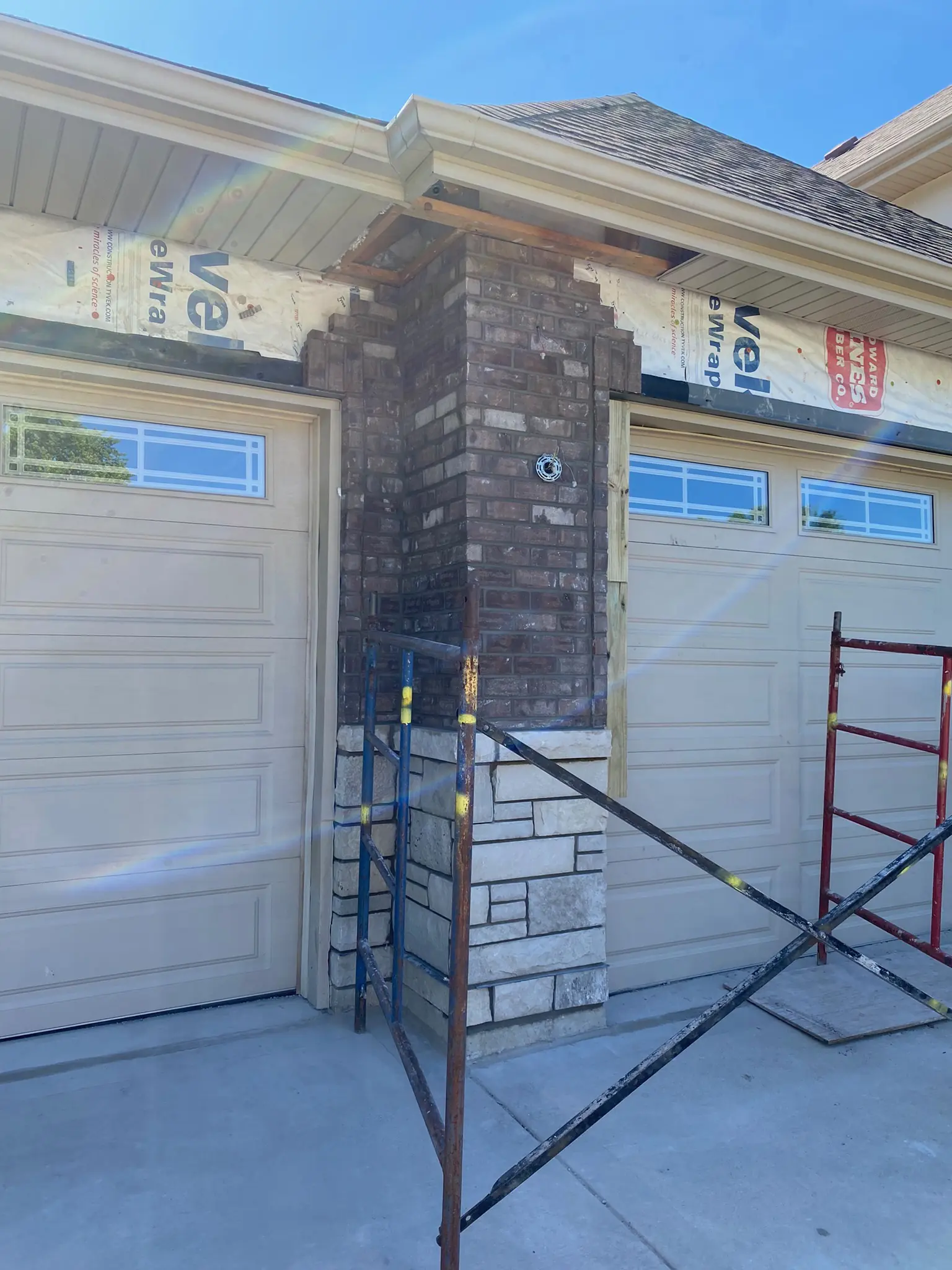
Residential Masonry Restoration in La Grange, IL
Residential masonry restoration in La Grange, IL should begin with somebody walking the entire house, telling you everything that is wrong with the brick and stone, and then telling you what order to fix it in. Emerald Masonry LLC restores homes throughout La Grange and the West Suburbs — family-owned, licensed, bonded and insured, career masons with decades of Chicagoland experience, free on-site estimates. Call (708) 288-1696.
Most homeowners here do not need everything done this year. What they need is an honest ranking — and a mason who will say out loud which items can wait two seasons.
Step One: The Survey
Before we price anything, we walk all four elevations, the chimney, the openings and the grade, looking for:
- Mortar joints receding, sandy, cracked or missing
- Brick faces spalling, flaking, cracked, loose or drummy
- Limestone sills, bands and porch caps — cracks, lost wash, worn drip edges, sugaring
- Chimney — crown, cap, flashing, joints and the stack above the roofline, which weathers hardest
- Lintels — horizontal cracking and lifted brick above windows and doors
- Sealant joints at windows, doors and dissimilar materials
- Water management — gutters, downspouts, grade, splash zones, window wells
- Movement — step cracks, bowing, separation, anything suggesting structure rather than weathering
You get told what we found, in plain language, with the reasoning. Not a list of line items to take on faith.
Step Two: Ranking It Honestly
| Priority | What it covers | Why it comes first | |---|---|---| | 1 — Safety and structure | Loose or displaced brick, failing lintels, unstable chimney | Falling masonry, and damage that compounds | | 2 — Active water entry | Open joints, failed flashing, cracked sills, blocked weeps | Every wet cycle makes the next repair larger | | 3 — Advancing deterioration | Spalling brick, eroding joints not yet leaking | Far cheaper now than as replacement later | | 4 — Protective and preventive | Sealant renewal, breathable sealing, grade and downspout work | Extends everything above it | | 5 — Cosmetic | Staining, efflorescence cleaning, appearance blending | Do it once the wall is sound |
Phasing a La Grange restoration across two or three years is a perfectly sound plan — provided the order is right. Doing cosmetic work while water is still entering is how homeowners pay twice, a pattern we cover in how to prioritize masonry repairs on a budget.
What La Grange Homes Are Actually Made Of
La Grange is one of the older, better-preserved villages on the BNSF line, and its housing stock reflects that: late-1800s and early-1900s homes around the historic district and the blocks near the stations, brick and frame Victorians, foursquares, bungalows and 1920s brick homes, plus coach houses, garages and porch masonry that came with them.
Two technical facts govern nearly everything on these houses.
The masonry is soft, and the mortar must be softer still. Pre-1930s brick and local limestone were laid in lime-rich mortar because the joint is meant to be the sacrificial, flexible element. Repoint that wall with a hard modern mix and every freeze cycle and every bit of movement gets taken out of the brick faces instead. Spalled mortar can be replaced; spalled century-old brick cannot.
Cleaning is where irreversible damage happens. Sandblasting and high-pressure washing strip the fired face off brick and the weathered skin off limestone permanently, leaving the masonry drinking far more water than before. The gentlest method that works is always the right one — see why sandblasting damages brick.
Add a mature tree canopy that keeps north and east elevations damp, decades of gutters overflowing onto the same stone, and Cook County's freeze-thaw cycling, and you have the village's characteristic pattern: sound-looking walls with quietly failing details.
The Restoration Work Itself
- Fix the causes first — water paths, drainage, flashing, blocked weep holes.
- Repoint what has failed — joints cut to sound depth and repointed in mortar matched for color, sand, texture, profile and hardness.
- Replace failed brick and stone with matched or salvaged units, dry-laid for your approval before setting.
- Restore the chimney — crown, cap, flashing and stack, the most weather-exposed masonry on any house and the most commonly deferred.
- Handle lintels and sills — corroded steel replaced and flashed; limestone sills repaired so the wash and drip edge shed water again.
- Renew sealant joints with backer rod and the correct sealant for each substrate.
- Clean gently — never blasting, never high pressure.
- Seal last, with a breathable penetrating repellent, once mortar has cured.
What Drives the Cost
The scope you choose for phase one versus the full plan · wall area and number of elevations · the true percentage of joints and units that have failed · chimney work and roof access · staging requirements · match difficulty for brick, limestone and mortar · water-management corrections folded into the job · season and curing conditions. We do not quote older homes over the phone; the assessment is free and written.
Emerald Masonry LLC is a family-owned, licensed and insured masonry contractor serving Chicago and the Chicagoland suburbs led by career masons with decades of hands-on experience in tuckpointing, chimney repair, brick repair and replacement, lintel and parapet repair, foundation and limestone/sill repair, caulking, sealing, and commercial, residential, and historic masonry restoration. Free on-site estimates — call (708) 288-1696.
Serving La Grange and the West Suburbs
We restore residential masonry throughout La Grange's 60525 — the historic district, the streets near the Metra stations, and the surrounding neighbourhoods — and across the neighbouring Cook and DuPage County villages. Depending on what the survey turns up, a plan may start with tuckpointing in La Grange, brick repair in La Grange or chimney repair in La Grange. We do the same work in Western Springs, Brookfield, Riverside, La Grange Park and Hinsdale.
Why La Grange Homeowners Call Emerald
We survey before we quote, we rank the work honestly — including telling you what can wait — and we match materials to what your house is actually built of rather than to whatever is fastest. On this housing stock that means soft mortar, gentle cleaning and repair in kind. Family-owned, licensed, bonded and insured, career masons with decades of Chicagoland experience.
Want a straight, written assessment of your La Grange home's brick and stone, with a plan you can phase? Request a free on-site estimate or call (708) 288-1696.
Ready to get started?
Free on-site estimates for commercial and large-scale projects.
Residential Masonry Restoration in La Grange, IL — Frequently Asked Questions
How much does residential masonry restoration cost in La Grange, IL?
A restoration is priced by scope, because it is several repairs bundled into one plan. Wall area, the true percentage of failed mortar and units, chimney condition, lintels and limestone sills, staging requirements, and how much you choose to do in the first phase all move the number. Emerald Masonry provides a free written on-site estimate, with a $5,000 project minimum.
Do I have to do all the work at once?
No, and most owners of older La Grange homes should not. We rank the scope so anything structural or actively admitting water is done first, while cosmetic and preventive work can be phased across following seasons. You get the whole picture and choose the pace.
My home is in a historic district. Does that affect masonry work?
It can affect exterior changes and materials, so check the requirements with the Village before work is scheduled. Straight repair-in-kind with matched materials is generally the least complicated path, and it is also the right approach technically on this housing stock.
Why does mortar hardness matter so much on an older La Grange house?
Because the mortar must be softer than the brick or stone it holds. Repointing century-old soft brick with a hard Portland-heavy mix makes the units the sacrificial element, and the faces spall within a few winters — one of the most common ways a well-intentioned repair damages an older home.
Will restored areas match the rest of my house?
That is the craft of it. We match brick and stone for color, size and texture — salvaged or reclaimed units where needed — and match mortar for color, sand, texture, joint profile and hardness. Restoration that announces itself was not matched properly.
How long does a full restoration take?
A single focused elevation can be a matter of days; a whole house with chimney work and staging runs considerably longer. Weather and mortar curing set as much of the pace as labor does, so we give a realistic phase-by-phase schedule with the estimate.
Do you restore limestone trim as well as brick?
Yes — sills, watertable and belt courses, stone lintels, porch caps and steps. Stone needs softer mortar and gentle cleaning, and abrasive cleaning permanently strips its weathered surface, which cannot be reversed.
Residential Masonry Restoration in Nearby Areas
- Residential Masonry Restoration in Beverly, Chicago, IL
- Residential Masonry Restoration in Burbank, IL
- Residential Masonry Restoration in Elmwood Park, IL
- Residential Masonry Restoration in Evergreen Park, IL
- Residential Masonry Restoration in Mount Greenwood, Chicago, IL
- Residential Masonry Restoration in New Lenox, IL
Other Masonry Services in La Grange, IL
Learn more about our residential masonry restoration services across Chicagoland, or view all service areas.