
Commercial Masonry Restoration · Chicagoland, IL
The After-Hours Masonry Call: What a Property Manager Should Have Ready Before It Comes
Masonry emergencies arrive at 6:40 on a Saturday evening, in February, from a resident who says a piece of the building landed in the parking lot. What happens next is decided mostly by what was already in the file.
2026-09-20
Quick Answer
When masonry fails after hours, the response is decided by preparation: a named contractor already onboarded with a COI on file, documented emergency spending authority, dated baseline photographs, and a clear separation between stabilisation and permanent repair. Emerald Masonry LLC handles emergency stabilisation and restoration across Chicagoland — call (708) 288-1696.
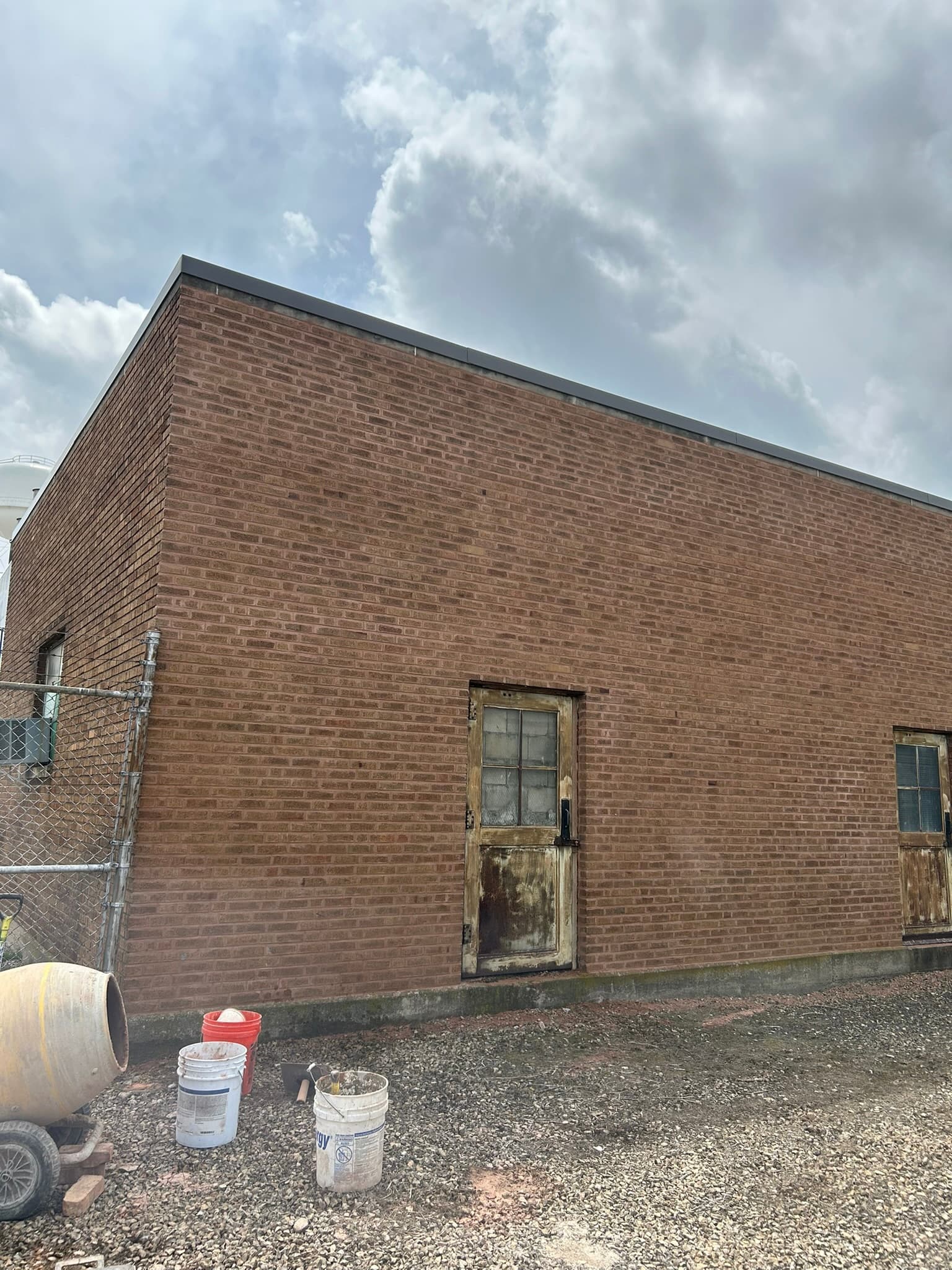
It is 6:40 on a Saturday evening in February. A resident calls to say that a piece of the building is in the parking lot, and she would like to know whether it is safe to move her car.
Almost nothing that happens over the next two hours is decided by skill or by luck. It is decided by what was already in the file — and by whether anyone thought about this before it happened.
Emerald Masonry LLC is a family-owned commercial masonry contractor serving Chicago and the Chicagoland suburbs, led by career masons with decades of hands-on Chicagoland experience. Free on-site assessments — call (708) 288-1696.
What actually falls off buildings around here
Masonry emergencies in Chicagoland are not random. They cluster.
Parapet and coping material. The most exposed masonry on any flat-roofed building, weathered on three surfaces with no heated space behind it, standing directly over sidewalks and entries. This is the most common source of falling material. See parapet wall failure signs.
Brick above an opening. A corroded lintel expands, lifts the masonry it carries, and eventually a displaced unit lets go — over a door people use every day.
Spalled face material from a wall that has been saturating and freezing for several winters, typically after a hard freeze-thaw swing.
Cornices, terra cotta and cast stone ornament, held by internal anchors that corrode invisibly. A unit can look sound and be held by nothing. See terra cotta and cast stone façade repair.
Balcony slab edges on multi-family buildings, where embedded reinforcement corrodes and pushes the surface off from within.
Impact damage — a vehicle into a dock corner, a bollard that was never there, or a delivery truck against a storefront pier.
Three of those six are overhead by definition. That is why overhead masonry outranks everything cosmetic in any maintenance plan.
The first twenty minutes
In order, and the order matters.
1. Secure the drop zone
Before photographs, before phone calls. Barricade or cordon the area beneath the failure — sidewalk, entry, walkway, parking stalls — and make it wide enough. Material that falls from height does not land directly below; it bounces and skitters.
If an entrance is under a compromised parapet or lintel, close it and reroute, with clear signage. Cones do not stop masonry. A partially restricted entry is an entry people will still use.
2. Get people away and keep them away
Residents and tenants will come to look. That is human and it is dangerous. A physical barrier plus a person, if you have one, beats tape alone.
3. Photograph, if it is safe
Before anything is moved or swept up:
- The failed material where it landed, with something for scale
- The wall it came from, from ground level and from any safe vantage
- Comparable undamaged elevations on the same building
- Any weather evidence — ice, standing water, a blocked scupper
- A wide shot establishing the relationship between the failure and what is below it
This is the evidence a carrier will want and the single hardest thing to reconstruct a week later.
4. Call a mason who is already in your file
Which is the entire point of this article.
The file, and why it has to exist beforehand
Everything below takes an hour to assemble on a quiet Tuesday and is impossible to assemble on a Saturday evening.
A named masonry contractor, already onboarded. Not a search result. A firm whose COI and W-9 are in your vendor file, whose after-hours number you have, and who has seen the property before. Vendor onboarding is the step that turns a two-hour response into a two-day one.
A current certificate of insurance. Emerald provides COI, W-9 and lien waivers on request, and they should sit in the file before anything is needed. See masonry contractor insurance and what to verify.
Documented emergency spending authority. What can you authorise, up to what amount, without a board or owner sign-off? Most management agreements and association bylaws grant hazard-mitigation authority. Know your number before you need it, and know who to call above it.
Baseline photographs of every elevation, dated. This is the one people skip and regret. A set of dated photographs from repeatable positions, refreshed annually, is what lets you demonstrate that a condition was not present last spring. That is a causation argument, and causation is what an insurance claim turns on.
A copy of the most recent condition assessment, if one exists, and any façade inspection documentation the building is subject to.
A resident and tenant notification template. Drafted calmly in advance, not written at 9pm.
Stabilisation is a different job than repair
This distinction matters contractually and it matters on a claim.
Stabilisation is making the hazard safe: removing loose material, netting or screening a face, shoring an opening, erecting overhead protection, barricading. It cannot be scoped in advance, so it is reasonably billed by the day or as time and materials — capped, with daily documentation.
Permanent repair is a defined scope: rebuild this section of parapet, replace these lintels, repoint this elevation. It should be scoped, priced, approved and scheduled through the normal process. For contract structure on work whose quantity is genuinely unknowable until the wall is opened, see unit price versus lump sum.
Blending the two into one open-ended number is bad for the owner and invites a dispute with the carrier over both.
What to say to residents and tenants
The construction part of an emergency is usually shorter than the communication part, and the communication part is where reputations are made or lost.
Three messages, in this order.
Immediately — safety and scope of restriction. What area is closed, what route to use instead, whether parking is affected, and that it is being addressed. Short. No speculation about cause, and no estimate of duration you cannot stand behind.
Within a day — what happened and what is next. Plain language: a section of masonry failed, the area is secured, a mason has assessed it, and here is the next step and the expected timeline. People tolerate disruption well when they understand it and badly when they are guessing.
When the plan is set — the permanent repair. Dates, duration, what will be noisy, what access is affected, and a named contact. See masonry work in occupied buildings and tenant communication.
Two things to avoid. Do not assign cause in writing before it is established — "the storm damaged the parapet" is a claims position, not an observation, and it can be contradicted later by your own photographs. And do not promise a completion date that depends on curing temperatures in February.
The liability question nobody enjoys
It has to be said plainly, because it changes how urgently overhead conditions get treated.
Masonry that falls from a building onto a place where people walk or park is a foreseeable-risk problem, and foreseeability is established by what the owner knew or should have known. A condition assessment that identified a deteriorating parapet two years ago, filed and not acted on, is a different situation from one that was identified and scheduled.
That cuts both ways, and the practical conclusion is not to avoid assessments — it is that an assessment should produce a dated plan, and the plan should be followed or consciously re-prioritised in writing. Documented deferral with a stated reason is defensible. Silence is not.
This is also why the survey that follows an emergency matters more than the repair itself: it converts an unknown into a managed item with dates against it.
The Illinois weather problem
A February failure creates a specific difficulty: mortar needs workable temperatures to cure properly.
That does not mean nothing happens until spring. It means the sequence becomes:
- Secure immediately — remove the hazard, protect below.
- Assess the full extent, from the roof where relevant.
- Protect through the winter — netting, screening, temporary weather protection, maintained and inspected.
- Scope and approve during the winter, so the work is ready to go rather than starting the procurement in April.
- Execute when conditions allow.
Buildings that handle winter failures badly are the ones that wait until March to start scoping. See cold-weather masonry repair in Illinois.
When an engineer belongs in it
Call one where:
- A wall or parapet is out of plane — leaning, bowing, or bulging
- A section has separated from the structure behind it
- Reinforcement is exposed in a slab, balcony or lintel condition
- The extent of the failure is unclear from a visual assessment
- Movement appears ongoing rather than historic
- The building is subject to a façade inspection regime and the failure is reportable
A contractor who says "you need an engineer for this" before quoting is giving you a better answer than one who quotes around it.
What the aftermath should produce
The most valuable output of an emergency is not the repair. It is the survey that follows it.
A parapet that dropped material almost never dropped it from the only bad spot. A lintel that failed over one opening has siblings on the same elevation, installed the same year, from the same unprotected steel, in the same exposure. The emergency is a symptom; the elevation is the condition.
So after stabilisation, the right next step is a full assessment of that elevation and its counterparts, with a priority order and a phasing plan — which is what turns an unbudgeted crisis into a managed capital item. See how to prioritise masonry repairs on a budget.
Two failures that look alike and are not
Worth separating, because the response differs and the claim differs.
A sudden event. An impact, a wind event, an ice storm that loaded a parapet, a nearby excavation or teardown that shook a party wall. The evidence is usually localised, recent, and inconsistent with the condition of comparable elevations — which is exactly why photographing undamaged walls matters. See adjacent construction and teardown damage.
An accumulated condition that finally let go. Years of freeze-thaw on saturated masonry, a lintel that has been rust-jacking since the last decade, coping joints open long enough to soak the core of a parapet. The evidence is diffuse: similar deterioration across the elevation, efflorescence, previous patch repairs, staining that predates the event.
Most real failures are the second kind with the first kind as a trigger — a windy night is what finally dislodges a unit that had lost its bond three winters ago. Say that accurately rather than reaching for whichever version is convenient, because your own photographs will eventually be read by someone else.
The preparedness checklist
Assemble this once, review it annually:
- [ ] Masonry contractor named, onboarded, COI and W-9 on file
- [ ] After-hours contact number, tested
- [ ] Emergency spending authority documented, with escalation contact
- [ ] Baseline elevation photographs, dated, refreshed annually
- [ ] Most recent condition assessment on file
- [ ] Resident / tenant notification template drafted
- [ ] Barricade and signage materials on site or sourceable same-day
- [ ] Insurance policy and carrier contact accessible outside business hours
- [ ] Structural engineer contact, for the conditions listed above
- [ ] Known overhead conditions already catalogued, with anything urgent already scheduled
That last line is the one that prevents most of the calls.
The short version
You cannot control when masonry fails. You can control whether, at 6:40 on a Saturday, you are making a call to someone who already knows your building — or typing a search into your phone while a resident waits in a parking lot.
Emerald Masonry LLC is family-owned, established 2024 and led by career masons with decades of hands-on Chicagoland experience. Licensed, bonded and insured, non-union, with COI, W-9 and lien waivers on request. We work with property managers, HOA and condo associations, churches and schools, insurance carriers, and general contractors, across commercial masonry restoration, parapet wall repair, lintel repair, and tuckpointing and repointing.
Get your building assessed before it calls you.
Request a free on-site assessment — or call (708) 288-1696.
Frequently Asked Questions
What should I do first if masonry falls from a building?
Secure the area below before anything else — barricade or cordon the drop zone, including sidewalk, entries and parking, and keep people out of it. Everything else, including photographs and phone calls, comes after the hazard is contained.
Do I need a structural engineer or a mason first?
For immediate stabilisation, a mason who can make the area safe. An engineer is needed where a wall is out of plane, a section has separated, reinforcement is exposed, or the extent of the failure is unclear — and a straight contractor will tell you which situation you have.
How quickly should photographs be taken?
Before anything is moved or cleaned up, if it can be done safely. Dated photographs of the failed material where it landed, the wall it came from, and comparable undamaged elevations are the evidence a carrier will want and the hardest to reconstruct later.
Who can authorise emergency masonry work?
Usually the manager or owner under emergency authority, which most management agreements and association bylaws grant for hazard mitigation. Confirm your specific limit before you need it, and document what you authorised and why at the time.
Is time and materials acceptable for emergency masonry?
For genuine stabilisation, yes — the scope cannot be known in advance. Cap it by the day, require daily documentation, and convert to a defined written scope for the permanent repair as soon as the hazard is controlled.
Will insurance cover falling masonry?
It depends on cause. Damage from a storm, impact or a sudden event is typically a different conversation than deterioration that accumulated over years, and carriers examine that distinction closely. Document the cause evidence early, because it is what the claim turns on.
What paperwork should already be on file before an emergency?
A current certificate of insurance and W-9 for your masonry contractor, their after-hours number, your documented emergency spending authority, and baseline photographs of the building's elevations. All four are trivial to assemble in advance and impossible to assemble at 7pm on a Saturday.
How long does emergency masonry work take to become permanent repair?
Stabilisation is usually same-visit or next-day; the permanent repair follows scoping, approval, and weather. Mortar needs workable temperatures to cure, so a February failure is frequently secured immediately and rebuilt in spring, with protection maintained in between.
Should we close the entrance or just cone it off?
Err toward closing and rerouting. Cones do not stop material falling, and a partially restricted entry under a compromised parapet or lintel is a hazard people will walk under. Reroute, sign it clearly, and keep it closed until a mason has assessed.