
Commercial Masonry Restoration · Chicagoland, IL
Balcony, Walkway, and Guardrail Masonry on Chicagoland Condo Buildings
The masonry a condo board worries about is usually the façade. The masonry that hurts people is the balcony slab edge, the walkway deck, and the brick a guardrail post is bolted into — and it deteriorates from the inside out.
2026-09-09
Quick Answer
Balcony slab edges, exterior walkways, and guardrail anchorages on Chicagoland condo buildings fail from embedded steel corrosion driven by water and de-icing salt, and they deteriorate internally before anything is visible. Because they are overhead and load-bearing on people, they are the highest-priority masonry on a multi-family property. Emerald Masonry LLC assesses and repairs them — call (708) 288-1696.
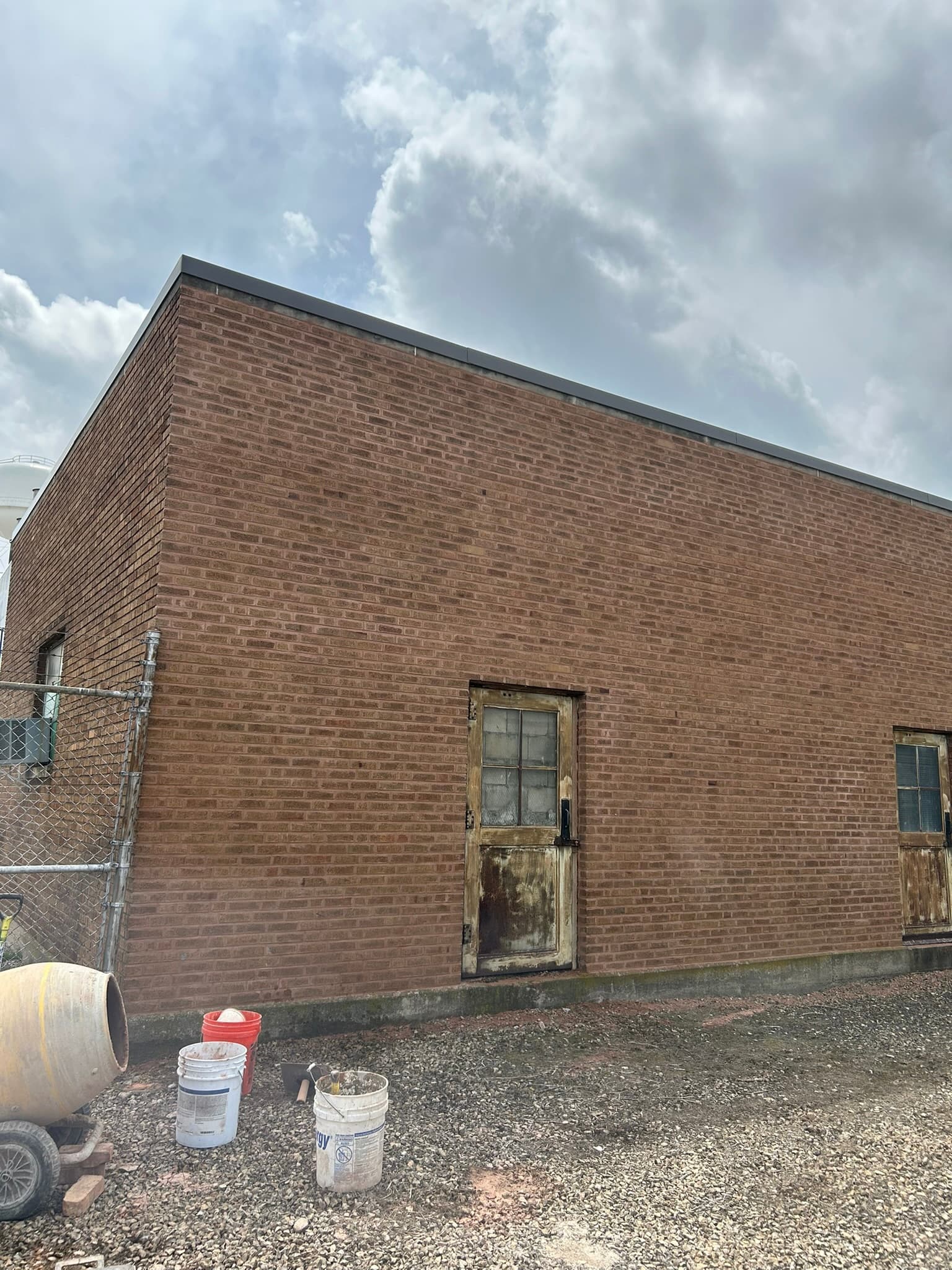
Ask a condo board what masonry they are worried about and they will point at the façade — the brick everyone can see from the parking lot.
Ask which masonry could actually injure somebody, and the honest answer is different: the balcony slab edge, the exterior walkway deck, and the brick or concrete a guardrail post is anchored into. All three are load-bearing on people. All three deteriorate from the inside out. And all three are routinely absent from a reserve study until they show up as an emergency.
Emerald Masonry LLC is a family-owned commercial masonry contractor serving Chicago and the Chicagoland suburbs, led by career masons with decades of hands-on Chicagoland experience, working with condo associations, property managers and boards across multi-family properties. Free on-site assessments — call (708) 288-1696.
The mechanism: steel inside concrete
The building science here is the same one that destroys lintels, and it is worth understanding because it explains why the failure is invisible until it is not.
Reinforced concrete works because steel and concrete expand at similar rates and the alkaline concrete keeps the steel passive — chemically protected from corrosion.
Two things break that protection:
Carbonation. Over decades, atmospheric carbon dioxide reacts with the concrete and lowers its alkalinity. The steel loses its chemical protection.
Chlorides. De-icing salt, tracked and shovelled onto balconies and walkways every Illinois winter, penetrates the concrete and attacks the steel directly. This is the dominant mechanism on exterior decks in this climate.
Once the steel starts corroding, it converts to iron oxide, which occupies several times the volume of the original metal. The concrete around it cannot move, so the expansion pushes the surface off from inside. That is spalling, and by the time you see it, the reinforcement has already lost section.
Which is the crucial point for a board: the damage is well advanced before anything is visible. A slab that looks fine can be years into the process.
Where multi-family buildings fail
The balcony slab edge
The most exposed concrete on the building. Water runs to the edge, sits at the drip line, and freezes there. Reinforcement near an edge has the least cover protecting it. Spalling almost always starts at the edge and the underside, and it drops material — over an entry walk, a patio, or a parking stall.
The underside and the soffit
Rust staining and efflorescence on the underside of a balcony is a diagnostic gift. It means water is moving through the slab and reaching steel. Residents rarely look up; a walkthrough should.
Guardrail anchorage
The item that matters most and gets checked least.
A guardrail post embedded in concrete or bolted into masonry can look completely sound while the steel inside its pocket has corroded and lost its grip. Worse, the corroding post expands and cracks the masonry it sits in, which then admits more water, which accelerates the corrosion. It is a closed loop.
A guardrail is a life-safety element carrying a code-defined load. Any movement under hand pressure is an immediate finding, not a maintenance note.
Exterior walkways and stair landings
On courtyard and garden-style buildings, the walkway is the only route to the unit. Deck coatings fail, water gets into the slab, and the deterioration runs the length of a bay. Because residents use it daily, this work carries the heaviest access and communication burden of anything on the property.
The balcony door threshold
The most overlooked detail on the list. Water entering at the door sill and its flashing runs into the slab and the wall below, and it is invisible from the balcony. The characteristic symptom is a leak reported by the unit below the balcony, not by the unit with the balcony — which is why these get misdiagnosed as window or façade leaks for years. Our post on through-wall flashing in masonry walls covers the detail.
Where the balcony meets the wall
A cold joint between two assemblies that move at different rates, sealed with a bead that has a service life measured in a handful of years. Failed sealant here delivers water directly into the junction.
What to look for on a walkthrough
- Rust staining at slab edges, undersides, or around railing posts
- Cracks running parallel to a slab edge — often the first sign of reinforcement corrosion below
- Hollow sound when a slab surface is tapped, indicating delamination before spalling appears
- Any exposed reinforcement — urgent, without qualification
- Guardrail posts that move, or cracked masonry around a post base
- Efflorescence on undersides and soffits
- Ponding water on a deck, meaning the slope is gone
- Failed or debonded deck coating
- Open sealant at the wall junction and at door thresholds
- Blocked or missing scuppers and drains
Two things a board should record: date every observation, and photograph from repeatable positions. Change over time is far more informative than any single inspection, and it is what tells you whether something is stable or progressing.
Chicagoland makes this worse than most markets
Freeze-thaw cycling. A Chicago winter does not freeze once and hold — it thaws and refreezes dozens of times a season. Every cycle is an expansion event inside wet concrete.
De-icing salt, applied directly. Unlike a façade, a balcony and a walkway get salt deliberately placed on them, all winter, every winter. Chloride attack on reinforcement is the single largest driver of the damage described here. Our post on road salt and de-icer damage covers the wider effect.
Shovelling. Metal shovels and ice chippers damage deck coatings and surface concrete, opening the path.
Building stock. Chicagoland's garden-style courtyard buildings, 1960s and 70s mid-rises, and townhome associations were built with cover depths and detailing that were normal at the time and are now, fifty years on, at the point where this shows.
How the repair actually works
- Assess and sound the concrete. Delaminated areas are identified by tapping before anything is removed — visible spalling is always smaller than the affected area.
- Involve a structural engineer where reinforcement is exposed, a slab is deflecting, or the extent is unclear. A straight contractor says this rather than quoting around it.
- Remove unsound concrete back to solid material, and fully around any corroded reinforcement — undercutting behind the bar, not merely to its face.
- Clean and treat the reinforcement, and supplement or replace bar where section loss requires it.
- Rebuild the section with an appropriate repair mortar, formed at edges to restore the original profile and drip.
- Restore guardrail anchorage properly — repairing the pocket or resetting the post, rather than injecting sealant around a loose base and calling it done.
- Repair the masonry around anchorages and at the wall junction.
- Restore slope and drainage, so the deck sheds rather than ponds.
- Reseal joints and thresholds with backer rod and correctly tooled sealant.
- Reinstate the deck coating or waterproofing system, once the substrate is sound.
Running the work in an occupied building
This is a resident-facing project more than a technical one.
Overhead protection wherever work is above an entry, walkway, or parking. Non-negotiable.
Written notice, in advance, unit by unit — what is happening, when, how long balcony access is restricted, and who to contact. Most complaints on this work are information failures rather than construction failures. See masonry work in occupied buildings and tenant communication.
Access sequencing that keeps at least one route to every unit open at all times on walkway buildings.
A named contact on both sides, so a resident with a question does not call three different people.
Materials, and why the wrong patch fails fast
Concrete repair on an exterior deck is genuinely material-sensitive, and this is where cheap work announces itself within a season or two.
The repair mortar has to be compatible with the substrate. A patch that is much stronger and stiffer than the surrounding concrete does not share load with it; it debonds at the perimeter and pops out. Matching the modulus and shrinkage behaviour of the parent material matters more than raw compressive strength.
Bond depends entirely on preparation. Sound, clean, roughened substrate, removal of every trace of unsound material, and full removal around and behind corroded reinforcement. A patch placed against a bar that is still rusting on its back face is a patch that will be re-done, because the corrosion continues underneath it.
Edges must be formed, not feathered. A feather-edged patch at a slab edge has no thickness at its most vulnerable point and fails first. Repairs are saw-cut to a square edge and formed to restore the original profile, including the drip.
Coatings are a system, not a product. A pedestrian traffic coating has a primer, a body coat, and a wear coat, applied to a substrate at the right moisture content and temperature. Rolling a coating over a damp or unsound deck is a way to hide a problem for one season.
Sealant is not a structural repair. Injecting sealant around a loose guardrail post base does not restore anchorage. It conceals the movement and delays the finding.
The paper trail a board should keep
This work has a longer institutional memory requirement than most, because it recurs and because boards turn over.
Keep, in one file: dated photographs from repeatable positions of every balcony edge, underside, and railing base; the sounding survey and any engineer's report; the written scope and the marked-up elevations showing what was repaired and where; the coating system and product data used, with the date; and the sealant type and date at thresholds and wall junctions.
Five years on, when the next board asks whether the north stacks were done in the last cycle, that file answers it in a minute. Without it, the answer is another survey.
Who pays, and what the declaration says
Balconies are frequently limited common elements — the association controls repair of the structure while the owner has exclusive use. But this varies genuinely between buildings, and the declaration governs, not general practice.
Read it before commissioning anything, and if the language is ambiguous, get an opinion before the work rather than after the invoice. Our guide to HOA versus unit owner responsibility for masonry repair walks through the usual arrangements.
Budgeting and phasing
Balcony and walkway repair belongs in a reserve study as a recurring cyclical item, not as a one-time event — because coatings, sealant and joints all have service lives well short of the structure's.
When phasing across budget years:
- Life-safety first. Exposed reinforcement and compromised guardrails do not defer. Nothing else on the property outranks them.
- Group by access. Staging is a large share of this cost. Doing two stacks on one mobilisation beats doing them in different years.
- Fix water before appearance. A recoated deck over a spalling slab is money spent twice.
For contract structure on work whose quantity genuinely cannot be known until the concrete is opened, see unit price versus lump sum — this is close to the ideal case for a hybrid.
What drives the cost
Number of balconies, bays, or walkway sections. Extent of concrete removal and reinforcement repair, which is only truly known once sounding is done. Guardrail anchorage scope. Access and staging. Overhead protection. Coating and waterproofing restoration. Whether an engineer is engaged. Resident coordination requirements. Weather windows, since repair mortars and coatings both need workable temperatures.
Free on-site assessment and a written scope your board can circulate — call (708) 288-1696.
Put it on the walkthrough list
If your association has not looked specifically at slab edges, undersides, and guardrail anchorage in the last couple of years, that is the walkthrough worth scheduling — separately from the façade, and with somebody actually putting a hand on the railings.
Emerald Masonry LLC is family-owned, established 2024 and led by career masons with decades of hands-on Chicagoland experience. Licensed, bonded and insured, non-union, with COI, W-9 and lien waivers on request. We work with HOA and condo associations, property managers, and general contractors, across commercial masonry restoration, brick repair, caulking and joint sealant, and masonry sealing.
Request a free on-site assessment — or call (708) 288-1696.
Frequently Asked Questions
Why do balcony edges and walkways spall?
Water and de-icing salt reach the steel reinforcement inside the concrete, and corroding steel expands to several times its original volume. Because the concrete cannot move, the expansion pushes the surface off from within — which is why spalling appears suddenly on a slab that looked sound.
What are the warning signs on a balcony or walkway?
Rust staining at the slab edge or underside, hairline cracks running parallel to the edge, hollow-sounding areas when tapped, a loose or wobbling guardrail post, efflorescence on the underside, and spalled patches showing exposed steel. Any exposed reinforcement should be treated as urgent.
How do we know if a guardrail is still properly anchored?
You do not, from looking at it. A post embedded in masonry or concrete can look perfect while the steel inside has corroded and lost its grip, so anchorage should be physically checked rather than assumed. A post that moves at all under hand pressure needs immediate attention.
Is balcony repair the association's responsibility or the unit owner's?
It depends on the declaration, and it varies genuinely between buildings. Balconies are frequently limited common elements, where the association controls repair of the structure while the owner has use — but the document governs, so read it before commissioning anything.
How much does balcony and walkway masonry repair cost in Chicagoland?
It is priced by scope. The drivers are the number of balconies or walkway bays, the extent of concrete removal and steel repair, guardrail anchorage work, access and staging, overhead protection, and whether a coating or waterproofing system is being restored. Emerald Masonry provides a free on-site assessment and a written scope.
Can this work be phased across budget years?
Yes, and most associations do — but the phasing has to follow condition and life-safety priority rather than building sequence. Anything with exposed reinforcement or a compromised guardrail is not a candidate for deferral.
Do residents have to vacate their units?
Almost never. Balcony access is typically restricted for the duration of the work on that unit, with notice given in advance, and overhead protection installed below. Written communication ahead of mobilisation prevents the majority of resident complaints.
Should a structural engineer be involved?
Where reinforcement is exposed, where a slab is deflecting, or where the extent of deterioration is unclear, yes — and a straight contractor will say so rather than quoting around it. Routine surface spalling and joint work does not usually require one.
What is the single most overlooked item on a condo balcony?
The door threshold and the flashing beneath it. Water entering at the balcony door detail runs into the slab and the wall below, and it is invisible from above — which is why the leak reports usually come from the unit underneath rather than the one with the balcony.