
Commercial Masonry Restoration · Chicagoland, IL
Your Façade and Your Insurance Renewal: What Carriers Now Ask About Masonry
Masonry used to surface in an insurance conversation only after something fell. Increasingly it surfaces at renewal — in an underwriting question, a loss-control photograph, or a recommendation letter with a deadline attached.
2026-09-20
Quick Answer
Commercial property carriers increasingly evaluate façade condition at renewal, not just at claim time — through loss-control inspections, underwriting questions about deferred maintenance, and recommendation letters with deadlines. A dated condition assessment and a documented, followed repair plan is the most useful thing an owner can hold. Emerald Masonry LLC assesses and restores Chicagoland façades — call (708) 288-1696.
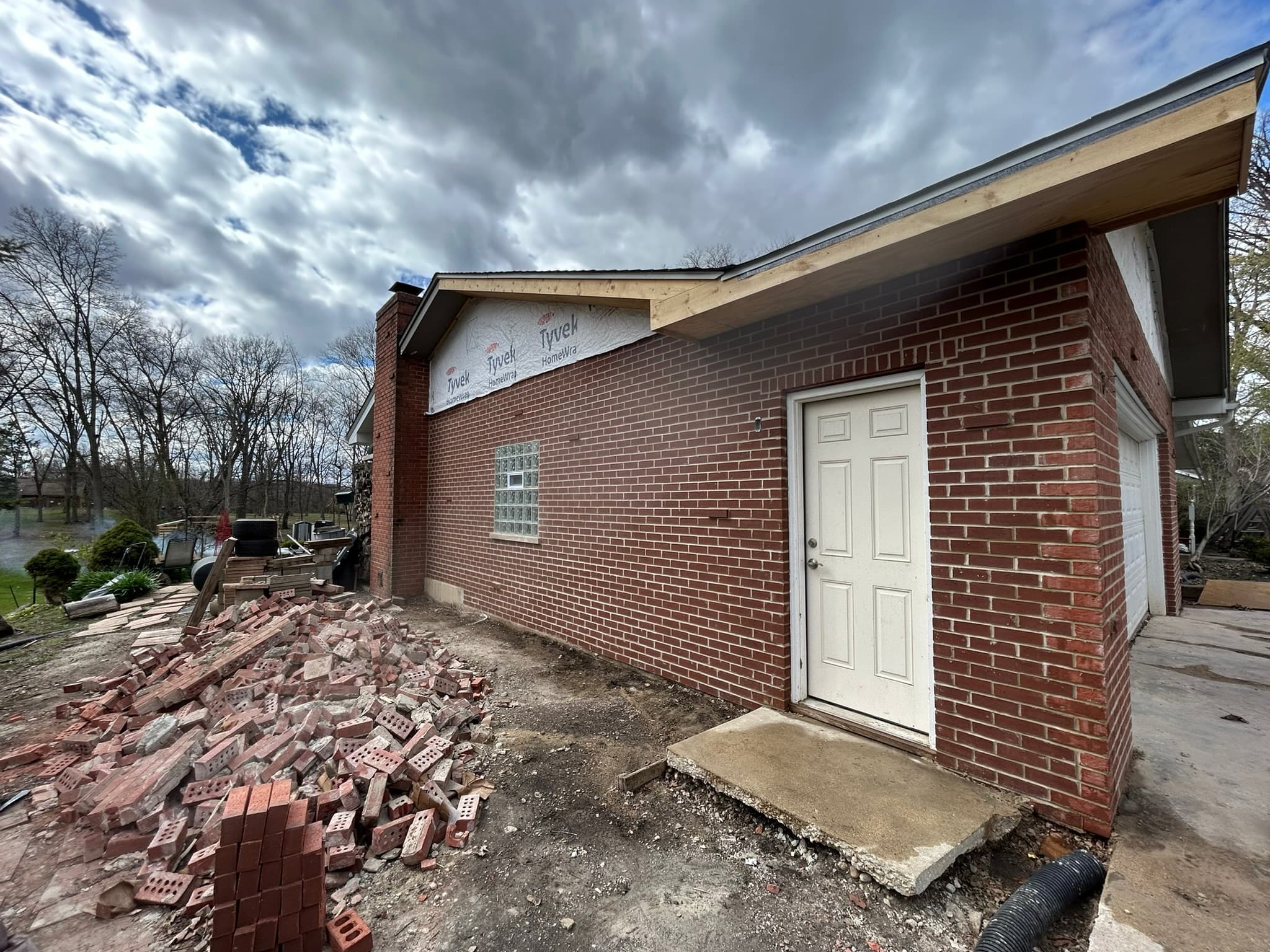
For a long time, masonry entered an insurance conversation in exactly one circumstance: after something fell, when somebody filed a claim.
That has been shifting. On older commercial and multi-family buildings across Chicagoland, façade condition now shows up at renewal — in a loss-control inspector's photographs, in an underwriting questionnaire about deferred maintenance, or in a recommendation letter with a date on it.
The practical consequence for owners, boards and managers is worth stating plainly: the most useful masonry document you can hold is not a repair invoice. It is a dated condition assessment with a written plan that you actually followed.
Emerald Masonry LLC is a family-owned commercial masonry contractor serving Chicago and the Chicagoland suburbs, led by career masons with decades of hands-on Chicagoland experience, in commercial tuckpointing, façade and parapet repair, lintel replacement, chimney and stack rebuilds, CMU block repair, brick repair and replacement, foundation and limestone/sill repair, caulking, sealing, and commercial, residential and historic masonry restoration. Free on-site assessments — call (708) 288-1696.
Why a property carrier cares about brick
Two separate exposures, and they are often confused.
Property. Water getting into a building through a failed façade produces interior damage, mould remediation, tenant disruption, and business interruption. From an underwriting standpoint, a wall that is actively admitting water is a predictable future claim.
Liability. Masonry over a sidewalk, an entry, or a parking stall that is spalling, loose, or displaced is a bodily-injury exposure. This is the one that moves underwriters most, because the severity is open-ended in a way water damage is not.
Which is why the conditions that draw attention are disproportionately overhead: parapets, coping, cornices, lintels over entrances, balcony edges, and decorative units held by corroding anchors.
Where condition surfaces in the process
Loss-control inspections
Many commercial and larger multi-family policies include a physical inspection. The inspector is not a mason, and the report is not an engineering assessment — but they photograph elevations, and visible spalling, open joints, displaced units and staining go into a file.
Underwriting questionnaires
Renewal submissions increasingly ask about building age, roof and façade condition, deferred maintenance, capital improvement plans, and whether recent inspections identified conditions. How those questions are answered matters, and an honest "assessed in 2026, three-phase plan underway, phase one complete" is a far stronger answer than a blank.
Recommendation letters
The formal version: a written finding with a condition, sometimes a deadline, occasionally a consequence. Masonry recommendations usually concern loose material over pedestrian areas, parapet deterioration, or active water infiltration.
The correct response is not to argue and not to ignore. It is to get it assessed and respond in writing with a scope and a schedule — even when the work itself must wait for curing temperatures. Carriers respond well to documented plans with dates and badly to silence.
After a loss
Where the argument is always the same one.
Sudden loss versus accumulated deterioration
Policies cover sudden and accidental loss. They do not cover wear.
So when masonry fails and a claim follows, the whole thing turns on causation — did a storm, impact or event cause this, or did years of freeze-thaw on a saturated wall finally let go on a windy night?
In Chicagoland, honestly, it is usually the second with the first as a trigger. A wind event dislodges a unit that lost its bond three winters ago.
That reality makes one preparation disproportionately valuable: dated baseline photographs of every elevation, refreshed annually, from repeatable positions. They are what let you demonstrate that a condition was not present last spring, and they cost nothing but an hour. Without them, a causation argument is assertion against assertion. See storm damage versus pre-existing deterioration and masonry insurance claims in Illinois.
What Chicagoland does to façades
Worth understanding because it explains why this region draws underwriting attention at all.
Freeze-thaw cycling. A Chicago winter does not freeze once and hold — it thaws and refreezes dozens of times a season. Every cycle is an expansion event inside wet masonry, and it is the dominant deterioration driver here.
Lake-effect moisture. More wetting, slower drying, particularly on shaded elevations.
De-icing salt at grade level, attacking the bottom courses of every wall, step and dock.
Age of the stock. Chicago brick bungalows, greystones, two-flats, courtyard buildings, and mid-century commercial construction — much of it now at or past the point where original mortar and original unprotected steel lintels are genuinely due.
Parapets everywhere. Flat-roofed commercial and multi-family construction means an enormous quantity of the region's masonry is roof-edge masonry, which is the most exposed and least inspected material on any building. See parapet wall failure signs.
The conditions that draw the most attention
From what actually gets photographed and written up, the list is short and consistent.
Loose, displaced or spalling material above a pedestrian area. Top of the list every time, because the severity is unbounded. A single displaced brick over an entry canopy outweighs a whole elevation of tired joints on a rear wall.
Parapet deterioration visible from the street or the roof. Open coping joints, a parapet visibly out of plane, vegetation growing from the top of a wall — that last one is a particularly bad sign, because it means water has been standing in the masonry long enough to support a root system.
Cornices, terra cotta and cast-stone ornament showing cracks, displacement or previous patch repairs. Anchors corrode invisibly, so displacement matters more than surface condition here.
Active water infiltration — interior staining, efflorescence blooming on an exterior wall, saturated masonry that never dries on one elevation.
Lintel rust-jacking above entrances and storefronts, which reads as a straight horizontal crack with rust staining below it. See lintel rust stains and orange streaks.
Balcony and walkway edges on multi-family, where reinforcement corrosion pushes the concrete surface off from within.
Prior repairs that look wrong — hard grey mortar smeared over soft historic joints, painted-over spalling, sealant used as a structural fix. These signal a maintenance history rather than a single condition, and they are read that way.
What it costs to do nothing
Worth setting out, because the deferral decision is usually framed as saving money.
Masonry deterioration is not linear. The mechanism that caused it — an open joint, a cracked coping, a corroding lintel — keeps operating every rain and every freeze-thaw cycle. So the progression runs from a repointing scope, to repointing plus unit replacement, to a saturated wall with interior damage, to rebuilding. Each step is a multiple of the last.
Layer the insurance consequence on top: terms that tighten, deductibles that move, a recommendation that escalates, and — after a loss — a causation argument you are poorly positioned to make because there is no baseline documentation.
The building was always going to need the work. Deferral mostly determines how much of it, and under what conditions, and whether you were choosing the timing or something else was.
What a carrier-ready file contains
None of this is exotic. Most of it is an afternoon.
A dated condition assessment, elevation by elevation, with photographs. Emerald provides this free, in writing.
A written repair plan with a priority order — overhead and structural first, active water entry second, deterioration third, appearance last — and dates against each phase.
Evidence of work completed against that plan: scopes, invoices, before-and-after photographs.
Baseline elevation photographs, dated and refreshed annually.
Documentation of conscious deferral. This one is underrated. Deferring a cosmetic item with a stated reason and a revisit date is defensible planning. Deferring an overhead item silently is not. A plan that shows judgement reads better than one that shows everything was done at once, because nobody believes the latter anyway.
Contractor documentation — COI, W-9, lien waivers on file, which Emerald provides on request.
Phasing, and what it signals
A common worry: does phasing look like deferral to an underwriter?
Done properly, no — it looks like management. What distinguishes them is sequence and evidence.
Phasing by priority, with the overhead and water-entry items in phase one and completed on schedule, signals a building that is being run. Phasing that defers the parapet because the street elevation is more visible signals the opposite, and an inspector's photographs will show which one you did.
Two practical rules carry over from any capital plan: group by access, since the expensive part of upper-elevation work is getting up there, and sequence by priority, never by convenience. See how to prioritise masonry repairs on a budget and, for associations, HOA masonry maintenance budgets.
For condo and townhome associations specifically
Associations carry a particular version of this problem, because the insurance conversation and the reserve conversation happen in different meetings with different documents.
The reserve study carries a masonry line estimated from building age and square footage. The insurance renewal asks about condition. Neither is informed by an actual survey of the walls unless somebody commissions one.
Connecting them is straightforward and high-value: one condition assessment feeds both. It gives the board a defensible scope and sequence for the reserve plan, and it gives the manager something substantive for the renewal submission. See HOA versus unit owner responsibility.
Timing the work against the renewal date
A small piece of sequencing that repeatedly pays for itself.
Find out when your renewal submission is actually prepared — usually weeks before the policy date, not on it — and work backwards. An assessment completed and a first phase underway before that submission changes what can honestly be reported. The same work finished a month after it counts for nothing until the following year.
In Chicagoland that collides with the construction season. A policy renewing in late winter means the useful window for completing visible work closes in autumn, because mortar needs workable temperatures to cure. Buildings that handle this well commission the assessment in summer, complete phase one in early autumn, and go into the submission with photographs of finished work and dates against the remaining phases.
If the timing has already slipped, a written scope with a scheduled start is still a materially better answer than nothing — it is evidence of a decision rather than evidence of drift.
What we provide
A free on-site assessment, elevation by elevation, with photographs and a written scope separated into urgent, deteriorating, and cosmetic — with stated exclusions, so it is a document you can hand to a board, a manager, an owner, or an underwriter without translation.
Where a building needs an engineered façade examination, or where a wall is out of plane, has separated, or shows exposed reinforcement, we will say so rather than quoting around it. A contractor who recommends an engineer before quoting is giving you the more useful answer.
What drives the cost of the work
Elevation area and height. Access and staging. The ratio of repointing to rebuilding. Lintel, parapet, coping and flashing scope. Overhead protection where the public passes beneath. Whether the project is phased and mobilised more than once. Weather windows, since mortar needs workable temperatures to cure properly.
We do not price façade work over the phone — see why masonry contractors won't quote over the phone.
The short version
Carriers are increasingly reading buildings, not just policies. The file that helps you is a dated assessment, a priority-ordered plan, and evidence you followed it — assembled before a renewal question or a recommendation letter arrives, not after.
Emerald Masonry LLC is family-owned, established 2024 and led by career masons with decades of hands-on Chicagoland experience. Licensed, bonded and insured, non-union, with COI, W-9 and lien waivers on request. We work with property managers, HOA and condo associations, churches and schools, insurance carriers, and general contractors, across commercial masonry restoration, parapet wall repair, tuckpointing and repointing, lintel repair, and masonry sealing.
Request a free on-site assessment — or call (708) 288-1696.
Frequently Asked Questions
Do insurance carriers actually look at masonry condition?
Increasingly yes, particularly on older commercial and multi-family buildings. Loss-control inspections photograph elevations, underwriting questionnaires ask about deferred maintenance and capital plans, and visible overhead deterioration draws attention because it represents a liability exposure as well as a property one.
What is a loss-control recommendation letter?
A written finding from the carrier's inspector identifying a condition they want addressed, often with a deadline. Masonry recommendations typically concern loose or spalling material over walkways, deteriorated parapets, or water infiltration. Ignoring one can affect terms at renewal.
Can deferred masonry maintenance affect my premium or coverage?
It can affect terms, deductibles, or a carrier's willingness to quote at all, especially where the condition is overhead and near public access. Carriers are underwriting future losses, and visible unmanaged deterioration is a reasonable predictor of one.
Why do carriers care about the difference between storm damage and wear?
Because policies cover sudden and accidental loss, not deterioration. A claim for masonry damage turns on whether the condition resulted from an event or accumulated over years, which is why dated baseline photographs of your elevations are so valuable.
What documentation helps most at renewal?
A dated condition assessment, a written repair plan with a priority order, evidence of work actually completed against that plan, and baseline photographs of each elevation. Documented, followed planning reads very differently to an underwriter than a silent file.
We got a recommendation about our parapet. What now?
Get it assessed promptly and respond in writing with a scope and a schedule, even if the work itself cannot happen until the weather allows. Carriers generally respond well to a documented plan with dates and badly to silence.
Does a façade inspection requirement interact with insurance?
They are separate regimes but they inform each other. A building subject to a periodic façade examination produces documentation an underwriter may ask to see, and findings left unaddressed in one regime tend to surface in the other.
How much does a façade condition assessment cost?
Emerald Masonry provides a free on-site assessment and a written scope. A formal engineered façade examination, where a building is subject to one, is a separate professional service priced by the engineer.
Is it better to phase repairs or do everything before renewal?
Phase by priority — overhead and structural first, water entry second — and document the phasing. A credible multi-year plan with completed first phases generally satisfies an underwriter better than a rushed partial job with no plan behind it.