
Masonry Restoration · Chicagoland, IL
After a Fire: What Heat Actually Does to Brick, Mortar, and Stone — and How Masonry Gets Restored
Masonry survives fires that destroy everything around it, which is exactly why it gets misjudged afterward. A wall that looks sound can be calcined behind the face, and a wall that looks ruined is often just sooted. Telling them apart is the whole job.
2026-08-25
Quick Answer
Fire damages masonry in three ways: thermal spalling that pops brick faces off, calcination that turns mortar and limestone chalky and structurally weak, and soot and smoke staining that is cosmetic. Brick often survives high heat while mortar and limestone do not, so post-fire assessment means sounding the wall and testing joint depth rather than judging by appearance. Emerald Masonry LLC restores fire-damaged masonry across Chicagoland — (708) 288-1696.
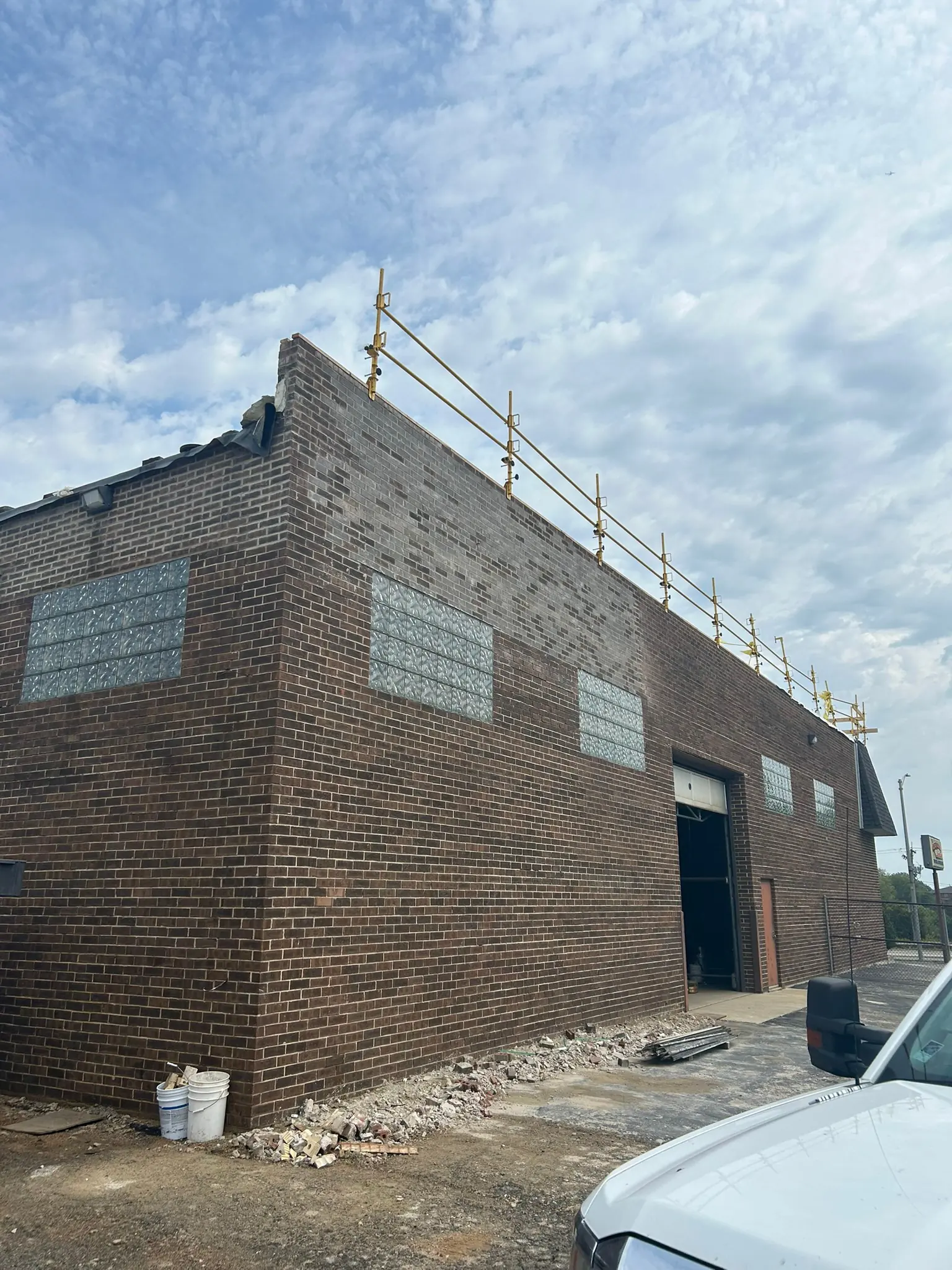
Masonry is what tends to be left standing. Fire takes the framing, the roof and the finishes, and the brick walls are still there the next morning — which is precisely why fire damage to masonry gets misjudged so often.
A brick wall that looks sound after a fire can have mortar you can rake out with a finger. A wall that looks catastrophic can be nothing worse than soot. Telling those apart is the entire assessment, and it cannot be done from a photograph.
Emerald Masonry LLC restores fire-damaged masonry on homes, multi-family buildings, churches and commercial properties throughout Chicago and the Chicagoland suburbs. Family-owned, licensed, bonded and insured, career masons with decades of experience, free written on-site assessments. Call (708) 288-1696.
The Building Science: Three Different Kinds of Damage
Fire does not do one thing to masonry. It does three, and they have completely different consequences.
1. Soot and smoke staining — cosmetic
Carbon deposits and smoke residue on the face of the masonry. Ugly, sometimes dramatic, and structurally meaningless. It cleans, with the right method.
2. Thermal spalling — surface loss
Brick and stone contain moisture. Heat that moisture fast enough and it flashes to steam inside the unit, while the outer surface expands against a cooler interior. The face pops off. Firefighting water contributes as much as the fire does — hitting hot masonry with a cold hose stream causes rapid contraction on top of everything else, which is why spalling clusters both at the seat of the fire and where streams landed.
Related, and easier to miss: crazing, a fine network of cracks in the brick face that indicates the unit has been thermally stressed even where nothing has popped off yet.
3. Calcination — the one that matters structurally
This is the dangerous one, and it is invisible.
Lime- and cement-based mortars are chemically altered by sustained heat. Past a certain temperature the binder breaks down and the mortar becomes chalky, powdery and mechanically weak — while frequently keeping its original color and shape. A joint can look completely normal and turn to dust under a screwdriver.
Limestone does the same thing. Heat it enough and calcium carbonate begins converting toward quicklime, leaving the stone friable, discolored and prone to crumbling — and, once it is later exposed to water, prone to expanding as it rehydrates.
Here is the fact that reverses most people's intuition: the brick is usually the survivor. Clay brick was fired in a kiln at temperatures far above what most building fires reach, so a fire that guts a structure often leaves the brick units serviceable while destroying the mortar around them and the stone trim among them.
The Warning Signs, and What Each One Means
Spalled and popped brick faces
Face material missing, exposing the softer interior. Concentrated near the seat of the fire and at hose-stream impact points. Those units absorb water rapidly from then on.
Crazing on brick faces
A fine crack network across the face. The unit has been heat-stressed; it may still be serviceable, but it is now a weaker, more absorbent brick.
Discoloration and color change
Brick and stone can permanently change color with heat. On its own it is cosmetic — but it is a useful map of where the wall got hottest, and therefore where to probe hardest.
Mortar that crumbles when probed
The finding that decides the scope. Sound mortar resists a screwdriver; calcined mortar gives way and comes out as powder. The screwdriver test is the same technique used on weathered joints, applied here to a different failure mechanism.
Drummy or hollow-sounding areas
Tapped masonry that sounds hollow has lost its bond to what is behind it.
Cracks that were not there before
Differential thermal expansion, or structural movement caused by the loss of the framing that was bracing the wall. Cracking that is offset, widening, or accompanied by a wall out of plane is a structural finding, not a cosmetic one.
Displacement, bulging or lean
Where a fire destroyed floor and roof framing, masonry walls lost the lateral bracing those elements provided. A wall out of plane after a fire is urgent.
Steel that was in the fire
Lintels, shelf angles, ties and beams. Steel loses strength dramatically at fire temperatures and may have deflected permanently. Any steel in the fire zone needs assessing on its own terms, not assumed sound because the brick above it looks fine.
How Fire-Damaged Masonry Is Actually Restored
- Wait for release and make it safe. Nothing happens until the structure is cleared for entry. Unstable masonry is shored or taken down, and areas below are secured.
- Protect the exposed wall. This gets skipped and it costs owners real money. A fire-damaged wall with degraded mortar and an open roof will take on water, and Chicago's freeze-thaw cycling will do serious secondary damage over a single winter. Temporary covering is not optional.
- Survey and map the damage. Sound every accessible area, probe the joints, note spalling, crazing, discoloration and cracking, and mark the boundary between sound and compromised masonry — which is nearly always beyond the visibly charred area.
- Assess the steel and the structure. Lintels, shelf angles, ties, beams and bearing conditions. Where a wall has moved or lost its bracing, a structural engineer is brought in before masonry work begins.
- Document everything. Photographs, measured extents and a written scope. On an insurance claim this record is what the whole conversation runs on.
- Take down what is compromised — to masonry that sounds and probes solid — and salvage sound units as you go, cleaned of mortar and sorted for reuse.
- Rebuild with matched materials. Salvaged brick first, then reclaimed era brick, then closest current production. Mortar matched for color, sand, texture, joint profile and — critically — hardness.
- Repoint the transition zone, where mortar was degraded but units were not.
- Restore stone and trim. Calcined limestone that has lost integrity is repaired with Dutchman patches or replaced in matched stone; it does not consolidate back into sound stone because it looks acceptable.
- Clean the soot. Gentlest effective method, appropriate to the substrate — never sandblasting, never high pressure. See how to clean brick without damaging it.
- Restore the water management. Flashing, sills, weeps, coping and drainage, all disturbed by the fire and by the demolition.
- Seal last, on exposed elevations, once mortar has cured.
Materials and Techniques
Mortar hardness is the decision that governs the rebuild. The mortar must be softer than the units. On Chicago's pre-1930s soft common brick, greystones and two-flats, that means a lime-rich, low-Portland mix — the same logic covered in lime versus Portland mortar. A rebuild in hard Type S mortar on soft historic brick trades a fire problem for a spalling problem within a few winters.
Salvage is usually the best match. On a hundred-year-old building the original brick is not in production, and the closest match available is the brick that just came out of the wall. Sound units are worth the labor to clean and sort.
Cleaning method is where irreversible mistakes get made. Post-fire is exactly when someone suggests blasting a facade, because soot is dramatic and the pressure of a restoration schedule is real. Blasting strips the fired face off brick and the weathered skin off limestone permanently, leaving a wall that drinks water for the rest of its life — see why sandblasting damages brick.
What Drives the Cost of Fire-Damage Masonry Restoration
- How far the compromised zone extends beyond the visible damage — the largest and least predictable variable
- Whether structural elements moved, and whether an engineer's involvement is required
- Shoring and temporary protection during the work
- Wall area to be taken down and rebuilt versus repointed
- Match difficulty for brick, stone and mortar, and how much salvage is usable
- Height and access — staging, lifts, and working around fire-damaged structure
- Soot cleaning extent and the method the substrate requires
- Season, because mortar needs above-freezing conditions to cure and an open wall cannot always wait
Emerald Masonry does not price fire damage over the phone. The on-site assessment is free and written, formatted so it can go straight to an adjuster or a property manager. Our overview of masonry insurance claims in Illinois covers how that documentation is typically used.
DIY vs. Hiring a Restoration Mason
This is not a homeowner project, and the reason is specific rather than general: the failure mode here is invisible. Weathered mortar announces itself over years. Calcined mortar looks fine and is not. A homeowner cleaning soot off a wall has no way to know whether the joints behind that face still have any strength, and cleaning aggressively enough to remove soot is exactly the pressure that damages a fire-stressed brick face.
There is also a sequencing problem. Fire restoration involves several trades working against an insurance timeline, and masonry has to happen at the right point — after the structure is stabilized and before finishes go back — which is the kind of coordination covered in masonry sequencing with other trades.
The Chicagoland Context
Two regional facts make fire damage worse here than it would be elsewhere.
The housing stock is soft-brick and lime-mortar. Chicago's bungalows, two-flats, three-flats, greystones and workers' cottages were built with soft common brick laid in lime-rich mortar. That mortar is more vulnerable to calcination than a modern high-cement mix, and the brick is softer and more absorbent once its face is compromised.
Party walls and attached buildings share the consequences. In Chicago's dense two-flat and storefront blocks, a fire in one building heats the masonry of the one next door. Party-wall damage assessment — and the question of who is responsible for what — comes up constantly, and we cover the ownership side in party wall masonry and who pays.
And then there is winter. A fire-damaged wall with degraded mortar and no roof over it is the single most freeze-thaw-vulnerable masonry there is. Chicagoland cycles through freezing and thawing dozens of times a season. A building left open from November to March can lose considerably more masonry to water and ice than it lost to the fire.
Prevention and What to Do Afterward
- Get the wall covered as soon as the structure is released — temporary roofing and wall protection pay for themselves in one winter
- Photograph everything before cleanup, from multiple angles and distances
- Get a masonry assessment early, not after the framing is back
- Do not let anyone blast the facade to remove soot
- Have the chimney inspected internally by a chimney professional before any appliance is used again
- Keep the written scope and photographs with your property records — the documentation matters again at resale
- Expect the compromised area to be larger than the burned area, and be sceptical of any scope that stops precisely at the char line
Related Services
- Historic masonry restoration — soft-mortar rebuilds and salvage matching on older buildings
- Commercial masonry restoration — multi-tenant, institutional and church properties
- Residential masonry restoration — whole-house post-fire scopes
- Brick replacement — rebuilding compromised sections
- Tuckpointing and repointing — the transition zone where mortar was degraded but units survived
- Lintel repair — steel that was in the fire
- Limestone and sill repair — calcined stone trim
The Short Version
Fire damages masonry in three ways, and only one of them is visible. Soot is cosmetic. Spalling and crazing cost you surface. Calcination destroys mortar and limestone while leaving them looking normal — and the brick, counterintuitively, is usually the part worth saving.
That means the assessment is not a visual one. It is sounding the wall, probing the joints, checking the steel, and finding where sound masonry actually begins — which is always further out than the char line suggests.
Emerald Masonry LLC is a family-owned, licensed and insured masonry contractor serving Chicago and the Chicagoland suburbs led by career masons with decades of hands-on experience in tuckpointing, chimney repair, brick repair and replacement, lintel and parapet repair, foundation and limestone/sill repair, caulking, sealing, and commercial, residential, and historic masonry restoration. Free on-site estimates — call (708) 288-1696.
If you are dealing with a fire-damaged building — as an owner, a property manager or an adjuster — we will assess the masonry, document it in writing, and tell you what genuinely has to come down. Request a free on-site estimate or call (708) 288-1696.
Frequently Asked Questions
Is fire-damaged brick still structurally sound?
Sometimes, and appearance is a poor guide either way. Fired clay brick tolerates very high temperatures, so brick is often the surviving element, while the mortar holding it and any limestone in the wall can be badly degraded — which means the wall must be sounded and the joints probed rather than judged by how it looks.
What is calcination in mortar?
It is the chemical breakdown that happens when lime- or cement-based mortar is heated past a certain point, leaving it chalky, powdery and structurally weak. Calcined mortar often looks intact but crumbles when probed, which is why post-fire assessment always includes testing joint depth.
Can soot and smoke staining be cleaned off brick?
Usually, with the right method. Soot removal is done with the gentlest effective cleaning — never sandblasting or high-pressure washing, both of which strip the fired face off brick and permanently make the wall more absorbent.
What is thermal spalling?
It is the face of a brick or stone popping off because moisture inside it flashed to steam and because the hot outer surface expanded against a cooler interior. It is common near the seat of a fire and near where hose streams hit hot masonry, and the sudden cooling from firefighting water contributes as much as the heat did.
Does a chimney fire damage the masonry?
It can, significantly. A chimney fire can crack clay flue liners, degrade mortar inside the flue and the stack, and thermally spall brick, so a chimney that has had a fire needs an internal inspection before it is used again — that inspection is a chimney professional's work, and the masonry repair that follows is ours.
How soon after a fire should masonry be assessed?
As soon as the structure is released as safe to enter. Fire-damaged masonry with degraded mortar is far more vulnerable to water and freeze-thaw than sound masonry, so an exposed wall left through a Chicago winter can deteriorate substantially before repairs even start.
Will insurance cover fire damage to masonry?
Fire is a covered peril under most property policies, so fire-damaged masonry is generally a payable claim, though your coverage is determined by your own policy and your insurer. What a contractor provides is an accurate written scope and photographic documentation of what actually failed.
Can fire-damaged brick be reused?
Often, yes, and it is frequently the best match available. Sound salvaged units from the damaged area are cleaned of mortar, sorted, and relaid — which matters most on older buildings where the original brick is no longer produced.
Why do you have to remove more wall than the fire visibly touched?
Because heat travels through the assembly. Mortar can be calcined and brick can be crazed well beyond the visibly charred area, so the rebuild has to reach masonry that sounds and probes solid, not merely masonry that looks clean.