
Masonry Restoration · Chicagoland, IL
Why Masonry Estimates Change Mid-Job: Hidden Conditions, Change Orders, and How to Tell an Honest One From a Bait-and-Switch
Masonry is the only trade where you cannot see the work until you have started destroying it. That makes some change orders genuinely unavoidable — and makes the dishonest ones very easy to hide behind the honest ones.
2026-08-26
Quick Answer
Masonry change orders happen because the extent of deterioration cannot be fully seen until the wall is opened, so a mason estimates from surface evidence and probes. A legitimate change order names a specific condition, explains why it was not visible, shows photographs, and prices only the added scope. A bait-and-switch appears after a suspiciously low bid, is vague about what was found, and grows repeatedly. Emerald Masonry LLC writes assumption-based scopes across Chicagoland — (708) 288-1696.
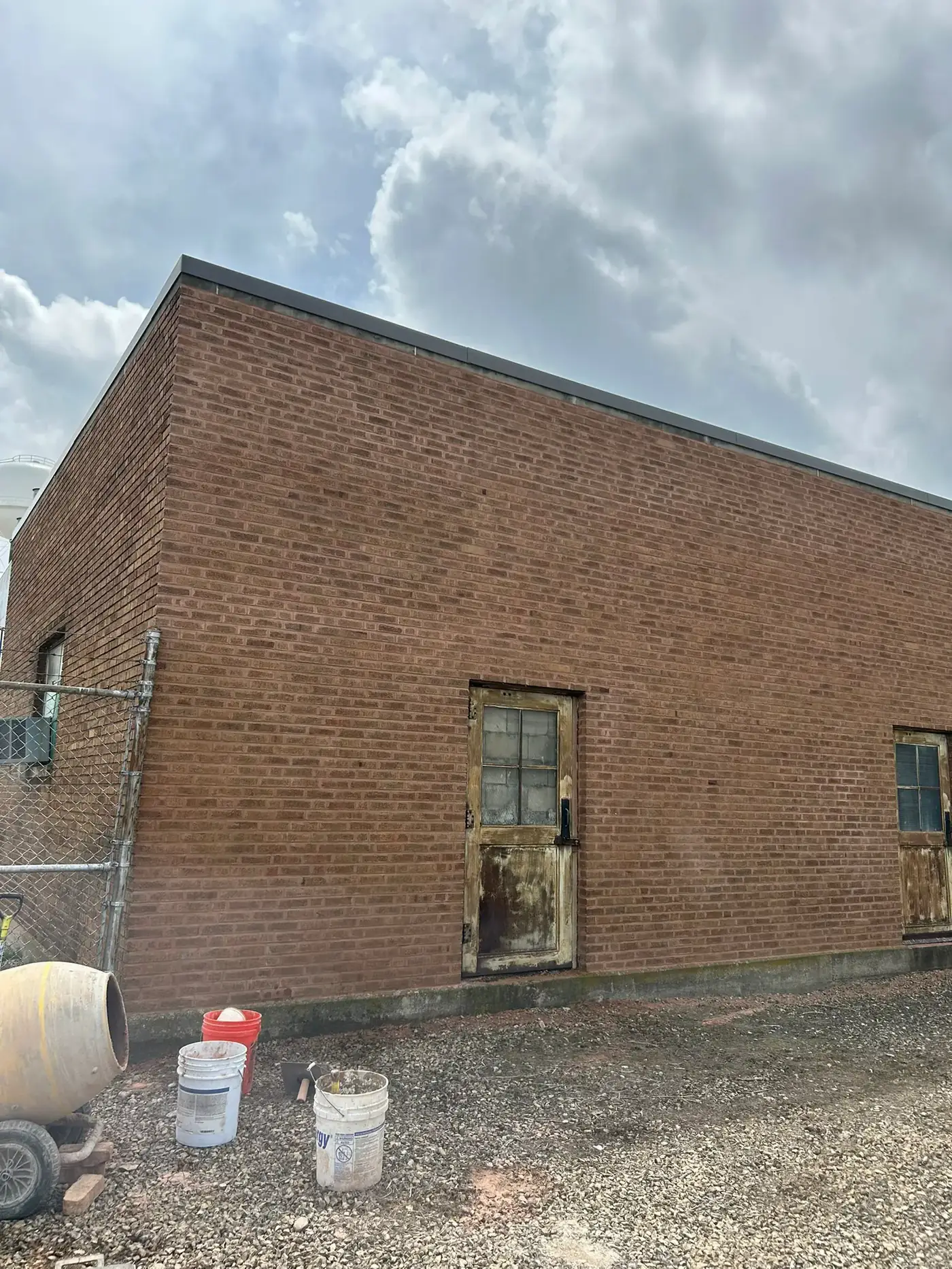
Here is the uncomfortable truth about masonry repair, and almost nobody says it out loud during the estimate: a mason cannot see the work until the destruction has started.
A roofer can pull a corner of shingle. A plumber can open an access panel. A mason is looking at a wall whose interior is genuinely opaque — and the thing being estimated is the extent of deterioration inside it. That reality produces legitimate change orders. It also produces a very effective place for dishonest contractors to hide.
Emerald Masonry LLC writes assumption-based scopes for homeowners, property managers, HOAs and churches across Chicago and the Chicagoland suburbs. Family-owned, licensed, bonded and insured, career masons with decades of experience, free written on-site estimates. Call (708) 288-1696.
Why Masonry Is Different From Other Trades
Three things about masonry make the scope genuinely uncertain until work begins.
Depth is invisible. A mortar joint's surface tells you very little about how far the deterioration runs behind it. Proper repointing cuts to sound material — as a rule of thumb around two to two and a half times the joint width — and whether "sound" appears at that depth or considerably deeper is not knowable from the sidewalk.
Units hide their own condition. A brick with an intact face can be soft and saturated behind it. Sounding finds a lot of this; it does not find all of it.
Steel is buried on purpose. Lintels, shelf angles and wall ties are inside the assembly. You can read the symptoms — a horizontal crack, orange staining, a lifted course — but the actual section loss is only measurable once the masonry is off.
Add the fact that most Chicagoland buildings have been repaired before, sometimes badly and sometimes invisibly, and you have a trade where the honest position is: here is what we can see, here is what we are assuming, and here is what happens if that assumption is wrong.
The Hidden Conditions That Actually Come Up
Mortar deterioration deeper than the surface indicated
The most common one by a wide margin. The joints looked like a standard repointing depth; at depth the mortar is still sandy. The choices are to cut deeper — more labor, more mortar, more time — or to pack new mortar against unsound material, which fails early.
More failed units than the elevation showed
Sounding reveals drummy brick, and taking one out reveals that its neighbours are softer than they looked. This is why scattered-unit repairs sometimes convert into a section rebuild once opened.
Steel worse than the symptoms suggested
A lintel that read as surface corrosion turns out to have lost real section. Now it is a replacement rather than a treatment, with shoring, more masonry removal, and flashing to install. The signs are covered in lintel rust stains and orange streaks on brick.
A previous repair nobody could see
Hard mortar over soft brick from a 1990s job. A parge coat concealing spalled masonry. Brick face-nailed or patched with sealant. Foam in a cavity. These change both the scope and the method.
Deterioration running below the visible zone
Chimneys and parapets are the classic case: the top courses are obviously gone, and once they come off it is apparent the failure continues below the roof line. Rebuilding to sound masonry is deeper than the ground-level view implied.
Wet or damaged structure behind the masonry
Rotted sheathing, corroded ties, a failed shelf angle, water damage in framing. Not masonry work, but discovered by masonry work — and it has to be addressed before the wall goes back.
Access that turns out to be harder than the site suggested
An alley narrower than it looked, a neighbour's consent needed for staging, a utility in the way, a slope that will not take a lift.
Legitimate Change Order vs. Bait-and-Switch
| | Legitimate | Bait-and-switch | |---|---|---| | Original bid | In range with the others | Noticeably below the others | | What it names | A specific condition, in a specific location | Vague — "more damage than expected" | | Evidence | Photographs, measurements, you can look at it | Verbal, or you are told it is already covered up | | Relationship to original scope | The scope stated an assumption; the assumption was wrong | The scope was silent, so anything counts as extra | | Pricing | Same unit rates as the original bid | New rates, negotiated while your wall is open | | Timing | Work stops, you approve, work resumes | Work proceeds; the bill arrives afterward | | Frequency | Once, occasionally twice on a large old building | Repeatedly, escalating |
The single most useful test is the middle row. A legitimate change order can point to the sentence in the original scope that it is amending. If the original document never said what it assumed, it was not really a scope — and that vagueness was doing work for somebody.
How a Good Scope Reduces Surprises Before They Happen
- Inspect from staging, not from the ground. A meaningful share of "hidden" conditions were simply never looked at closely.
- Sound the wall. Tapping finds drummy and debonded areas that photographs miss entirely.
- Probe joint depth in multiple locations and elevations, not one convenient spot — the screwdriver test applied systematically.
- Check every elevation. Failures cluster by exposure; the south and west faces are usually worse.
- State the assumptions in writing. Quantity of units, depth of cut-out, linear footage, access method, staging duration.
- Set unit prices for the uncertain quantities. Per-unit brick replacement, per-foot additional repointing. Now a surprise is arithmetic at a rate you already agreed to.
- Use allowances where a quantity genuinely cannot be known, with a stated reconciliation method.
- Say what happens if something structural appears — who stops, who is called, how it gets priced.
That is what turns a discovery into a manageable event instead of a negotiation over an open wall. Our guides to how to read a masonry scope of work and what a masonry estimate should include go into the document itself.
What a Change Order Should Actually Say
If you only take one checklist from this, take this one. A change order worth signing states, in writing:
- The specific condition found — what it is, and exactly where on the building.
- Why it was not visible during the estimate, in a sentence a reasonable person can evaluate.
- Which assumption in the original scope it amends, quoted or referenced.
- The added quantity — square footage, linear footage, unit count, courses.
- The price, broken out, and the rate used — ideally a unit price already in the contract.
- Photographs of the condition, dated.
- Schedule impact, including any additional curing time.
- Knock-on effects on other scope items or trades.
- A signature line for you, dated before the work proceeds.
Nine items, one page. A contractor who cannot produce that for a genuine discovery is not being slowed down by paperwork — they are avoiding a record. And on a large commercial or association project, that document is also what a board, an owner or an adjuster will need months later when somebody asks why the final number differed from the bid.
What to Do When One Lands
- Ask to see it. Go up on the staging if it is safe, or ask for photographs with something for scale.
- Ask what the original scope assumed about this exact item. A good contractor can point at the line.
- Ask why it was not visible. There is a real answer for genuine hidden conditions, and it is specific.
- Check the rate. Is the extra work priced at the same unit rates as the original bid, or at new numbers?
- Get it in writing before work resumes — scope, quantity, price, schedule impact.
- Ask whether it changes anything downstream — curing time, sealing, other trades.
- Do not approve a lump sum with no breakdown while your wall is open. That is the moment of maximum leverage against you.
Why This Bites Harder in Chicagoland
Three regional factors make masonry scope uncertainty worse here than in most markets.
The stock is old and has been repaired repeatedly. Chicago's bungalows, two-flats, three-flats, greystones and courtyard buildings have a century of accumulated repairs, some of them invisible until opened, many of them done in mortar far too hard for the brick.
Freeze-thaw drives damage inward. Water gets into a joint or a unit, freezes, expands roughly nine percent, and forces the masonry apart — dozens of times each winter. That means the damage is not confined to the surface where you can see it, a mechanism laid out in freeze-thaw masonry damage in Chicago.
Face brick and common brick behave differently on the same house. Many Chicago houses are hard face brick on the street elevation and softer common brick on the sides. A scope written from the front elevation systematically underestimates the sides.
For property managers and HOA boards this is why masonry budgets carry contingency as a matter of routine, and why bid comparison has to be about assumptions rather than bottom-line totals — the subject of why commercial masonry bids vary.
DIY vs. Hiring a Pro — The Estimating Angle
Homeowners occasionally try to scope masonry themselves and hire labor to execute it. The failure mode is predictable: the quantity is wrong, because judging deterioration depth and unit soundness is exactly the skill that takes years to build. You end up either paying for a scope that stops short of sound material, or discovering mid-job that you have no contractual mechanism for the extra — no unit prices, no allowances, no stated assumptions.
Ironically, the more uncertain a trade is, the more the paperwork matters.
Prevention: What to Ask Before You Sign
- What does this price assume about quantity and depth?
- What are the unit prices if more is found?
- How will a change order be documented and approved?
- What do you consider a hidden condition versus something you should have caught?
- Did you inspect from staging or from the ground?
- Which elevations did you assess?
- What contingency would you recommend for this building?
- Who do we call if something structural turns up?
A contractor who answers those crisply is telling you they have thought about it before. Related reading: how to evaluate a masonry contractor bid and why masonry contractors won't quote over the phone.
Related Services
- Tuckpointing and repointing — where cut-out depth drives most scope changes
- Brick repair and brick replacement — unit-count uncertainty
- Lintel repair — buried steel, the classic hidden condition
- Parapet wall repair — deterioration running below the visible zone
- Chimney repair — rebuild depth discovered on removal
- Commercial masonry restoration — phased scopes with stated assumptions
The Short Version
Masonry change orders are not automatically a red flag. The trade is genuinely opaque, and a contractor who promises zero surprises on a hundred-year-old wall is either inexperienced or telling you what you want to hear.
What separates honest from dishonest is documentation before the fact. A scope that states its assumptions, sets unit prices for the uncertain quantities, and defines how discoveries get approved turns hidden conditions into arithmetic. A scope that says none of that leaves the whole question to be settled later — while your wall is open and your leverage is gone.
Emerald Masonry LLC is a family-owned, licensed and insured masonry contractor serving Chicago and the Chicagoland suburbs led by career masons with decades of hands-on experience in tuckpointing, chimney repair, brick repair and replacement, lintel and parapet repair, foundation and limestone/sill repair, caulking, sealing, and commercial, residential, and historic masonry restoration. Free on-site estimates — call (708) 288-1696.
Holding a masonry bid you are not sure how to read, or a change order you did not expect? We will give you a written scope that says what it assumes. Request a free on-site estimate or call (708) 288-1696.
Frequently Asked Questions
Why did my masonry estimate go up once work started?
Because the full extent of deterioration is not visible until the wall is opened — sound-looking mortar can be shallow, and brick faces can hide softened units behind them. A legitimate increase names the specific condition found, shows you photographs of it, and prices only the additional scope.
What is a hidden condition in masonry work?
It is a defect that could not reasonably be seen during the estimate — deteriorated mortar far deeper than the surface suggested, corroded steel buried in a wall, a previous repair concealed behind a facing, or rot in framing revealed when masonry comes off. It is a real category, and it is also the category dishonest contractors hide behind.
How do I tell a legitimate change order from a bait-and-switch?
A legitimate one is specific, photographed, tied to a condition the original scope explicitly assumed away, and priced against the same unit rates as the original bid. A bait-and-switch is vague, arrives after a bid that was well below the others, and tends to happen more than once.
Should a masonry contract include allowances or unit prices?
It should, wherever the quantity genuinely cannot be known up front. A unit price for additional brick replacement or additional linear footage of repointing means a surprise is priced at a rate you already agreed to, rather than negotiated while your wall is open.
How much contingency should I budget for masonry work?
There is no universal figure, but experienced property managers and HOA boards routinely carry a contingency on masonry precisely because the scope is discovered rather than fully known. Ask your contractor what they would recommend for your specific building and why.
Can a mason avoid change orders by inspecting more carefully?
They can dramatically reduce them — by sounding the wall, probing joint depth, checking multiple elevations, and inspecting from staging rather than the ground. What they cannot do is see through masonry, which is why the honest answer is a scope with stated assumptions rather than a promise of no surprises.
Do I have to approve a change order before the work is done?
You should, in writing, before it proceeds. Any competent contractor will stop, document, explain and get sign-off — and a contractor who performs extra work first and presents the bill afterward has told you something important about how they operate.
Why was one masonry bid so much lower than the others?
Sometimes efficiency, and sometimes because it assumes a smaller scope than the wall actually needs — shallower cut-out, fewer replacement units, less staging. A very low bid on masonry frequently converts into change orders later, which is why comparing assumptions matters more than comparing totals.
What should I ask before signing a masonry contract?
Ask what the price assumes about quantity, what happens if more is found, whether unit prices are stated, how change orders will be documented, and what the contractor considers a hidden condition versus something they should have caught. The answers tell you most of what you need to know.