
Historic Masonry Restoration · Chicagoland, IL
Prairie-Style Brick Home Masonry Repair: Roman Brick, Raked Joints and Limestone Sills in Chicago's Suburbs
Prairie-style homes are a Chicago original, and their masonry is built to look long and low: thin Roman brick, deep horizontal joints, continuous stone sills, broad chimneys and planters. Those same details are what make repairs easy to get wrong. Here's what fails on a Prairie home and how to repair it so it still looks right.
2026-11-01
Quick Answer
Prairie-style brick home masonry repair means repointing Roman brick with raked horizontal joints and flush, color-matched vertical joints, repairing continuous limestone or cast stone sills and water tables, rebuilding broad low chimneys, and restoring urns, planters and terrace walls without losing the home's horizontal look. Emerald Masonry LLC, family-owned, licensed and insured, gives free assessments: (708) 288-1696.
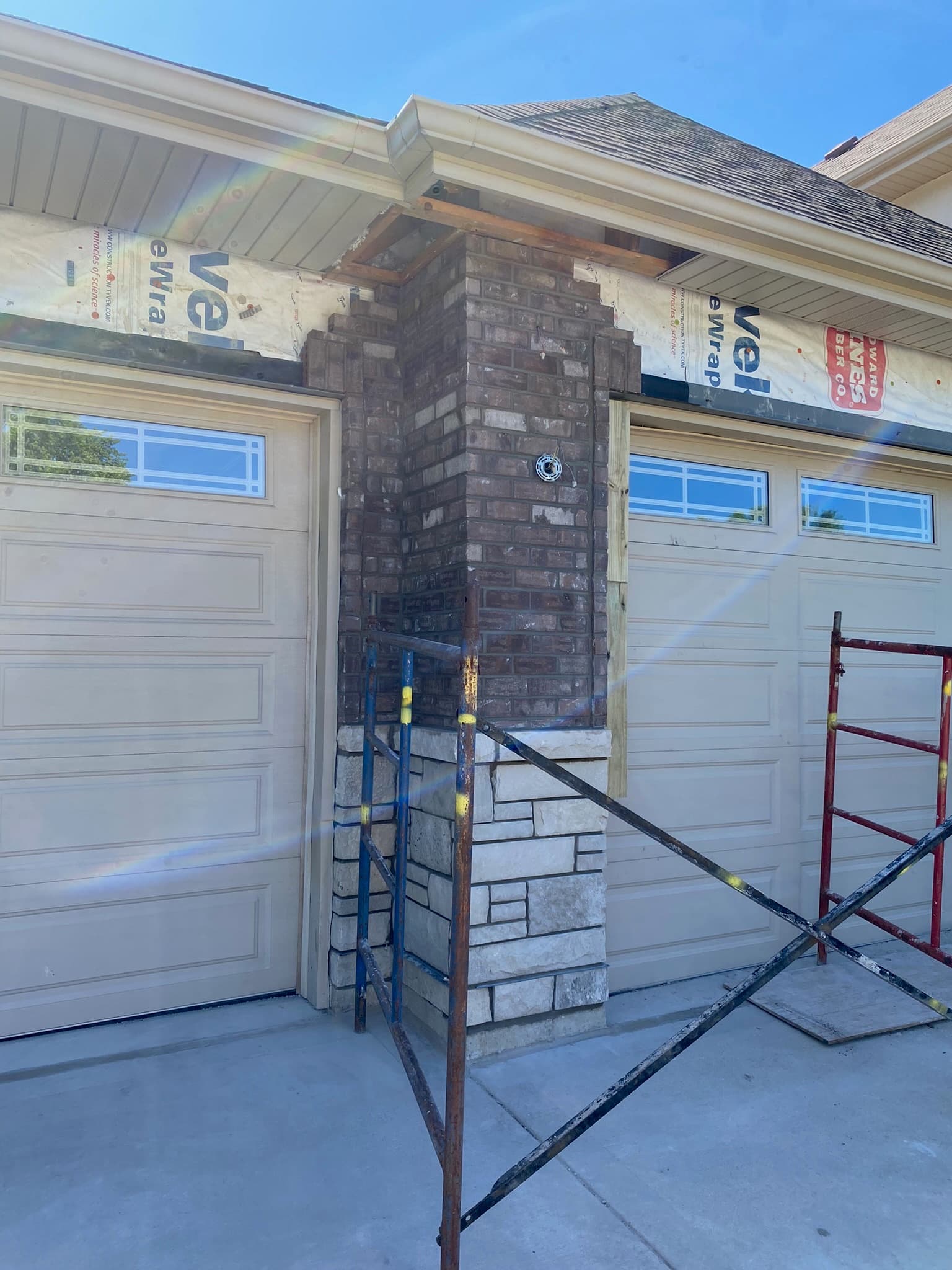
Prairie-Style Brick Home Masonry Repair in Chicago's Suburbs
Prairie-style brick home masonry repair comes down to protecting the details that make the house look long and low. That means repointing Roman brick with raked horizontal joints and flush, color-matched vertical joints, repairing continuous limestone or cast stone sills and water tables, rebuilding broad, low chimneys, and restoring the urns, planters and terrace walls that tie the house to the ground. Emerald Masonry LLC, a family-owned masonry contractor serving Chicago and the Chicagoland suburbs, does this work with matched brick and mortar. Free on-site assessments: (708) 288-1696.
The Prairie style was born in and around Chicago in the early 1900s, and the region still has more of these houses than anywhere else, from the best-known examples in Oak Park and River Forest to quieter brick Prairie homes and "Prairie box" Foursquares in La Grange, Hinsdale, Riverside, Downers Grove and Chicago neighborhoods. Most are now more than a century old. This guide explains what fails on a Prairie-style brick home, why, and how to repair it without losing what makes it a Prairie house.
On a Prairie house, the mortar joints are part of the design. Repoint them the wrong way and the house stops looking horizontal.
What makes a Prairie-style home's masonry different
Most brick houses use masonry to keep the weather out. Prairie houses also use it to draw lines. The architects behind the style wanted homes that sat low on the flat Midwest landscape, so nearly every masonry detail stretches the house sideways.
Roman brick
Many Prairie homes are built in Roman brick: a long, thin brick, flatter and longer than the standard modular brick on a post-war bungalow. More bed joints and fewer head joints per foot of wall give a streaky, horizontal look. Roman brick was often made in tans, buffs, browns and iron-spot blends rather than plain red.
Raked bed joints, flush head joints
The signature detail on many Prairie walls is the joint work. The horizontal (bed) joints are raked back deeply so they throw a shadow line. The vertical (head) joints are struck flush and colored close to the brick so they nearly vanish. The eye reads a wall of long horizontal stripes. Not every Prairie home has this, but when yours does, it has to be reproduced.
Continuous sills, bands and water tables
Instead of a separate stone sill under each window, Prairie homes often run one continuous limestone or cast stone sill across a whole row of windows, plus stone or stucco bands and a water table near the base. These long courses are made of several pieces joined end to end.
Broad chimneys, piers, urns and planters
Chimneys tend to be wide and low, rising through hipped roofs with deep overhangs. Porches and terraces sit on brick piers and low walls with flat stone caps, and many houses have built-in urns and planter boxes in brick, stone or cast concrete.
| Detail | Typical Prairie version | Typical post-war version | Why it matters for repair | |---|---|---|---| | Brick | Long, thin Roman brick | Standard modular brick | Replacements must match size, not just color | | Bed joints | Deeply raked | Concave tooled | Profile must be reproduced | | Head joints | Flush, tinted to brick | Same as bed joints | Two mortar colors may be needed | | Sills | Continuous stone course | One sill per window | Piece-by-piece repair is possible | | Chimney | Broad, low, through a hipped roof | Narrower, taller | Wider crown, more flues, more exposure | | Garden masonry | Urns, planters, terrace walls | Rare | Highest freeze-thaw exposure on the house |
Why Prairie home masonry fails
The good news: the wide overhanging eaves on most Prairie homes keep a lot of rain off the main walls, so the brick under the eaves is often in better shape than you would expect for its age. The trouble concentrates where the eaves cannot protect the masonry.
Chimneys above the roof
The chimney is exposed on all sides above the roof, gets no protection from the eaves, and on a broad chimney the crown is large and flat. A cracked or worn chimney crown lets water straight into the masonry, and the top courses start to spall and loosen. Chimneys that also vent a furnace can be soaked from inside by condensing exhaust.
Urns, planters and terrace walls
These are the hardest-working masonry on the house. They hold wet soil, are exposed on every face and the top, and freeze through every winter. Cracked caps, open joints and blocked drainage lead to spalling, bulging and pieces breaking away.
Continuous sills and water tables
A long sill has many joints, and every joint is a place for water to get in. Over time joints open, individual pieces crack or settle, and some begin to pitch back toward the wall. At the base, the water table takes splash-back, snow and de-icing salt.
Porch piers and steps
Brick piers and low porch walls carry roof loads and take splash and salt at grade. Open joints and failed caps let water in, and the bottom courses often deteriorate first.
Past repairs
On many century-old Prairie homes, the biggest damage comes from earlier repairs: hard gray portland mortar smeared over soft original joints, every joint tooled the same way, standard-size brick patched into Roman brick walls, or waterproof coatings that trap moisture. Hard mortar can make the brick edges spall, because the brick ends up as the weakest part of the wall.
Warning signs to look for
- Mortar recessed or crumbling, especially at the chimney top, planters and the base of the walls.
- Brick faces flaking off (spalling) near the ground, at the chimney or on garden masonry.
- Cracked or shifted pieces in a continuous sill or water table.
- Cracked crowns and caps on the chimney, piers and planters.
- White efflorescence or dark wet patches on walls that should be dry.
- Mismatched patches: wrong-size brick, gray joints, or joints that no longer match the original profile.
- Rust staining above openings, which can point to rusting steel lintels.
- Bulging or leaning planter walls or porch piers.
How a professional repairs a Prairie-style brick home
Every house is assessed on its own, but a careful repair follows the same order.
- Document the original details. Photograph and measure the brick size, joint widths, bed and head joint profiles and mortar colors before anything is removed.
- Take a mortar sample. Match the original for color, sand and, as closely as practical, strength. On older homes this is often a lime-rich mix softer than modern Type S.
- Prepare test panels. Repoint a small area so you can approve color and profile before the full job, especially where bed and head joints differ.
- Remove deteriorated mortar carefully. Joints are cut or raked out to a sufficient depth for the new mortar to bond, without chipping the edges of thin Roman brick.
- Repoint in two passes where needed. Raked bed joints and flush tinted head joints are tooled separately so the horizontal effect returns.
- Replace damaged brick with a matched Roman brick, salvaged or specialty, set in matching mortar.
- Repair sills, bands and water tables piece by piece. Pin and patch, piece in with a dutchman, or replace individual units; reset any that pitch toward the wall.
- Restore the chimney. Tuckpoint or rebuild the top, form a new crown that overhangs and sheds water, and add a cap.
- Rebuild or repair garden masonry. Reset caps, repoint, rebuild unsound sections, and give urns and planters drainage so water cannot sit inside.
- Clean gently. Low-pressure washing and suitable cleaners only. Never sandblasting.
Materials and techniques
| Item | What we use | What to avoid | |---|---|---| | Mortar | Mix matched to the original sample, often lime-rich; Type N or O where suitable | Hard, gray Type S or bagged mixes on soft old brick | | Joint profile | Raked bed joints and flush head joints reproduced as found | Concave-tooling every joint | | Brick | Matched Roman brick, salvaged or specialty | Standard modular brick | | Stone | Matching limestone or cast stone, dutchman pieces, stainless pins | Cement patching over large failures | | Crowns and caps | Crowns with overhang and drip; stone or precast caps on piers | Thin cement wash crowns | | Water repellents | Breathable products only, used selectively | Film-forming coatings and paints |
For more on the mortar side, read our guides to lime vs portland mortar and Type N vs Type S mortar. For brick, see salvaged brick sourcing and matching and brick bonds and patterns.
What drives the cost of Prairie-style masonry repair
We never quote a Prairie home over the phone, because the cost depends on details that only show up on site:
- Scope: spot repointing, full tuckpointing or a combination.
- Joint work: two joint profiles and two mortar colors take more time than one.
- Brick sourcing: matching Roman brick is harder than standard brick.
- Stone work: how many sill, band or water table pieces need repair or replacement.
- Chimney: crown and cap, tuckpointing, or rebuild above the roof.
- Garden masonry: urns, planters, piers and terrace walls.
- Access: wide eaves, low hipped roofs and landscaping can make staging slower.
- Undoing past repairs: removing hard mortar or coatings adds work.
Emerald Masonry LLC gives a written, itemized estimate after a free on-site assessment.
DIY vs hiring a pro
Small jobs like clearing planter drains or keeping gutters clean are good homeowner tasks. Repointing a Prairie wall is not. The joint profiles are unusual, thin brick chips easily, and a mismatched mortar color or hard mix is very difficult to undo. On a house where the masonry carries the design, a bad repair is visible from the street for decades. If the home is a landmark or in a historic district, poor work can also cause problems with the preservation commission.
Chicagoland context: where Prairie homes are and what they face
Prairie houses cluster in the older railroad suburbs and city neighborhoods built up in the early 1900s: Oak Park and River Forest, Riverside, La Grange, Hinsdale, Downers Grove, Evanston and parts of Chicago. Many simpler "Prairie box" Foursquares sit on ordinary blocks and are not always recognized as Prairie at all.
They all face Chicago's climate: dozens of freeze-thaw cycles a winter, wet springs, and heavy salt use on walks and drives. That combination is hard on exposed masonry like chimneys, planters, piers and water tables. Local rules also matter. Several of these communities have historic districts or landmark programs, so check with your municipality before exterior work on a designated property.
If your house is closer to a Foursquare than a full Prairie design, our American Foursquare masonry guide covers that house type in more depth. For nearby work, see our La Grange limestone sill repair, Hinsdale limestone sill repair and Hinsdale chimney repair pages.
Maintenance and prevention
- Look up every spring and fall. Check the chimney top, crown and cap with binoculars.
- Keep gutters and downspouts clear so the wide eaves do their job, and send downspouts away from the foundation.
- Drain urns and planters. Make sure drain holes are open; empty or protect them for winter if they hold water.
- Check sill and water table joints for gaps and pieces that have tipped.
- Go easy on salt near porch piers, steps and the water table.
- Repoint small areas early with the correct mortar before damage spreads.
- Avoid sealers that form a film and never paint the brick.
Related services
- Historic masonry restoration for older and landmark homes.
- Residential masonry restoration for whole-house repair plans.
- Tuckpointing and repointing with matched mortar and joint profiles.
- Limestone and sill repair for continuous sills, bands and water tables.
- Chimney repair for crowns, caps and rebuilds.
Also useful: our guide to Chicagoland limestone and restoration masons vs new-construction masons.
Conclusion: keep the lines, fix the water
A Prairie-style home's masonry is part of its architecture. The goal of any repair is to stop water at the chimney, planters, sills and base while keeping the Roman brick, raked joints and long stone lines exactly as they were meant to look.
Emerald Masonry LLC is a family-owned masonry contractor serving Chicago and the Chicagoland suburbs, led by career masons with decades of hands-on Chicagoland experience, in historic and residential masonry restoration, tuckpointing and repointing, chimney repair, brick repair and replacement, limestone and sill repair, lintel repair, foundation masonry, caulking and sealing. Established 2024; licensed, bonded and insured. Free on-site assessments — call (708) 288-1696.
Own a Prairie-style brick home? Call (708) 288-1696 or book a free on-site assessment.
Frequently Asked Questions
What makes masonry repair on a Prairie-style home different?
Prairie homes are designed to look long and low, and the masonry does much of that work: thin Roman brick, deeply raked horizontal joints, flush vertical joints tinted to the brick, and continuous stone sills and bands. A repair that uses standard brick or a uniform joint breaks those horizontal lines, so matching the brick size and joint profile matters as much as the mortar itself.
What is Roman brick?
Roman brick is a long, thin brick, much flatter and longer than a standard modular brick. It was popular on Prairie and early modern homes because it stretches the horizontal lines of the wall. Replacements must match its size, color and texture, which usually means sourcing a specialty or salvaged brick.
Why are the horizontal joints on my Prairie house deeper than the vertical ones?
That is intentional. Many Prairie homes were built with raked horizontal (bed) joints that cast a shadow line and flush vertical (head) joints colored close to the brick so they almost disappear. When the house is repointed, both joint types must be reproduced or the wall will look striped instead of horizontal.
Can you tuckpoint a Prairie house with regular mortar?
Not with a hard, gray, off-the-shelf mix. Older Prairie homes were often laid in softer mortar, so the repointing mortar should be matched in strength, color and sand to the original and must not be harder than the brick. We match from a sample of the existing mortar.
My Prairie home's long stone sill is cracked. Does the whole sill have to be replaced?
Usually not. Long continuous sills and water tables are made of several pieces, and often only one or two pieces are cracked or spalled. Those can be pinned and patched, pieced in with a dutchman, or replaced individually while the rest stays.
Do I need approval to repair masonry on a Prairie-style house?
If the home is a designated landmark or sits in a local historic district, the village or city preservation commission may need to review exterior masonry work. Check with your municipality before work begins; we provide the brick, mortar and joint details they typically ask for.
Why are the urns and planters on my Prairie house falling apart?
Masonry urns, planter boxes and terrace walls hold wet soil and are exposed on every side, so they take more freeze-thaw than any wall on the house. Water through cracked caps and open joints freezes inside them. They usually need repointing, new caps and drainage, and sometimes a rebuild.
Who repairs Prairie-style brick homes near Chicago?
Emerald Masonry LLC, a family-owned masonry contractor based in Palos Heights, repairs Prairie-style and other early 20th-century brick homes across Chicago and the western and southwest suburbs, including La Grange, Hinsdale and Downers Grove. Call (708) 288-1696 for a free on-site assessment.
How much does masonry repair on a Prairie-style home cost?
It depends on the scope, how much Roman brick needs replacing, how hard it is to source a match, the joint work required, chimney and planter repairs, and access around wide eaves. Emerald Masonry LLC gives a written, itemized estimate after a free on-site look.