
Chimney Repair · La Grange, IL
Chimney Repair in La Grange, IL — Matching Mortar to a Victorian Stack
The common advice for old chimneys — 'use Type N' — is close but not right for La Grange's softest 1880s brick. Emerald Masonry LLC matches the mortar to the actual hardness of your stack, which on the oldest homes here often means Type O or a custom lime blend.
Quick Answer
Emerald Masonry LLC provides chimney repair in La Grange, IL (60525) — crown rebuilding, caps, flashing, lime-mortar repointing, corbel reconstruction and rebuilds above the roofline on historic-district and Victorian stacks. Family-owned, licensed and insured, career masons with decades of Chicagoland experience, free estimates. Call (708) 288-1696.
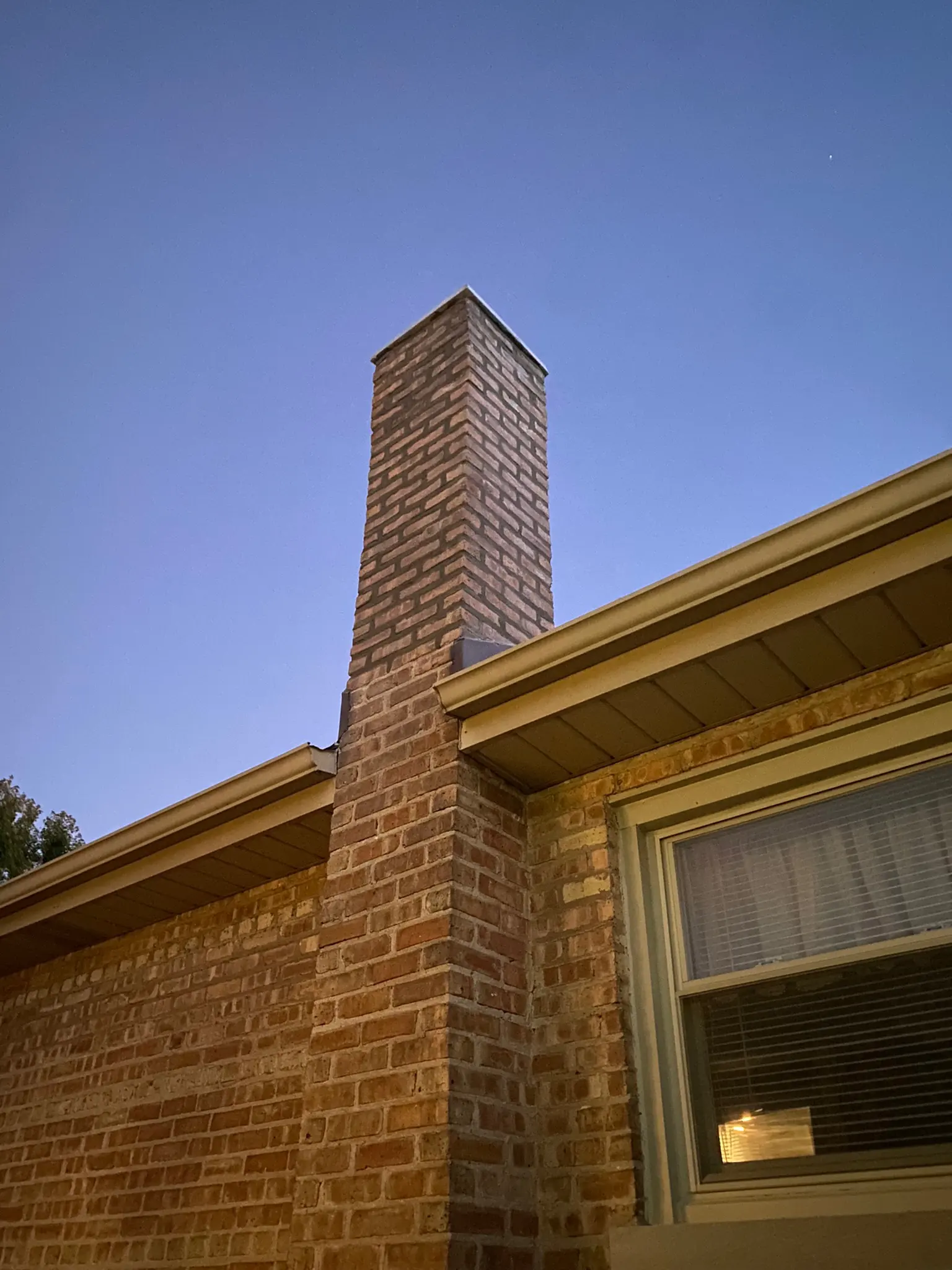
Chimney Repair in La Grange, IL
Chimney repair in La Grange, IL means matching the repair — and especially the mortar — to a stack that is often well over a century old. Emerald Masonry LLC rebuilds crowns, replaces flashing, repoints with correctly matched mortar, reconstructs corbelled tops and rebuilds above the roofline. Family-owned, licensed, bonded and insured, career masons with decades of Chicagoland experience, free on-site estimates. Call (708) 288-1696.
La Grange has an unusual concentration of genuinely old housing for a Cook County suburb — a village incorporated in 1879 with multiple historic district overlays, full of Italianates, Queen Annes, Stick-style homes, Tudor Revivals, Craftsman bungalows and Prairie-influenced houses along the streets running off the BNSF line.
Those houses carry tall, ornate, frequently multi-flue chimneys with corbelled tops — and the single most consequential decision on repairing one is which mortar goes into the joints.
The Mortar Advice That Is Almost Right
You will read, in a lot of places, that historic masonry should be repointed with Type N mortar. That is far better guidance than most contractors give, and for a great many early-1900s homes it is correct.
But it is not automatically correct, and on La Grange's oldest brick it is sometimes wrong.
Here is why. A masonry wall is designed so the mortar is softer than the brick it holds. Mortar is the sacrificial layer — it absorbs movement and moisture stress and wears out first, because replacing mortar is cheap and replacing 1880s brick is not. That rule does not say "use Type N." It says use something softer than this particular brick.
Type N still contains Portland cement. On dense, machine-made brick it is appropriately soft. On genuinely soft, low-fired 1880s and 1890s brick — the kind found on La Grange's earliest houses — Type N can still be harder than the unit, which inverts the relationship and drives freeze-thaw stress into the brick faces.
The full gradient
| Mortar | Relative hardness | Where it belongs | |---|---|---| | Type M | Hardest | Heavy load-bearing, below grade — not chimney stacks | | Type S | High | Below grade, structural, high-lateral-load masonry | | Type N | Medium | Most above-grade brick; typical early-1900s masonry | | Type O | Low | Soft historic brick, low-stress repointing | | Custom lime blend | Lowest | Very soft handmade or low-fired brick; preservation work |
The right answer is determined on site, by the era of the stack, the hardness of the existing mortar, and how the brick itself behaves — not by a rule of thumb applied to a whole decade of construction.
If a contractor tells you the mix without ever examining your brick, that is worth noticing.
Why These Stacks Fail First
Every chimney is the most exposed masonry on a building — above the roofline, weathered on four sides, with no heated interior drying it from behind. La Grange's Victorians add two multipliers:
Height. A three-story stack has far more exposed surface than a suburban ranch chimney, and all of it absorbs water.
Corbelling. The stepped, projecting brickwork at the top creates dozens of horizontal ledges that hold water rather than shedding it. That is why the decorative top deteriorates visibly ahead of the plain shaft below.
Then Cook County freeze-thaw does the work — dozens of crossings of the freezing point each winter, each one expanding water trapped in saturated masonry by roughly nine percent.
The Three Water Paths
Water enters a chimney assembly in exactly three places. Sealing the wrong one changes nothing, which is why so many "repaired" chimneys keep leaking.
| Path | What it is | Telltale sign | |---|---|---| | Flashing | Metal sealing the chimney-to-roof joint | Ceiling or attic stains near the chase; rusted or tar-patched metal | | Crown | Sloped slab across the top of the masonry | Cracking on top of the stack; staining running down from above | | Joints / brick | The mortar and units of the stack | Efflorescence, flaking faces, joints you can rake with a screwdriver |
On a stack that looks sound from the ground but leaks inside, it is usually flashing or crown — not a rebuild.
Signs Your La Grange Chimney Needs Work
- Deteriorated corbelling — missing, crumbling or displaced units in the decorative top courses.
- White efflorescence staining on the stack.
- Spalling brick faces, flaking or popping, worst on the north and west sides.
- Mortar joints that rake out under a screwdriver, or receded behind the brick face.
- A cracked or crumbling crown.
- Rusted, lifted or tar-patched flashing at the roofline.
- Water stains on ceilings or in the attic near the chimney chase.
- A visible lean, or a gap opening between the chimney and the house.
- Brick or mortar debris in gutters, on the roof or in the yard.
- A band of spalling matching where somebody repointed a few years ago — the signature of a mortar that was too hard.
The Repair Ladder
| Repair | When it applies | |---|---| | Chimney cap | Any open or unused flue | | Crown repair or rebuild | Cracked or crumbling top slab | | Flashing replacement | Ceiling stains near the chase | | Repointing | Receded or sandy joints, brick sound | | Brick replacement | Spalled units on an otherwise sound stack | | Corbel rebuild | Damage concentrated in the projecting top courses | | Rebuild above roofline | Lean, deep joint failure, widespread spalling |
Our Process
- Free on-site inspection, from the ground and the roof — crown, cap, flashing, joints, brick faces, corbelling and plumb.
- Test the existing mortar and brick to determine the correct mix, rather than assuming from the build date.
- Identify the active water path before proposing scope.
- Written scope with photographs of the conditions found.
- Repair or rebuild — matched repointing, salvaged brick replacement, crown rebuilt with proper overhang and drip edge, new step and counter flashing, or rebuilding above the roofline with the corbelled profile reconstructed rather than simplified.
- Cap and protect — stainless or galvanized cap where appropriate, breathable sealer only where warranted.
- Cleanup and photo documentation.
Materials We Use
Custom lime blends, Type O and Type N mortars selected to the actual stack, matched sands for color, salvaged brick matched for size and softness, poured or cast concrete crowns with overhang and drip edge, stainless and galvanized caps, new step and counter flashing, and vapor-permeable sealers only. Related work: tuckpointing, brick repair, historic masonry restoration and masonry sealing.
What Drives Cost in La Grange
- Which rung of the ladder the stack is actually on.
- Height and roof pitch — tall Victorians need real staging, not ladders.
- Number of flues — a wide multi-flue stack is substantially more masonry.
- Corbel complexity — rebuilding decorative brickwork to profile is slower, more skilled work.
- Custom mortar blending for soft historic brick.
- Salvaged brick sourcing for units beyond saving.
- Permit and any historic-overlay review.
- Season — cold-weather work requires protection and adds time.
We never quote a chimney sight unseen, and we do not lead with teaser inspection pricing.
Serving La Grange and the Near West Suburbs
La Grange sits in Cook County with no lake buffer, taking the full regional freeze-thaw swing. Mature canopy over the historic streets keeps north elevations damp long after storms, so the same chimney is often sound on one face and failing on another.
We work throughout 60525 — the historic district streets around the village center and the Stone Avenue and La Grange Road stations, the Victorians north and south of Ogden, the bungalow and Tudor blocks, and the churches and institutional buildings downtown. We also serve neighboring La Grange Park, Western Springs, Brookfield and Countryside. La Grange owners frequently pair chimney work with brick repair.
Emerald Masonry LLC is a family-owned, licensed and insured masonry contractor serving Chicago and the Chicagoland suburbs led by career masons with decades of hands-on experience in tuckpointing, chimney repair, brick repair and replacement, lintel and parapet repair, foundation and limestone/sill repair, caulking, sealing, and commercial, residential and historic masonry restoration. Free on-site estimates — call (708) 288-1696.
What Waiting Costs
On a historic stack, deferral destroys original material. Once the face spalls off a hundred-and-forty-year-old brick, it is gone, and every replacement is a compromise. Corbelling that could have been repointed becomes corbelling that must be rebuilt — and rebuilt decorative work never quite matches what a Victorian bricklayer laid.
Get a Free Chimney Inspection in La Grange
Seeing crumbling corbelling, white staining, flaking faces or stains near the chimney chase — or unsure whether the mortar somebody used was right? Get it assessed before winter.
Call (708) 288-1696 or request a free estimate.
Ready to get started?
Free on-site estimates for commercial and large-scale projects.
Chimney Repair in La Grange, IL — Frequently Asked Questions
Is Type N mortar the right choice for a historic chimney?
Often, but not always — it depends on how soft your brick actually is. Type N is the usual answer for early-1900s masonry, but genuinely soft 1880s and 1890s brick frequently needs Type O or a custom lime blend, because Type N still contains Portland cement and can be harder than the brick it holds. The mix should be matched to the stack, not assumed from its age.
How much does chimney repair cost in La Grange, IL?
It depends which part has failed and how tall and ornate the stack is. Crown and flashing work is a modest repair, repointing a three-story Victorian chimney with custom lime mortar is mid-range, and rebuilding a corbelled top to the original profile is the largest. Emerald Masonry inspects in person and gives a free written estimate.
Do I need village or preservation approval for chimney work in La Grange?
Exterior masonry work generally requires a village permit, and properties inside a historic district overlay can require additional review — particularly for a visible rebuild that changes a corbelled profile. Straightforward repointing and crown repair using matching materials is usually simpler. We work within whatever process applies.
Why do La Grange's Victorian chimneys fail before the walls below them?
They are taller, exposed on four sides above the roofline, and carry decorative corbelling that creates dozens of horizontal ledges holding water instead of shedding it. There is also no heated interior drying them from behind. Same house, far harder service conditions.
Can you rebuild a decorative corbelled chimney top?
Yes, and on La Grange Victorians it is routine work. The stepped, projecting top courses are rebuilt to the original profile using salvaged brick where possible, rather than simplified into a plain cap. It takes more time and skill than a plain stack, which is why it belongs in the written scope up front.
My chimney leaks but the brick looks fine — what is it?
Usually the flashing where the chimney passes through the roof, or a cracked crown at the top. Both let water in well before the masonry itself shows damage, and both are far cheaper than the rebuild some contractors quote. We identify which of the three water paths is active before proposing anything.
Chimney Repair in Nearby Areas
Other Masonry Services in La Grange, IL
Learn more about our chimney repair services across Chicagoland, or view all service areas.