
Limestone / Sill Repair · Western Springs, IL
Limestone and Sill Repair in Western Springs, IL — Stone on Century-Old Homes
A stone sill has one job: shed water away from the wall. When it cracks, tilts or loses its slope it starts holding water instead — and everything below it begins to fail. Emerald Masonry LLC repairs Western Springs stone rather than tearing it out.
Quick Answer
Emerald Masonry LLC provides limestone and sill repair in Western Springs, IL — restoring cracked, spalled and eroded stone window sills, lintels, water tables and trim on century-old homes. Family-owned, licensed and insured, career masons with decades of Chicagoland experience, free estimates. Call (708) 288-1696.
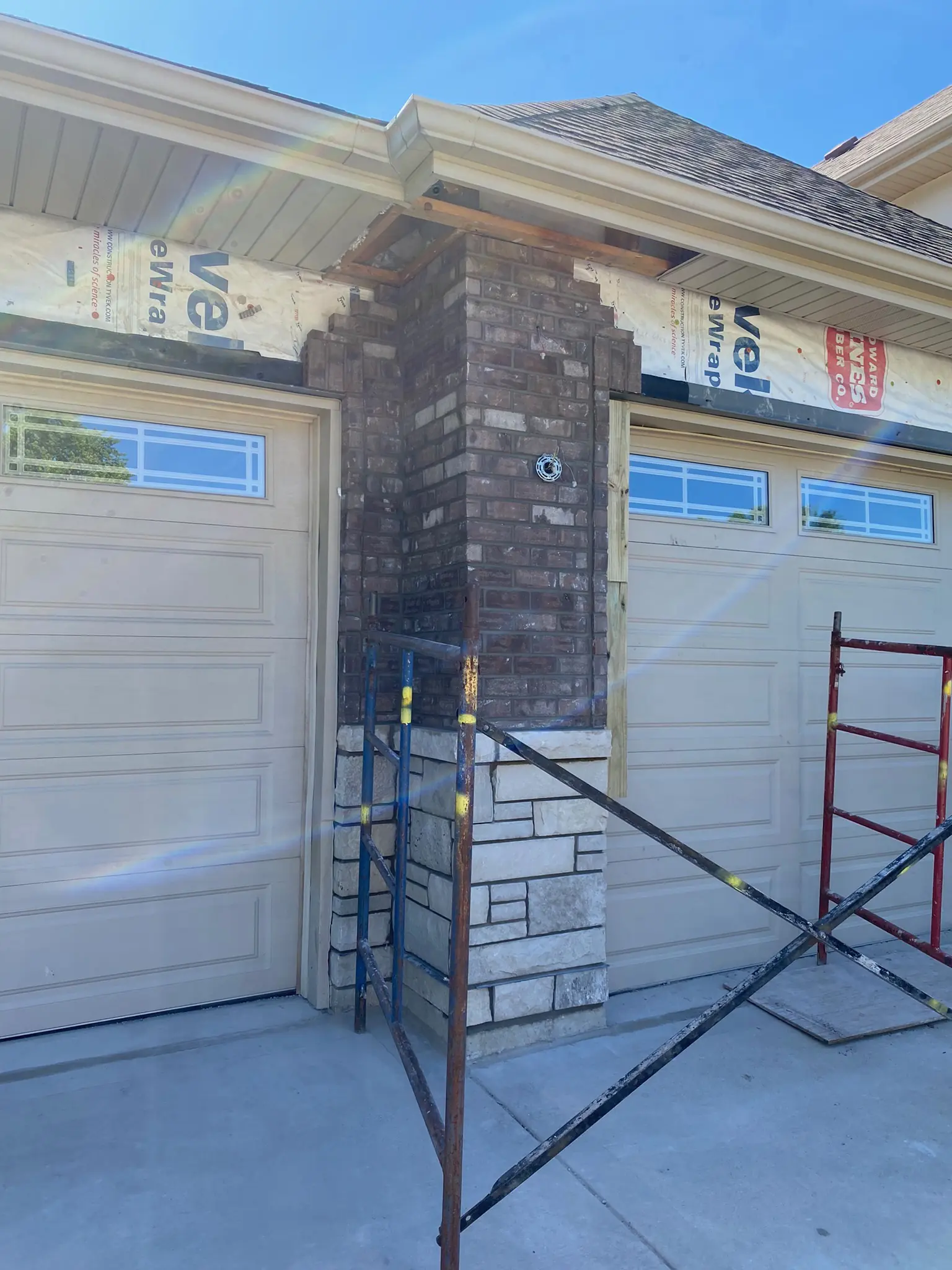
Limestone and Sill Repair in Western Springs, IL
Limestone and sill repair in Western Springs, IL is the restoration of the stone elements on a house — window and door sills, lintels, water tables, steps and trim — when they crack, spall, erode or shift out of place. Emerald Masonry LLC repairs those units rather than defaulting to replacement, using dutchman inserts, matched patching and correctly matched stone. Family-owned, licensed, bonded and insured, career masons with decades of Chicagoland experience, free on-site estimates. Call (708) 288-1696.
Here is the thing about a stone sill: it has exactly one job, and when it stops doing that job the damage shows up somewhere else.
A sill exists to catch water running down the window and throw it clear of the wall below. It is sloped for that reason, and it projects past the wall face for that reason. When the slope flattens through erosion, the joints open, or the unit cracks, it stops throwing water clear and starts delivering it straight down the brick.
Which is why homeowners in Western Springs call us about spalling brick under a window and end up needing sill work. The brick is the symptom. The sill is the cause.
Western Springs Stone
The village grew up around the Burlington line from the 1880s, and its older neighborhoods — the streets around Old Town, the blocks near the historic Water Tower, the residential grid running off Hillgrove and Wolf — carry a substantial stock of pre-1920 homes with genuine stone detailing: sills, lintels, water tables, porch elements and foundation stone. Later blocks add early-20th-century Tudors, Colonials and bungalows, most with stone sills even where the walls are brick.
That is a lot of century-old horizontal stone, all of it doing the hardest job on the elevation.
How Limestone Fails
Limestone is sedimentary, laid down in visible bedding planes — horizontal layers that are planes of relative weakness. It is durable and handsome, and it is porous, so it takes on water.
In a Cook County winter that absorbed water freezes inside the stone, expands, and splits it along those layers. Four failure modes follow:
- Delamination and spalling — the face shedding in sheets or shells following the bedding.
- Cracking — often across the middle of a sill span, or radiating from a bearing point.
- Surface erosion — the slope flattening and the crisp nose profile rounding over. This is the quiet one, because the sill still looks intact while it has stopped shedding water.
- Displacement — a sill dropping or tilting because the mortar bed beneath it failed.
Horizontal stone always fails first, because it holds water rather than shedding it. Sills, water tables, steps and caps take the worst of it.
Signs Your Western Springs Home Needs Stone Repair
- Sills flaking, shelling or crumbling at the face or the nose.
- Cracks running through a sill, lintel or trim unit.
- Brick below a window streaked, stained or spalling — the strongest single indicator.
- Open or missing mortar joints where stone meets brick.
- Failed or missing caulking at the sill-to-window joint.
- Stone that has dropped, tilted or shifted out of plane.
- A sill that no longer looks sloped — check with a level; a flat sill is a failed sill.
- Rust staining on the stone, indicating corroding embedded metal or a steel lintel behind it.
- Water staining or damage inside below a window.
- Eroded carved detail on trim and porch stonework.
Repair Before Replacement
Replacement is occasionally right, but it is a last resort — it destroys original material, costs more, disturbs the surrounding masonry, and never matches a century-old wall perfectly.
| Approach | What it involves | When it is right | |---|---|---| | Repointing and recaulking | Restoring joints and sealant around sound stone | Stone intact, joints failed | | Patching / composite repair | Matched cementitious patch rebuilding lost material | Localized spalling and edge loss | | Dutchman repair | Cutting out the damaged area, fitting matched new stone | Significant local damage, unit otherwise sound | | Repinning / resetting | Removing, rebedding and anchoring a shifted unit | Displaced but intact stone | | Full replacement | New matched limestone unit | Structurally failed or broken units |
Our Process
- Free on-site assessment. Every stone element examined, with slope checked on sills — and, critically, identifying where water is entering.
- Correct the water path first. Failed joints, missing caulking, bad flashing, a clogged gutter discharging onto stone.
- Cut back to sound material without over-cutting.
- Method selected per unit — patching, dutchman, repinning or replacement, chosen unit by unit rather than applied blanket-wide.
- Matched stone and mortar. Indiana limestone and matched stone, with soft lime-based mortar on pre-1920 walls.
- Restore the slope. A repaired sill that still does not shed water has not been repaired.
- Sealant and breathable protection — new backer rod and sealant where needed, vapor-permeable products only.
Why the Mortar Matters at a Stone Joint
The governing rule: mortar must be softer than the masonry it holds. At a stone joint, a hard modern Portland mix concentrates stress at the stone face rather than in the joint — and on porous, layered limestone that means accelerated delamination. On Western Springs's pre-1920 homes we use lime-based mixes deliberately, not as a stylistic preference.
Materials We Use
Indiana limestone and matched replacement stone, stainless anchors and pins, matched stone patching compounds, lime-modified and Type N mortars appropriate to the age of the wall, backer rod and sealant, and breathable sealers. Related work commonly includes tuckpointing, brick repair, lintel repair and historic masonry restoration.
What Drives Cost
- Number of units — a few sills versus a full facade of stone.
- Repair method — patching is less involved than a dutchman; a dutchman less than replacement.
- Height and access — upper-floor sills need staging or a lift.
- Matching difficulty — unusual stone color, grain or a carved profile.
- Related damage — a rusting steel lintel behind the stone, or spalled brick below a failed sill.
- Ornamental complexity on porch and trim stonework.
Serving Western Springs and the Near West Suburbs
Western Springs sits in Cook County with no lake buffer and dozens of freeze-thaw crossings each winter. The village's mature tree canopy keeps north and east elevations damp for long stretches, which is why the same house often has sound sills on one side and delaminating sills thirty feet away.
We work throughout 60558 — the Old Town streets, the blocks around the historic Water Tower and the BNSF station, the residential grid off Hillgrove and Wolf, and the churches and institutional properties in the village. We also serve neighboring La Grange, La Grange Park, Hinsdale and Burr Ridge. Western Springs owners frequently pair stone work with tuckpointing.
Emerald Masonry LLC is a family-owned, licensed and insured masonry contractor serving Chicago and the Chicagoland suburbs led by career masons with decades of hands-on experience in tuckpointing, chimney repair, brick repair and replacement, lintel and parapet repair, foundation and limestone/sill repair, caulking, sealing, and commercial, residential and historic masonry restoration. Free on-site estimates — call (708) 288-1696.
Why Waiting Costs More
A failed sill does not stay a sill problem. It becomes a wet wall, then spalled brick below, then a rusting steel lintel behind it, then water inside at the window head. Repairing the sill is often the cheapest way to avoid brick repair, because it removes the water that would have caused it.
Request a Free Stone Assessment in Western Springs
If your sills are flaking or cracked — or if the brick under a window is streaked and spalling — have the stone above it assessed before another freeze-thaw season.
Call (708) 288-1696 or request your free estimate.
Ready to get started?
Free on-site estimates for commercial and large-scale projects.
Limestone / Sill Repair in Western Springs, IL — Frequently Asked Questions
Can a cracked limestone sill be repaired or does it need replacing?
Most cracked sills are repairable. Cracks, spalled edges and eroded faces are commonly restored with dutchman stone inserts, matched patching mortars, or careful cutting and repinning. Full replacement is reserved for units that have broken into separate pieces or lost structural integrity.
How much does limestone sill repair cost in Western Springs, IL?
It depends on how many units are involved, whether they can be repaired in place or must be replaced, and how high off the ground they sit. A handful of ground-floor sills is a modest job; restoring stone across a full facade is a project. Emerald Masonry assesses in person and provides a free written estimate.
Why is the brick under my window streaked and spalling?
That is the classic signature of a failed sill above it. Once a sill loses its slope or its joints open, it holds water and sheds it down the wall instead of away from it. The brick below takes that concentrated runoff every storm, which is why sill repair usually prevents brick repair.
What is a dutchman repair?
A dutchman is a stone patch — the damaged section of a unit is cut out cleanly and a matched piece of new stone is fitted into its place. It preserves the original unit and most of its material while restoring a sound surface. It is the standard professional alternative to replacing an entire sill or lintel.
Should limestone be sealed after repair?
Only with a breathable, vapor-permeable product, and only after the water source is corrected. Film-forming coatings and paint trap moisture inside porous stone, and the trapped water then spalls the face off from behind — causing exactly the damage the coating was meant to prevent.
Do you work on the older homes near Old Town Western Springs?
Yes. The village's oldest stock predates 1920 and needs soft, lime-based mortar at stone joints rather than a hard modern mix, which concentrates stress at the stone face and accelerates delamination. We match the mortar to the age of the wall, not to what is convenient.
Limestone / Sill Repair in Nearby Areas
Other Masonry Services in Western Springs, IL
Learn more about our limestone / sill repair services across Chicagoland, or view all service areas.