
Commercial Masonry Restoration · Tinley Park, IL
HOA & Condo Masonry Repair in Tinley Park, IL — Per-Unit Chimneys and Shared Walls
On townhome stock the masonry dispute is almost never the field wall. It is the chimney serving one unit — and which column of the declaration that sits in decides who pays.
Quick Answer
Emerald Masonry LLC provides HOA and condo association masonry repair in Tinley Park, IL — surveying every building, producing phased written scopes a board can approve and bid, and repairing common-element masonry with resident notice throughout. Licensed, bonded and insured; COI and lien waivers on request. Call (708) 288-1696.
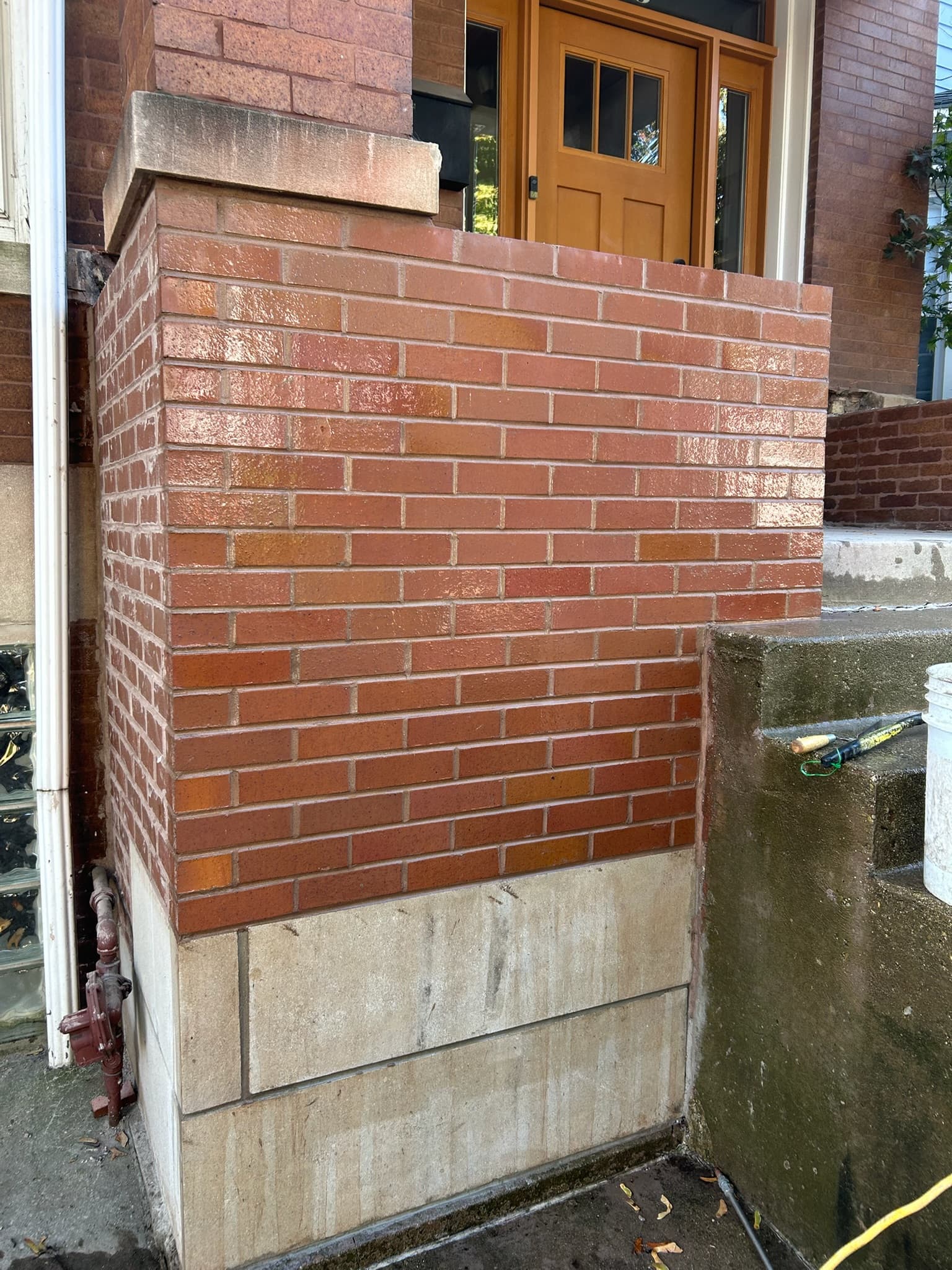
HOA and condo masonry repair in Tinley Park, IL
HOA masonry repair in Tinley Park, IL produces one dispute far more often than any other, and it is not the field wall. It is the chimney serving a single unit — and which category of your declaration that element sits in decides who pays for it. Emerald Masonry LLC works with associations throughout Tinley Park and the surrounding Cook, Will and DuPage County suburbs, led by career masons with decades of hands-on Chicagoland experience. Licensed, bonded and insured; COI, W-9 and lien waivers on request. Free on-site assessments — call (708) 288-1696.
Tinley Park has a substantial stock of 1970s through 1990s townhome and condo developments, plus later multi-family, and that stock shares two structural features that generate most of the masonry questions: per-unit chimneys and party walls between units.
Start with a survey of every building, not a price for one
Deterioration across an association is never uniform. On a typical Tinley Park property, one or two buildings are meaningfully worse than the rest — usually the ones with the most exposed west elevations, the worst drainage, or a chimney that has been leaking quietly for a decade.
So the first deliverable is a condition survey building by building, ranked by risk rather than by address order. That gives a board three things a lump-sum bid cannot:
- A defensible order of work — which building is phase one, and why
- A basis for the reserve conversation — what is coming, and roughly when
- A comparable bid document — every contractor pricing the same quantities
How we rank an association scope
| Priority | What it covers | Why it comes first | |---|---|---| | 1 — Safety | Loose or displaced brick, unstable chimney or parapet, failing lintels over entries | Anything over a walkway, entry or patio is the first dollar spent | | 2 — Active water entry | Open joints, failed flashing, cracked sills, blocked weeps | Water reaching a unit becomes an owner complaint and a claim | | 3 — Advancing deterioration | Spalling brick, eroded joints not yet leaking | Cheaper now than as unit replacement later | | 4 — Preventive | Sealant renewal, breathable sealing, drainage corrections | Extends everything above it | | 5 — Cosmetic | Cleaning, staining, appearance blending | Once the envelope is sound |
Boards get into trouble when phase one is chosen by what looks worst from the street rather than by what is actually failing. Those are frequently different buildings.
The per-unit chimney problem
On Tinley Park's townhome stock this is the single most common masonry dispute we encounter, and the sequence that resolves it is consistent:
- Establish the water path and the failed element. A damp bedroom wall is frequently fed by a cracked chimney crown two floors above, not by the wall it appears on.
- Name the element precisely — field wall, parapet, a chimney serving one unit, a stoop, a patio.
- Apply the declaration. Exterior structural walls are commonly common elements; a chimney serving a single unit is frequently a limited common element, where the association repairs it but cost may be allocated to the benefited unit.
- Then decide funding — reserves, operating budget, assessment, or allocation.
Steps 1 and 2 are ours. Steps 3 and 4 are the board's, with counsel where the answer is not clean. Our guide to who pays for masonry repair, the association or the unit owner covers the classification question in depth.
What fails on Tinley Park association property
- Chimneys and stacks — the most exposed masonry on any building, and the most commonly deferred because no single owner looks at them
- Lintels over garage and entry openings — bare steel corroding and lifting the brick above it
- Base courses and grade-level walls — splash-back, snow, de-icing salt and foundation plantings holding moisture
- Veneer details — blocked or caulked weep holes, short flashing, failed sealant joints at windows and dissimilar materials
- West and south elevations — driving rain with little to break it up on an open suburban site
- Party-wall and patio transitions, where masonry meets another material and nobody owns the joint
On newer veneer buildings the brick itself is rarely the problem. The details are, which is why a survey has to look at flashing, weeps and sealant rather than only at mortar joints.
Working around residents
- Phase by building and by elevation — one face under staging at a time
- Written notice before work reaches a building, with dates and what residents must clear
- Protected walkways and entries wherever work is overhead
- Parking and drive-aisle planning agreed with management before mobilisation
- A named point of contact so residents call us, not the board
- Daily cleanup, because a tidy site generates far fewer complaints
Documentation the board will need
We produce it as standard: a written scope with stated assumptions, photographic documentation by building and elevation, phased pricing that maps to the reserve schedule, a COI naming the association, a W-9, and lien waivers. Recording the mortar specification and brick source matters more than it sounds — it is what makes phase three match phase one three years later.
What drives the cost
Number of buildings in the phase · wall area and the real percentage of failed joints and units · chimney and lintel counts across the property · access and staging logistics on a multi-building site · overhead protection at entries and walkways · resident coordination and notice · match difficulty for brick and mortar · season and curing conditions.
Emerald Masonry LLC is a family-owned commercial masonry contractor serving Chicago and the Chicagoland suburbs, led by career masons with decades of hands-on Chicagoland experience, in commercial tuckpointing, façade and parapet repair, lintel replacement, chimney and stack rebuilds, CMU block repair, brick repair and replacement, foundation and limestone/sill repair, caulking, sealing, and commercial, residential and historic masonry restoration. Free on-site assessments — call (708) 288-1696.
Serving Tinley Park associations and the southwest suburbs
We work with associations throughout Tinley Park's 60477 and 60487 and across Cook, Will and DuPage County. Related scopes on the same property often include commercial façade repair in Tinley Park, parapet wall repair in Tinley Park, lintel repair in Tinley Park and masonry sealing in Tinley Park. We do the same work in Orland Park, Oak Forest, Mokena and Frankfort. See our HOA and condo association practice and our work with property managers.
Why Tinley Park boards call Emerald
We survey every building before we price any of them, we rank the work by risk rather than by appearance, and we hand the board a document it can actually bid and approve. The insurance paperwork arrives without being chased. Family-owned, licensed, bonded and insured, led by career masons with decades of Chicagoland experience.
Need a phased, building-by-building masonry scope for your Tinley Park association? Request a free on-site assessment or call (708) 288-1696.
Ready to get started?
Free on-site estimates for commercial and large-scale projects.
Commercial Masonry Restoration in Tinley Park, IL — Frequently Asked Questions
How much does HOA masonry repair cost in Tinley Park, IL?
Association work is priced building by building, because deterioration is rarely uniform across a property. Wall area, the true percentage of failed joints and units, chimney and lintel counts, access and staging across the site, and how many buildings are in phase one all move the number. Emerald Masonry provides a free on-site assessment and a written scope a board can bid.
Can you survey all our buildings and tell us which need work first?
Yes, and that is usually the most valuable thing we do for an association. We assess every building, rank them by condition and risk rather than by street order, and give the board a phased plan so the worst exposure is addressed first.
Who is responsible for a chimney serving one unit?
That is set by your declaration and bylaws rather than by us, and on townhome stock a single-unit chimney is frequently a limited common element — meaning the association performs the repair while cost may be allocated differently. Boards should confirm against their own documents before assigning cost.
Do you provide certificates of insurance and lien waivers?
Yes — a COI naming the association, a W-9, and lien waivers on request, as standard on association work. Emerald Masonry LLC is licensed, bonded and insured in Illinois.
How much notice do residents get?
Written notice before work reaches their building, with the schedule by elevation, what they need to clear from patios and balconies, and where parking will be affected. We would rather over-communicate than have the board field complaints.
Can the work be phased across budget years?
Yes, and most associations should. We rank the scope so anything unsafe or actively admitting water is in phase one, with preventive and cosmetic work scheduled later — phasing a properly ranked scope is sound management rather than deferral.
Will repairs match across buildings done in different years?
That is exactly why we record the mortar specification and brick source in the written scope. A documented mix and unit source means phase three matches phase one instead of reading as three separate repairs.
Do you work with our property management company?
Regularly. We provide written scopes, photographic documentation and phased pricing formatted so a manager can take them straight to the board or to ownership without translating them first.
Commercial Masonry Restoration in Nearby Areas
Other Masonry Services in Tinley Park, IL
Learn more about our commercial masonry restoration services across Chicagoland, or view all service areas.