
Tuckpointing & Repointing · Elmhurst, IL
Tuckpointing in Elmhurst, IL — Mortar Joint Repair for Brick Homes and Commercial Buildings
Elmhurst's older residential neighborhoods and Route 83 commercial corridor include a dense concentration of brick buildings that require periodic tuckpointing to remain weathertight. Emerald Masonry LLC provides professional mortar joint repair for homes, commercial facades, and institutional buildings throughout Elmhurst and DuPage County.
Quick Answer
Elmhurst's older residential neighborhoods and Route 83 commercial corridor include a dense concentration of brick buildings that require periodic tuckpointing to remain weathertight. Emerald Masonry LLC provides professional mortar joint repair for homes, commercial facades, and institutional buildings throughout Elmhurst and DuPage County.
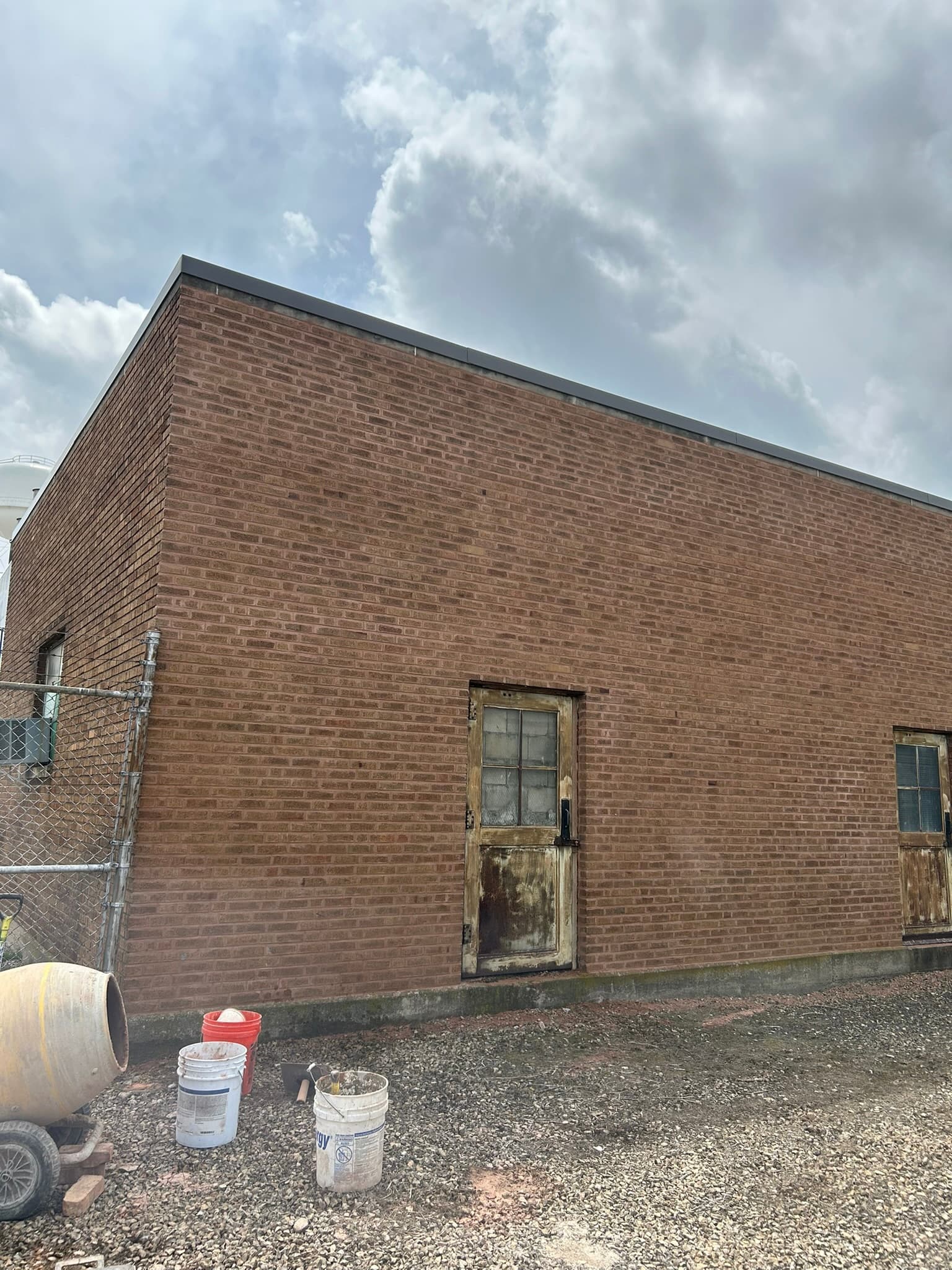
Walk the residential blocks north of St. Charles Road in Elmhurst and the brick construction is obvious — two-story homes, corner commercial buildings, and the occasional institutional structure, all built with the kind of solid masonry that defined DuPage County's growth through the 1950s. That construction holds up well for decades. But mortar joints don't last forever, and when they start to fail, water finds its way in.
Tuckpointing — the process of removing deteriorated mortar from brick joints and replacing it with fresh, properly specified mortar — is the most direct way to stop that process. Done correctly and on schedule, it protects the brick, the wall assembly, and the interior of the building from moisture-related damage that compounds season after season.
What Deteriorated Mortar Looks Like
Homeowners and property managers in Elmhurst often notice mortar problems when they see something specific — white staining on brick (efflorescence), dark water marks below a window head, or paint peeling off an interior wall that backs to an exterior face. By the time those symptoms appear, the mortar joints have been compromised for a while.
A closer look at the joints tells the real story:
- Recessed mortar — joints that have eroded back ¼ inch or more behind the brick face. Visible as a shadow line between the brick units.
- Crumbling mortar — joints that powder when probed with a key or small tool. Common on Elmhurst's pre-1950 housing stock.
- Hairline cracks along joints — often appear where brick courses intersect window or door openings, or at building corners.
- Dark or wet-looking joints after dry weather — indicates mortar is absorbing rather than repelling water.
In Elmhurst's climate, deteriorated joints go through roughly 40–60 freeze-thaw cycles per winter. Each cycle forces moisture deeper into open joints, expanding and contracting until the adjacent brick begins to spall.
The Tuckpointing Process
We begin every project with a full inspection — walking the elevation and probing joints at multiple locations to assess depth of deterioration. This determines the scope and whether any brick units need to be replaced before tuckpointing begins.
Step 1: Joint preparation. Deteriorated mortar is cut to a depth of ¾ inch using angle grinders, oscillating tools, or cold chisels depending on the joint size and access. This removes all soft and crumbling material while preserving sound underlying mortar and the adjacent brick faces.
Step 2: Cleaning. Cut joints are blown out with compressed air and brushed to remove dust. Clean joints are essential for proper mortar adhesion — even a thin layer of dust can prevent bonding.
Step 3: Mortar specification. This is where many tuckpointing jobs go wrong. Mortar strength must match or be slightly softer than the surrounding brick. Elmhurst's pre-1950 residential brick is typically a softer, more porous unit that requires a lower-strength mortar — Type O or a lime-rich blend. Using Type S or harder Portland-based mixes on older brick transfers stress from joint to brick, causing the face to pop off within a few seasons.
Step 4: Packing and tooling. New mortar is packed in lifts to the full joint depth, then tooled to a profile that matches the existing joint. Most Elmhurst-era residential brick uses a concave tooled joint; some older commercial buildings have a flush or raked profile that we match for visual consistency.
Step 5: Final inspection. We walk the elevation after cure and probe the new joints for any voids or weak spots before closing out the work.
Residential vs. Commercial Tuckpointing in Elmhurst
Residential projects in Elmhurst typically involve two-story homes, basement window wells, chimney stacks, and retaining walls. Most single-family work can be completed in one or two days without scaffolding using ladder-and-plank staging.
Commercial projects along Route 83, St. Charles Road, and the York Road corridor often involve full facade elevations on multi-story buildings. These require aerial lifts or tube-and-clamp scaffold for proper access and quality control at height. We own our own lift equipment and don't subcontract access work — a detail that matters for scheduling and accountability.
Institutional buildings — schools, churches, and municipal properties — often have decorative coursework, corbeling, or ornamental brick details that require experienced hand work. We've done tuckpointing on churches throughout DuPage County where the mortar profile and color need to blend into historic construction.
How Often Does Brick Need Tuckpointing?
Under normal conditions, quality tuckpointing on a well-maintained building in the Chicago area lasts 25–30 years. Buildings that were previously repointed with hard Portland cement mortar on older soft brick, however, often develop problems within 10 years — because the wrong mortar was used. Buildings near heavy traffic corridors see faster joint erosion from vibration and exhaust.
For Elmhurst properties built before 1960, an inspection every 10–12 years is a reasonable baseline. Commercial buildings with large areas of flat facade exposure may need attention sooner, especially on north-facing elevations that hold moisture longer.
FAQ
How much does tuckpointing cost in Elmhurst? Residential tuckpointing on a single-story home runs roughly $8–$15 per linear foot of joint, depending on joint depth, mortar hardness, and access. A full two-story home can range from $3,000–$8,000. Commercial projects are priced per square foot of facade or per linear foot depending on scope. We don't provide accurate estimates without seeing the building — joint depth and condition vary too much to quote over the phone.
Can I spot-tuck just the bad sections? Yes, selective repair is common and often the right approach — particularly when overall mortar is sound but specific areas have deteriorated due to water concentration at window heads or parapet caps. We'll identify what needs attention now and what can wait, rather than recommending a full repoint when it isn't warranted.
Will new mortar match the existing color? We color-match mortar to existing joints as closely as practical. An exact match is difficult because existing mortar has weathered over years and new mortar lightens as it cures. We carry a range of mortar colors and do sample tests on inconspicuous areas when color matching is critical — particularly on historic downtown Elmhurst properties.
My chimney is crumbling — is that the same work? Chimney repointing follows the same process but has access and safety considerations specific to rooftop work. We handle chimney tuckpointing as part of our standard scope. See our chimney repair page for more detail on crown repair and full chimney rebuilds.
Serving Elmhurst and DuPage County
Emerald Masonry LLC is based in Palos Heights and works throughout the DuPage County corridor — Elmhurst, Villa Park, Lombard, Addison, Glendale Heights, and surrounding communities. We're licensed, bonded, and insured, and we carry workers' compensation coverage on all crew members.
Call (708) 288-1696 or request a free tuckpointing estimate. We'll schedule an on-site inspection, walk the building with you, and provide a written scope and price before any work begins.
Ready to get started?
Free on-site estimates for commercial and large-scale projects.