
Tuckpointing & Repointing · Elgin, IL
Tuckpointing in Elgin, IL — Mortar Joint Repair for the Fox River Valley's Historic and Modern Brick
Mortar is the part of a brick wall that wears out first, and on Elgin's older Fox River Valley buildings it has often been failing for decades. Here's what tuckpointing really is, why mortar matching matters most on historic brick, and how to spot joints that need attention.
Quick Answer
Mortar is the part of a brick wall that wears out first, and on Elgin's older Fox River Valley buildings it has often been failing for decades. Here's what tuckpointing really is, why mortar matching matters most on historic brick, and how to spot joints that need attention.
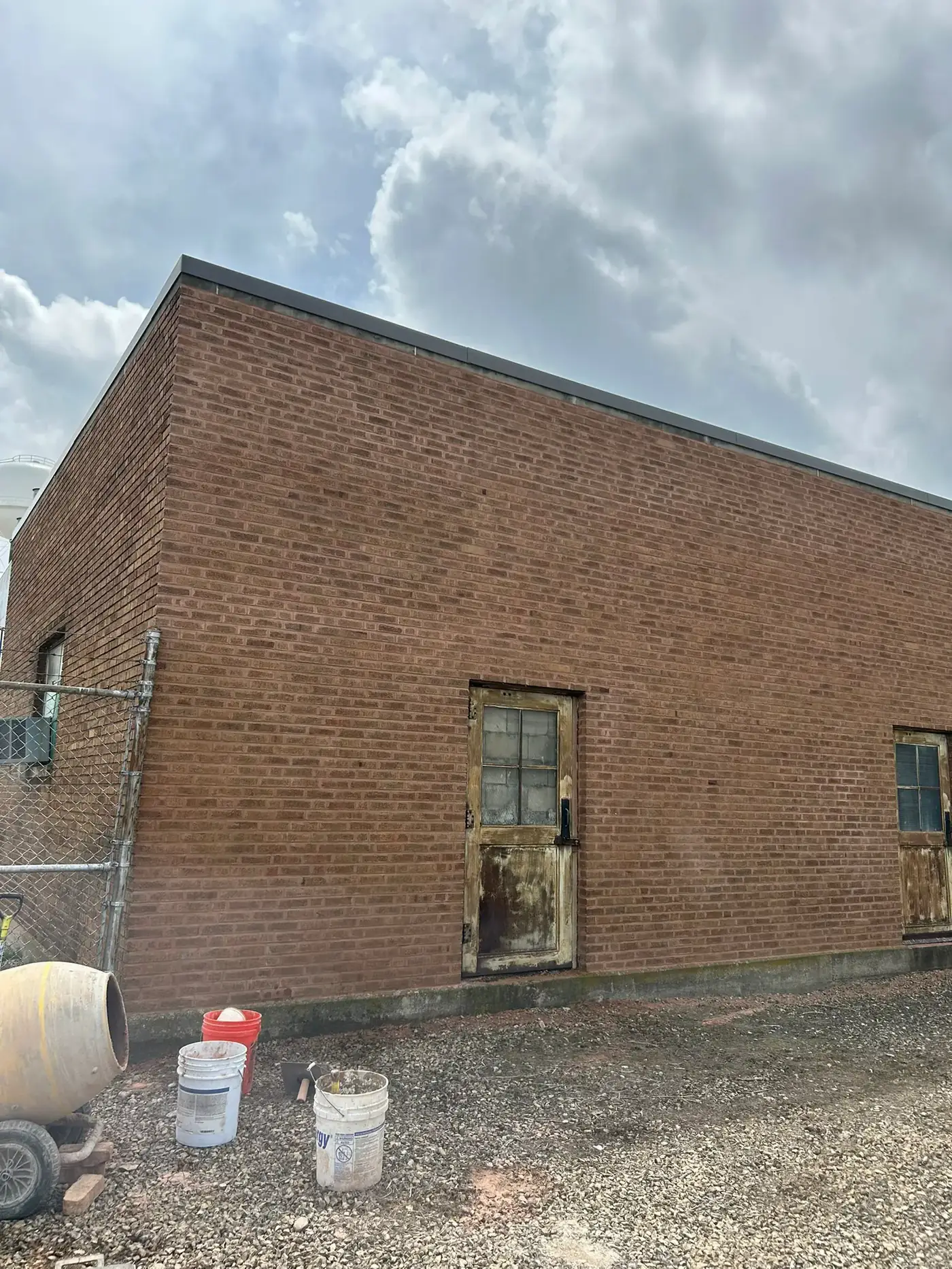
In any brick wall, the mortar joints wear out long before the brick does. Mortar is the softer, sacrificial part of the system — it is supposed to take the weather and the movement so the brick does not have to. When it deteriorates, water gets in, and the whole wall starts down a path toward serious damage. Tuckpointing — grinding out the failed mortar and replacing it — is how you stop that before it becomes a brick problem.
Emerald Masonry provides tuckpointing and repointing throughout Elgin and Kane County, on everything from century-old downtown brick to modern commercial buildings. This page explains what tuckpointing is, why the mortar match matters more than most people realize, and how to tell when your Elgin building needs it.
Elgin's Brick and Why Mortar Matching Matters Here
Elgin has one of the more interesting building stocks in the western suburbs. The historic districts near the Fox River and downtown are full of brick homes, commercial blocks, and institutional buildings from the late 1800s and early 1900s — much of it built with soft, lime-based mortar and handmade or early-machine brick. Spread out from that core and you find the full range: mid-century brick, postwar bungalows, and modern commercial and industrial buildings.
That mix makes mortar matching the single most important part of tuckpointing in Elgin. Here is why it matters so much: old, soft brick was meant to be set in soft, lime-rich mortar. Mortar is supposed to be slightly weaker than the brick, so that when the wall moves and weathers, the mortar gives way first and gets renewed — instead of the brick cracking. If someone repoints a soft old Elgin wall with hard, modern Portland-based mortar, the relationship inverts. Now the mortar is stronger than the brick, so the brick takes the stress, traps the water, and spalls. A "repair" with the wrong mortar can do more damage than leaving the wall alone.
Getting the mortar right — in strength, composition, and color — is what separates real tuckpointing from a cosmetic job that fails early.
What Tuckpointing Actually Is
The terms get used loosely, so it is worth being precise.
- Repointing is the structural work: grinding or raking out deteriorated mortar to a proper depth and packing in fresh mortar that bonds and seals the joint.
- Tuckpointing, strictly speaking, is a finishing technique that creates a crisp, fine joint line for appearance. In everyday use — and on this page — "tuckpointing" means the whole job of removing failed mortar and replacing it.
What matters is the work being done correctly: the old mortar removed to sufficient depth (not just smeared over), the joint cleaned, and the new mortar matched to the wall and tooled to shed water.
How to Tell Your Elgin Building Needs Tuckpointing
Mortar failure is gradual, so it pays to know the signs:
- Joints that are recessed, crumbling, or missing — you can rake a key or a fingernail into them
- Mortar that turns to sand when you touch it
- Hairline gaps opening between the brick and the mortar
- Visible cracks running through the joints
- Damp interior walls or musty smells on the inside of an exterior wall
- Efflorescence — white chalky staining — signaling water is moving through the joints
- Early spalling on the brick faces, which means water is already getting in
Catch it at the joint stage and tuckpointing solves it. Wait until the brick is spalling and you have added brick repair to the bill.
How a Proper Job Is Done
- Assessment. We identify which joints are failing and confirm the original mortar type so the new mortar matches.
- Removal. Failed mortar is ground and raked out to the correct depth — deep enough for the new mortar to bond, without damaging the brick edges.
- Cleaning. The joints are cleaned out so the new mortar adheres properly.
- Repointing. Fresh mortar, matched in strength and color, is packed in and compacted.
- Tooling. The joints are tooled to the right profile so they shed water and match the look of the wall.
Done this way, a tuckpointing job restores the weather seal and protects the brick for decades. On larger or multi-story buildings, access — scaffolding or lifts — is part of the plan and the proposal.
Choosing a Tuckpointing Contractor in Elgin
- They match the mortar. On Elgin's historic brick especially, this is non-negotiable. Ask how they determine the right mix.
- They remove mortar to proper depth. A surface smear over old joints is not tuckpointing and will not last.
- They have experience with both old and modern masonry. The two need different approaches.
- They are licensed, bonded, and insured.
Emerald Masonry has tuckpointed Chicagoland brick for more than decades. We are family-owned, non-union, and licensed, bonded, and insured, and we work with homeowners, property managers, HOAs, churches, and insurance companies. We provide free on-site estimates and carry a ,000 project minimum.
Frequently Asked Questions
How often does brick need to be tuckpointed?
There is no single number — it depends on the original mortar, the exposure, and how the wall was built. As a rough guide, mortar joints in our climate often last several decades before needing attention, with weather-exposed and north-facing walls going first. The better answer is to watch for the warning signs and have the wall looked at when joints start recessing or crumbling, rather than waiting on a fixed schedule.
Why is mortar matching such a big deal on older Elgin buildings?
Because old, soft brick needs soft, lime-rich mortar. If a hard modern mortar is forced into a soft old wall, the mortar becomes stronger than the brick, and the brick ends up taking stress and trapping water — which causes it to crack and spall. Matching the mortar to the wall keeps the system working the way it was built to, with the mortar wearing out instead of the brick.
Can you tuckpoint just one section, or does the whole wall need it?
You can absolutely tuckpoint only the failing areas, and often that is the right, cost-effective call. The key is matching the new mortar so the repaired sections blend with the rest of the wall. We will tell you honestly whether spot repointing makes sense or whether the joints have failed broadly enough that doing a full elevation is the better value.
What happens if I put off tuckpointing?
The failing joints let water into the wall, where it freezes and expands every winter. Left long enough, that moves the problem from the mortar into the brick itself — spalling faces, cracked units, and eventually structural issues. Tuckpointing at the joint stage is far cheaper than the brick replacement and restoration that follow if it is ignored.
Serving Elgin and Kane County
We provide tuckpointing and repointing throughout Elgin and the surrounding Kane and DuPage County communities, including South Elgin, St. Charles, Bartlett, Streamwood, Hanover Park, and Carpentersville. From the historic brick near the Fox River and downtown Elgin to modern commercial buildings across the area, we match the mortar to the wall and do the job to last. We also handle full masonry restoration when a building needs more than joint work.
Get a Free Tuckpointing Estimate
If your mortar joints are recessing, crumbling, or letting water in, the time to act is before the brick starts to suffer. Contact Emerald Masonry for a free on-site estimate in Elgin, or call (708) 288-1696. We will assess the joints, match the mortar, and give you a straight answer on what your wall needs.
Ready to get started?
Free on-site estimates for commercial and large-scale projects.