
Chimney Repair · Chicagoland, IL
Abandoned Chimneys on Apartment, Condo and Church Buildings: Repair, Rebuild, Lower or Remove?
When a building switches to high-efficiency boilers, the old masonry stack stops doing anything — and starts falling apart faster than it ever did in service. Here is how property managers, condo boards and parishes decide what to do with it.
2026-10-03
Quick Answer
An abandoned masonry chimney or boiler stack on an apartment, condo, church or school building has four options: repair, rebuild, take down below the roofline and cap, or remove entirely. Unused stacks deteriorate faster because nothing heats or dries them. Emerald Masonry LLC assesses and scopes all four across Chicagoland — (708) 288-1696.
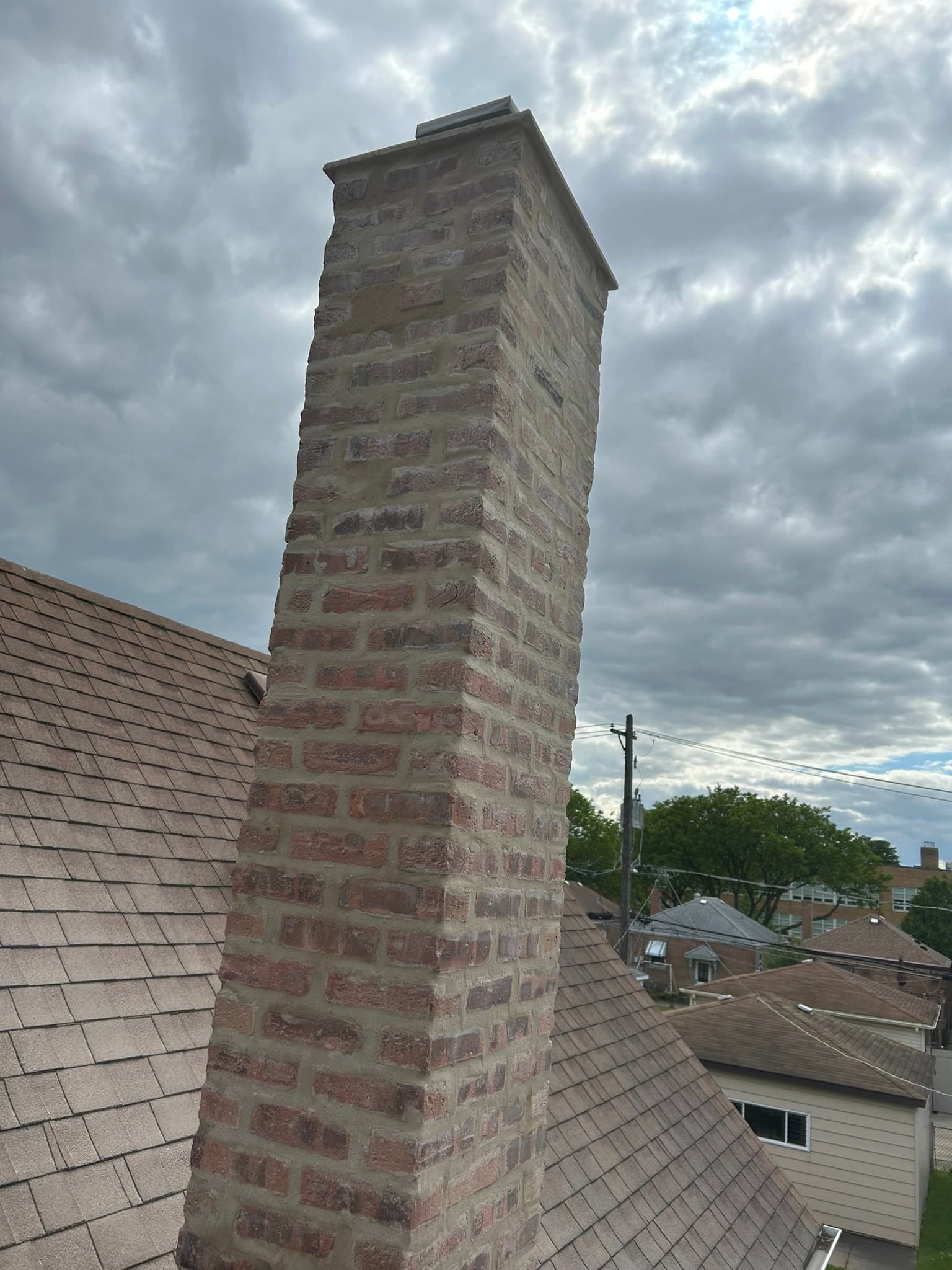
Abandoned Chimneys on Apartment, Condo and Church Buildings: Repair, Rebuild, Lower or Remove?
An abandoned chimney or boiler stack on an apartment building, condo building, courtyard building, church or school has four realistic futures: repair it, rebuild it, take it down below the roofline and cap it, or remove it completely. The right answer depends on whether anything still vents through it, how far the masonry has deteriorated, whether it matters architecturally, and what the building can afford to keep maintaining. Emerald Masonry LLC assesses and scopes all four options for property managers, condo boards and building owners across Chicago and the Chicagoland suburbs. Free on-site assessment: (708) 288-1696.
Across Chicago's multi-unit stock, thousands of masonry stacks have quietly gone out of service. A building converts from a large atmospheric boiler to high-efficiency units that vent through the side wall in plastic pipe. The water heaters follow. The old stack — sometimes three or four flues wide and rising well above the roof — is left standing, cold, and forgotten.
An unused masonry stack is not a neutral object. It is a tall, unheated, fully weather-exposed piece of masonry with no maintenance budget, sitting above people's heads. On most buildings it deteriorates faster after it is abandoned than it ever did in service.
Why abandoned stacks deteriorate faster than working ones
No heat, no drying
A working chimney is warmed from the inside every heating season. That heat drives moisture out of the brick and keeps the inner wythe above freezing for much of the winter. When the flue goes cold, the stack becomes a saturated column of masonry that freezes and thaws from both faces. Every Chicagoland winter brings dozens of freeze-thaw cycles, and each one widens the cracks water has already found.
Four exposed faces and an open top
Like every chimney, a building stack is exposed on all four sides and on top, with no roof over it. The crown — the cap of concrete or mortar at the top — is usually the first thing to crack. Once it does, water runs straight down into the core and into the flue liners.
Acidic residue
Decades of combustion leave sulfates and condensate in the flue and the mortar. When the stack goes cold and wet, that residue keeps working on the mortar from the inside, which is why abandoned stacks often show crumbling mortar joints and bulging high up even when the face brick looks reasonable.
Nobody owns it
The single biggest cause is organisational. The stack is no longer on the HVAC contractor's list, it is not on the roofer's list, and it is invisible from the sidewalk. It falls out of every maintenance plan at once.
Warning signs on an unused building stack
- Loose, displaced or missing bricks at the top courses.
- A cracked, broken or missing crown, or a flue liner sticking up with nothing around it.
- Spalling brick — faces popping off — on the upper third of the stack.
- Open or sandy mortar joints, especially on the north and west faces.
- A visible lean or a stack that no longer lines up with the building corner.
- Brick fragments on the roof, in gutters, or on the ground below.
- Rust staining from internal steel, ladders, ties or old brackets.
- New water stains on top-floor ceilings or walls beside the chimney chase.
- Efflorescence — white salt bloom — running down the stack faces.
Any falling debris is a make-safe call, not a budgeting conversation.
The liability problem
A stack that sheds brick onto a sidewalk, a courtyard, a parking lot or a playground is a falling-masonry hazard, and owners generally have a duty to keep their buildings from becoming one. Our guide to falling masonry liability and an owner's duty to inspect covers that in more depth. If your building is tall enough to fall under Chicago's exterior wall inspection requirements, the stack is part of what gets looked at — see the Chicago façade inspection ordinance and masonry.
The practical point is simple: a deteriorating abandoned stack is a cost you will pay either way. The only choice is whether you pay it on a schedule or after something falls.
The four options
1. Repair
Repair means rebuilding the crown, repointing open joints, replacing spalled units, adding a cap, and sealing where appropriate. It is the right answer when the stack is structurally sound, still vertical, and either still in use or worth keeping. On an abandoned stack, repair buys time — but the stack will keep needing attention because nothing will ever heat it again.
2. Rebuild
Rebuilding takes the stack down to sound masonry — often to the roofline or a few courses below — and relays it in matching brick with new flue tiles, crown and flashing. This is the choice when the stack is needed (it still vents an appliance), is a defining architectural feature, or sits on a landmark or historic building where removal is not acceptable.
3. Lower below the roofline and cap
The stack is taken down to a point below the roof deck, the remaining masonry is capped solid, and the roofer closes the opening and ties it into the roof system. Nothing is left above the roof to weather, so the maintenance liability disappears. For a stack that no longer serves anything, this is very often the most cost-effective permanent answer.
4. Full removal
The stack is removed through the building — through the attic, top floors, and sometimes down to the basement — to recover space or remove a chase that is causing interior problems. It is the most invasive and expensive option, rarely necessary on an occupied multi-unit building, and almost always involves an engineer and multiple trades.
Decision table: which option fits your stack?
| Situation | Repair | Rebuild | Lower and cap | Full removal | |---|---|---|---|---| | Still vents a boiler, water heater or exhaust | Yes, if sound | Yes, if deteriorated | No — reroute first | No — reroute first | | Unused, structurally sound, minor damage | Possible | Rarely | Usually best | Rarely | | Unused, top third spalled or loose | Short-term only | If it must stay | Usually best | If space is needed | | Visible lean or displacement | Engineer first | Often | Often | Engineer-led | | Landmark or defining architectural feature | Yes | Yes | Usually not acceptable | Usually not acceptable | | Interior chase leaking or taking space | — | — | Partial fix | Yes |
Before anything comes down: confirm it is truly abandoned
The most important step happens before the mason arrives. Every flue in the stack must be confirmed out of service. On many buildings, the boilers were converted but a water heater, an incinerator chute, a laundry exhaust or a commercial tenant's appliance still uses one flue. Have your HVAC contractor confirm in writing what, if anything, still vents through the stack. If something does, it has to be rerouted before the stack can be lowered.
When a structural engineer should be involved
A masonry contractor can assess and scope most repairs and lowerings. Bring in a structural engineer when:
- The stack is leaning or displaced out of plane.
- It is unusually tall, freestanding, or braced to the roof structure.
- It carries anything — signage, antennas, steel brackets, a ladder or a tie.
- Lowering or removal would affect roof framing, a bearing wall or a party wall.
- There is cracking at the roofline suggesting the stack is moving relative to the building.
See when masonry needs a structural engineer for the broader checklist.
Roofing tie-in: the part that goes wrong
Lowering a stack creates a hole in the roof. The masonry scope and the roofing scope have to meet cleanly: the mason removes the masonry to the agreed level and caps it solid; the roofer installs decking, insulation and membrane over the opening and ties it into the existing system. If those two contracts don't name the same elevation and the same responsibility for temporary weather protection, water gets in between them. Our guide to masonry and roofing sequencing covers the handoff.
On rebuilt or repaired stacks, the same applies to step and counter flashing at the roof line — the most common leak point on any chimney.
Our process for abandoned building stacks
- Roof-level assessment. We inspect every stack on the building from the roof, photograph each face and the crown, and note lean, cracking, spalling and loose units.
- Flue confirmation. We ask for written confirmation from your HVAC contractor about what still vents.
- Option scope. We price the realistic options side by side — usually repair versus lower-and-cap, and rebuild where the stack must stay.
- Make-safe if needed. Loose units at the top are removed immediately and debris protection set up if anything is at risk of falling.
- Coordinate with roofing. Elevations, temporary weather protection and patch responsibility agreed in writing.
- Execute. Hoisting and debris control, work from roof-level staging or lifts, masonry removed by hand above occupied spaces.
- Close out. Photos, quantities completed, and lien waivers.
Materials and techniques
On repairs and rebuilds: brick matched for size, color and hardness; Type N mortar for most exposed chimney work, or a softer lime-rich mix on historic brick; new clay flue tiles where flues remain active; a properly formed concrete crown with a drip edge; stainless or copper caps; and new step and counter flashing. On lowered stacks: masonry capped solid below the deck, ready for the roofing system. Breathable sealers can help on rebuilt stacks — never a film that traps water inside.
What drives the cost
No responsible contractor prices a building stack from the street. The cost depends on:
- Height above the roof and number of flues.
- Access — roof loading, lifts, hoisting, and whether staging must be built around the stack.
- How far it comes down and how much debris must be lowered.
- Matching material for rebuilds, especially on historic brick.
- Roof patching by the roofer after lowering.
- Engineer involvement where the stack is leaning or tied in structurally.
- Phasing on buildings with several stacks.
Emerald provides a free on-site assessment and a written scope with options, so a board or owner can compare them directly.
Phasing a building with several stacks
Courtyard buildings, large condo buildings and school campuses often have multiple stacks in different conditions. A sensible plan:
- Make every stack safe this season — remove anything loose.
- Lower and cap stacks that serve nothing, prioritising those over walkways, entrances and play areas.
- Repair or rebuild stacks that still vent or that must stay for architectural reasons.
- Fold the remaining work into your reserve plan or a multi-year masonry program.
For condo associations, the cost allocation question matters too — see HOA versus unit owner: who pays for masonry repair.
Permits and approvals
Lowering or removing a chimney may require a permit depending on the municipality and the building, and landmark or historic buildings may need additional review. Rules vary across Chicago and the suburbs, so confirm with your village or the City before work starts. On association buildings, board approval and owner notice are usually required as well.
Why not just let maintenance handle it?
An in-house maintenance team can clear a gutter of brick fragments, but working at the top of a tall stack — removing units by hand above occupied space, hoisting debris, forming a crown, and leaving the roof watertight — is specialised masonry work with real fall and falling-object risk. A badly patched abandoned stack is often worse than an untouched one, because hard mortar or a non-breathable coating traps the water that is destroying it.
Chicagoland context
Chicago's pre-war apartment buildings, courtyard buildings and greystones were built around central boilers with substantial masonry stacks. Parish complexes and older schools have even larger ones serving boiler rooms that have since been replaced. Many of those stacks have now been cold for a decade or more, and Chicagoland's freeze-thaw winters and wind-driven lake-effect moisture are working on all of them. Across Cook, DuPage and Will County, the abandoned stack is one of the most common unscheduled masonry liabilities on multi-unit and institutional property.
Maintenance and prevention
- Inspect every stack from the roof at least once a year, and after major storms.
- Keep a photo record of each face so change is visible.
- Make sure any stack that stays has a sound crown and a cap.
- Don't let an abandoned stack sit in limbo — decide its future and schedule it.
Related services
- Chimney repair and rebuilding
- Tuckpointing and repointing
- Brick replacement
- Parapet wall repair — the masonry the stack usually shares a roof with
- Historic masonry restoration for landmark stacks
- Commercial masonry restoration
If you manage multi-unit or institutional property, see our pages for property managers, HOA and condo associations and commercial buildings. Homeowners weighing the same question on a house should read should I remove my chimney instead of repairing it.
Decide the stack's future before winter decides it
Emerald Masonry LLC is a family-owned commercial masonry contractor serving Chicago and the Chicagoland suburbs, led by career masons with decades of hands-on Chicagoland experience, in commercial tuckpointing, façade and parapet repair, lintel replacement, chimney and stack rebuilds, CMU block repair, brick repair and replacement, foundation and limestone/sill repair, caulking, sealing, and commercial, residential and historic masonry restoration. Free on-site assessments — call (708) 288-1696.
Emerald was established in 2024, is licensed, bonded and insured, and provides a COI, W-9 and lien waivers on request. If your building has a stack nobody has looked at since the boilers were replaced, call (708) 288-1696 or request a free on-site assessment. We will price every realistic option, side by side.
Frequently Asked Questions
Why is the chimney we stopped using falling apart faster than when it was in use?
A chimney in service is warmed from inside, which dries the masonry and limits freeze-thaw. Once the boilers are converted and the flue goes cold, the stack stays saturated all winter and freezes repeatedly from both faces. Abandoned stacks commonly show more damage in five years than they did in the previous twenty.
Can we just take the chimney down below the roof and cap it?
Often, yes — it is usually the most cost-effective permanent answer for a stack that no longer vents anything. The masonry is removed to a point below the roof deck, capped, and the roof is patched over it by the roofer. It must first be confirmed that no appliance, water heater or exhaust still uses any flue in the stack.
Who should decide whether a stack is repaired or removed — the mason or an engineer?
A mason can assess condition and scope most repairs and lowerings. Bring in a structural engineer when the stack is leaning, displaced, very tall, carries a load or bracket, or when removal would alter roof framing or a bearing wall. Emerald Masonry LLC will tell you when a stack crosses that line.
Is the association or the unit owner responsible for a shared chimney?
In most condominium declarations a chimney that serves the building or passes through common elements is a common element, but it depends on your declaration. Check it before assigning cost, and see our guide on HOA versus unit-owner responsibility.
How much does it cost to remove an unused chimney stack?
Cost depends on stack height above the roof, number of flues, access and hoisting, debris removal, how far down it comes, roof patching, and whether any interior work is needed. Lowering and capping is typically less than a full rebuild but more than a top-only repair. Emerald provides a free on-site assessment and a written scope.
Does a historic church or school need to keep its chimney?
Sometimes. A stack that is part of a building's character or a designated landmark may need to be repaired or rebuilt in matching materials rather than removed. Check with your municipality before deciding, and scope the work to historic-masonry standards if it stays.
What are the warning signs that an abandoned stack is becoming dangerous?
Loose or missing bricks at the top, a cracked or broken crown, open mortar joints, a visible lean, bricks or debris found on the roof or ground, rust from internal steel, and new water stains on top-floor ceilings beside the stack. Any falling debris is an immediate make-safe call.
Do you provide a COI, W-9 and lien waivers for chimney work?
Yes. Emerald Masonry LLC is licensed, bonded and insured and provides a certificate of insurance naming the owner and manager, a W-9, and lien waivers with each payment on request.