
Commercial Masonry Restoration · Chicagoland, IL
Who Actually Signs Off? Masonry Approval Chains in Condos, Churches, Schools and Corporate Buildings
The most common reason a masonry project stalls in Chicagoland is not price or weather. It is that nobody established, in writing, who has authority to approve the scope, the change order, and the finished work.
2026-09-20
Quick Answer
Masonry projects stall most often because approval authority was never defined: who signs the scope, who can authorise a change order and up to what amount, and who accepts the finished work. Establishing those three roles in writing before mobilisation prevents most delays. Emerald Masonry LLC scopes commercial work for boards and managers across Chicagoland — call (708) 288-1696.
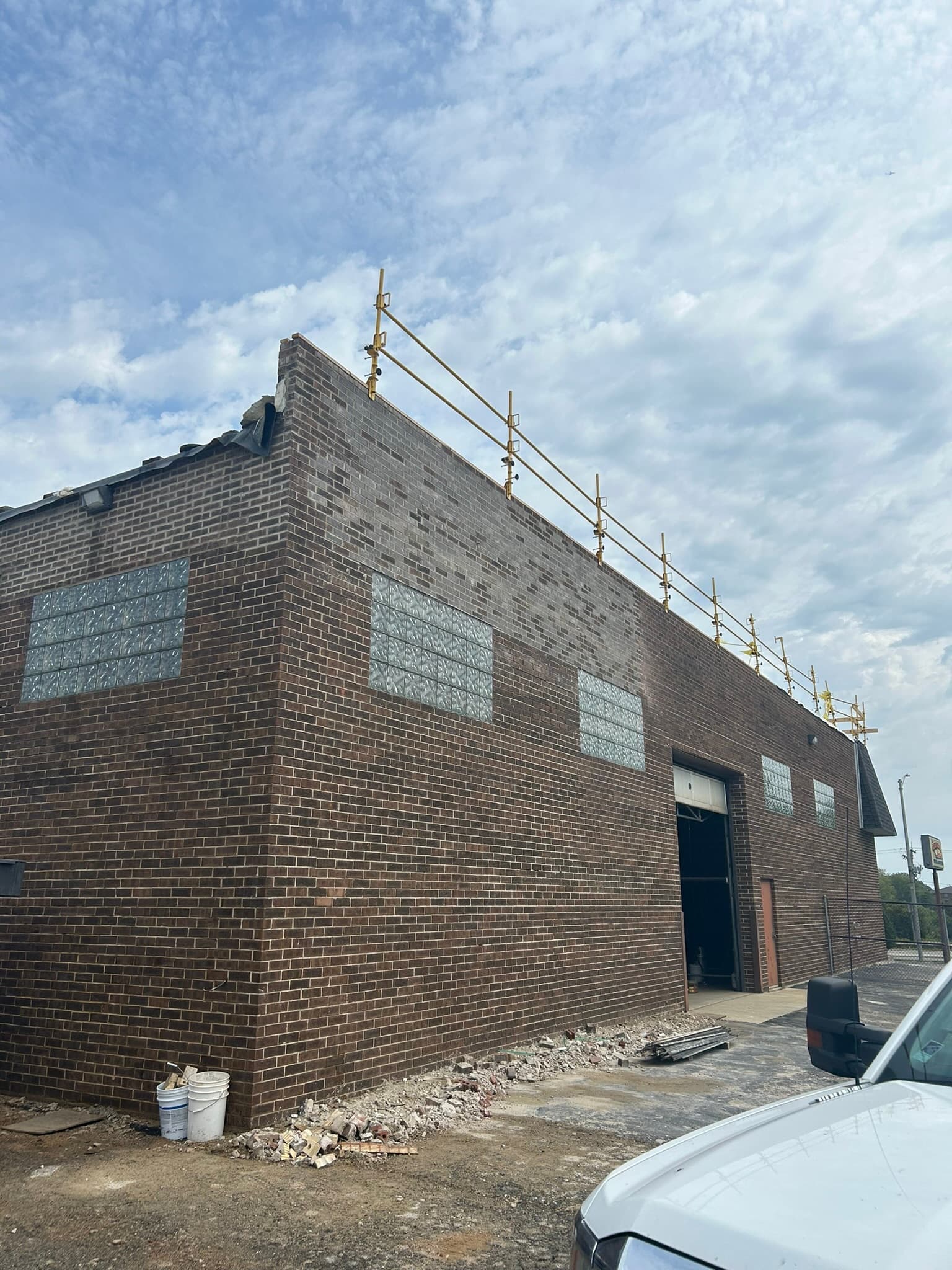
Ask a Chicagoland masonry contractor what delays commercial projects and almost nobody will say price. They will say approvals.
Not approval in the sense of permits — that is a separate and comparatively predictable problem. Approval in the sense of: the crew has the wall open, a condition has appeared that nobody could see from the ground, and there is no one with authority to say proceed until a board meets in eleven days.
Emerald Masonry LLC is a family-owned commercial masonry contractor serving Chicago and the Chicagoland suburbs, led by career masons with decades of hands-on Chicagoland experience. We scope work so boards, managers and committees can actually act on it. Free on-site assessments — call (708) 288-1696.
Three decisions, three different signatures
Nearly every commercial masonry project needs three separate approvals, and most owners treat them as one.
1. The scope approval. Who signs the written scope and binds the organisation to it.
2. The contingent-work approval. Who can authorise additional work when a hidden condition appears, and up to what amount, without going back to a full body.
3. The acceptance approval. Who walks the finished work, against what standard, and releases final payment and retainage.
Naming all three before mobilisation costs one conversation. Not naming them costs weeks.
Why masonry specifically
This trade has a structural problem other trades do not: nobody can see the whole scope before the work starts.
A repointing scope is written from the ground, from photographs, or from a lift that visited three points on an elevation. The wall's actual condition reveals itself progressively, over weeks, as staging goes up and joints get cut. A downspout comes off and there are forty feet of joints nobody could inspect behind it. A brick sound from the street is spalled through on its bed face. A lintel head opens up and the steel has lost more section than the photographs suggested.
That is not a contractor problem or an owner problem — it is the nature of the work. But it means contingent decisions are guaranteed, and an approval chain that assumes a fixed scope will seize up the first time reality intervenes.
Our guide to hidden conditions and change orders covers the site side; this is the governance side.
Condominium and townhome associations
Who owns the decision. The board. Exterior masonry is generally a common element under the declaration, so the association funds and controls it. Balconies and patios are frequently limited common elements with split responsibility — read the declaration before the scope is written, not after. See HOA versus unit owner responsibility.
Where it stalls. Boards meet monthly. Volunteer directors turn over. A project scoped in March by one board can be accepted in October by a different one.
What fixes it.
- A board resolution naming the manager or a designated director as the contingent-work authority, with a stated threshold.
- Unit prices fixed during the bid so contingent work has an agreed rate and does not require renegotiation from a weak position. See unit price versus lump sum.
- An approved mock-up panel as the acceptance standard, photographed and filed, so a later board can hold the work to what an earlier board agreed. See mock-ups and test panels.
- A written resident communication plan, with the board or manager issuing notice and the contractor supplying content and timing.
Managed commercial property
Who owns the decision. It depends entirely on the management agreement, and the range is wide. Some managers hold meaningful capital authority; others can approve a service call and nothing else.
Where it stalls. The manager scopes and bids the work in good faith, then discovers the owner's threshold is well below the number — and the whole package goes back around.
What fixes it. Establish the manager's authority limit before scoping, and if the project exceeds it, bring the owner or asset manager into the scope conversation at the start rather than presenting them with a finished bid package. A scope separated into urgent / deteriorating / cosmetic is far easier for an owner to approve in part than an all-or-nothing number.
Churches and congregations
Who owns the decision. A building committee, board, council, vestry, or trustees — and for larger expenditures sometimes a denominational or diocesan body as well.
Where it stalls. The money is frequently raised rather than budgeted, which ties the schedule to a capital campaign rather than a fiscal year. Committees meet monthly. And the building is occupied every weekend, so the construction calendar has to bend around services, funerals, weddings and school programs.
What fixes it. Phasing that follows a defensible priority order — overhead and structural first, water entry second, deterioration third, appearance last — so each phase is a self-contained decision the committee can fund when the money arrives. Plus the same documentation any institution needs: COI, W-9, lien waivers before mobilisation.
Schools, municipal and public work
Who owns the decision. A district or village board, through a formal process, with a published bid and a board vote.
Where it stalls. The meeting calendar. A project that misses a board date waits a month, and a month in September is the difference between mortar curing properly and not.
What also applies. Where the funding source is public, Illinois prevailing wage requirements may attach — and that is determined by the funding, not by the building type. It changes every number received, so it belongs in the bid documents from the start rather than surfacing later. See public works masonry bidding.
Corporate and owner-occupied
Who owns the decision. Usually facilities, with a procurement threshold above which it escalates.
Where it stalls. Vendor onboarding. Insurance certificates with specific limits and additional-insured language, safety documentation, and sometimes a portal that has to be navigated before a crew can be scheduled at all.
What fixes it. Start onboarding in parallel with the bid rather than after award. A contractor who cannot produce a COI, W-9 and lien waivers promptly is telling you something useful. See what general contractors need from a masonry subcontractor.
Insurance and restoration work has a fourth signature
Where the masonry is part of an insurance claim, a carrier or adjuster enters the chain — and the approval sequence changes shape entirely.
The scope is no longer only what the owner wants done; it is what the policy covers, which is a narrower and differently argued question. A repointing scope an owner would approve on condition grounds can be partially denied on the grounds that the deterioration predates the loss. That distinction — storm damage versus pre-existing deterioration — is the central argument in most masonry claims, and it is worth understanding before the adjuster arrives rather than after. See storm damage versus pre-existing deterioration.
Practically, three things keep a claim moving:
Document before anything is touched. Dated photographs from repeatable positions, of the damaged area and of comparable undamaged elevations. The comparison is what supports a causation argument.
Keep the emergency scope separate from the restoration scope. Making a wall safe is usually authorised quickly and under different terms than the permanent repair. Blending them into one number invites a dispute over both.
Agree who talks to the carrier. Owner, manager, public adjuster, or contractor — but one of them, consistently. Multiple channels produce contradictory records, and contradictory records slow settlements.
See masonry insurance claims in Illinois for the wider process.
When approval authority is genuinely absent
Sometimes there is no chain to map, because the situation outran it: a brick has come off a parapet onto a sidewalk, or a wall has been struck.
Two principles apply.
Life safety does not wait for a signature. Making an area safe — barricading, netting, removing loose material, shoring — proceeds on the manager's or owner's emergency authority, which nearly every management agreement grants. Nobody has ever been criticised for securing a hazard promptly.
Convert to a defined scope as soon as the hazard is controlled. Emergency work is usually billed by the day or by time and materials because it genuinely cannot be scoped in advance. That structure is defensible for stabilisation and a poor fit for everything after it, so the permanent repair should be scoped, priced and approved through the normal chain once the immediate risk is gone.
The one-page authority sheet
Before mobilisation, get these on a single page and circulate it. It takes minutes and it prevents most of what goes wrong.
| Item | Who | Notes | |---|---|---| | Signs the scope | | Binds the organisation | | Authorises contingent work | | Up to a stated amount | | Above that amount | | Board / owner / committee | | Verifies quantities | | And how often | | Issues resident/tenant notice | | Content from contractor | | Walks the punch list | | Against the approved mock-up | | Releases retainage | | And on what trigger |
None of that is legal drafting. It is a list of names against a list of decisions.
What the contractor should bring to it
A contractor is not a bystander in this. What we put on the table:
A scope separated by priority, so partial approval is possible when full funding is not.
Stated exclusions, because what is not in a number matters as much as what is.
Unit prices for the foreseeable unknowns, fixed while the bid is competitive.
A documentation regime for quantities — marked-up elevations, dated photographs, weekly rather than final verification — so a contingent authorisation is based on evidence rather than assertion.
A mock-up as the acceptance standard, so "does it look right" becomes an objective comparison.
COI, W-9 and lien waivers on request before work begins.
A realistic schedule that names the weather assumption, because mortar needs workable temperatures to cure and an optimistic date is a promise to disappoint someone.
Phasing and the meeting calendar
One practical scheduling note that saves associations and congregations real money.
The expensive part of upper-elevation masonry is getting up there. Two items on the same elevation done in one mobilisation cost meaningfully less than the same two items in different years. So phasing should group by access, not by category.
But phasing must sequence by priority, not by convenience. A plan that defers the overhead and water-entry items because the cosmetic ones are easier to explain to owners is not a plan. See how to prioritise masonry repairs on a budget.
And build the timeline around the approval calendar rather than the construction season. A scope delivered two weeks before a board meeting gets decided that month. One delivered two days after it waits four weeks, and in Chicagoland four weeks in autumn can mean waiting until spring.
The short version
Masonry is the trade where the scope is discovered rather than specified. Any approval structure that assumes otherwise will stall the first time a wall is opened.
Name three people: who signs the scope, who authorises contingent work and up to how much, and who accepts the finished job. Fix unit prices during the bid. Require a mock-up. Get the documentation in the file before mobilisation. Then let the crew work.
Emerald Masonry LLC is family-owned, established 2024 and led by career masons with decades of hands-on Chicagoland experience. Licensed, bonded and insured, non-union, with COI, W-9 and lien waivers on request. We work with property managers, HOA and condo associations, churches and schools, insurance carriers, and general contractors, across commercial masonry restoration, tuckpointing and repointing, parapet wall repair, and lintel repair.
Request a free on-site assessment and a written scope — or call (708) 288-1696.
Frequently Asked Questions
Who approves a masonry repair on a condo building?
The board, acting on the association's behalf, because exterior masonry is usually a common element. A managing agent typically administers the process and may hold spending authority up to a threshold set by the board, but the contract itself is the association's.
What is a change order authority threshold and why does it matter?
It is a dollar or scope limit below which a named person can approve additional work on the spot, and above which it goes back to the board or owner. Without one, a crew either stops and waits for a monthly meeting or proceeds on a verbal and argues about it later.
Who signs off on the finished work?
It should be named before mobilisation — usually the manager or an owner's representative, walking the work against an agreed standard such as an approved mock-up panel. Acceptance by a group that never saw the work in progress is where closeout disputes come from.
Does a church need a formal approval process for masonry work?
Most congregations already have one, through a building committee, board, council or trustees, and often a denominational body for larger expenditures. The practical step is writing down who signs the scope and who can authorise contingent work, since committees meet monthly and crews do not.
What documentation do managers usually require before work starts?
A certificate of insurance, a W-9, and lien waivers, plus the signed scope and any required licences. Emerald Masonry provides COI, W-9 and lien waivers on request before mobilisation, which is what most vendor files require anyway.
Can a property manager approve masonry work without the owner?
Only up to whatever authority the management agreement grants, which varies widely. Emergency stabilisation is usually covered; a capital repointing project usually is not. Confirm the limit before scoping, not after.
How does approval authority change on a school or municipal project?
It gets more formal and slower, often involving a board vote, a published bid process, and sometimes prevailing wage requirements determined by the funding source. Build the timeline around the meeting calendar rather than the construction season and you avoid most of the friction.
What happens if hidden conditions appear and nobody can approve the extra work?
The job pauses, staging sits idle, and the cost rises for everyone. This is precisely what unit prices agreed during the bid and a named authority threshold are for — they let documented contingent work proceed without a special meeting.
Who is responsible for telling residents or tenants?
Agree it in writing. Usually the manager or board issues notice and the contractor supplies the content, timing and duration. Most complaints on occupied buildings are information failures, not construction failures.