
Commercial Masonry Restoration · Wheaton, IL
Commercial Masonry Restoration in Wheaton, IL — Facades, Parapets and Institutional Buildings
Wheaton's commercial masonry runs from 1890s downtown storefronts to college and church buildings to modern office and medical construction — and each needs a different mortar, a different access plan and a different phasing approach. Emerald Masonry LLC restores all of it on occupied buildings.
Quick Answer
Emerald Masonry LLC provides commercial masonry restoration in Wheaton, IL — facade repair, parapet and coping work, tuckpointing, lintel replacement and stone restoration on occupied commercial, institutional and church buildings. Family-owned, licensed and insured, career masons with decades of Chicagoland experience, free estimates. Call (708) 288-1696.
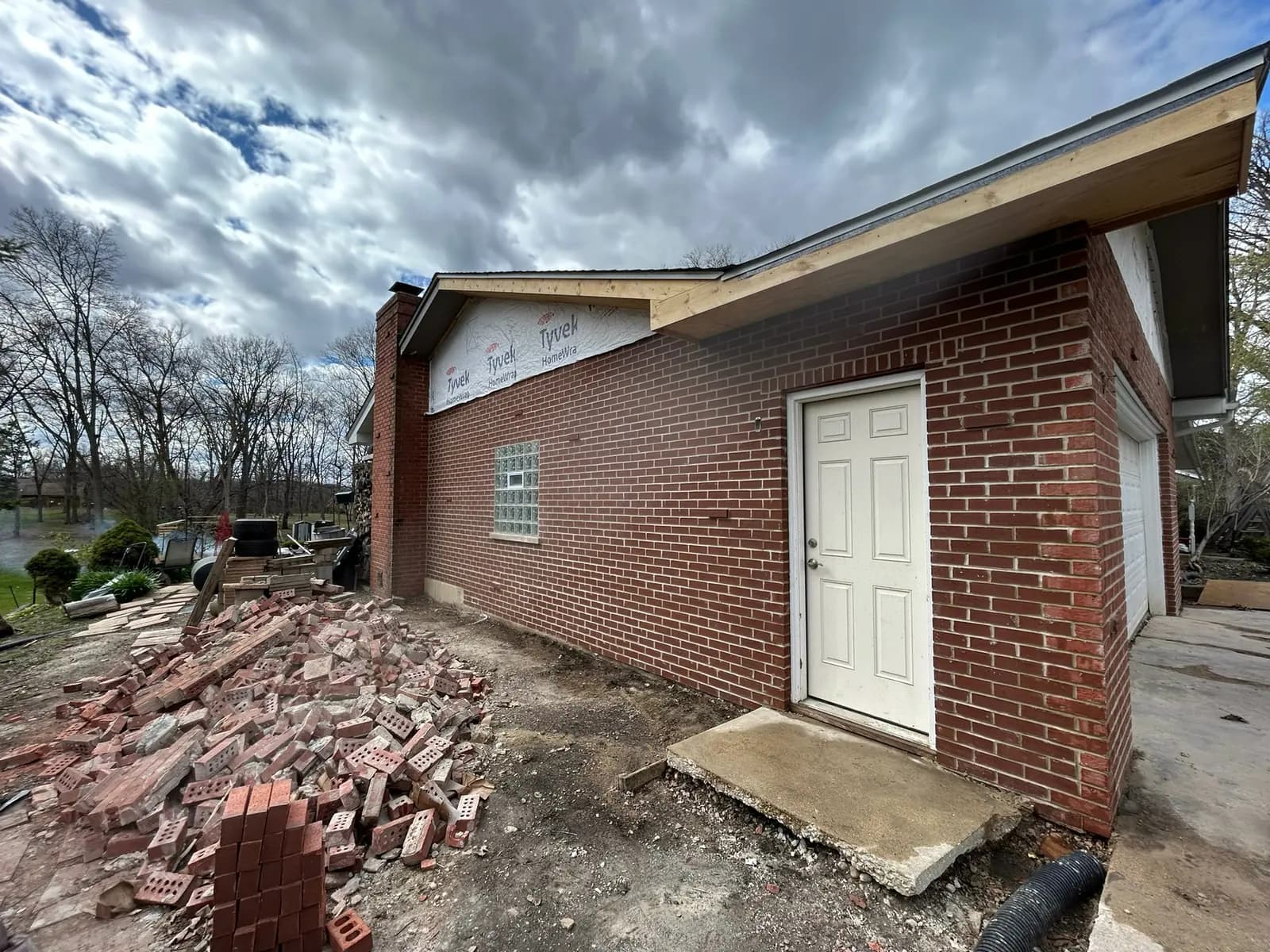
Commercial Masonry Restoration in Wheaton, IL
Commercial masonry restoration in Wheaton, IL covers facade repair, parapet and coping work, tuckpointing, lintel replacement and stone restoration on occupied commercial, institutional and church buildings. Emerald Masonry LLC works with owners, property managers, associations and church boards across DuPage County. Family-owned, licensed, bonded and insured, career masons with decades of Chicagoland experience, free on-site assessments. Call (708) 288-1696.
Wheaton has an unusually wide range of commercial masonry for a city its size, and the differences matter more than most owners expect.
Downtown: 19th- and early-20th-century brick and stone commercial blocks around Front Street and Hale, with tall street-facing parapets and heavy coping — soft brick, lime mortar, and public sidewalks directly below.
Institutional: Wheaton College, the DuPage County government campus, hospitals and medical offices, schools, and an exceptional density of churches — the tallest, most ornamental and most access-intensive masonry in the city.
Modern commercial: office, retail and medical construction along Roosevelt, Naperville Road and Butterfield — brick veneer, CMU and precast panel, where joints and sealant rather than mortar do the weather work.
Those three groups need three different mortars, three different access plans, and three different phasing approaches.
The Elements That Actually Fail
Parapets — first, and worst
The section of wall extending above the roofline is weathered on both faces with no heated interior drying it, and it carries the water leaving the roof edge. That combination makes it the fastest-deteriorating masonry on almost every flat-roofed commercial building.
And it is the most misdiagnosed. Failed coping joints, open parapet mortar or missing through-wall flashing send water down inside the wall, where it appears on the top floor. Owners replace the roof membrane, the leak continues, and everyone is frustrated — because the water was never entering at the roof.
Lintels and shelf angles
Corroding steel over storefront and window openings expands to several times its original volume, lifting the brick above and cracking the joint line. Rust staining is the early warning; displaced masonry over a public sidewalk is the late one.
Coping and horizontal surfaces
Cracked, displaced or wrongly sloped caps at the top of the wall let water into everything below.
Joints and sealant
On precast, panel and veneer buildings the sealed joints are the weather barrier, and sealant is a wear item with a service life far shorter than the structure.
Ornamental stone and terra cotta
On churches and older downtown buildings, the most exposed and most anchored elements — cornices, towers, surrounds — which are also the ones that come down onto sidewalks.
Signs Your Wheaton Building Needs Attention
- Cracked, loose or displaced coping along the top of the wall.
- Open, sandy or receded mortar joints, on the roof side as often as the street side.
- Spalling brick or delaminating stone on either face.
- Rust staining below a lintel or bleeding from a joint.
- Efflorescence on the facade or the wall below a parapet.
- A visible lean, bow or bulge in the parapet, sighted from a corner.
- Interior water staining on the top floor near exterior walls.
- Failed sealant — split, pulled away, hardened or missing.
- Debris on the roof or sidewalk below the wall.
- Recurring tenant complaints in the same bay across multiple floors — often one vertical joint.
Loose masonry at a roof edge above a public sidewalk is a life-safety and liability matter, not deferred maintenance.
Mortar by Era — The Decision That Protects the Building
The governing rule: mortar must be softer than the units it holds, so the joints take the stress instead of the brick or stone faces.
- 19th-century downtown blocks — soft lime-based mortar. A hard Portland mix here spalls the brick faces within a few winters, which on a historic facade is permanent loss of original material.
- Early-1900s institutional and church masonry — lime-modified mixes, often with ornamental stone requiring dutchman or matched patching.
- Post-war and modern — Type N or Type S as conditions warrant, with cast stone coping and sealant-dependent joints.
Our Process on Occupied Buildings
- Free on-site assessment from the roof and from grade — parapet, coping, joints, both faces, flashing, lintels, plumb and the roof-to-wall termination.
- Diagnose the water path before scoping anything. Leaks blamed on roofing are frequently parapet leaks.
- Written scope with photographs, sized for ownership, a property manager or a board.
- Priority ranking — safety, active water entry, then progressive damage, then cosmetic.
- Phasing plan — protection below, roof staging, sidewalk protection downtown, and scheduling around business, worship or class hours.
- Repair or rebuild — era-matched repointing, coping replacement with proper slope and drip edge, new through-wall flashing, lintel replacement, unit replacement, or section rebuilding.
- Coordination with roofing so membrane termination, counterflashing and masonry tie together.
- Documentation of completed work for your records and the next capital cycle.
Materials We Use
Lime-based mortars for historic masonry and Type N/Type S for modern walls, matched replacement brick, limestone and cast stone coping with correct slope, overhang and drip edge, stainless and copper through-wall flashing with end dams, new steel lintels primed and sized to span, high-performance polyurethane and silicone sealants with correct backer rod, and breathable sealers where warranted. Related services: parapet wall repair, tuckpointing, lintel repair, limestone and sill repair, caulking and joint sealant and historic masonry restoration.
What Drives Cost
- Access — scaffolding, swing stage or lift on a multi-story occupied building, plus sidewalk protection and permitting downtown. Frequently the largest single component.
- Linear footage and building height.
- Repoint versus rebuild on the parapet or facade sections.
- Coping and flashing scope — installing through-wall flashing means opening the wall.
- Historic requirements — custom lime mortar and hand work on older buildings.
- Ornamental work — cornices, towers and carved detail are skilled, slower work.
- Occupancy and phasing around tenants, congregations or classes.
- Documentation for boards and reserve studies.
We assess in person, provide a free written scope with photographs, and supply the certificate of insurance commercial and association properties require.
Serving Wheaton and DuPage County
DuPage has no lake moderation, so freeze-thaw cycling is aggressive — dozens of crossings of the freezing point each winter, each a load cycle on saturated masonry. Wide, sun-exposed elevations on modern commercial buildings degrade sealant fastest on the south and west faces, while mature canopy over the older districts keeps north elevations damp.
We work throughout 60187 and 60189 — the downtown commercial district, the college and county campuses, the churches and school buildings, medical and office properties along the main corridors, and condominium and association buildings citywide. We also serve neighboring Glen Ellyn, Lombard, Naperville and Carol Stream. Wheaton owners frequently pair restoration with brick replacement or chimney repair.
Emerald Masonry LLC is a family-owned, licensed and insured masonry contractor serving Chicago and the Chicagoland suburbs led by career masons with decades of hands-on experience in tuckpointing, chimney repair, brick repair and replacement, lintel and parapet repair, foundation and limestone/sill repair, caulking, sealing, and commercial, residential and historic masonry restoration. Free on-site estimates — call (708) 288-1696.
Budgeting: Treat the Envelope Like the Roof
The buildings that handle this well fund the envelope on a cycle instead of reacting to leaks. Inspect on a schedule, prioritizing south and west elevations and the parapet. Put joint sealant and facade repair in the reserve study as recurring capital items. Walk the building after hard freezes and major storms. Treat rust staining as urgent — it is the earliest sign embedded steel is corroding, and steel is what turns a masonry bill into a structural one.
Deferring does not save money; it converts a repointing project into a repointing-plus-steel-plus-interior-restoration project.
Request a Free Commercial Masonry Assessment in Wheaton
If your coping is shifting, your parapet joints are open, or your top floor is taking water with a sound roof, get the envelope inspected before winter.
Call (708) 288-1696 or request a free estimate.
Ready to get started?
Free on-site estimates for commercial and large-scale projects.
Commercial Masonry Restoration in Wheaton, IL — Frequently Asked Questions
How much does commercial masonry restoration cost in Wheaton, IL?
It depends on scope, building height, access method and how much of the envelope is involved. On multi-story buildings, access — scaffolding, swing stage or lift — is frequently the largest single line item, and sidewalk protection adds to downtown work. Emerald Masonry provides a free written scope with photographs suitable for ownership or a board.
Can the work be done while our tenants stay in the building?
Yes, and it almost always is. Commercial masonry restoration is routinely staged on occupied buildings — protected walkways below, phased elevations, and loud or access-blocking work scheduled around business hours. On downtown Wheaton buildings we plan sidewalk protection and any street-side permitting before mobilizing.
Our top floor leaks but the roof was just replaced — what now?
Look at the parapet. Water entering through failed coping joints, open parapet mortar or missing through-wall flashing runs down inside the wall and appears well below the roof. It is one of the most commonly misdiagnosed commercial leaks, routinely blamed on the membrane when the masonry above it is the actual path.
Do older downtown Wheaton buildings need different mortar?
Yes. The 19th-century commercial blocks were laid with soft lime mortar and softer brick, and a hard modern Portland mix on that masonry spalls the brick faces within a few winters. Modern brick veneer and CMU buildings take Type N or Type S. Matching the mortar to the era is what keeps a repair from damaging the building.
Do you work with property managers, boards and churches?
Yes — we work with building owners, property managers, condo and homeowner associations, churches and insurance companies throughout DuPage County. We provide written scopes with photographs in the format boards need for approval and reserve planning, plus the certificate of insurance commercial property requires.
How should an association budget for masonry work?
Treat the envelope like the roof — a recurring capital item with a finite service life, funded on a cycle rather than reacted to after leaks start. A written condition assessment gives a reserve study real numbers instead of placeholders, and phasing lets a board spread work across budget years in the order that actually protects the building.
Commercial Masonry Restoration in Nearby Areas
Other Masonry Services in Wheaton, IL
Learn more about our commercial masonry restoration services across Chicagoland, or view all service areas.