
Commercial Masonry Restoration · Downers Grove, IL
Commercial Façade Repair in Downers Grove, IL — What an Inspection Should Actually Produce
A façade assessment that produces a number is not an assessment. It should produce a mapped condition record, a prioritised scope, and a defensible answer to what can wait.
Quick Answer
Emerald Masonry LLC provides commercial façade repair in Downers Grove, IL — assessing and documenting building envelopes, then repointing, rebuilding parapets, replacing lintels and restoring sealant and flashing on office, retail and multi-tenant buildings. Licensed, bonded and insured; COI and lien waivers on request. Free on-site assessments — call (708) 288-1696.
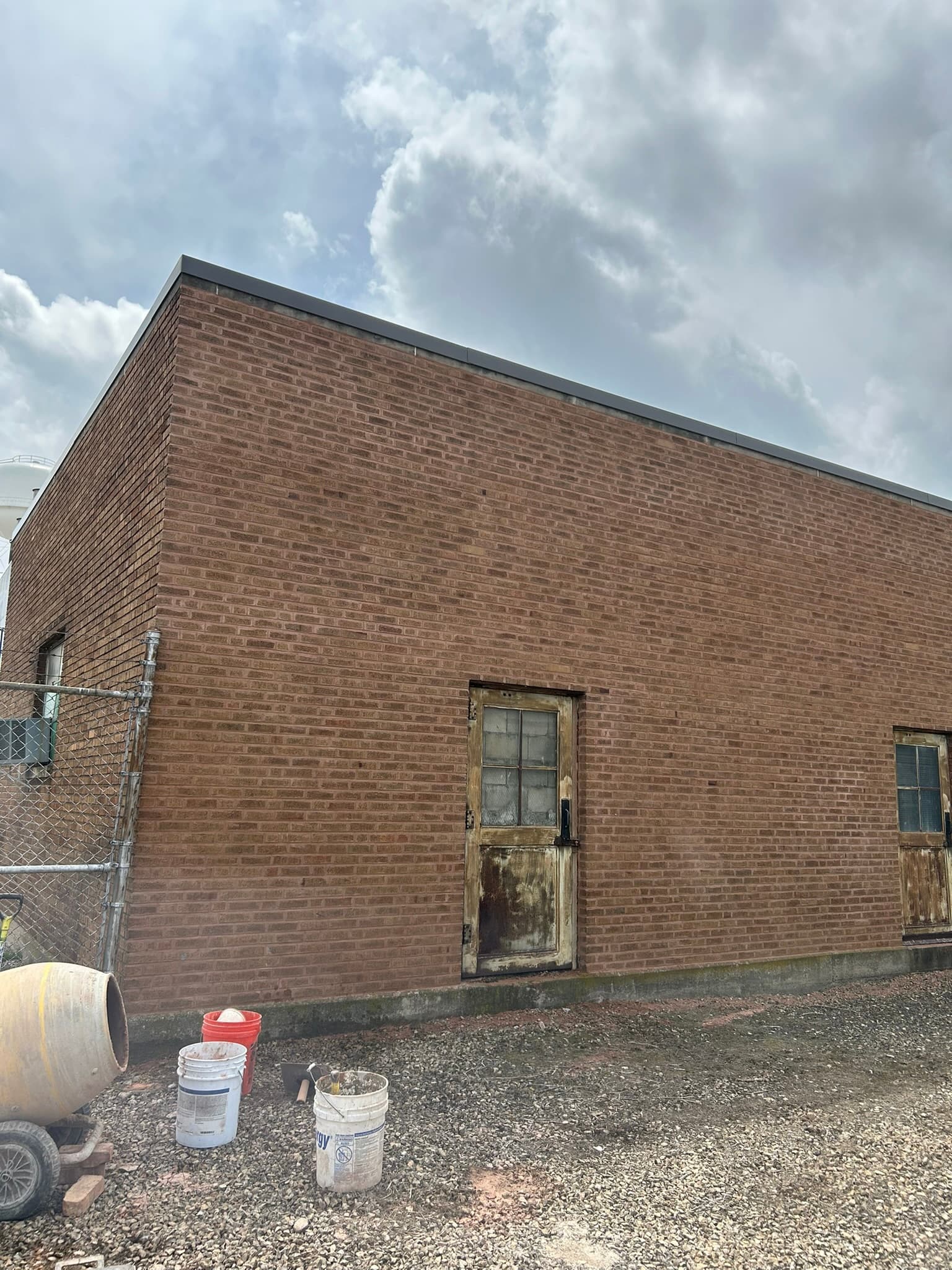
Commercial Façade Repair in Downers Grove, IL
Commercial façade repair in Downers Grove, IL should begin with a document, not a number. An assessment that produces only a price tells an owner nothing about what is failing, what is urgent, or what can defensibly wait another two budget years. Emerald Masonry LLC is a family-owned commercial masonry contractor serving Downers Grove and DuPage, Cook and Will County, led by career masons with decades of hands-on Chicagoland experience. Licensed, bonded and insured; COI, W-9 and lien waivers on request. Free on-site assessments — call (708) 288-1696.
What a Real Façade Assessment Produces
- A condition record mapped by elevation — not general impressions, but located findings
- Photographs tied to locations, so a finding can be revisited in two years
- An explanation of mechanism — what is failing, and what is driving it
- Quantities with stated assumptions — the basis every bid gets compared on
- A priority ranking — safety, then active water entry, then advancing deterioration, then preventive
- A phasing plan that maps to how the building is actually funded
- A defensible "can wait" list, which is often the most valuable page in the document
Signs a Façade Needs Assessing Now
Some of these are budget items. The first two are not.
- Masonry debris on the sidewalk, roof or entry canopy — brick fragments or mortar below an elevation mean something above is releasing
- Displaced coping, or a parapet out of plumb when sighted along its length
- Horizontal cracking above windows, doors or storefronts, with the masonry above lifted — corroding steel
- Tenant reports of water at the building perimeter, especially at upper floors or after driving rain
- Efflorescence — white salt bloom — tracking down an elevation
- Sealant that has split, hardened or pulled away from one side of a joint
- Staining tracks running from a specific point above, which map the water path for you
- Spalling brick faces, meaning water has been getting past the joints for years
The first two should be treated as immediate: the area below gets cleared and the element assessed, because anything shedding masonry over a public walkway or an entrance is a liability question before it is a maintenance one.
Inspect From the Wall, Not the Sidewalk
This is where most façade assessments go wrong. The elements that fail first — parapets, coping, cornices, upper-elevation lintels and shelf angles — are the ones a ground-level walk sees least. Binoculars do not find drummy masonry and a camera does not measure joint depth.
Proper assessment means getting to the wall by lift or staging, sounding the masonry to find debonded areas that look intact, and probing joint depth rather than judging mortar by its face. On a multi-storey Downers Grove office or retail building, the difference between a sidewalk assessment and a wall assessment is routinely the difference between a repointing scope and a parapet rebuild.
What Fails on Downers Grove Commercial Buildings
The downtown core near Main Street and the BNSF station carries older brick commercial buildings — flat roofs, decorative parapets over the sidewalk, storefront lintels behind sign bands, and shared party walls.
The corridors and office parks along Butterfield Road, Ogden Avenue and Finley bring later construction: brick and stone veneer over steel or CMU backup, precast and panel joints, long control joints, storefront and curtain-wall perimeters, and shelf angles at floor lines.
Across both, water infiltration almost never comes through sound brick. It comes through:
- Open or failed coping joints at the parapet, admitting water into the top of the wall
- Deteriorated through-wall flashing, so water that enters cannot drain back out
- Failed sealant joints at windows, panels and dissimilar materials
- Cracked or eroded sills that have stopped throwing water clear
- Corroding lintels and shelf angles, expanding and lifting the masonry above them
- Blocked weep holes, converting a drainage wall into a wall that holds water
Our Repair Sequence
- Assess and document — every elevation, the parapet, and the roof edge.
- Rank and phase into a written scope an owner can fund in order.
- Plan access and protection — staging or lift, overhead protection over entrances and walkways, tenant notice, parking management.
- Address the water path first — flashing, coping, sealant, weeps.
- Repoint to sound depth in mortar matched for colour, texture and hardness.
- Rebuild what is past repointing — parapets and sections where units have lost their bond.
- Replace corroded lintels and shelf angle areas, with flashing restored at the head.
- Seal last, and only on sound masonry, with a breathable penetrating repellent.
What Drives the Cost
Elevation area and the true percentage of failed joints and units · parapet repair versus rebuild, and how far down it reaches · access method, which on a multi-storey or tight downtown site is a major line · overhead protection over entrances and public walkways · lintel and shelf-angle count · precast and sealant joint footage · phased or off-hours scheduling · tenant coordination · season and curing conditions.
Emerald Masonry LLC is a family-owned commercial masonry contractor serving Chicago and the Chicagoland suburbs, led by career masons with decades of hands-on Chicagoland experience, in commercial tuckpointing, façade and parapet repair, lintel replacement, chimney and stack rebuilds, CMU block repair, brick repair and replacement, foundation and limestone/sill repair, caulking, sealing, and commercial, residential and historic masonry restoration. Free on-site assessments — call (708) 288-1696.
Serving Downers Grove and DuPage County
We repair commercial façades throughout Downers Grove's 60515 and 60516 — the downtown blocks, the office and flex buildings along the corridors, and the multi-tenant and institutional properties between them — and across DuPage, Cook and Will County. Related scopes often include commercial tuckpointing in Downers Grove, lintel repair in Downers Grove, masonry caulking and joint sealant and limestone and sill repair. We do the same work in Westmont, Lisle, Darien and Hinsdale — see our commercial masonry practice and our work with property managers.
Why Downers Grove Owners and Managers Call Emerald
We produce a document you can act on, bid, and revisit in two years — not a number with no reasoning behind it. We inspect from the wall, we tell you honestly what can wait, and the COI and lien waivers arrive without being chased. Family-owned, licensed, bonded and insured, led by career masons with decades of Chicagoland experience.
Need a documented, prioritised façade assessment for a Downers Grove building? Request a free on-site assessment or call (708) 288-1696.
Ready to get started?
Free on-site estimates for commercial and large-scale projects.
Commercial Masonry Restoration in Downers Grove, IL — Frequently Asked Questions
How much does commercial façade repair cost in Downers Grove, IL?
Scope sets it. Elevation area, the true percentage of failed joints and units, parapet and lintel condition, access method, overhead protection over entrances and walkways, and whether work must be phased or run off-hours all move the number. Emerald Masonry provides a free on-site assessment and a written, prioritised scope.
What should a façade assessment actually give us?
A mapped condition record by elevation, photographs tied to locations, an explanation of what is failing and why, a prioritised scope with quantities and stated assumptions, and a defensible answer on what can safely wait. A single price with no condition record is not an assessment.
How do you inspect a façade properly?
From staging, a lift or a rope-access vantage rather than the sidewalk, because ground-level inspection systematically misses parapets, cornices and upper-elevation conditions. We sound the masonry for drummy areas and probe joint depth instead of judging by appearance.
Can we phase façade work across budget years?
Yes, and most owners should. We rank by public safety, then active water entry, then advancing deterioration, then preventive — which lets an owner spread a large scope while ensuring nothing hazardous is left standing over an entrance.
Our tenants can't close. Can work happen around them?
Yes. We phase by elevation so only one face is under staging at a time, protect entrances and walkways with overhead cover, keep parking and drive aisles usable, and move the loudest phases off-hours where daylight and weather allow.
What causes most façade water infiltration?
Rarely the brick face. It is usually failed sealant joints, deteriorated through-wall flashing, open coping joints on the parapet, cracked sills, or a corroding shelf angle or lintel — so finding the actual path matters more than sealing the surface.
Do you provide COI and lien waivers?
Yes, as standard on commercial work — certificate of insurance naming the owner or manager, W-9, and lien waivers on request. Emerald Masonry LLC is licensed, bonded and insured in Illinois.
Should we seal the façade after repairs?
Only after the masonry is sound, and only with a breathable penetrating repellent. Sealing a wall with open joints or failed flashing traps water inside it, and film-forming coatings spall brick faces from behind.
Commercial Masonry Restoration in Nearby Areas
Other Masonry Services in Downers Grove, IL
Learn more about our commercial masonry restoration services across Chicagoland, or view all service areas.