
Commercial Masonry Restoration · Joliet, IL
Commercial Masonry Restoration in Joliet, IL — Limestone Downtown, Brick Industry, One Contractor
Joliet asks a commercial mason to do two very different jobs: restore soft local limestone downtown and repair hard industrial brick along the corridors. Most contractors are set up for one or the other.
Quick Answer
Emerald Masonry LLC provides commercial masonry restoration in Joliet, IL — restoring limestone and brick facades, parapets, storefronts, warehouses and institutional buildings across Will County, phased so tenants stay open. Family-owned, licensed, bonded and insured, career masons with decades of Chicagoland experience, free on-site estimates. Call (708) 288-1696.
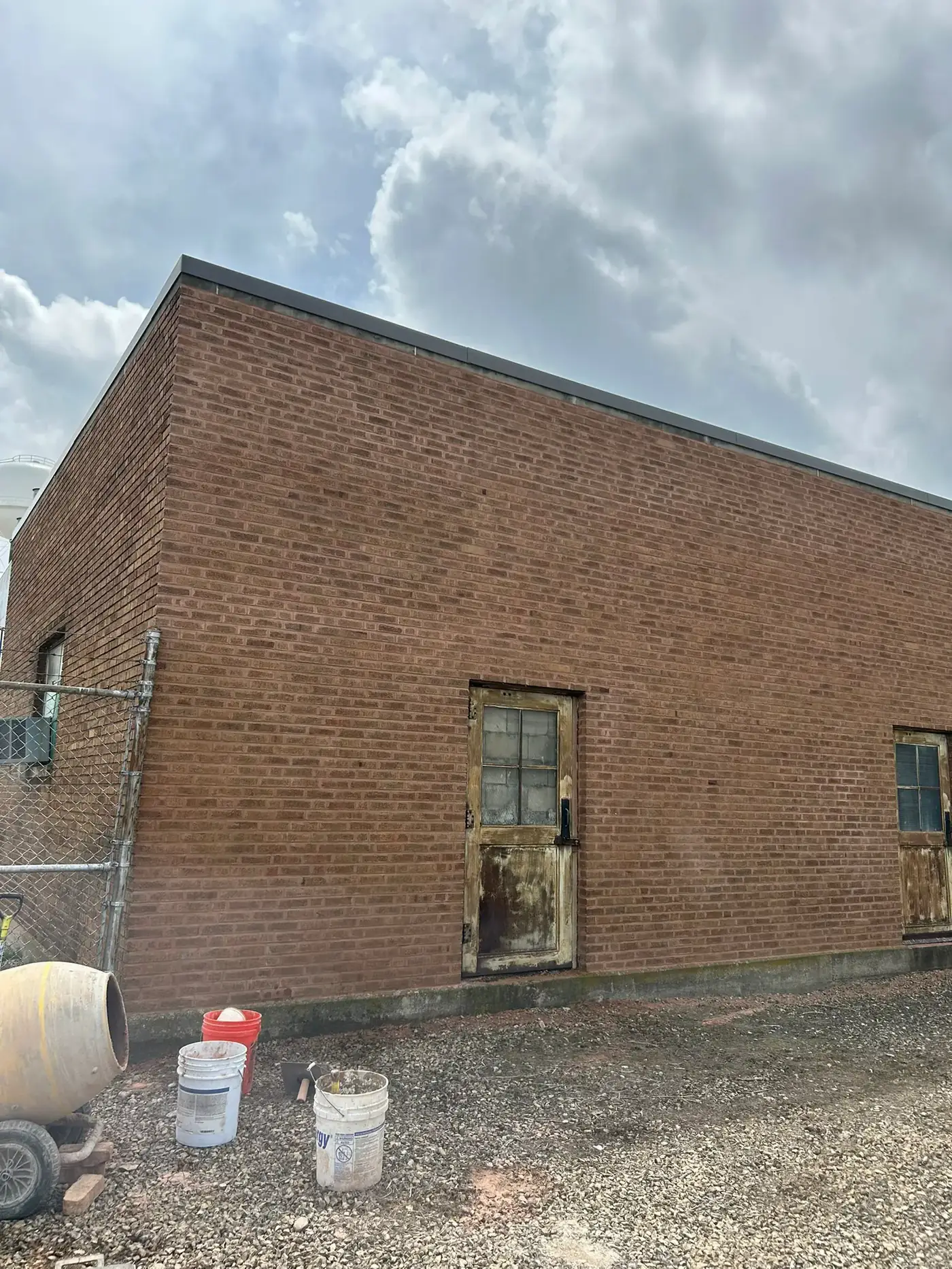
Commercial Masonry Restoration in Joliet, IL
Commercial masonry restoration in Joliet, IL means being fluent in two completely different building traditions inside the same city — and most contractors are honestly set up for only one. Emerald Masonry LLC restores commercial, industrial, institutional and multi-tenant masonry throughout Joliet and Will County. Family-owned, licensed, bonded and insured, career masons with decades of Chicagoland experience, free on-site estimates, $5,000 project minimum. Call (708) 288-1696.
Joliet is a limestone city with a brick industrial economy wrapped around it, and those two building types fail differently, get repaired differently, and are ruined by different mistakes.
Joliet's Two Building Stocks
Downtown limestone and the historic core
Joliet was built out of the ground it stands on. The dolomitic limestone quarried along the Des Plaines River valley — the same stone tradition documented in our guide to Athens marble and Chicagoland limestone — built the downtown commercial blocks, the churches, the civic buildings, and the landmark theatre and institutional structures that give the city its character.
That stone has one absolute rule: the mortar must be softer than the stone. Repoint a limestone facade with a hard, Portland-heavy modern mix and every freeze cycle and every bit of thermal movement is forced into the stone face instead of the joint. Combine that with pressure washing or sandblasting — which strips the weathered outer skin off limestone permanently — and a century-old facade can be irreversibly damaged in a single season by a contractor who thought they were helping.
Downtown Joliet also carries the classic older-commercial failure package: decorative parapets above the sidewalk, coping joints that have opened, corbelled cornices holding water, storefront lintels rusting behind the sign band, and shared party walls between buildings under different ownership.
The industrial and corridor stock
The other Joliet is brick and block at scale: warehouses and distribution buildings along the interstate and intermodal corridors, older manufacturing along the river and the rail lines, strip retail along the arterials, and multi-tenant flex buildings in between.
That masonry fails from different causes. Dock and overhead-door openings take truck impact on top of weather. Control joints in long block walls get neglected until the wall cracks somewhere it chose itself. Lintels over wide openings carry more brick and deflect more. Roof-edge and parapet details on large flat roofs run hundreds of feet, so a single failed coping joint feeds water into a lot of wall.
One city, two trades. We do both, and we tell you which one your building is.
We Rank the Work by Risk, Then Phase It
A commercial scope should tell an owner what has to happen now and what can honestly wait:
| Priority | What it covers | Why it comes first | |---|---|---| | 1 — Public safety | Loose or displaced masonry, unstable parapet or coping, failing lintels over entrances | Anything over a sidewalk, entrance or parking stall is the first dollar spent | | 2 — Active water entry | Open joints, failed through-wall flashing, failed sealant, cracked sills | Water reaching tenant space becomes a tenant claim, not just a masonry repair | | 3 — Advancing deterioration | Spalling units, eroded joints, corroding steel not yet lifting masonry | Costs multiply once the units themselves start going | | 4 — Preventive | Sealant renewal, breathable sealing, drainage corrections | Protects everything above it | | 5 — Appearance | Cleaning, staining, blending | Do it once the envelope is sound |
Most Joliet owners phase a full building across two or three seasons. That is a perfectly sound plan — as long as nothing in Priority 1 is left standing while it happens.
Keeping the Building Working While We Restore It
- Phase by elevation. One face under staging at a time; the other three operate normally.
- Overhead protection. Covered walkways and protected entrances wherever work is above a path of travel.
- Access planning. Staging laid out so parking, drive aisles, dock doors and accessible entrances stay usable.
- Advance notice. Tenants told what is happening, where, and for how long — before the trucks arrive.
- Off-hours where it helps. Retail and restaurant tenants often want the noisy phases outside business hours; we are straight about which portions can move and which are weather- and daylight-dependent.
- Documentation as we go. Photographs and written progress notes that a property manager can forward to ownership or an adjuster without translating.
Our Restoration Process
- Survey every elevation, the parapet and the roof edge — joints, units, lintels, sills, coping, flashing, sealant, weeps, and any signs of movement.
- Sound and probe. Drummy brick, debonded stone and hollow areas do not show up in photographs from the ground.
- Rank and phase into a written scope an owner can fund in a sensible order.
- Protect and stage — overhead protection, containment and access planning before any cutting begins.
- Repoint and rebuild — joints cut to sound depth and repointed in mortar matched for color, texture and, critically, hardness; failed units cut out and replaced with matched brick or stone; parapets rebuilt where deterioration has gone through.
- Lintels, sills and openings — corroded steel replaced and flashed, sills restored so they shed water again.
- Sealant joints — proper backer rod, correct sealant chemistry for each substrate, right bead geometry.
- Seal last, on exposed elevations, after mortar has cured.
Materials
Soft, lime-rich mortars for limestone and pre-1930s soft brick; Type N and, where the units genuinely warrant it, Type S for harder modern brick and block; matched sand and pigment for color; salvaged and reclaimed units where a match is not currently produced; non-staining sealants where porous stone is involved; breathable penetrating repellents rather than film-forming coatings that trap moisture in a wall.
What Drives the Cost
Elevation area and the true percentage of failed joints and units · parapet condition, and whether it can be repointed or must be rebuilt · access method, from lift to pipe staging to a tight downtown setback · overhead protection over public walkways · lintel count and opening sizes · off-hours or phased scheduling · limestone versus brick, and match difficulty · season and curing conditions. We never quote a commercial building over the phone — the assessment is free and written.
Emerald Masonry LLC is a family-owned, licensed and insured masonry contractor serving Chicago and the Chicagoland suburbs led by career masons with decades of hands-on experience in tuckpointing, chimney repair, brick repair and replacement, lintel and parapet repair, foundation and limestone/sill repair, caulking, sealing, and commercial, residential, and historic masonry restoration. Free on-site estimates — call (708) 288-1696.
Serving Joliet and Will County
We restore commercial masonry across Joliet — the downtown limestone blocks, the Cathedral Area and the historic districts, the arterial retail corridors, and the industrial and distribution buildings toward the interstates — plus the surrounding Will County communities. Depending on the survey, a building's scope may center on commercial tuckpointing in Joliet, parapet wall repair in Joliet, or foundation masonry repair in Joliet. We do the same work in Lockport, Shorewood, Crest Hill, Plainfield and New Lenox.
Why Joliet Owners and Property Managers Call Emerald
We give you a ranked scope instead of a lump sum, we phase the work so the building keeps earning, and we tell you when something can wait — and when it genuinely cannot. We specify soft mortar on limestone because that is what the stone requires, not because it is easier. Family-owned, licensed, bonded and insured, career masons with decades of Chicagoland experience.
Need a written, phased assessment of your Joliet building's masonry? Request a free on-site estimate or call (708) 288-1696.
Ready to get started?
Free on-site estimates for commercial and large-scale projects.
Commercial Masonry Restoration in Joliet, IL — Frequently Asked Questions
How much does commercial masonry restoration cost in Joliet, IL?
Scope sets the price, not a square-foot rate. The real drivers are elevation area, what percentage of joints and units have actually failed, parapet and lintel condition, access method, overhead protection over sidewalks and entrances, and whether work has to happen off-hours. Emerald Masonry provides a free written assessment and estimate with a $5,000 project minimum.
Can my tenants stay open during the restoration?
In nearly every case, yes. We phase by elevation so only one face of the building is under staging at a time, protect entrances and walkways with overhead cover, and keep parking, drive aisles and dock doors usable throughout.
Do you restore Joliet's limestone buildings?
Yes, and they need a different specification than brick. Local dolomitic limestone requires soft, lime-rich mortar and gentle cleaning — a hard modern mix or any abrasive cleaning permanently damages the stone's weathered surface and cannot be undone.
How do you decide what gets repaired first?
We rank by risk. Anything that could shed masonry over a sidewalk, entrance or parking area comes first, then active water entry, then advancing deterioration, then preventive work — which is what lets an owner phase a large scope across budget years without leaving a hazard standing.
Do you work on warehouses and industrial buildings?
Yes. Block and brick walls, dock openings, overhead door jambs, bollard and corner impact damage, and control joints on the large-format buildings along Joliet's intermodal and interstate corridors. Dock-area masonry takes physical abuse on top of weather and needs a different repair approach than a storefront.
Do you handle churches and institutional buildings in Joliet?
Yes. Churches, schools and municipal buildings are a regular part of our work, and we provide free written assessments and phased scopes so a congregation or board can budget the work across more than one fiscal year.
Do you work with property managers and insurance companies?
Regularly. We provide written scopes, photographic documentation and phased pricing that a property manager can take to ownership or an adjuster, and we have worked with insurance carriers on storm and impact damage throughout Will County for years.
Commercial Masonry Restoration in Nearby Areas
Other Masonry Services in Joliet, IL
Learn more about our commercial masonry restoration services across Chicagoland, or view all service areas.