
Commercial Masonry Restoration · Oak Brook, IL
Commercial Masonry Restoration in Oak Brook, IL — When Repointing the Same Crack Twice Means the Wall Has Nowhere to Move
Oak Brook's commercial stock is not historic masonry. It is 1970s–1990s cavity-wall brick veneer hung on steel, and its cracks usually come from shelf angles and missing movement joints — not from tired mortar. That is why some buildings get repointed every decade and crack again in exactly the same places.
Quick Answer
Emerald Masonry LLC provides commercial masonry restoration in Oak Brook, IL — repairing cavity-wall brick veneer, corroded shelf angles, failed through-wall flashing and movement joints on office buildings, retail centers, medical offices and condominium associations. Family-owned, licensed and insured, career masons with decades of Chicagoland experience. Free on-site assessments: call (708) 288-1696.
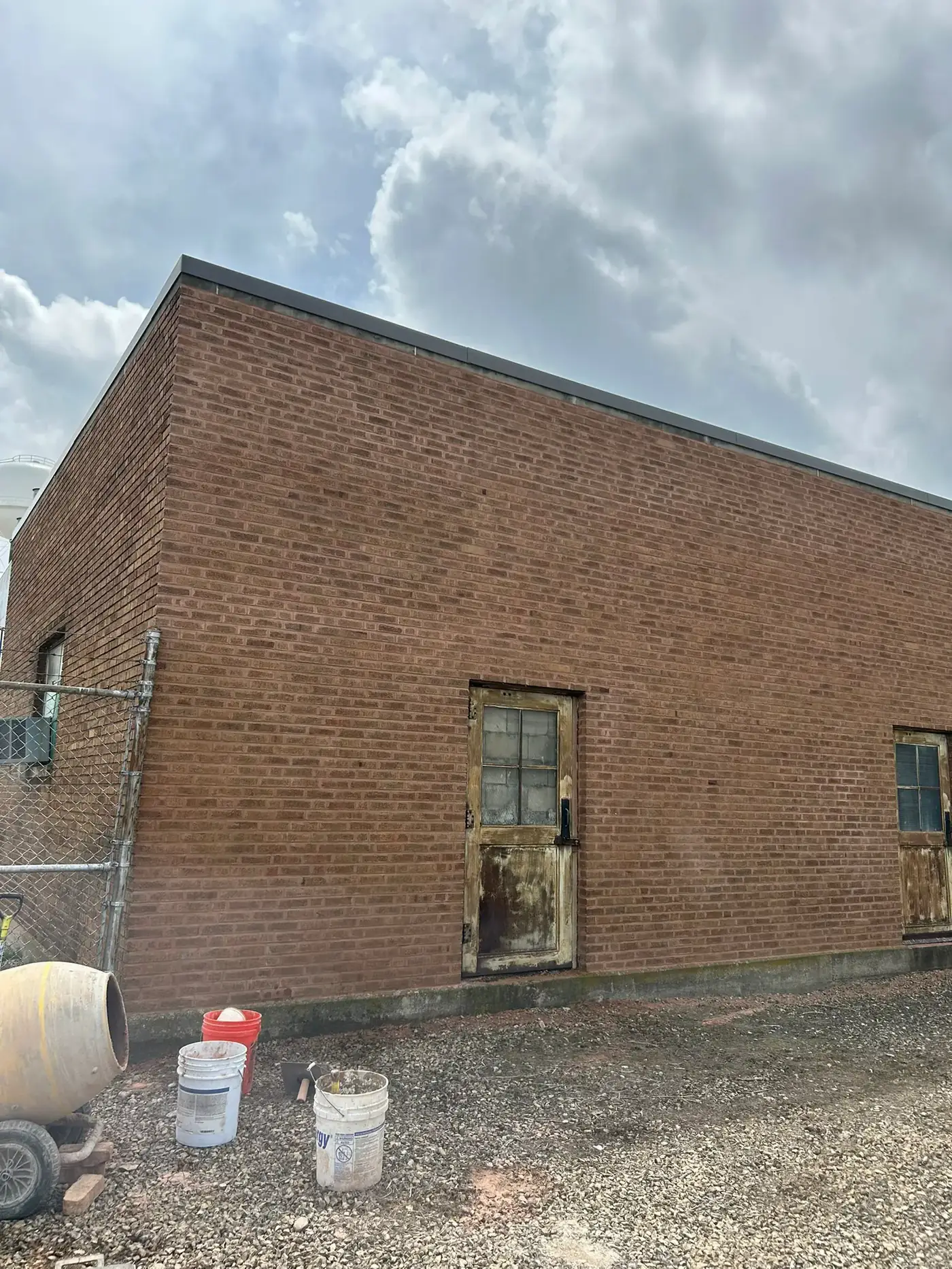
Commercial Masonry Restoration in Oak Brook, IL
Commercial masonry restoration in Oak Brook, IL is usually misdiagnosed at the first step, because the buildings here are not what the restoration industry advertises for. Emerald Masonry LLC restores brick and stone on office buildings, retail centers, medical offices, institutional buildings and condominium associations throughout DuPage County. Family-owned, licensed, bonded and insured, career masons with decades of Chicagoland experience. Free on-site assessments — call (708) 288-1696.
One question is worth asking before anyone quotes your building: has this crack been repaired before? If it came back in the same place, the mortar was never the problem.
Oak Brook Is Not a Historic Masonry Market
Most commercial masonry marketing is built around landmark restoration — terra cotta, century-old load-bearing walls, lime mortar, preservation review. That work is real. It is also almost entirely irrelevant to what stands in Oak Brook.
The village's commercial fabric is corporate office-park construction, largely 1970s through 1990s: low- and mid-rise office buildings along the Butterfield and 22nd Street corridors, the Oakbrook Center retail environment, medical and professional offices, and a substantial stock of condominium and townhome associations. Structurally that means:
- Cavity-wall brick veneer — a single wythe standing off a steel or concrete frame with an air space and backup wall behind it.
- Shelf angles — steel angles bolted to the structure carrying the veneer at each floor line, so the brick is not stacked 60 feet on one foundation.
- Through-wall flashing at those angles, at the base and over openings, to catch cavity water and drain it out.
- Movement joints — deliberate soft, sealant-filled joints that let the masonry expand and contract.
- Sealant joints at windows, panels and transitions, with a service life measured in decades, not centuries.
Every one of those five fails on a schedule. None of them is mortar.
The Mechanism Nobody Explains: Brick Grows
This is the part that makes repeat cracking make sense.
Fired clay brick leaves the kiln bone dry and immediately begins reabsorbing atmospheric moisture. As it does it expands — permanently and irreversibly. Thermal movement rides on top of that. Concrete and steel frames, meanwhile, shrink and creep slightly. So the brick skin grows while the structure behind it does not.
That movement has to go somewhere. In a properly detailed building it goes into movement joints — vertical soft joints near corners and at spacing, horizontal soft joints beneath each shelf angle. Where those were overspaced, omitted, or filled with hard mortar by a previous contractor, the wall relieves the stress the only way it can: it cracks — in the same place every time, because the geometry has not changed.
Reading Crack Patterns on a Cavity Wall
The location of a crack tells you more than its width does.
| What you see | What it usually means | | --- | --- | | Vertical crack a few feet in from a building corner | Missing or overspaced vertical movement joint | | Horizontal crack line at the same height across an elevation | Shelf angle — corrosion, deflection, or a filled horizontal soft joint | | Cracks angling from the corners of windows | Stress concentration at openings, often with a missing joint or a corroding lintel | | Stepped diagonal cracking near the base | Foundation or settlement movement, not veneer movement | | Bulging or out-of-plane brick | Corroded or failed veneer ties — this is urgent | | Rust staining at a horizontal line | Shelf angle or lintel steel actively corroding | | Efflorescence or staining below a floor line | Flashing failed or was omitted; water is exiting where it should not | | Cracked, hardened or missing sealant in a soft joint | Sealant at end of service life — a maintenance item, until it is not | | Damp interior finishes at the perimeter | Cavity drainage compromised somewhere above |
A vertical crack near a corner and a horizontal crack at a floor line are two entirely different repairs. Treating both as "tuckpointing" is the most expensive mistake made on this stock.
Risks of Waiting
Water past compromised flashing or an open joint reaches the veneer ties and the shelf angle steel. Corroding steel expands to several times its volume — rust jacking — cracking masonry from behind and pushing the veneer out of plane, while corroded ties stop restraining the brick at all.
That sequence ends with displaced masonry above tenants, parking and sidewalks. Long before that it produces interior water damage, tenant complaints, and repeated repointing spend that fixes nothing.
Our Commercial Restoration Process
Most competitors in this market publish none of this. Here is ours.
- Close-up survey of every elevation, from a lift or staging where needed. Distance hides everything that matters.
- Map the cracking against floor lines, corners, openings and joint locations — the pattern is the diagnosis.
- Probe selectively at a suspect shelf angle or flashing line rather than guessing at what is behind the wall.
- Check the joints — where movement joints are, where they should be, where they have been filled with hard mortar — and assess sealant condition and remaining life.
- Prioritize into three buckets — life safety, active water intrusion, cosmetic — and say plainly which is which.
- Produce a written scope by elevation and element, phaseable across reserve years.
- Plan access and protection — lift, swing stage or scaffold, overhead protection, pedestrian routing, tenant and parking coordination.
- Execute the repair: replace or treat corroded steel, restore through-wall flashing with end dams, cut in movement joints where the building needs them, rebuild displaced masonry, replace spalled units, repoint with matched mortar.
- Reseal joints with the correct sealant for the substrate and movement capability, and document the work with photos so the next board inherits a record rather than a mystery.
Materials
Mortar is matched for hardness, colour, sand and texture, and is always softer than the brick it sits against — Type N for most veneer conditions, Type S only where structural or below-grade conditions warrant it. Replacement ties and anchors are stainless or hot-dip galvanized, never bare steel. Through-wall flashing is durable membrane or metal detailed with end dams. Sealants are selected for joint movement capability and substrate, not one tube for the whole building. Replacement brick is matched and blended through the field.
Related work commonly runs alongside: tuckpointing, brick repair, brick replacement, lintel repair, parapet wall repair, caulking and masonry sealing.
What Drives the Cost
- Access — nearly always the largest line, and the reason phasing by elevation saves money
- Building height and the number of elevations in scope
- Whether steel or flashing must be opened up, which is invasive by nature
- How many movement joints have to be cut into an existing wall
- Extent of brick replacement, match difficulty and sealant footage
- Occupied-building constraints — tenant hours, parking, deliveries, protection
- Documentation for boards, managers and insurers
We do not price facade work from a photograph or over the phone. Assessments are free, on site and written.
Being Honest About Scope
Emerald Masonry is the right contractor for Oak Brook's office, retail, medical, institutional and association buildings that need competent masonry work, straight diagnosis and a scope a board can fund. We are not the right call for a landmark building under AIA contract documents, a union-required project, or large-scale terra cotta or curtain wall engineering — those need a specialty firm, and we will say so rather than take the work.
Serving Oak Brook and DuPage County
Emerald Masonry LLC is a family-owned, licensed and insured masonry contractor serving Chicago and the Chicagoland suburbs led by career masons with decades of hands-on experience in tuckpointing, chimney repair, brick repair and replacement, lintel and parapet repair, foundation and limestone/sill repair, caulking, sealing, and commercial, residential and historic masonry restoration. Free on-site estimates — call (708) 288-1696.
We serve Oak Brook and neighbouring Hinsdale, Downers Grove, Westmont and Burr Ridge, for property managers, building owners, condominium and townhome associations, HOAs, churches and insurance companies. $5,000 project minimum.
Get a Free Oak Brook Facade Assessment
If your building has been repointed before and the same cracks are back, stop buying the same repair. Call (708) 288-1696 or request an assessment.
Ready to get started?
Free on-site estimates for commercial and large-scale projects.
Commercial Masonry Restoration in Oak Brook, IL — Frequently Asked Questions
How much does commercial masonry restoration cost in Oak Brook, IL?
Access is usually the largest single driver — swing stage, mast climber, boom lift or scaffold on an occupied office building costs real money before any masonry is touched. Beyond that it is scope, elevation count, whether shelf angles or flashing must be opened up, and phasing. Emerald Masonry provides a free on-site assessment and a written scope an owner or board can budget against.
Why do the same cracks keep coming back after tuckpointing?
Because the crack is a movement joint the building never got, or one that has been mortared shut. Brick expands permanently over decades as it absorbs moisture, and it moves thermally on top of that. If there is nowhere soft for that movement to go, the wall relieves it by cracking in the same place every time.
What is a shelf angle and why does it matter on an Oak Brook office building?
A shelf angle is the steel angle bolted to the structure that carries the brick veneer at each floor line on a multi-story building. When water reaches it and it corrodes, the rust expands and lifts the masonry above, producing a horizontal crack line at the same height across the elevation. Repointing that line without addressing the steel does not stop it.
Do you work with property managers and condominium associations?
Yes. Much of our commercial work is for property managers, condo and townhome associations, HOAs, churches and insurance companies across DuPage and Cook County. We scope by elevation and by element so a board can phase work across reserve years rather than facing one unaffordable number.
Can masonry work be done while our building stays occupied?
Yes, and on most Oak Brook office and retail properties that is the normal condition. Exterior masonry is staged by elevation with overhead protection, controlled access and coordination around tenant hours, parking and deliveries. Interior access is rarely required.
When should we hire a large restoration firm instead of you?
If your project is a landmark building under AIA contract documents, requires a union workforce, or involves terra cotta, curtain wall or structural concrete engineering at scale, a large specialty restoration firm is the right call. We are the right call for the office, retail, medical, institutional and association buildings that need competent, honest masonry work without that overhead.
What should a commercial masonry assessment include?
A close-up look at every elevation rather than a walk-around from the parking lot, documentation of crack patterns and their locations relative to floor lines and openings, condition of sealant and movement joints, evidence at shelf angles and flashing lines, and a prioritized scope that separates safety, water intrusion and cosmetic items. Anything less is a bid, not an assessment.
Commercial Masonry Restoration in Nearby Areas
Other Masonry Services in Oak Brook, IL
Learn more about our commercial masonry restoration services across Chicagoland, or view all service areas.