
Historic Masonry Restoration · Naperville, IL
Historic Masonry Restoration in Naperville, IL — Century Homes and Downtown Brick
Naperville's historic district holds pre-Civil-War brick and locally quarried limestone that predates almost everything else in DuPage County. Emerald Masonry LLC restores it with soft lime mortar and matched materials — never the hard modern mix that quietly destroys old brick.
Quick Answer
Emerald Masonry LLC provides historic masonry restoration in Naperville, IL — lime-mortar repointing, brick and limestone repair, chimney rebuilding and facade restoration on century-old homes, churches and downtown buildings. Family-owned, licensed and insured, career masons with decades of Chicagoland experience, free estimates. Call (708) 288-1696.
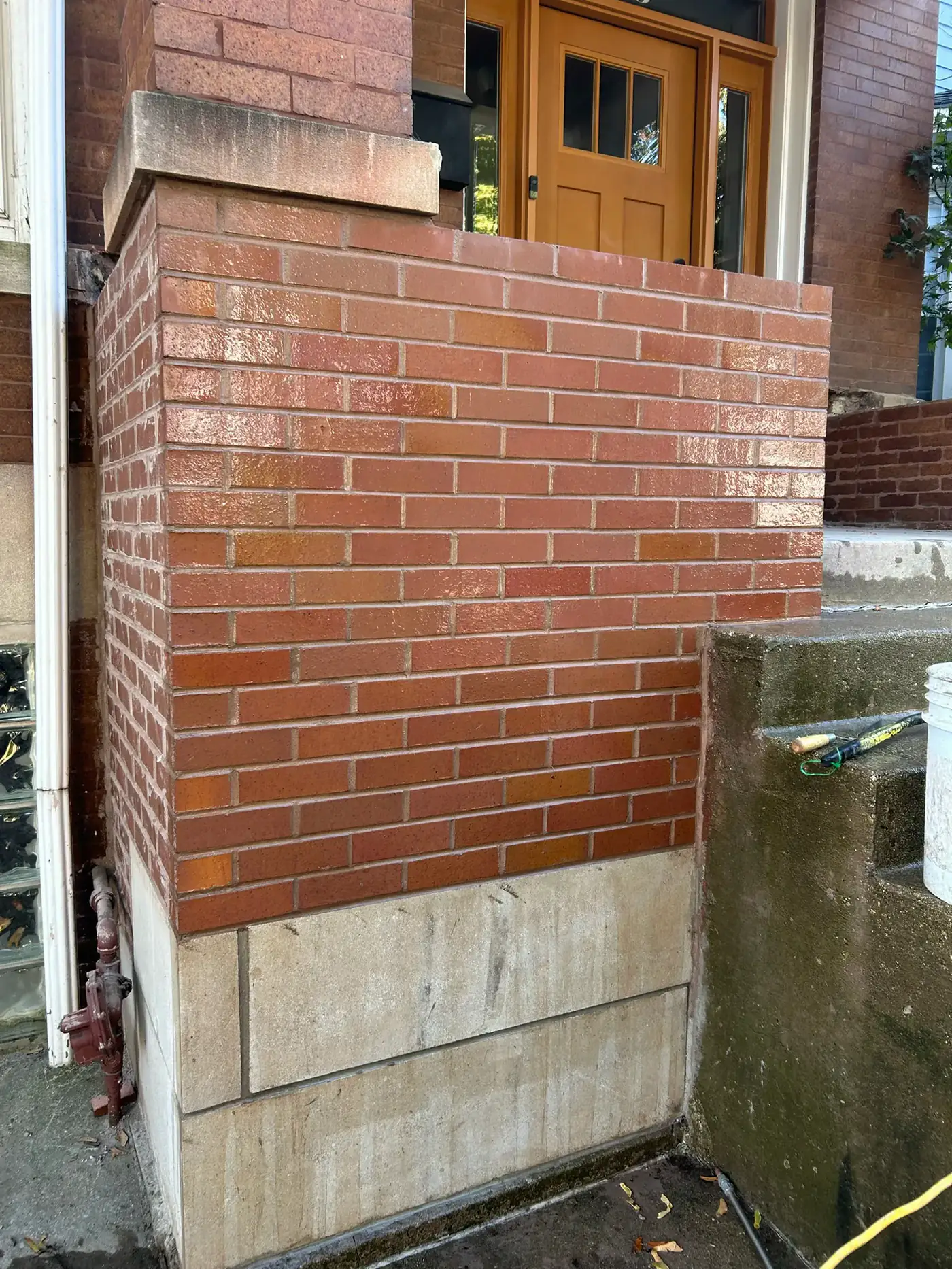
Historic Masonry Restoration in Naperville, IL
Historic masonry restoration in Naperville, IL means repairing century-old brick and limestone the way it was originally built — soft lime-based mortar matched to the wall, joints raked by hand rather than power-ground, and salvaged or reproduction units where masonry must be replaced. Emerald Masonry LLC restores Naperville's older homes, churches and downtown buildings led by career masons with decades of hands-on Chicagoland experience. Family-owned, licensed, bonded and insured, free on-site assessments. Call (708) 288-1696.
Naperville is often thought of as a modern city, and by population it is — but its core is one of the oldest settled places in DuPage County. Founded in 1831, the city's historic district holds pre-Civil-War brick homes, Greek Revivals, Italianates, Victorians and Queen Annes, mid-1800s churches, and downtown commercial buildings built with brick and locally quarried limestone from the Naperville and Lemont-area quarries along the DuPage and Des Plaines corridors.
That masonry is now 130 to 190 years old. Almost none of it was built with anything resembling modern mortar, and almost all of it is on its original joints.
The One Rule That Governs Historic Masonry
Everything about this work follows from a single piece of building science, and getting it wrong is the most common way old buildings are damaged by well-intentioned contractors.
A masonry wall is designed so the mortar is softer than the brick. Mortar is the sacrificial layer — it absorbs movement and moisture stress and wears out first, because mortar is cheap to replace and 170-year-old brick is irreplaceable.
Modern Portland-based mortar is dramatically harder than the lime mortar these walls were laid with. Point a soft historic wall with it and the relationship inverts: the joints become the strong element, the brick becomes the weak one, and every freeze-thaw cycle drives stress into the brick faces. The result shows up within three to eight winters as spalled, popped and delaminating brick — a cheap repair converted into an expensive and permanent loss.
| | Historic wall (pre-1920) | Modern wall (post-war) | |---|---|---| | Mortar | Lime-rich, soft, breathable | Portland-based, hard, dense | | Brick | Softer, often handmade, variable | Machine-made, dense, uniform | | Joint preparation | Hand-raked, careful, shallow tools | Power grinding acceptable | | Failure if mismatched | Brick faces spall and are lost forever | Mortar erodes early | | Cleaning | Gentle only — no blasting, no high pressure | Wider tolerance | | Sealing | Breathable products only | Wider range of options |
Signs a Historic Naperville Building Needs Restoration
- Mortar joints receded well behind the brick face, or joints that rake out as loose sand.
- Spalling brick — faces flaking, popping or delaminating, worst below sills and near grade.
- Cracked, eroded or displaced limestone sills, lintels, water tables and foundation stone.
- Open joints and deteriorated crowns on original chimneys, which on these houses are tall and heavily exposed.
- Efflorescence blooming on interior or exterior masonry.
- Step cracks through joints at corners and around openings.
- Prior inappropriate repairs — hard gray Portland mortar smeared over soft historic brick, wrong-color patches, or a previously sandblasted facade. These are repairs that need undoing.
Our Restoration Process
- Assessment and documentation. We walk the building, photograph conditions, evaluate the existing mortar's hardness and composition, and flag prior bad repairs.
- Mortar analysis and matching. A mix formulated to the original — soft enough to protect the masonry, durable enough to serve.
- Hand joint preparation. Joints raked by hand where the brick is soft, with power tools used only where masonry can safely take them. Aggressive grinding on a soft wall permanently widens joints and chews the brick edges.
- Repointing in lifts, packed and compacted, then tooled to the original joint profile at the right firmness.
- Brick and stone repair. Failed units replaced with salvaged or reproduction matches; limestone restored with dutchman inserts or matched patching rather than replaced wholesale.
- Chimneys, parapets and trim restored to shed water properly.
- Gentle cleaning, breathable protection. No sandblasting, no high-pressure washing, no film-forming sealers — all three damage historic masonry permanently.
Materials We Use
Lime-based and lime-modified mortars custom-blended to the original, matched sands for true color, salvaged and reproduction brick matched for size and texture, Indiana limestone and matched patching compounds for stone repair, and vapor-permeable sealers only. Related work commonly includes limestone and sill repair, tuckpointing, chimney repair and brick replacement.
What Drives Restoration Cost in Naperville
- Scope — one elevation, a full facade, or the whole envelope including chimneys and parapets.
- Mortar matching complexity — a custom historic blend is more work than an off-the-shelf mortar.
- Hand work required — soft brick means hand-raking, which is slower than grinding by design.
- Access and staging — tall Italianates, steep roofs and downtown storefronts each need different setups.
- Sourcing — salvaged period brick and matched stone are not always immediately available.
- Undoing prior bad repairs — removing hard mortar from soft brick without further loss is delicate, time-consuming work.
- Review and permitting — landmark or district review adds documentation.
Working in Naperville and Across DuPage
DuPage County has no lake moderation, so freeze-thaw cycling here is aggressive — dozens of crossings of the freezing point each winter, each one a load cycle on saturated masonry. Mature tree canopy over the historic district shades north elevations and keeps them damp long after a storm, which is why the same building often has sound masonry on one side and failing masonry on another. Heavy clay soils move seasonally and show up as step cracks at the corners of older buildings.
We work throughout Naperville — the historic district streets around Naper Settlement and the downtown core, the century homes along Main, Eagle and Jefferson, the mid-1800s churches, the brick and limestone commercial buildings downtown, and the older properties near North Central College. We also serve neighboring Lisle, Downers Grove, Plainfield and Aurora. Naperville property owners often pair restoration with brick repair, chimney repair or masonry sealing.
Emerald Masonry LLC is a family-owned, licensed and insured masonry contractor serving Chicago and the Chicagoland suburbs led by career masons with decades of hands-on experience in tuckpointing, chimney repair, brick repair and replacement, lintel and parapet repair, foundation and limestone/sill repair, caulking, sealing, and commercial, residential and historic masonry restoration. Free on-site estimates — call (708) 288-1696.
Why Deferring Costs More on a Historic Building
On a 150-year-old wall, waiting is not just a larger repointing bill later — it is the permanent loss of original material. Once the face spalls off a handmade brick, that brick is gone, and every replacement is a compromise against the original. The same applies to eroded limestone detail and to carved trim. Restoration is always cheaper, and always more authentic, when it happens before the units themselves begin failing.
Request a Free Historic Masonry Assessment in Naperville
If you own a century-old home, church or downtown building in Naperville and the mortar is receding, the brick is flaking, or a previous contractor left hard gray mortar across soft old brick, have it properly assessed.
Call (708) 288-1696 or request your free estimate.
Ready to get started?
Free on-site estimates for commercial and large-scale projects.
Historic Masonry Restoration in Naperville, IL — Frequently Asked Questions
What makes historic masonry restoration different from ordinary tuckpointing?
The mortar and the method. Naperville's pre-1920 buildings were laid with soft lime mortar and softer brick, and that wall only works if the mortar stays weaker than the brick. Repointing with hard modern Portland mortar inverts that and pops the brick faces off within a few winters, so historic work means matching the original mix and raking joints by hand rather than power-grinding them.
How much does historic masonry restoration cost in Naperville, IL?
More than standard repointing on a comparable wall, because the work is slower and more exacting — hand-raked joints, custom-blended lime mortar, and salvaged or reproduction units where brick and stone must be replaced. Scope drives everything, from a single elevation to a full building envelope. Emerald Masonry gives free on-site assessments with a written scope.
Is Naperville limestone repairable or does it need replacing?
Usually repairable. The local limestone used across older Naperville buildings is durable stone — what typically fails is the mortar around it and the surface layers where water has been sitting. Cracked, spalled and eroded sills, lintels and trim are commonly restored with dutchman stone inserts or matched patching rather than wholesale replacement.
Do I need approval for masonry work on a historic Naperville property?
It depends on the property and whether it sits in the historic district or carries a landmark designation, and exterior work generally requires a city permit regardless. We work within whatever review applies and provide the scope documentation the city or commission asks for.
Can you match hundred-year-old brick and mortar?
Yes — matching is the core of the craft. We match mortar hardness, color, sand and texture to the original, tool joints to the original profile, and source salvaged or reproduction brick and stone for replacements. A properly restored section should be hard to pick out from the untouched wall beside it.
What are the signs a century-old Naperville home needs restoration now?
Mortar receded well behind the brick face or raking out as sand, brick faces flaking or crumbling, open joints on chimneys and parapets, cracked or eroded limestone sills, and water staining on interior walls. Spalling brick is the signal that water has been entering for a long time and the joints should have been addressed earlier.
Historic Masonry Restoration in Nearby Areas
Other Masonry Services in Naperville, IL
Learn more about our historic masonry restoration services across Chicagoland, or view all service areas.