
Tuckpointing & Repointing · Naperville, IL
Tuckpointing in Naperville, IL — Solid Masonry and Brick Veneer Are Not the Same Repair
Most Naperville homes are brick veneer, not solid masonry — a thin brick skin over a drained air cavity. Repointing a veneer wall without restoring its drainage seals water in. The first question on a Naperville estimate is not what era your house is. It is what kind of wall you actually own.
Quick Answer
Emerald Masonry LLC provides tuckpointing and repointing in Naperville, IL, grinding out failed mortar joints and repacking them with matched mortar — after first identifying whether the wall is solid masonry or brick veneer, because veneer walls must be allowed to drain. Family-owned, licensed and insured, career masons with decades of Chicagoland experience, free on-site estimates. Call (708) 288-1696.
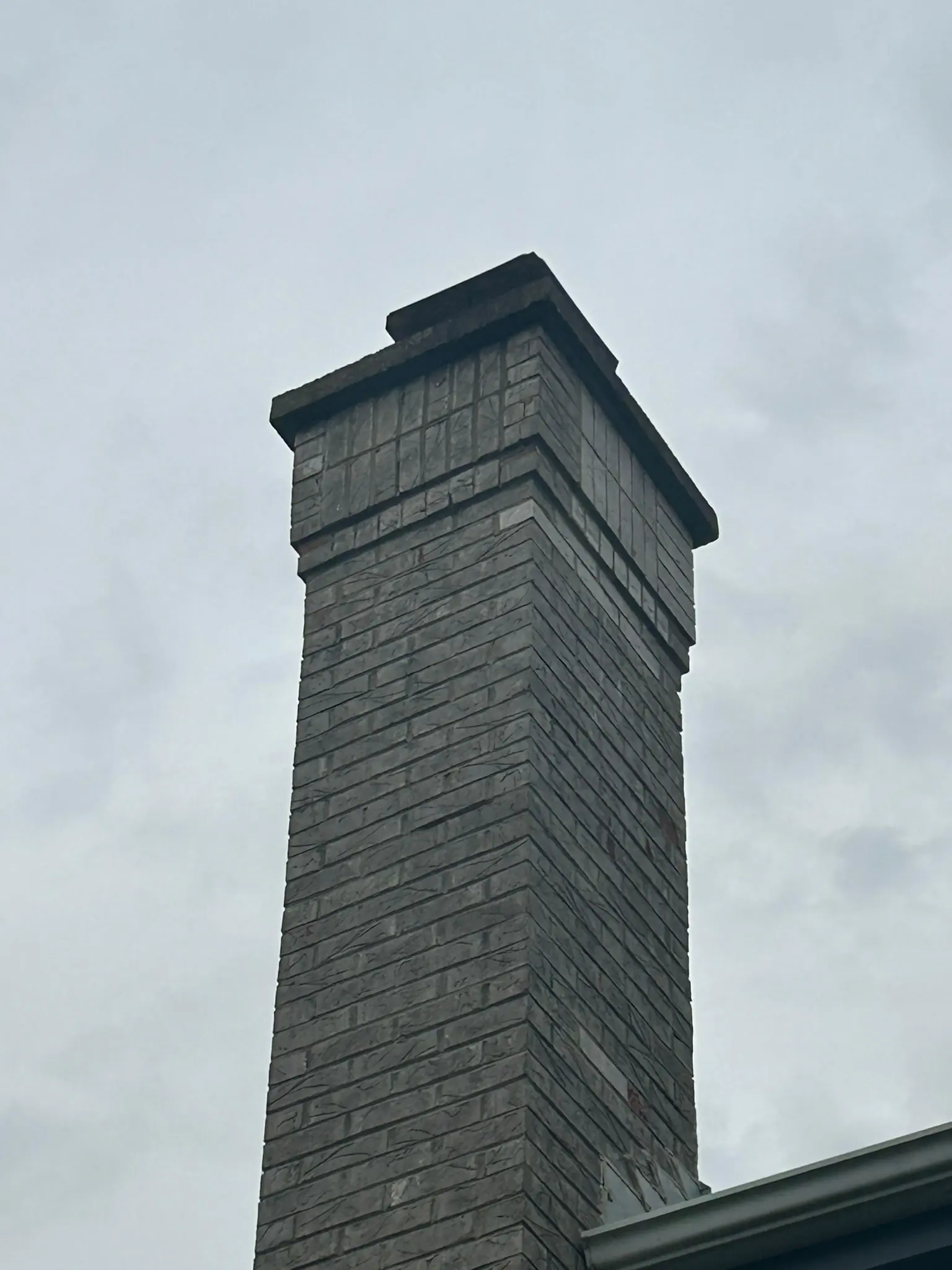
Tuckpointing in Naperville, IL
Tuckpointing in Naperville, IL means grinding out deteriorated mortar joints and repacking them with mortar matched to your brick — but before any of that, someone has to answer a question most estimates skip entirely: is your wall solid masonry, or is it brick veneer? Emerald Masonry LLC has been answering that question on Chicagoland walls for career masons. Family-owned, licensed, bonded and insured, free on-site estimates. Call (708) 288-1696.
The answer changes the job completely.
The Two Kinds of Brick Wall in Naperville
Almost every article about tuckpointing sorts houses by age. That is the wrong first cut. Sort them by wall type instead.
Solid masonry. Two or more wythes of brick stacked and bonded together, the wall itself carrying load. You will find this downtown — the nineteenth-century commercial buildings along Main and Jefferson, the older stock near Naper Settlement and the Historic District, church and institutional buildings. In a solid wall, the mortar joints are the weather barrier. Water that gets past them has nowhere to go but into the wall.
Brick veneer. A single four-inch skin of brick standing on the foundation ledge, tied back to a wood or steel frame with corrugated metal wall ties, with a deliberate air cavity behind it. This is the overwhelming majority of Naperville — the ranches and split-levels of the 1950s through 1970s, the enormous 1980s and 1990s build-out across the 60540, 60563, 60564 and 60565 ZIP codes, and the newer east-side construction. In a veneer wall, the brick is a rain screen. It is expected to leak. The system works because water that gets through the brick runs down the back face, lands on through-wall flashing, and exits through weep holes in the bottom course.
Here is the sentence that matters:
A veneer wall does not keep water out. It lets water back out. Repointing that seals the exits turns a working wall into a tank.
How to tell which one you have
- Look at a window or door jamb. Veneer usually returns only a few inches into the opening before you hit frame; a solid wall returns the full thickness of the masonry.
- Look at the bottom course, just above grade or above the foundation. Open head joints, small tubes, or rope wicks at regular intervals mean veneer with a drainage cavity.
- Check the age. In Naperville, post-1960 is veneer until proven otherwise.
- Tap the wall and look at the corners for a header course — bricks laid end-on to tie two wythes together. Headers mean solid.
Where Naperville Joints Actually Fail First
On a veneer home, mortar failure is not random. It concentrates:
- The bottom two or three courses, where flashing sits and where splash-back, mulch beds and irrigation keep the brick wet.
- Under limestone, cast stone and precast sills, where water sheds off the sill nose and hits the joint directly.
- Chimney chases and full-height fireplace walls, which are exposed on three or four sides and dry from none.
- The weather-facing elevation — in DuPage County, generally the north and west faces, which see wind-driven rain and stay frozen longest.
- At the shelf angle, where a taller veneer wall is carried on steel.
On solid downtown masonry the pattern is different: parapets, chimneys, the top of the wall, and anywhere a gutter, coping or roof edge has been dumping water for decades.
Risks of Waiting
Open joints are not cosmetic. A failed joint is an opening in the wall, and in Naperville's climate the sequence is predictable: water enters, freezes, expands, and levers the joint wider. On a veneer wall the water also reaches the wall ties, which are typically galvanized steel. Corroded ties expand as they rust and eventually stop holding the brick back to the structure. That is how a veneer wall starts to bow — and a bowing veneer wall is a rebuild, not a repointing.
Left long enough, open joints produce spalled brick faces, efflorescence, rust staining below sills and lintels, damp interior walls, and eventually displaced brick. Every one of those is more expensive than the mortar work that would have prevented it.
Our Tuckpointing Process
No competitor page in this market publishes one. Here is ours.
- Diagnose the wall. Solid or veneer, what the brick is, how hard the existing mortar is, where the flashing and weep holes are, and whether the ties are still doing their job.
- Establish the scope by elevation. Full repointing, spot repointing, or no work — decided wall by wall, not by averaging the house.
- Protect the site. Windows, landscaping, walks, neighboring property and, on multi-unit or commercial work, pedestrian paths.
- Cut the joints. Grind or rake failed mortar back to sound material, typically two to two and a half times the joint width, without nicking the brick edges.
- Clean and dampen. Blow the joints clear and pre-wet the brick so it does not pull the water out of fresh mortar before it can cure.
- Match and mix mortar. Hardness first, then color, then sand and texture — mixed in controlled batches so the wall does not shift shade partway up.
- Pack in layers. Fill in lifts rather than one deep pass, so the joint is dense the whole way back instead of hollow behind a face skin.
- Tool to match the original profile. Concave, weathered, grapevine or flush — profile is most of what makes a repair read as original.
- Restore drainage. Open and clear weep holes, correct anything previously sealed shut, and address flashing where it is accessible.
- Clean down and walk it. Brush and wash the face, then review the finished elevation with the owner.
Materials and Mortar Matching
The governing rule is simple and it is where most bad tuckpointing goes wrong: mortar must be softer than the brick it sits against. Mortar is the sacrificial component. It is supposed to fail first, because a joint can be replaced and a brick face cannot.
- Type N — the general-purpose mix for most Naperville veneer and mid-century brick.
- Type S — higher strength, appropriate for below-grade, retaining and some structural conditions, and too hard for soft older brick.
- Type O and lime-rich mixes — for soft pre-1900 solid masonry downtown, where a modern Portland-heavy mortar would destroy the brick faces.
Colour matching is a mix of sand selection, cement colour, and curing conditions. We match wet-to-cured, not wet-to-wet, because mortar lightens as it dries.
Related work often runs alongside repointing: brick repair and brick replacement where faces have spalled, limestone and sill repair where sills have cracked or lost pitch, lintel repair where steel has rusted above openings, and masonry sealing only where it is genuinely appropriate.
What Drives the Cost
There is no honest per-square-foot number for a Naperville house, because the variables that actually move the price are not area:
- Wall type and whether drainage has to be restored.
- How many elevations need work, and whether each needs full or spot repointing.
- Height and access — a two-story front elevation off a driveway prices differently than a three-story rear wall over a deck and landscaping.
- Staging — ladders, scaffold, or lift.
- Mortar matching difficulty, especially on historic or unusual brick.
- Condition — how deep the joints have eroded and how much brick has to be replaced along the way.
- Coordination on HOA, multi-building and commercial work.
We do not quote masonry over the phone, and we do not promise a price per foot before seeing the wall. The estimate is free, written, and itemized by elevation so it can be phased.
Naperville Specifics
Naperville sits in DuPage County with a slice in Will, and its masonry takes a beating from the same thing every Chicagoland wall does: repeated freeze-thaw cycling, often dozens of times a winter, on brick that is already holding water. What is distinctive here is the breadth of the housing stock in a single town — an 1880s downtown core, post-war ranches, decades of subdivision veneer, and large newer homes with substantial masonry chimneys and front elevations. Two houses three miles apart can need entirely different mortar.
Add irrigation. Naperville is a heavily irrigated town, and lawn systems that spray a brick wall several mornings a week will open the bottom courses faster than weather ever would. Mulch piled over the weep-hole course does the same thing more quietly.
We work throughout Naperville and the surrounding DuPage and Will County communities, including neighboring Downers Grove, Lisle, Plainfield and Wheaton.
Why Homeowners and Boards Call Emerald
Emerald Masonry LLC is a family-owned, licensed and insured masonry contractor serving Chicago and the Chicagoland suburbs led by career masons with decades of hands-on experience in tuckpointing, chimney repair, brick repair and replacement, lintel and parapet repair, foundation and limestone/sill repair, caulking, sealing, and commercial, residential, and historic masonry restoration. Free on-site estimates — call (708) 288-1696.
We work for homeowners, property managers, HOAs, churches and insurance companies across Cook, DuPage, Will, Kane, Lake and McHenry counties. There is a $5,000 project minimum.
Get a Free Naperville Tuckpointing Estimate
If your joints are receding, sandy, or crumbling under a screwdriver, get them looked at before the next freeze cycle rather than after it. Call (708) 288-1696 or request an estimate, and we will tell you what kind of wall you own, what it needs, and what it does not.
Ready to get started?
Free on-site estimates for commercial and large-scale projects.
Tuckpointing & Repointing in Naperville, IL — Frequently Asked Questions
How much does tuckpointing cost in Naperville, IL?
Cost is driven by wall type, how many elevations need work, wall height and staging, and whether the drainage system behind a veneer wall also has to be restored. A per-square-foot rate quoted before anyone has identified whether your wall is solid masonry or veneer is a guess, not an estimate. Emerald Masonry provides a free written estimate itemized by elevation and scope.
Is my Naperville house solid brick or brick veneer?
If your home was built after roughly 1960, it is almost certainly brick veneer — a single wythe of brick anchored to a wood or steel frame with a drained air space behind it. Look at a window jamb: veneer typically shows a brick return only a few inches deep, and you should find small open weep holes in the bottom course of brick. Downtown Naperville's pre-1940 buildings are more often true solid masonry, two or more wythes thick.
What are weep holes and why do they matter for tuckpointing?
Weep holes are the deliberate openings left in the bottom course of a brick veneer wall so water that gets into the cavity can drain back out. They are not defects and they must never be mortared, caulked, or sealed shut during tuckpointing. Closing them turns a drained wall into a bathtub, and the damage shows up as spalled brick and interior staining a few winters later.
Do 1980s and 1990s Naperville homes really need tuckpointing already?
Often yes, but usually in specific places rather than across the whole house — bottom courses above the flashing line, under limestone or cast stone sills, at chimney chases, and on the weather-facing elevation. DuPage County runs dozens of freeze-thaw cycles a year, and thirty to forty winters is enough to open joints in newer mortar.
Can you tuckpoint historic buildings in downtown Naperville?
Yes. Pre-1900 solid masonry near the historic core and Naper Settlement generally needs a soft, lime-rich mortar rather than a hard modern mix, because mortar has to be softer than the brick it sits against. Using a high-Portland mortar on soft nineteenth-century brick transfers stress into the brick faces and causes them to spall.
Do you work with Naperville HOAs and property managers?
Yes. We work with homeowners associations, property managers, churches and commercial owners across DuPage and Will County, and we can scope work by building and by elevation so a board can phase it across budget years. Free on-site assessments and written scopes are provided.
How long does tuckpointing last on a Naperville home?
Joints that are cut back to sound mortar, properly packed and matched typically last 25 to 30 years or more. Joints that were skim-coated over failed mortar — a common shortcut — can start crumbling again within about five.
Tuckpointing & Repointing in Nearby Areas
Other Masonry Services in Naperville, IL
Learn more about our tuckpointing & repointing services across Chicagoland, or view all service areas.