
Brick Repair · Maywood, IL
Brick Repair in Maywood, IL — On a 100-Year-Old Wall, the First Thing to Fix Is Usually the Last Repair
Maywood has some of the oldest housing in west Cook County, which means most of its brick has been repaired before — often with mortar harder than the brick and patches that made things worse. On these walls, undoing the last repair is frequently step one.
Quick Answer
Emerald Masonry LLC provides brick repair in Maywood, IL — replacing spalled and cracked brick, correcting failed past patches and hard-mortar repairs, and repointing with properly matched mortar on Maywood's pre-1930 housing, churches and commercial buildings. Family-owned, licensed and insured, career masons. Free estimates: (708) 288-1696.
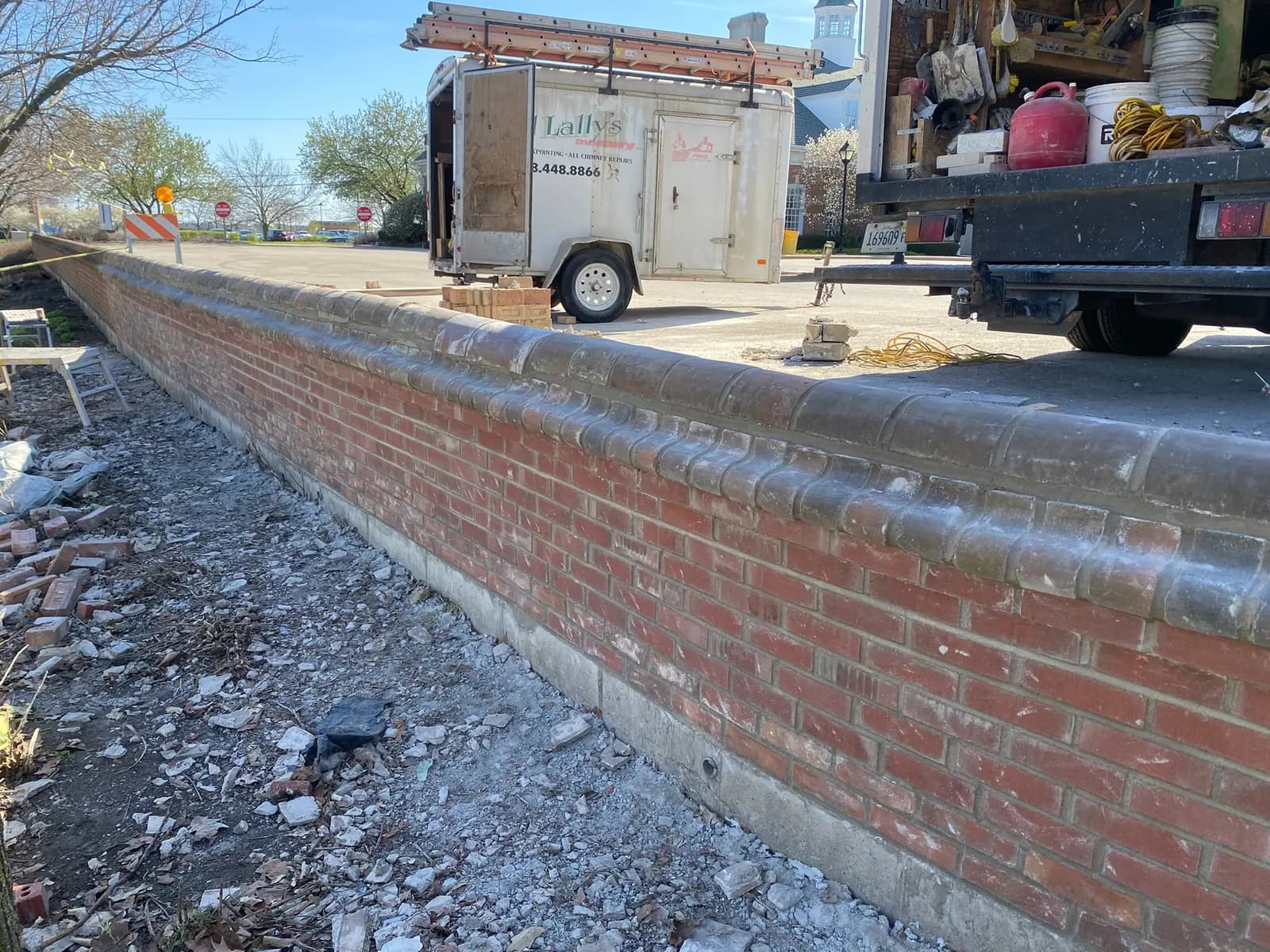
Brick Repair in Maywood, IL
Brick repair in Maywood, IL means replacing units that have lost their face, repointing the joints around them, and — on most buildings here — correcting whatever was done to the wall the last time somebody tried to fix it. Emerald Masonry LLC serves Proviso Township and west Cook County: family-owned, licensed, bonded and insured, career masons with decades of Chicagoland experience, free on-site estimates. Call (708) 288-1696.
Maywood is one of the oldest suburbs in the region — laid out in 1869, well before most of its neighbors — and that shapes every masonry conversation here.
A wall that has stood for a century has almost always been repaired before. Sometimes well. Frequently not. And on a great many Maywood buildings, the honest first step is not adding new work but taking out the old work that is doing damage.
That is not an upsell. It is the opposite: it is the reason a cheap patch two owners ago is why you are now replacing brick instead of just repointing.
The Damage a Bad Repair Does
There is one rule behind almost all of it: mortar must be softer than the brick it holds.
Mortar is meant to be the sacrificial part of a wall. Masonry moves — it expands in summer, contracts in winter, absorbs water and freezes. If the mortar is softer than the brick, the joint absorbs that stress, and joints can be replaced cheaply forever. If the mortar is harder, the brick faces absorb it instead, and they spall, flake and shear off.
Century-old Maywood brick is soft. Modern Portland-heavy mortar out of a bag is hard. Put them together and you get the signature we see constantly on these blocks:
A patch that looks perfect, surrounded by brick faces that are falling off.
Other repairs we routinely have to undo:
- Smeared face pointing — mortar buttered over the surface of failing joints instead of the joints being cut back to sound material. It has no depth, no bond, and it traps water behind it.
- Overcut joints from an aggressive angle grinder, which takes the arrises off soft brick and permanently widens every joint on the wall.
- Caulk in mortar joints — flexible sealant used where mortar belonged, sealing water in rather than out.
- Painted or coated brick, applied to hide spalling, which stops the wall drying outward and accelerates the damage underneath. See why painted brick traps moisture.
- Mismatched replacement brick — modern units set into a historic wall, differing in size, color and hardness, so the wall reads as patched forever and the new units behave differently in a freeze.
- Filled weep holes, closing off the wall's drainage. Covered in weep holes in masonry walls.
If any of that sounds like your building, the wall is not beyond help. It just means the scope starts one step earlier than you expected. More on the pattern in why masonry repairs fail: contractor shortcuts.
Signs Your Maywood Building Needs Brick Repair
- Brick faces flaking, popping or shearing off — spalling, and the single clearest signal.
- Bricks that crumble or powder when pressed with a key.
- Cracked units, especially cracked straight through the face.
- Step cracks running diagonally through the mortar joints.
- Loose or displaced brick you can move by hand — treat as urgent.
- Deep, receding or missing mortar joints.
- White efflorescence blooming on the surface after wet weather.
- A visibly patched area that looks worse than the wall around it.
- Damage concentrated in the lowest few courses, near grade.
- Bulging or bowing in a wall face — a structural signal, not a cosmetic one.
Why Maywood Walls Deteriorate the Way They Do
Age, first. Much of Maywood's housing and its commercial stock along Fifth Avenue and Madison Street predates 1930, with a meaningful share going back to the 1880s and 1890s. That masonry was built with soft, hand-formed or early machine-made brick and lime-rich mortar — durable materials, but ones that demand matching materials when repaired.
Ground moisture. Maywood sits low, with the Des Plaines River along its western edge and the forest preserve corridor beside it. Lower ground, a higher water table, and flood-plain conditions on parts of the village mean the base of a wall is working harder here than it does two towns east. That shows up as damage concentrated in the bottom three courses — the mechanism is explained in why the bottom three courses of brick fail first.
Freeze-thaw. Cook County crosses freezing dozens of times each winter. Saturated brick that freezes expands from within, and each cycle takes a little more of the face.
Salt. Sidewalk and street de-icer splashes onto the lower wall all winter, crystallizes inside the brick, and does mechanical damage independent of frost. See road salt and de-icer brick damage.
Deferred maintenance cycles. Maywood has a lot of long-tenured owners and budget-conscious institutions, which means repairs have often been staged over decades by different hands — hence the layers.
Institutional and church masonry. Between the medical campus on the west side, the schools, and a large number of older churches, Maywood has significant institutional brick and stone. That work almost always requires lime-based mortar, hand preparation and salvage matching rather than production methods.
Repair or Replace? The Honest Rule
- Repoint when brick faces are sound and the mortar joints have eroded. This is maintenance, and it is the cheapest place to be.
- Replace individual units when a brick has lost its face, cracked through, or gone soft. Once the hard fired outer skin is gone, the brick absorbs water like a sponge and cannot be restored by coating it.
- Rebuild a section when displacement, bowing or widespread unit failure means the wall no longer holds together — repointing a wall that has moved does not put it back.
Most Maywood jobs are a mix: a few dozen replacement units, several hundred feet of repointing, and one small area of rebuild. We map it that way in the estimate rather than pricing the whole wall at its worst spot.
Our Brick Repair Process
- Free on-site assessment, elevation by elevation, identifying failed units, joint condition, previous repairs and — critically — where the water is coming from.
- Address the water source first. Gutters, downspout discharge, grading, a failed sill, an open coping joint. Replacing brick without correcting the water means replacing it again.
- Remove failed units by cutting the joints, not the brick. Neighboring units stay undamaged; sound brick gets salvaged for reuse on visible elevations.
- Remove damaging previous repairs — hard mortar, smeared pointing, sealant in joints — with hand tools where the brick is soft.
- Source matched brick. Salvaged period units first, matched for size, color range, texture and hardness.
- Match the mortar. Hardness first, then color, sand and texture — always softer than the surrounding brick.
- Lay in matching bond, with joints packed in lifts and tooled to the original profile so the repair disappears into the wall.
- Repoint the surrounding joints so the new work is not an island in failing mortar.
- Clean down before the mortar cures hard, protecting brick faces.
- Walkthrough, with an explanation of curing — fresh mortar reads light and darkens over the following weeks.
Materials We Use
Salvaged and matched replacement brick of the correct era and size; Type N, Type O and lime-modified mortars for soft historic units, with firmer mixes only where the brick genuinely supports them; custom-blended sand and pigment for color matching; breathable penetrating sealers where appropriate — never film-forming coatings on old brick.
Related services: brick replacement, tuckpointing, foundation masonry repair, limestone and sill repair, historic masonry restoration and lintel repair.
What Drives the Cost
- Number of units being replaced, and how scattered versus concentrated they are.
- Height and access — ground floor versus staging a second or third story.
- Brick matching difficulty, especially for pre-1900 units where salvage is scarce.
- Removal of previous repairs, which is slow, careful work on soft brick.
- Amount of surrounding repointing required.
- Water-source corrections that have to happen alongside the masonry.
- Whether any section requires rebuilding rather than unit replacement.
We assess in person and itemize by area, so the wall can be phased across budget years if that is what makes sense — with the areas actively taking water flagged as the ones that should not wait.
The Cost of Waiting
A spalled brick is an open door. The fired outer skin is what makes a brick weather-resistant; once it is gone the unit absorbs water freely, freezes, and takes its neighbors with it. One failed brick becomes a patch of six, then a course, then a section where the wall has lost enough material that repointing is no longer the answer.
The gap between replacing a dozen bricks and rebuilding a wall section is where the real money is — and it closes fast in a Chicagoland winter.
Emerald Masonry LLC is a family-owned, licensed and insured masonry contractor serving Chicago and the Chicagoland suburbs led by career masons with decades of hands-on experience in tuckpointing, chimney repair, brick repair and replacement, lintel and parapet repair, foundation and limestone/sill repair, caulking, sealing, and commercial, residential and historic masonry restoration. Free on-site estimates — call (708) 288-1696.
Serving Maywood and West Cook County
We work throughout 60153 — the residential grid, the Fifth Avenue and Madison Street corridors, the church and school properties, and the institutional buildings on the west side — plus neighboring Forest Park, Oak Park, River Forest, Westchester and Berwyn.
Get a Free Brick Repair Assessment in Maywood
Flaking faces, loose units, cracks running through the joints, or a patch somebody else left that is now the worst part of the wall — we will tell you honestly what needs replacing, what only needs repointing, and what needs to come back out.
Call (708) 288-1696 or request your free estimate.
Ready to get started?
Free on-site estimates for commercial and large-scale projects.
Brick Repair in Maywood, IL — Frequently Asked Questions
Why did my last brick repair fail so quickly?
The most common reason on older Maywood walls is that the patch used mortar harder than the surrounding brick. Hard Portland-heavy mortar against soft century-old brick forces freeze-thaw stress into the brick faces instead of the joints, so the brick spalls around a patch that itself looks perfect.
How much does brick repair cost in Maywood, IL?
It depends on how many units are being replaced, how high they are, how well the brick can be matched, and whether previous bad repairs have to be removed first. Removing a hard patch properly takes longer than the patch took to install. Emerald Masonry gives a free written estimate that itemizes each area.
Can damaged brick be repaired, or does it have to be replaced?
Brick with sound faces and failed joints around it needs repointing, not replacement. Brick whose face has spalled off, that is cracked through, or that is crumbling to the touch has lost its weather skin and should be replaced — patching over it with mortar just hides an entry point for water.
Can you match brick on a 100-year-old Maywood building?
In most cases, yes, through salvaged brick from the same era rather than new production. Century-old units are no longer manufactured, so matching means sourcing reclaimed brick of the right size, color range and texture, and pulling sound units from a less visible elevation for the front wall.
Why is the damage worst on the bottom few feet of my wall?
Because that band gets water from every direction — splash-back off the ground, snow piled against it, road salt, and moisture drawn up from wet soil. On Maywood's lower, river-adjacent ground this is especially pronounced, and it is why the lowest three courses usually fail first.
Do you work on churches and institutional buildings in Maywood?
Yes. Older church, school and civic masonry is a significant share of our work, and it typically involves soft historic brick and stone that requires lime-based mortar and hand preparation rather than aggressive grinding.
Should I paint or seal my brick to stop the damage?
Not with a film-forming paint or coating. Old brick has to breathe, and sealing it traps moisture inside the unit where it freezes and pushes the face off. Where sealing is warranted we use a breathable penetrating sealer, and only after the underlying repairs are done.
Brick Repair in Nearby Areas
Learn more about our brick repair services across Chicagoland, or view all service areas.