
Commercial Masonry Restoration · Chicagoland, IL
Strip Center Masonry Repair in Chicagoland: The Elevations Nobody Looks At
Every owner of a strip center knows what the front looks like. Almost none of them know what the back wall, the dumpster enclosure or the parapet above the tenant signs looks like — and that is where the money goes.
2026-10-01
Quick Answer
Strip center masonry repair in Chicagoland is mostly about the elevations nobody inspects: rear CMU service walls struck by trucks, dumpster enclosures, parapets and coping above tenant signs, sign anchors, storefront piers and roof scuppers. Phasing by elevation and working around tenant hours keeps a plaza open. Emerald Masonry LLC assesses and repairs multi-tenant retail masonry — (708) 288-1696.
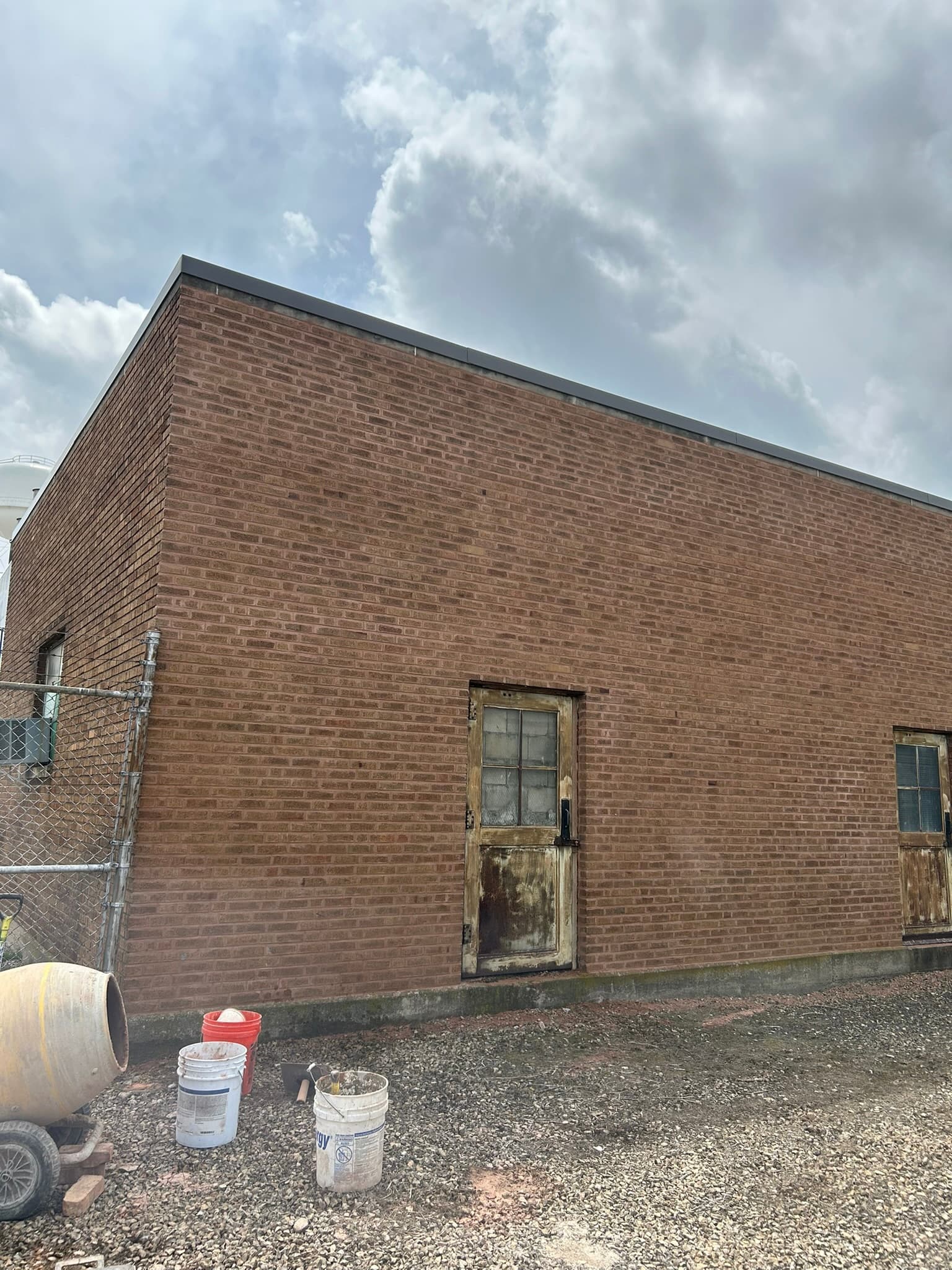
Strip Center Masonry Repair in Chicagoland: The Elevations Nobody Looks At
Strip center masonry repair in Chicagoland is rarely about the storefront glass line everybody sees from the parking lot. On a multi-tenant strip center or neighbourhood shopping plaza, the expensive failures sit on the rear service wall, inside the dumpster enclosure, on the parapet above the tenant signs, and at every point where a sign, canopy or scupper has been fastened through the masonry. Emerald Masonry LLC assesses and repairs retail and multi-tenant masonry across Chicago and the Chicagoland suburbs. Call (708) 288-1696.
A strip center is a simple building. A long, single-storey box, usually CMU block at the rear and sides with a brick, split-face or EIFS-and-brick front; a flat roof behind a parapet; a canopy or fascia running the length of the storefronts; and a row of tenants who each think of the building as their own unit.
That simplicity is the problem. Nobody owns the whole wall. Tenants watch their own storefront, the landscaper watches the lot, the roofer watches the membrane — and the masonry between all of them gets looked at when something falls off or a tenant calls about a ceiling tile.
This post is the plaza-wide view. If you have a single storefront building, start with commercial storefront masonry repair in Chicago. If your question is who pays under a particular lease, that is covered in landlord or tenant — who pays for masonry under a commercial lease. For a worked local example, see retail strip center masonry repair in Homer Glen. Here the question is different: where on a multi-tenant retail center is the masonry actually failing, and how do you fix it without closing anyone?
Strip center masonry repair: why the back of the building costs more than the front
The front of a strip center is maintained by default. It is the elevation every tenant, customer and leasing broker looks at, and anything ugly on it gets reported.
The rear is the opposite. It is a service corridor: delivery trucks, box trucks backing to doors, pallet jacks, forklifts at the larger anchors, dumpsters dragged in and out by a hauler on a schedule, grease bins, snow piled against the wall by a plough every winter. It is usually bare CMU, often painted, frequently with no gutters. And the only people who see it daily are drivers and staff on a break.
Add the roofline — invisible from the lot — and the result is a building where the two elevations taking the most abuse get the least inspection.
Elevation by elevation: where strip centers fail
| Elevation or element | Typical failure | Urgency | |---|---|---| | Rear CMU service wall | Truck and loader impact, cracked and displaced block, open joints at door jambs | High where block is displaced or a jamb is loose; otherwise next season | | Dumpster / trash enclosure | Impact damage, leaning walls, loose gate posts, saturated and spalling block | Medium to high — leaning walls and loose posts first | | Parapet and coping above signage | Open coping joints, failed through-wall flashing, spalled inner face | High if water is reaching tenant spaces or units are loose over a walk | | Sign anchors and raceway penetrations | Cracked units around fasteners, failed sealant, rust jacking | Medium; high where a sign is loose | | Storefront piers | Spalling at the base from de-icing salt, cracked units at lintel bearing | Medium; high where a lintel is rusting | | Canopy / fascia interface | Water behind the fascia, failed counterflashing, rusting ledger anchors | Medium to high depending on staining inside | | Roof drains and scuppers | Saturated masonry below scuppers, failed sleeves, staining and efflorescence | Medium; rises sharply after a freeze-thaw season | | Expansion and control joints | Dried, split or missing sealant; cracks where no joint exists | Low to medium, but cheap to fix early |
Urgency is always a site judgement, not a table entry. Anything that can fall on a pedestrian is first, regardless of where it sits.
Rear service walls
Rear walls are usually hollow or partially grouted CMU. A truck mirror or a fork tine does not just chip a face shell — it can crack a unit through, shove a run of block out of plane, or loosen the masonry around a steel door frame. Snow ploughs do the same at the base every winter.
Warning signs:
- Horizontal or stepped cracking a few feet above grade along a truck route
- Displaced units that sit proud of or behind the face of the wall
- Loose hollow-metal door frames or cracked block at the jambs
- Paint peeling and efflorescence at the base, where snow sits against the wall and salt is pushed into it
Repair is usually cut-out and replacement of damaged units, repointing, and resetting or re-anchoring door frames — followed by the part owners skip: protection. Bollards, wheel stops or corner guards at the spots where strikes keep happening are cheaper than repeating the repair. CMU versus brick repair covers how block repair differs from brick.
Dumpster and trash enclosures
The enclosure is the single most abused masonry on a retail property. It is struck by the hauler, wet constantly from leaking bins and snow melt, and frequently built as a free-standing wall with little foundation and no reinforcement. Gate posts anchored into the block loosen and pry the top courses apart.
When an enclosure is merely chipped, units can be replaced. When it leans, has been hit repeatedly or the gate posts are loose, rebuilding with grouted, reinforced cores, a proper cap and independent gate posts or bollards is normally the better long-term spend.
Parapets and coping above tenant signage
The front parapet on a strip center is doing three jobs: hiding the roof, terminating the membrane and carrying every tenant's sign. Its coping joints and the roof-side face are invisible from the lot, and it is exposed on both faces with nowhere warm to dry toward. Parapet wall failure signs on commercial buildings covers how to read it; coping and roofline leaks covers the water paths.
The tell on a plaza is a tenant reporting a stained ceiling tile near the front wall after a roof replacement. That is almost always the parapet, not the membrane.
Sign penetrations and anchors
Every tenant change brings a new sign, and every new sign brings new holes. Old raceway anchors are abandoned in place, new ones are drilled beside them, and the electrical feed goes through the wall wherever the sign installer found it convenient. Each hole is a water path, and steel anchors that rust expand and crack the unit around them. Anchoring into brick for awnings, handrails and signs explains how it should be done; on a plaza the job is usually patching the abandoned penetrations as much as resealing the live ones.
Storefront piers and the canopy interface
Brick piers between storefronts sit in the splash zone of a salted walk and take snow from the canopy above. Spalling at the base, cracked units where a lintel bears and orange rust staining are the usual signs — see lintel rust stains and orange streaks.
Where a canopy or fascia meets the masonry, a ledger or a series of anchors carries it and a counterflashing is supposed to keep water out of the joint. When that detail fails, water runs down behind the fascia and into the wall, where it shows up as staining inside the storefront head.
Roof drains and scuppers
Scuppers cut through the parapet and roof drains near the walls put concentrated water exactly where masonry is weakest. A failed scupper sleeve, a blocked drain that ponds against the parapet, or a downspout that discharges onto the face of the block will saturate a section of wall that then fails first in every freeze-thaw cycle.
CAM recovery versus capital items — a question for your lease, not your mason
Owners of multi-tenant retail almost always ask the same budgeting question: can this be run through common area maintenance (CAM), or is it a landlord capital item?
We cannot answer that for you, and nobody should pretend to from the masonry alone. It is a lease question. Many commercial leases distinguish routine repair and maintenance from capital replacement, some exclude capital items from CAM entirely, some allow them to be amortised over a useful life, and some treat structural elements as the landlord's responsibility regardless. The language varies lease by lease, even within one center.
What a masonry contractor can do is make the answer easier to reach:
- Itemise the scope so repointing, unit replacement, sealant work, enclosure rebuilds and parapet reconstruction are separate lines rather than one lump sum
- Describe each line accurately — repair of existing versus replacement or rebuild
- Separate tenant-caused damage, such as sign penetrations or a tenant's delivery vehicle strikes, where your leases may assign it differently
- Photograph conditions before work starts, so the record supports whatever allocation your lease administrator makes
Then have your lease administrator, accountant or counsel apply the leases. That is general information, not legal or accounting advice. The landlord-versus-tenant post walks through the clauses that typically decide it.
How a strip center repair actually runs
- Walk every elevation, including the roof. Rear, sides, enclosures, parapet from both faces, sign locations, canopy edge, drains and scuppers. Photograph and number each condition.
- Rank conditions by risk. Loose or falling material over walks and doors first; active leaks into tenant spaces second; impact damage that is spreading third; cosmetic last.
- Issue an itemised scope by elevation. One line per condition and location, so it can be priced, phased and allocated. How to write a masonry scope for bid applies directly.
- Plan the phasing. By building, by elevation, or by tenant bay — and by season if the budget needs it.
- Notify tenants. Dates, affected entrances, noise windows, parking or loading changes, and who to call.
- Protect the public. Barricades at the work zone, overhead protection or a closed walk where work is above an entrance, and clear routes to every open store.
- Execute and close out bay by bay, with photographs of each repaired condition so the record is complete for CAM reconciliation and for the next inspection.
Scheduling around tenant hours
Retail tenants have different peaks. A breakfast tenant, a salon, a fitness studio and a pharmacy at the anchor are not busy at the same hour. In practice:
- Rear and roof work usually runs during normal hours, with deliveries coordinated so the loading zone stays usable
- Grinding and saw cutting at the front is scheduled early, or for the quietest days, and dust-controlled with shrouded tools and vacuums
- Entrances stay open, protected and signed; where a bay must be closed briefly, it is planned with that tenant directly
- Work at restaurants and food tenants is coordinated around service, intake air and outdoor seating
Masonry work in occupied buildings covers the communication side in more detail.
Phasing by building or elevation
Plazas phase naturally. A common pattern is the rear and roofline in year one — because that is where water and impact damage live — and the storefront elevation the next season, once the building is dry. Out-buildings and pad sites become their own phases. Phasing also lets an owner spread capital across budget years; multi-year masonry programmes for portfolios sets out how to structure it.
Materials and techniques
- Mortar. Retail block and brick from the 1960s onward is generally a modern unit, so a Type N mortar is typical for repointing exposed above-grade walls and Type S where a wall is below grade, retaining or structurally loaded. Older brick fronts on pre-war commercial strips need a softer, more lime-rich mix. Type N versus Type S mortar explains the choice.
- Block replacement. Units matched for size, face texture (smooth or split-face) and colour, with cores grouted and reinforced where the wall is being strengthened against impact.
- Coping and flashing. Coping reset or replaced in kind, with through-wall flashing installed where the parapet is rebuilt — see through-wall flashing in masonry walls.
- Sealants. Control joints, sign penetrations and dissimilar-material joints at the canopy are sealant work, not mortar work. Silicone, urethane and hybrid masonry sealants covers selection.
- Coatings. Painted CMU rear walls should be repaired and repointed before repainting, with a breathable coating; a film that traps moisture accelerates spalling.
What drives the cost
Nobody can price a plaza from the parking lot. The factors are consistent:
- Linear footage and elevation count — rear only, or the whole envelope
- Unit replacement versus repointing, and how much block has been struck through
- Enclosure repair versus rebuild, and whether bollards or guards are added
- Parapet repoint versus partial rebuild, and whether flashing has to be installed
- Access — ground-level rear work is far simpler than parapet work over open entrances that need overhead protection
- Working hours — off-hours or early shifts add cost but can save tenant goodwill
- Phasing — more mobilisations cost more than one, but can fit a budget better
- Coordination with a roofer, sign contractor or canopy contractor
Why commercial masonry bids vary explains most of the spread you will see between proposals.
In-house maintenance versus a masonry contractor
A maintenance team can do a lot: keep scuppers and drains clear, report vehicle strikes the day they happen, keep snow piles off the walls, reseal small sign holes after a tenant leaves, and walk the roof after storms.
Bring in a mason when units are cracked through or displaced, a wall or enclosure leans, a parapet has open coping joints or spalled units, there is staining inside a tenant space, or anything is loose above a walk. Patching block with a bag of premixed mortar or caulking over cracked coping usually hides the condition until it is worse — why masonry repairs fail covers the common shortcuts.
Strip center masonry repair in the Chicagoland climate
Chicagoland retail centers take a specific beating. Freeze-thaw cycling drives water held in open joints and saturated block apart every winter. De-icing salt is spread heavily on walks and lots and ploughed straight against piers and rear walls. Long, open parking fields expose the front elevation to wind-driven rain. And the region's strip centers span decades — from older brick commercial strips along arterial roads to block-and-split-face plazas built from the 1970s onward — so the right mortar and repair method differs from one center to the next. Freeze-thaw masonry damage in Chicago explains the mechanism.
Maintenance and prevention for a multi-tenant plaza
- Walk every elevation and the roof once a year, ideally in spring, and photograph each condition so the next walk is a comparison
- Log every vehicle strike with the date and photographs, and look for repeat locations that need bollards
- Clear scuppers and drains in fall and after major storms
- Require sign contractors to seal and patch abandoned penetrations as part of every tenant sign change
- Keep snow storage off building walls in the snow contract
- Reseal control joints on a regular cycle — it is the cheapest masonry maintenance there is
Related services
Commercial masonry restoration, parapet wall repair, tuckpointing, brick repair, lintel repair and caulking and joint sealants. For portfolio owners and managers, see our property managers and commercial pages.
Walk the back of the building
Emerald Masonry LLC is a family-owned commercial masonry contractor serving Chicago and the Chicagoland suburbs, led by career masons with decades of hands-on Chicagoland experience, in commercial tuckpointing, façade and parapet repair, lintel replacement, CMU block repair, brick repair and replacement, limestone and sill repair, caulking, sealing, and commercial, residential and historic masonry restoration. Free on-site assessments — call (708) 288-1696.
We walk the rear, the enclosures and the roof as well as the storefronts, and hand you an itemised, elevation-by-elevation scope you can phase, budget and allocate. Established 2024, non-union, licensed, bonded and insured, with COI, W-9 and lien waivers on request.
If a tenant has called about a ceiling stain, a truck has found the back wall again, or nobody has been on the roof since the last sign went up, call (708) 288-1696 or request an assessment.
Frequently Asked Questions
What part of a strip center usually needs masonry work first?
Usually the rear and the roofline, not the storefronts. Rear CMU service walls take impact damage from trucks and loaders, dumpster enclosures take impact and constant wetting, and parapets above tenant signage leak into tenant spaces long before anyone sees a crack from the parking lot.
Can masonry repair costs be recovered through CAM charges?
It depends entirely on your leases. Many leases treat routine repair and maintenance differently from capital replacement, and some exclude capital items or require them to be amortised — so have your lease administrator or counsel review the language before you budget a recovery. This is general information, not legal or accounting advice.
Can the work be done without closing stores?
In most cases, yes. Rear elevations and roof-side parapet work can usually proceed during business hours, and front work can be phased bay by bay with protected entrances, early starts or off-hours shifts for the noisiest tasks such as grinding.
Why does a tenant's ceiling leak near the sign?
Sign anchors, raceway fasteners and electrical penetrations are drilled straight through the parapet or fascia masonry, and their sealant has a much shorter life than the wall. Water enters at the fastener, travels inside the wall and appears inside the tenant space, often some distance from the sign.
Should a damaged dumpster enclosure be patched or rebuilt?
A few cracked or broken block units can be cut out and replaced. When the enclosure is leaning, the gate posts have loosened, or the walls have been struck repeatedly, rebuilding with grouted, reinforced cores and adding bollards is usually more economical than patching it every year.
How do you phase masonry repair across a plaza with several buildings?
By risk first and by elevation second: falling-material and active-leak conditions go first, then the rear and roofline, then the storefront elevations, often in separate seasons. Phasing by building or elevation also helps owners spread capital across budget years.
Who should be the point of contact for tenants during the work?
The property manager, ideally with a notice issued well before mobilisation that names the dates, the affected entrances and a phone number. The contractor's crew lead should be reachable on site for day-to-day questions about access and noise.
How often should a strip center's masonry be inspected?
Walk every elevation, including the rear and the roof, at least once a year, and again after severe weather or any reported vehicle strike. Emerald Masonry LLC provides free on-site assessments across Chicago and the Chicagoland suburbs; call (708) 288-1696.