
Commercial Masonry Restoration · Chicagoland, IL
"Like Kind and Quality" on a Masonry Claim: Why the Repair Won't Match
On a roof, like-kind replacement means the same shingle in the same colour. On a brick wall it can mean a unit that stopped being manufactured before the adjuster was born — and that is a scope problem, not a shopping problem.
2026-09-30
Quick Answer
On a masonry insurance claim, like-kind replacement is a sourcing problem rather than a purchase: the original brick is often discontinued, so matching means salvage, a close-match current unit, or relocating original brick from a hidden elevation. Colour, size, texture, bond pattern and mortar all have to match, and the chosen route belongs in the scope before work starts. Emerald Masonry LLC scopes matching explicitly on Chicagoland claims — (708) 288-1696. General information, not insurance or legal advice.
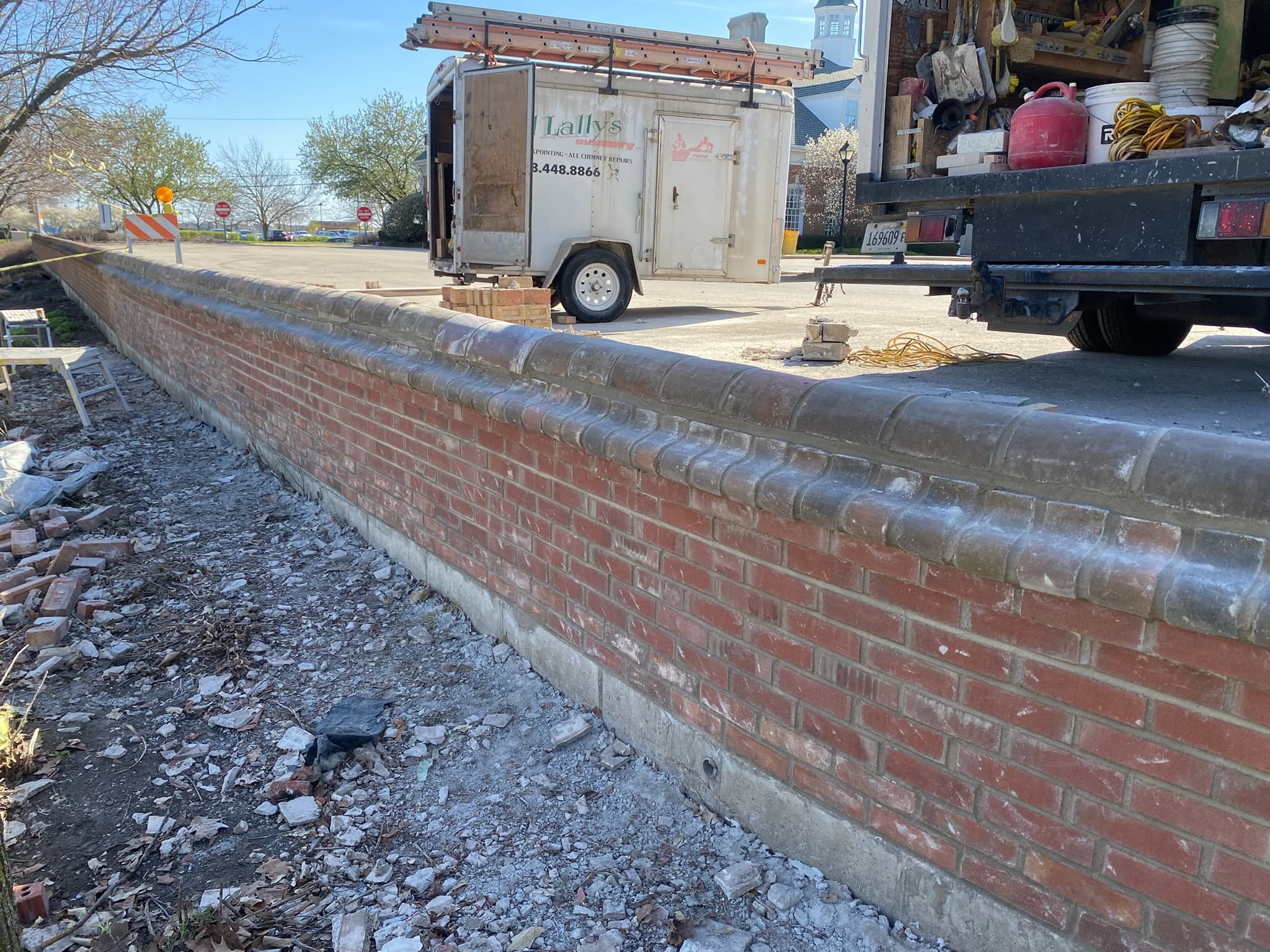
"Like Kind and Quality" on a Masonry Claim: Why the Repair Won't Match
On a masonry insurance claim, like-kind replacement is a sourcing problem, not a purchase. The original brick is usually discontinued, so matching means salvage, a close-match current unit, or relocating original brick from a hidden elevation — and colour, size, texture, bond pattern and mortar all have to line up. Which route is being used belongs in the scope before the wall is rebuilt, not in an argument afterwards. Emerald Masonry LLC scopes matching explicitly on Chicagoland claims. Call (708) 288-1696.
This is general information from a masonry contractor, not insurance or legal advice. Coverage questions belong to your policy, your carrier and your counsel.
Insurance restoration has a shared vocabulary that works well on most trades. Like kind and quality — restore what was there, don't upgrade it, don't cheapen it. On a roof that is a clear instruction: same shingle, same weight, same colour. On siding, same profile.
On a brick wall the phrase runs straight into a wall of its own, because the material it points at frequently does not exist any more.
Brick is a local, era-specific product. The clay pit that produced the brick on a 1928 Chicago two-flat closed decades ago. The plant that made the 1962 face brick on a suburban ranch is gone. There is no catalogue number to reorder. On most Chicagoland masonry claims, "the same brick" is not purchasable at any price.
That is not a reason to lower expectations. It is a reason to put matching in the scope as its own decision, with its own cost, agreed in advance.
What actually has to match
Homeowners and adjusters both tend to think of matching as a colour question. It is at least five questions, and the ones people miss are the ones that make a repair obvious.
Colour — and colour range
Brick is rarely one colour. A wall is usually a blend, sometimes a deliberate one, and matching the average colour while missing the range produces an area that reads as flat next to a wall that reads as varied. That flatness is visible from across the street even when every individual brick is close.
Size
Nominal brick dimensions have shifted over the last century, and older walls frequently use units taller or narrower than current modular sizes. A size mismatch cannot be hidden, because it forces the joints out of alignment with the courses on either side of the repair — and that misalignment is far more noticeable than a slight colour difference.
Texture and surface
Wire-cut, sand-faced, smooth, tumbled. Texture controls how a wall handles light, which is why two bricks that match in a photograph can look nothing alike on a sunny elevation.
Bond pattern
Running bond, common bond with header courses at intervals, stack bond. A repair that ignores the pattern — omitting a header course, or interrupting the coursing rhythm — reads as wrong even to someone who could not name what is wrong. Brick bonds, patterns and repair matching covers this.
Mortar
The most common reason a masonry repair looks like a patch is not the brick at all. It is the mortar. Colour, sand texture and joint profile all have to match, and the joint has to be tooled the same way. On older soft brick the mix also has to be softer than the brick it holds — a durability requirement rather than an aesthetic one, and one that a hard modern mix violates. Mortar colour matching and lime versus Portland mortar cover both halves.
The three matching routes, and what they cost
| Route | How it works | Best for | Trade-off | |---|---|---|---| | Salvage | Reclaimed units of the same era and type | Chicago common brick, widely used face brick | Availability is unpredictable; quantity may be limited | | Close match, current production | Modern unit selected for size, colour range and texture | Later stock; larger quantities | Almost always reads slightly newer for a few seasons | | Relocate original | Move original brick from a hidden elevation into the visible repair; new brick fills the hidden area | Prominent elevations where the match must be right | Highest labour; doubles the handled area |
Salvaged brick sourcing in Chicago and brick matching and replacement material go through each in practice.
The relocation route is worth understanding, because it is the answer almost nobody proposes and frequently the right one. If the damage is on a street elevation and the building has a rear or side wall nobody sees, moving original brick forward gives a genuinely invisible repair on the face that matters, and puts the acceptable-but-newer brick where it does not. It costs more in labour and it has to be scoped deliberately.
Why the repair still looks new — and why that is fine
This conversation goes better when it happens before the work.
New brick has not weathered. New mortar cures noticeably lighter than it will eventually read, and takes a season or more to settle toward its final tone. A repair that is a genuinely good match will therefore look like a repair for a while, and then stop.
The honest standard to set is: will this be indistinguishable in two or three years? A repair that vanishes on day one usually means somebody tinted the mortar to match a dirty wall, and it will read too dark once the wall is cleaned or the mortar ages. Why new brick looks different as it weathers in is the page to hand to anyone expecting invisibility immediately.
The boundary problem nobody scopes
Here is a failure mode that survives even a perfect unit match: a perfect repair with a visible edge is still a visible repair.
If a falling limb took out four square feet in the middle of a large elevation, replacing exactly four square feet leaves a rectangle. Options, in ascending cost:
- Blend — feather replacement units into the surrounding field rather than rebuilding a clean rectangle
- Work to a natural break — extend to a corner, an opening, a course line, or a change of material
- Extend to a logical boundary — take the repair to the full panel or full elevation
None of these is automatically right, and which one a policy funds is a coverage question, not a contractor's decision. But the scope has to name one, with a price, or the choice gets made silently by whoever is holding the trowel. Storm damage versus pre-existing deterioration covers the related question of how much of the surrounding wall is event damage at all.
Chicago common brick: the special case
One material deserves its own paragraph because it is everywhere in this market and it behaves differently from everything else.
Chicago common brick — the soft, variable, pinkish-to-buff brick used on the side and rear elevations of an enormous share of the city's and inner suburbs' housing stock — is close to impossible to match with new production. It is soft, it is inconsistent by design, and its colour range within one wall is wider than most modern blends. New brick placed into a common-brick wall looks new for a long time, and a hard modern unit placed among soft ones also behaves differently, concentrating stress on its neighbours.
For common brick, salvage is usually the only honest route, and the scope should say so rather than assuming a supplier will produce something acceptable. Chicago common brick and why it crumbles covers the material.
There is a related point worth raising with an adjuster early: on many buildings the street elevation is hard face brick and the sides and rear are common brick. They are two different materials with two different matching problems and two different mortar specifications on one building — so one line item covering "brick replacement" across the whole structure is under-specified on its face.
Lead times are part of the scope
Matching has a calendar as well as a price, and it is a common source of frustration after approval:
- Salvage depends on what a reclamation yard actually holds — sometimes immediate, sometimes weeks, occasionally not available in the quantity needed
- Close-match current production is usually quickest, but a specific colour blend may still be a made-to-order run
- Cast stone reproduction from a mould is measured in weeks, not days
- Terra cotta is the longest of all
That matters on a claim because emergency stabilisation, permanent repair and matching often cannot happen in one mobilisation. Building that into the scope — stabilise now, rebuild when the units land — avoids either an unsafe wall or a rushed mismatch.
Stone, cast stone and terra cotta
Each behaves differently and each deserves its own line item and its own lead time:
- Limestone can often be matched by quarry source and finish, and Chicagoland has a strong regional supply — but the finish (smooth, sawn, tooled) matters as much as the stone
- Cast stone can frequently be reproduced by taking a mould from an intact unit, which is a lead-time item rather than a matching problem
- Terra cotta usually means salvage or a substitute material, and substitutes differ in weight, water behaviour and anchorage — see terra cotta and cast stone façade repair
Set the standard with a sample, before the rebuild
The mechanism that resolves all of this is the same one that resolves quality disputes on ordinary commercial work: an approved sample or mock-up.
Lay up a small panel with the proposed brick and the proposed mortar, let it cure, look at it dry, in daylight, from a normal viewing distance, next to the existing wall. Get agreement. Then build.
On a claim that sample does something extra: it converts "will it match?" from a promise into an observable fact, which protects the owner, the contractor and the adjuster at once. Mock-ups and test panels covers how to set one up.
Commercial, association and multi-unit claims
On an association or commercial loss the matching question acquires a governance layer. If one building of eight is damaged, its repair has to match the other seven — which means the mortar specification and brick source become property records, not project details. And where the damaged element is a common element, who approves the matching route and who absorbs any betterment are board questions worth settling early. HOA versus unit owner responsibility covers the allocation side.
Emerald Masonry LLC is a family-owned commercial masonry contractor serving Chicago and the Chicagoland suburbs, led by career masons with decades of hands-on Chicagoland experience, in commercial tuckpointing, façade and parapet repair, lintel replacement, chimney and stack rebuilds, CMU block repair, brick repair and replacement, foundation and limestone/sill repair, caulking, sealing, and commercial, residential and historic masonry restoration. Free on-site assessments — call (708) 288-1696.
On a claim we identify the unit and the mortar, price each available matching route separately, recommend one in writing with the visual trade-off stated plainly, and set a sample before the wall goes back. We do not make coverage determinations — that is between you and your carrier — but we make sure nobody is surprised at the end.
For buyers: insurance restoration, commercial masonry and HOA and condo associations. Also useful: masonry insurance claims in Illinois, the post-storm masonry inspection checklist and fire damage masonry restoration.
Decide matching before the wall comes down
The single most useful thing an owner, board or manager can do on a masonry claim is make matching an explicit, priced decision at the scope stage — the unit, the mortar, the boundary treatment and the sample. Everything after that is carpentry.
Call (708) 288-1696 or request an assessment.
Frequently Asked Questions
What does "like kind and quality" mean on a masonry claim?
Broadly, it is the idea that a repair should restore materials comparable to what was damaged rather than upgrading or downgrading them. On masonry that gets complicated fast, because the comparable material frequently no longer exists — so the practical question becomes which matching route is being funded, and that belongs in the scope.
Why can't you just buy the same brick?
Because brick is a local, era-specific product and most of what is on Chicagoland walls has not been manufactured for decades. Clay sources close, plants shut, colours are discontinued, and even nominal sizes have shifted — so an identical unit is usually not purchasable at any price.
Will the repaired area be invisible?
Rarely on day one, and that should be said honestly up front. New brick has not weathered, and new mortar cures lighter than it will eventually read, so a good match is a match that becomes indistinguishable over a few seasons rather than one that disappears immediately.
What are my options if the original brick is discontinued?
Three, and they differ in cost: salvaged brick from a reclamation source, a close match from current production, or relocating original brick from a less visible elevation and putting new brick there instead. The third gives the best visual result on a prominent wall and takes the most labour.
Does matching apply to the mortar too?
Very much so, and mortar is the more common reason a repair reads as a patch. Colour, sand texture and joint profile all have to match, and on older soft brick the mix also has to be softer than the brick it holds — which is a durability requirement, not an aesthetic one.
What if only part of an elevation is damaged?
Then the scope has to say how the boundary will be handled, because a perfect repair with a visible edge is still a visible repair. Blending into surrounding areas, working to a natural break such as a corner or an opening, or extending the repair to a logical line are all legitimate approaches with different costs.
Who decides which matching route gets paid for?
Your carrier, against your policy — we do not make coverage determinations. What a contractor can do is price each route transparently so that the decision is made with the costs and the visual outcomes in front of everyone rather than discovered at the end.
What about limestone, cast stone or terra cotta?
Those are harder again. Limestone can often be matched by source and finish, cast stone can be reproduced from a mould taken off an intact unit, and terra cotta usually requires either salvage or a substitute material — each of which is a distinct line item with a distinct lead time.
How does Emerald Masonry handle matching on a claim?
We identify the unit and mortar, price the available matching routes separately, and recommend one in writing with the visual trade-off stated — then set a sample or mock-up so the standard is agreed before the wall is rebuilt. Call (708) 288-1696.