
HOA & Condo Masonry Repair · Downers Grove, IL
HOA & Condo Masonry Repair in Downers Grove, IL — Written for the Board, Not Just the Wall
Every masonry contractor in DuPage will tell a board they serve condo associations. Very few will tell that board how the decision, the documentation, and the phasing actually work.
Quick Answer
Emerald Masonry LLC provides HOA and condo masonry repair in Downers Grove, IL — tuckpointing, brick and lintel repair, façade and balcony work on townhome and condominium associations — scoped elevation by elevation, phased against reserves, with resident communication planned in. Licensed, bonded and insured; COI, W-9 and lien waivers on request. Call (708) 288-1696.
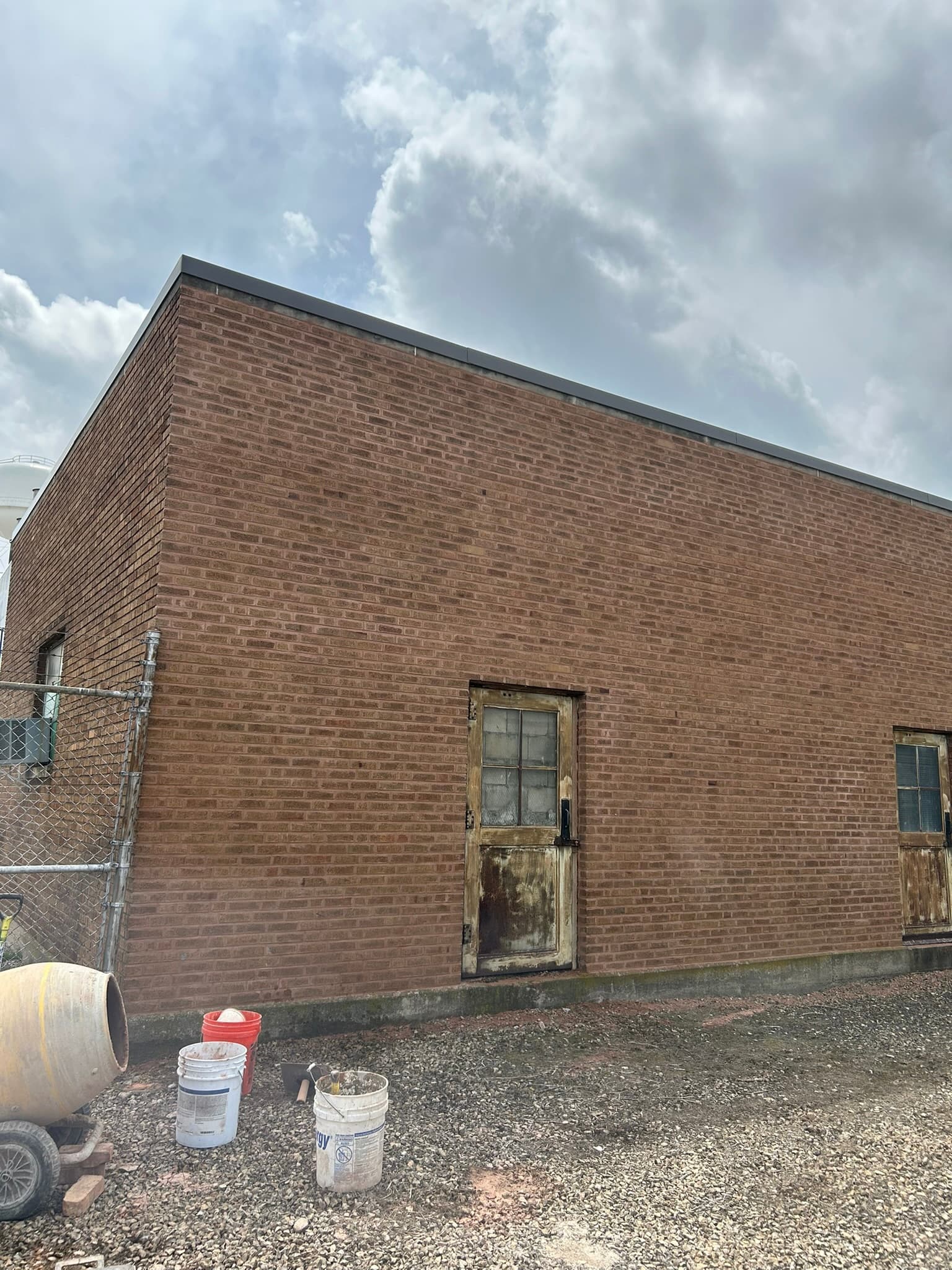
Search for masonry help for a Downers Grove association and every result will tell you it serves condo associations, townhome associations, and multi-unit communities.
Read further and something is consistently missing. None of them tell a board how the decision actually gets made — who approves what, where the money comes from, how the work is phased against a reserve schedule, who is responsible for a balcony versus a wall, or what documentation a management company needs in the vendor file before a crew can set foot on the property.
The strongest page in this market runs over a thousand words, correctly names townhome and condo associations, even references local code violations — and carries no FAQ, no phasing guidance, no board-approval discussion, and not one mention of a certificate of insurance, a W-9, or a lien waiver. Behind it sit lead-generation templates with stock photography and unverifiable testimonials.
HOA masonry repair in Downers Grove, IL is as much a governance and documentation exercise as a construction one, and this page is written for that half.
Emerald Masonry LLC is a family-owned commercial masonry contractor serving Chicago and the Chicagoland suburbs, led by career masons with decades of hands-on Chicagoland experience, in commercial tuckpointing, façade and parapet repair, lintel replacement, chimney and stack rebuilds, CMU block repair, brick repair and replacement, foundation and limestone/sill repair, caulking, sealing, and commercial, residential and historic masonry restoration. Free on-site assessments — call (708) 288-1696.
The first question is not "what does it cost"
It is "who is responsible for what."
On most Illinois associations the exterior masonry — walls, parapets, lintels, chimneys — is a common element, funded by the association and controlled by the board. Balconies, patios, and sometimes exterior doors and windows are frequently limited common elements, where responsibility splits between the association and the unit owner in whatever way the declaration says.
That split is not standard. It genuinely varies building to building, and it is the single most common source of friction on association masonry projects. Read the declaration first, and where the language is ambiguous, get an opinion before the scope is written rather than after an invoice arrives. Our guide to HOA versus unit owner responsibility for masonry repair covers the usual arrangements.
What actually fails on Downers Grove association buildings
Mortar joints on the weather elevations. South and west walls run years ahead of north and east on the same building — which is why a sensible plan often treats two elevations now and two later rather than wrapping every building at once.
Lintels and shelf angles. The steel above windows, doors and garage openings corrodes, expands, and lifts the masonry it carries. On brick-veneer buildings from the 1970s onward, a continuous shelf angle behind the wall does the same thing invisibly. See brick veneer ties and shelf angles.
Balcony slab edges and guardrail anchorage. Overhead, load-bearing on people, and deteriorating from the inside out as embedded steel corrodes. This outranks everything cosmetic. Our guide to balcony, walkway and guardrail masonry goes through the inspection.
Parapets and roof edges on the flat-roofed buildings, weathered on three surfaces with no heated space behind them.
Grade-level courses, where splash, road salt, and raised landscaping grade do their work every winter.
Chimneys and flues on the older garden-style courtyard buildings.
Downers Grove, specifically
Downers Grove has one of the deeper association housing stocks in DuPage, and it splits into recognisable groups.
The 1960s–80s condominium and townhome communities along the Finley Road, Butterfield, and 63rd Street corridors — brick veneer over frame or block, steel lintels now well past their service life, balconies and walkways, and flat or low-slope roofs with parapets. This is the bulk of the work.
Garden-style courtyard buildings in the older neighbourhoods nearer downtown and the BNSF line — solid masonry, tall chimney stacks, and mortar that is genuinely due.
Newer townhome and rowhome developments, where the issues are sealant renewal, expansion joints, weep holes, and flashing rather than wholesale repointing.
Mixed-use and commercial condominium along Ogden Avenue and near the downtown, where a commercial unit owner and a residential board share a building.
Four different repair vocabularies, and a scope that treats them the same is a scope that will produce surprises.
What we give a board
The deliverable is a document, not a number.
- A free on-site assessment, elevation by elevation and building by building, with photographs.
- A written scope with stated square footages, the repoint-versus-rebuild split, access method, materials, and explicit exclusions.
- A priority order the board can defend to owners: overhead and structural, then active water entry, then deterioration, then appearance.
- A phasing proposal grouped by access rather than by category — because the cost of upper-elevation work is largely the cost of getting up there, and two items on one mobilisation beat the same two items in different years.
- Unit prices for contingent work, fixed during the bid rather than negotiated once staging is up. Our guide to unit price versus lump sum explains why that matters on masonry specifically.
- A mock-up requirement, so mortar colour, joint profile and brick match are approved as a physical standard before production. See mock-ups and test panels.
- COI, W-9 and lien waivers on request, before mobilisation.
- A resident communication plan — notice, affected parking and balconies, duration, and a named contact.
Reserve studies, honestly
Most boards arrive with a reserve study that carries a masonry or tuckpointing line, and treat it as a budget.
It is better understood as a planning placeholder. Reserve studies generally estimate from building age, square footage, and typical service lives — not from a condition survey of your actual walls. The real scope, and more importantly the real sequence, comes from looking at the buildings.
Sometimes the study is high and the work can be staged further out. Sometimes it is low because a lintel condition nobody had catalogued moved a whole elevation up the priority list. Either way, an assessment before the money is committed is worth considerably more than it costs, which is nothing. See HOA masonry maintenance budgets.
Materials and technique
Mortar matched in type, hardness, colour, sand, and joint profile — with softness relative to the surrounding units treated as the governing constraint on older buildings. Type N where the wall calls for it, Type S where it genuinely does. Salvaged brick reused where sound, replacements matched in size, colour and texture. Backer rod and correctly tooled elastomeric sealant at expansion joints and perimeters — sealant where sealant belongs, mortar where mortar belongs. Flashing detailed continuous with end dams so water leaves the wall rather than draining into it.
What drives the cost
Number of buildings and elevations. Height and access — ground reach, lift, or scaffolding are three different cost structures. The ratio of repointing to rebuilding. Lintel, balcony and parapet scope. Resident protection and overhead coverage. Whether the work is phased and therefore mobilised more than once. Weather windows, since mortar needs workable temperatures to cure.
We do not price association work over the phone, and neither should anyone else — the reasons are in why masonry contractors won't quote over the phone.
Working with Emerald
Emerald Masonry LLC is family-owned, established 2024 and led by career masons with decades of hands-on Chicagoland experience. Licensed, bonded and insured, non-union, with COI, W-9 and lien waivers on request. We work directly with boards through our HOA and condo association practice, with management companies through property manager services, and on wider portfolios through commercial masonry.
Related services: commercial masonry restoration, tuckpointing and repointing, lintel repair, parapet wall repair, brick repair, and caulking and joint sealant.
Give the board something it can vote on
An assessment, a written scope, a priority order, and a phasing plan — at no cost and with no obligation.
Request a free on-site assessment — or call (708) 288-1696.
Ready to get started?
Free on-site estimates for commercial and large-scale projects.
HOA & Condo Masonry Repair in Downers Grove, IL — Frequently Asked Questions
How much does HOA masonry repair cost in Downers Grove, IL?
It is priced by scope, not per building. The drivers are elevation area and height, the ratio of repointing to rebuilding, lintel and balcony work, access and staging, resident protection, and whether the project is phased across reserve years. Emerald Masonry provides a free on-site assessment and a written scope a board can circulate and compare.
Is masonry repair the association's responsibility or the unit owner's?
On most Illinois condominium and townhome associations the exterior masonry is a common element and the association is responsible, while balconies and patios are frequently limited common elements with split responsibility. The declaration governs, so read it before commissioning anything.
How do we get three comparable bids?
Give every bidder the same written scope with the same stated square footages, the same elevations, and the same unit-price items for contingent work. Bids that look far apart usually are not pricing the same work, and normalising the scope is the only way a board can compare them honestly.
Can the work be phased across reserve years?
Yes, and for most associations it should be. We scope elevation by elevation with a defensible priority order — overhead and structural first, active water entry second, deterioration third, appearance last — so a multi-year plan protects the buildings in the right sequence rather than the convenient one.
Do you provide a certificate of insurance and lien waivers?
Yes. Emerald Masonry LLC is licensed, bonded and insured, and provides a COI, W-9 and lien waivers on request before work begins. Most management companies require all three in the vendor file, and a contractor who hesitates at that question has answered it.
How do you handle resident communication and access?
With written notice before mobilisation — what is happening, where, for how long, which parking and balconies are affected, and who to contact. Overhead protection goes in wherever residents pass beneath the work. Most complaints on association projects are information failures rather than construction failures.
Our reserve study has a tuckpointing line. Is that number reliable?
Treat it as a planning placeholder rather than a bid. Reserve studies typically estimate from building age and square footage, not from a condition survey, so the real scope and sequence should be established by an on-site assessment before the board commits the money.
HOA & Condo Masonry Repair in Nearby Areas
Other Masonry Services in Downers Grove, IL
Learn more about our hoa & condo masonry repair services across Chicagoland, or view all service areas.