
Commercial Façade Repair · Elmhurst, IL
Commercial Façade Repair in Elmhurst, IL — When a Fifteen-Year-Old Building Already Needs Work
Elmhurst has two commercial façade problems on the same block. The century-old buildings behave the way old masonry does. The new mixed-use buildings beside them are failing faster — and for completely different reasons.
Quick Answer
Emerald Masonry LLC provides commercial façade repair in Elmhurst, IL — mixed-use, mid-rise and downtown commercial masonry, including brick veneer on steel stud backup, shelf angles, window-perimeter sealant, thin brick and traditional repointing on older buildings. Written scopes with quantities. Licensed, bonded and insured. Call (708) 288-1696.
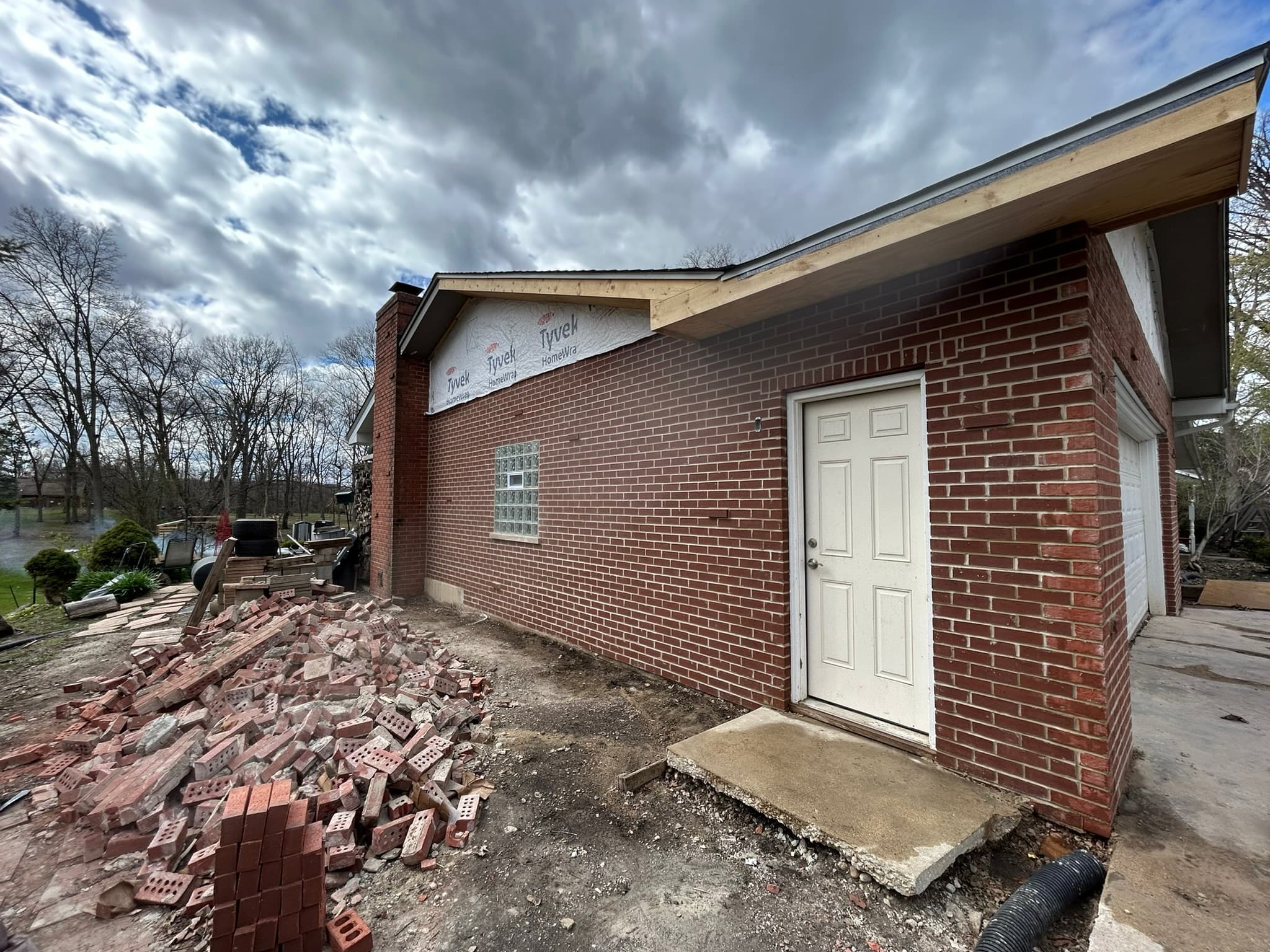
Commercial Façade Repair in Elmhurst, IL
Emerald Masonry LLC provides commercial façade repair in Elmhurst, IL — mixed-use, mid-rise and downtown commercial masonry, from brick veneer on steel stud backup and shelf-angle work to window-perimeter sealant, thin adhered brick and traditional repointing on the older buildings. You get a written scope with quantities by elevation and phased pricing. Licensed, bonded and insured. Call (708) 288-1696.
Downtown Elmhurst is unusual in DuPage County, and it creates an unusual diagnostic problem. Walk from the Metra station out along York Road and Schiller Street and you pass, sometimes in the same block, century-old two- and three-storey commercial buildings and mixed-use podium buildings put up between roughly 2005 and 2020 — retail or restaurant at grade, condominiums or apartments above, five or six storeys, brick-clad.
Those two buildings share a street and share nothing else. And the newer one is frequently in worse shape.
A 1910 commercial building fails slowly, from the joints, in ways a mason has seen a thousand times. A 2010 mixed-use building fails from its sealant and its flashing, faster than anyone budgeted for, and the symptoms show up several floors away from the cause.
Why the newer buildings are failing first
This surprises owners and boards constantly, and there is a straightforward explanation.
An old solid masonry wall is massive. It resists water by absorbing it and drying out again, and its weak point — the mortar joint — is replaceable and lasts decades.
A modern veneer wall is thin and drained. It is a single wythe of brick, or a thin adhered brick finish, over an air gap and a steel stud or block backup, and it depends for its weather resistance on a set of components with far shorter service lives:
- Sealant joints at windows, doors, material transitions and movement joints — typically fifteen to twenty years
- Through-wall flashing and weep holes, which only work if they were installed correctly and remain open
- Shelf angles at each floor line, carrying the veneer's weight
- Wall ties, holding the veneer to the backup
- Window-perimeter details at a very large number of openings
Every one of those is a discrete component with a finite life, and on a building completed in one season they all reach the end of that life at roughly the same time. That is why a fifteen-year-old Elmhurst mixed-use building can start leaking in four places in one spring.
The four conditions we find on podium and mid-rise stock
1. Window-perimeter sealant
The largest single length of sealant on the building, at the most exposed junction, on the component most likely to be blamed last. When it goes, water enters at the head and jambs and runs inside the wall.
2. Horizontal cracking at a floor line
A level crack at a consistent height is usually the shelf angle corroding and rust-jacking the course above it — not settlement. Rust occupies more volume than the steel it came from, so it lifts masonry. The repair reaches the steel, which means taking courses down. Brick veneer ties, shelf angles and hidden steel covers how to read it.
3. Blocked or absent drainage
Weep holes mortared shut by a prior repointing crew, buried behind raised planters, or never provided. Through-wall flashing omitted or unlapped at floor lines. A drained wall with its drainage closed stops being a drained wall. See weep holes and through-wall flashing.
4. Thin adhered brick mistaken for veneer
Some newer façades here are not brick veneer at all but a thin adhered brick finish bonded to a substrate. It fails by debonding and substrate moisture rather than by joint deterioration, and repointing it accomplishes nothing. Establishing which system is on the wall is the first thing we do. Manufactured stone veneer failure covers the closely related adhered-finish problem.
Old building, new building — two different scopes
| | Pre-1940 commercial | 2005–2020 mixed-use | |---|---|---| | Wall type | Solid masonry, soft brick, lime-rich mortar | Drained veneer over steel stud or block | | Primary failure | Mortar joints at end of service life | Sealant, flashing, shelf angles | | Mortar rule | Mix must be softer than the brick | Match existing; the joint is not the water barrier | | Where the leak enters | Joints, sills, parapet, cornice | Window perimeters, floor lines, transitions | | Where it appears | Near the entry point | Often floors below and bays across | | Wrong move | Hard Portland-heavy repointing | Repointing instead of re-detailing sealant and flashing |
On the older downtown buildings the governing rule still holds: the mortar must be softer than the brick it holds, so movement and moisture relieve through the replaceable joint rather than spalling the brick face. Lime versus Portland mortar covers why, and solid masonry versus brick veneer repair covers the distinction that decides the whole scope.
Tracing the leak, not the stain
On a podium building the reported leak location is rarely useful on its own. Water entering at a fourth-floor window head lands on the first obstruction it meets — a flashing edge, a shelf angle, a steel member — and exits there, which may be two floors down and a bay to one side.
So our assessment works upward and outward from the stain, not at it: water-testing where appropriate, checking the window heads and jambs above, opening a weep condition, checking the flashing lap at the nearest floor line, and reading the crack pattern for steel. Repairing the nearest visible defect is the reason these leaks survive two or three contractors.
Working on an occupied mixed-use building
This building type has the most demanding logistics in commercial masonry: retail and restaurants at grade that cannot lose their frontage, residents above who need notice and quiet hours, a public sidewalk directly beneath the work, and often a shared garage or podium deck below.
Emerald Masonry LLC is a family-owned commercial masonry contractor serving Chicago and the Chicagoland suburbs, led by career masons with decades of hands-on Chicagoland experience, in commercial tuckpointing, façade and parapet repair, lintel replacement, chimney and stack rebuilds, CMU block repair, brick repair and replacement, foundation and limestone/sill repair, caulking, sealing, and commercial, residential and historic masonry restoration. Free on-site assessments — call (708) 288-1696.
That means overhead protection over the public walk, staging one elevation at a time, storefront and entrance protection, written resident notice before work reaches an elevation, and all of it stated in the scope so bids are comparable. Masonry work in occupied buildings covers the communication discipline; who signs off — approval chains on commercial masonry matters when a commercial owner and a residential board share one façade.
Elmhurst and the surrounding towns
We work both halves of this stock across the county: historic masonry restoration in Elmhurst, tuckpointing in Elmhurst, efflorescence and waterproofing in Elmhurst, chimney repair in Elmhurst, commercial masonry restoration in Lombard and parapet wall repair in Wood Dale. Related services: commercial masonry restoration, caulking and joint sealant, tuckpointing and repointing, brick replacement and masonry sealing. For owners and managers: commercial masonry, property managers and HOA and condo associations.
Establish the wall type first
Emerald Masonry LLC was established in 2024 and is led by career masons with decades of hands-on Chicagoland experience on both Chicagoland's older commercial masonry and its newer veneer construction. Family-owned, licensed, bonded and insured, with free on-site assessments.
If a retail tenant is reporting water nobody can source, a horizontal crack has appeared along a floor line, or a building that still looks new is coming up on its first real façade decision, call (708) 288-1696 or request an assessment.
Ready to get started?
Free on-site estimates for commercial and large-scale projects.
Commercial Façade Repair in Elmhurst, IL — Frequently Asked Questions
How much does commercial façade repair cost in Elmhurst, IL?
The drivers are access over a public sidewalk or an occupied podium, the linear footage of sealant and joint involved, how much concealed steel has to be reached, and whether the veneer is traditional brick or a thin adhered system. Emerald Masonry LLC provides a free on-site assessment and a written scope with quantities by elevation — call (708) 288-1696.
Why does our 2010-era building already have façade problems?
Because newer veneer walls carry far more of their weather resistance in sealant and flashing than an older solid wall did, and sealant has a service life of roughly fifteen to twenty years. When the joints at windows, floor lines and material transitions reach the end of that life more or less together, a building that looks new starts leaking in several places at once.
What is a shelf angle and why does it matter on a mid-rise?
It is the steel angle that carries the brick veneer at each floor level so the veneer is not stacking its full weight to the ground. When it corrodes it expands, lifting the course above it and opening a horizontal crack along that floor line — very commonly misread as settlement, and repaired by rebuilding rather than repointing.
Is thin adhered brick repaired the same way as real brick veneer?
No, and confusing the two wastes money. Thin adhered brick is a finish bonded to a substrate rather than a drained veneer, so its failures are debonding, substrate moisture and joint cracking, and the repair addresses the assembly behind it rather than the joint alone. We establish which system you have before quoting anything.
The leak is in a ground-floor retail unit. Why are you looking at the third floor?
Because water that enters a veneer wall travels down inside the cavity and exits wherever it first meets an obstruction, which on a podium building is often several floors below and one bay across. Repairing the nearest defect to the stain is the most common reason these leaks persist through two or three contractors.
Can the work be done with retail open and residents in place?
Yes, with a real plan. We stage one elevation at a time with overhead protection where anyone walks beneath the work, keep storefronts and entrances clear, give residents written notice before work reaches their elevation, and schedule the noisiest operations around trading hours where required.
Do you provide a COI, W-9 and lien waivers?
Yes — on request before mobilisation, and lien waivers with each payment application. Emerald Masonry LLC is licensed, bonded and insured and works routinely with property managers, condominium boards and commercial owners.
Do you serve Elmhurst and the rest of DuPage County?
Yes. Emerald Masonry LLC works throughout Elmhurst, Villa Park, Lombard, Oak Brook, Westchester, Bensenville, Wood Dale and the wider Cook, DuPage and Will County area. Call (708) 288-1696 for a free on-site assessment.
Commercial Façade Repair in Nearby Areas
Other Masonry Services in Elmhurst, IL
Learn more about our commercial façade repair services across Chicagoland, or view all service areas.