
Insurance & Storm Damage Masonry Restoration · Homer Glen, IL
Storm Damage Masonry Repair in Homer Glen, IL — A Brick Claim Is Not a Roof Claim
The storm-claim advice in this market was written for roofs. On masonry the fight is never whether something happened — it is whether the wall was already failing, and that changes what you have to document on day one.
Quick Answer
Emerald Masonry LLC handles storm damage masonry repair in Homer Glen, IL — chimney, wall, parapet and limestone damage from wind, fallen limbs, hail, vehicle impact and fire, documented so an adjuster can separate the sudden event from pre-existing deterioration, then repaired with matched units and mortar. Licensed, bonded and insured. Call (708) 288-1696.
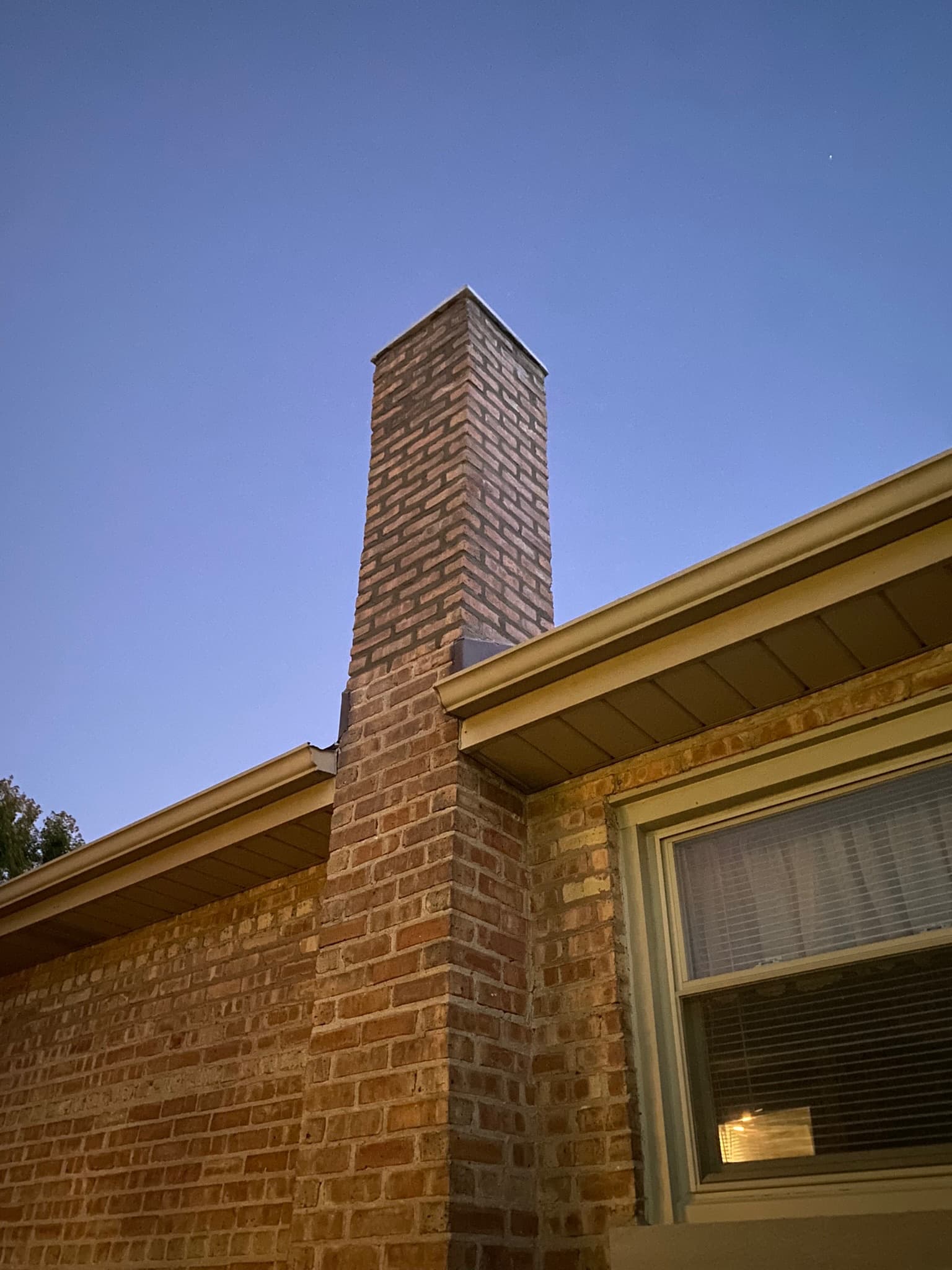
Storm Damage Masonry Repair in Homer Glen, IL
Emerald Masonry LLC handles storm damage masonry repair in Homer Glen, IL — chimney, wall, parapet and limestone damage from high wind, fallen limbs, hail, vehicle impact and fire. We document the damage so the sudden event can be separated from the wall's prior condition, then repair it with matched units and a matched mortar. Licensed, bonded and insured; COI, W-9 and lien waivers on request. Call (708) 288-1696.
Almost all the storm-claim advice available in this market was written about roofs. That is not a criticism — roofs get hit more often and the process is well established. But it produces a real problem, because a masonry claim does not work like a roof claim, and following roof advice on a brick chimney loses claims.
Here is the difference in one sentence.
On a roof claim the argument is usually whether the event caused the damage. On a masonry claim the argument is almost always whether the wall was already failing — and in Chicagoland, on a brick wall, the carrier's default assumption is that it was.
That assumption is frequently fair. Most brick problems around here genuinely are cumulative: freeze-thaw, open joints, water. Which means the burden sits on the evidence, and the evidence has to be gathered before anybody tidies up.
What storm damage masonry repair actually covers
- Chimneys and chases — displaced or toppled stacks, cracked crowns, torn flashing, impact damage
- Wall damage from fallen limbs, wind-driven debris or vehicle strike
- Parapets and coping displaced by wind on flat-roofed buildings
- Limestone and cast stone — cracked, spalled or dislodged sills, bands and caps
- Fire and smoke damage to masonry
- Emergency stabilisation — removing or securing anything overhead that could still fall
- Matched rebuilding with units and mortar that read as original
What actually distinguishes event damage from deterioration
This is the section that decides claims, and it is the one the roofing-led pages have no reason to write.
A mason reading a wall for a claim is looking for whether the failure surface is fresh:
- Fracture faces. A brick broken by impact shows a clean, bright, unweathered interior. A brick that spalled over five winters shows a face that has been exposed, dirtied and eroded.
- Mortar on displaced units. Brick knocked loose by a limb carries mortar that broke cleanly and is still sharp at the edges. Brick that fell because its joints turned to sand comes away with mortar you can crumble in your hand.
- Directional pattern. Wind and impact damage has a direction and a focus — a cone of damage, a line of displacement, a strike point. Freeze-thaw damage is distributed by exposure and moisture, concentrating at the base of the wall, below sills and around downspouts.
- Impact evidence. Bark, abrasion, paint transfer, crushed arrises, a scar on the coping.
- What the rest of the elevation looks like. If the whole wall is spalling and one area is displaced, both stories are true — part of the loss is the event and part is not. Saying so plainly is more credible than claiming everything.
Our guide to separating storm damage from pre-existing deterioration on a masonry claim goes through this in detail, and masonry insurance claims in Illinois covers the wider process.
The first hour matters more than the first week
- Secure underneath it. Cordon generously — the next piece may not land where the first one did. Close the entrance or the walk if it is beneath the damage.
- Photograph before anything moves. Wide and tight, from several positions, dated. Nobody sweeps up until this is done.
- Keep the fallen material. The brick itself is evidence, and its fracture face is the single most useful thing in the file.
- Call your carrier and open the claim before repairs begin.
- Get a mason out the same day if anyone walks beneath the damage. Day one is about hazard, not repair.
- Then stabilise — hazard removal and protection, which on masonry is not a tarp.
What to do when a brick falls off a house and the post-storm masonry inspection checklist cover the walk-around, including the damage that is not visible from the ground.
Matching is a sourcing problem, not a purchase
On a roof, like-kind replacement means the same shingle in the same colour. On masonry it frequently means a brick that has not been manufactured for forty years.
That has to be solved in the scope, before the rebuild is priced. There are three routes and they are not equivalent in cost:
| Route | When it works | |---|---| | Salvage brick from a reclamation source | Common Chicagoland units, where age and colour can be matched | | Close-match current production | Where size, colour range and texture line up acceptably | | Relocate original brick from a hidden elevation, filling that area with new | The best visual result on a prominent elevation, and the most labour |
Brick matching and replacement material and salvaged brick sourcing in Chicago cover how each is done. A scope that says "replace damaged brick" without naming the matching route is a scope that will produce either an argument or a patch you can see from the street.
The same applies to mortar. The new joints must match in colour, sand texture and profile, and — the governing rule on any older wall — the mix must be softer than the brick it holds.
Code and ordinance: ask before the rebuild is priced
When a chimney, parapet or wall section is substantially rebuilt rather than patched, current requirements may apply to the replacement. That can add scope that the loss estimate did not anticipate, and whether a policy responds to it is a coverage question worth asking your carrier early rather than discovering at invoicing.
We flag it in the scope whenever a rebuild crosses that line. It is not our call to make, but it should never be a surprise.
Homer Glen's specific exposure
Homer Glen presents a particular combination. The housing stock is largely 1990s and 2000s homes on large lots, many with tall brick chimney chases standing well above the roof line — the most wind-exposed masonry on the property, and frequently a veneer over a wood frame rather than a solid stack. Those lots carry mature trees, which is the falling-limb exposure. And the open, low-density layout west and south-west of the village gives wind a long fetch with little to break it.
On the commercial side, the strip along 159th Street and Bell Road brings the flat-roofed retail and professional buildings whose parapets and coping take wind directly, and whose displaced coping stones are both a claim and a liability.
We work the same stock nearby: chimney repair in Homer Glen, brick replacement in Homer Glen, lintel repair in Homer Glen, tuckpointing in Homer Glen, chimney repair in Mokena and masonry restoration in Mokena.
Commercial, association and multi-tenant claims
Neither the roofing-led storm pages nor the homeowner-focused masonry advice addresses the claim layer that boards and managers actually face: who opens the claim on a common element, how a deductible interacts with an association's assessment, how to keep a tenant space open while an elevation is stabilised, and how to document a loss on one building of eight so the carrier is not asked to fund the other seven.
We scope those the way we scope any commercial work — by building and elevation, with quantities, dated photographs and an explicit division between event damage and pre-existing condition. Emerald Masonry LLC is a family-owned commercial masonry contractor serving Chicago and the Chicagoland suburbs, led by career masons with decades of hands-on Chicagoland experience, in commercial tuckpointing, façade and parapet repair, lintel replacement, chimney and stack rebuilds, CMU block repair, brick repair and replacement, foundation and limestone/sill repair, caulking, sealing, and commercial, residential and historic masonry restoration. Free on-site assessments — call (708) 288-1696.
For buyers: insurance restoration, commercial masonry and property managers. Related services: chimney repair, brick replacement, parapet wall repair, limestone and sill repair and commercial masonry restoration. Also useful: fire damage masonry restoration and vehicle impact masonry damage.
An honest scope, and no coverage promises
Emerald Masonry LLC was established in 2024 and is led by career masons with decades of hands-on Chicagoland experience. Family-owned, licensed, bonded and insured, with COI, W-9 and lien waivers on request and free on-site assessments.
We will not tell you your claim is covered — your policy and your carrier decide that, and a contractor who promises otherwise is selling you something. What we will do is get on the wall, document what actually happened, say plainly which part of the damage is the event and which part was already there, and price a repair that matches.
If a limb came down, a chimney moved, or coping is off the roof edge, call (708) 288-1696 or request an assessment — and photograph it before anyone cleans up.
Ready to get started?
Free on-site estimates for commercial and large-scale projects.
Insurance & Storm Damage Masonry Restoration in Homer Glen, IL — Frequently Asked Questions
Will insurance cover storm damage masonry repair in Homer Glen, IL?
Policies generally respond to sudden, accidental events — a falling limb, high wind, hail, a vehicle strike, fire — and generally exclude gradual deterioration, freeze-thaw damage and deferred maintenance. Your policy and your carrier decide the claim, not us; what we do is document the damage so the sudden event can be distinguished from the wall's prior condition.
Why does my carrier keep calling it maintenance?
Because on masonry that is the default assumption, and often a fair one — most brick problems in Chicagoland genuinely are cumulative freeze-thaw and joint failure. The burden therefore falls on the evidence: fresh fracture faces, clean mortar on displaced units, a directional damage pattern consistent with the event, and impact marks all read differently from years of weathering.
What should I do in the first hour after a chimney or wall is hit?
Secure the area beneath it, photograph everything before anything is moved or swept up, keep the fallen material, and call your carrier. Then get a mason out to determine what else is loose — day one is about hazard, not repair.
Is emergency stabilisation covered?
Reasonable emergency measures to prevent further damage are commonly treated as part of a covered loss, but confirm it with your carrier before spending. On masonry that rarely means a tarp — it means removing or securing anything overhead that could still fall, and protecting where people walk.
What if my brick is no longer made?
That is very common on anything built before the 1990s and it becomes a sourcing problem rather than a purchase. We look at salvage, at current units that match in size, colour and texture, and at relocating original brick from a less visible elevation so the repaired area matches — and we put the approach in the scope before work starts.
Do you work with adjusters?
Regularly. We provide a written, line-itemised scope with quantities, dated located photographs and a clear statement of what we attribute to the event versus pre-existing condition. We do not negotiate your policy — that is between you and your carrier — but a clear scope removes most of the argument.
Can a rebuilt chimney or parapet be required to meet current code?
It can, and it is worth raising early. When a substantial portion of an element is rebuilt, current requirements may apply to the replacement — which can add scope your original policy limit did not anticipate. Ask your carrier about code or ordinance coverage before the rebuild is priced.
Do you serve Homer Glen and the surrounding towns?
Yes. Emerald Masonry LLC works throughout Homer Glen, Lockport, Mokena, New Lenox, Orland Park, Tinley Park, Frankfort and the wider Cook, DuPage and Will County area. Call (708) 288-1696 for a free on-site assessment.
Insurance & Storm Damage Masonry Restoration in Nearby Areas
- Insurance & Storm Damage Masonry Restoration in Bedford Park, IL
- Insurance & Storm Damage Masonry Restoration in Bolingbrook, IL
- Insurance & Storm Damage Masonry Restoration in New Lenox, IL
- Insurance & Storm Damage Masonry Restoration in Tinley Park, IL
- Insurance & Storm Damage Masonry Restoration in Bolingbrook, IL
- Insurance & Storm Damage Masonry Restoration in Chicago, IL
Other Masonry Services in Homer Glen, IL
Learn more about our insurance & storm damage masonry restoration services across Chicagoland, or view all service areas.